
The best Isle of Wight activities
There’s no shortage of fun to be had on the Isle of Wight. Whether you’re a walker, cyclist or want to embrace the sea in some fashion, you’ll be spoilt for choice.
From scenic coastal walks and cycling trails to watersports and horseriding, this article explores some of the best outdoor activities on the Isle of Wight, helping you plan memorable days out and active holiday adventures across the Island.
Get the guide
Before you dive into the article, check out the Isle of Wight travel guide that inspired it…
The best Isle of Wight activities
Walking
The Isle of Wight offers some of the most magnificent walking in the UK, with more than 500 miles of rights of way, permissive paths and bridleways squeezed into its modest dimensions. This is as dense a network as you will find anywhere in the country.
From sweeping downland to high cliffs, sleepy bays, woodlands, forests and sunken valleys, the variety of routes and their surroundings are astonishing, particularly across West Wight, where some of the Island’s most dramatic scenery unfolds.
The England Coast Path
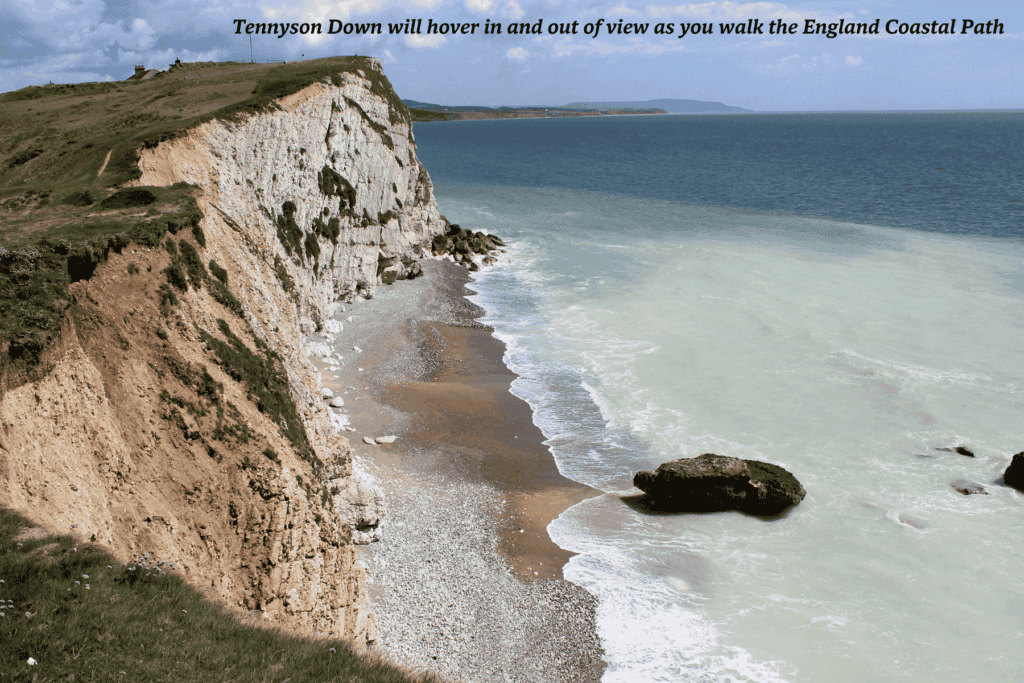
The England Coast Path runs for 88 miles around almost all the Island’s edges, allowing a circumnavigation of the Island on foot. Most walkers can complete the path in a week at a leisurely pace; clockwise, beginning at Yarmouth, is popular, as for much of the second half of the route, Tennyson Down will hover in and out of view.
You can walk across these landscapes unencumbered by roads, your route perhaps broken only by a winding country lane. Sometimes these paths will cross narrow, steep lanes, known locally as shutes: these make their way through pint-sized valleys or ravines, and often have deeply ancient origins in allowing the earliest inhabitants of the Island access to the sea by the most direct route.
One moment you might be inwoodland, listening to the earliest spring migrants, the next you emerge on to magnificent downland with views of sweeping cliffs, or stumbling upon a little-visited bay. Always, there is the sea – and often the opportunity to pause for a memorable photo overlooking the coast.
Crossing the Island on foot
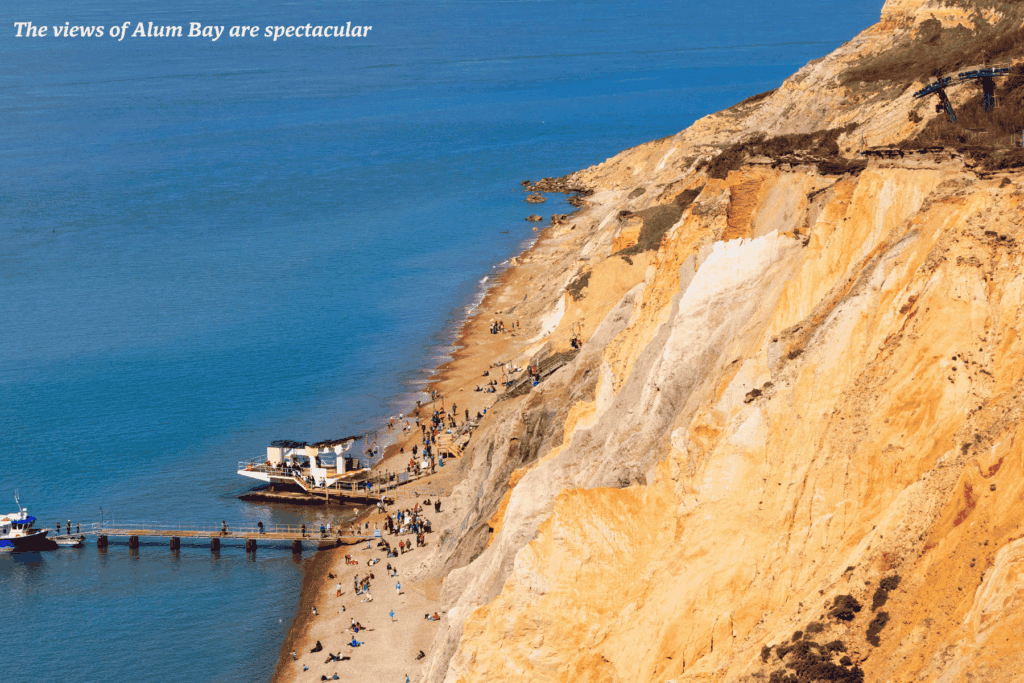
The granddaddy of Island walks is the 26½-mile Walk the Wight, sometimes called the Cross Island Trek or, more dauntingly, the Cross Wight Traverse. Running from Bembridge Point on the east coast to Alum Bay in the west, this is a classic coast-to-coast walk taking in just about all the features of the Island, from downlands to shutes, rivers and woodlands.
The recommended route is from east to west because, while this does mean you will tend to be walking into the prevailing westerlies, the hike culminates in the stupendous cliffs of Alum Bay and Tennyson Down, which represent as superb eye-popping a climax as any walk in Britain.
You can, of course, do the walk by yourself at any time but it also features in the annual Isle of Wight Walking Festival, where it becomes a fundraising event for an Island hospice, with around 6,000 people typically taking part. The walk should take about 12 hours for someone of average fitness to complete.
The route follows the Bembridge Trail from Bembridge via Brading and Arreton to Newport and then heads via Carisbrooke Castle along Mottistone Down to Compton Down, Freshwater Bay and onwards to the sea. Given the plethora of footpaths on the Island, there is probably an infinite number of variations on this route to take you across the Island.

The practicalities
You are also extremely unlikely to get lost. Every footpath on the Island has an official ID, which is displayed on its signpost. These IDs refer to the parish through which the footpath runs, or originates. For example, a path near Ventnor will start with ‘V’, followed by the number of the footpath; elsewhere you will see ‘BB’ for Bembridge (eg: BB21), ‘CS’ for Cowes…you get the idea.
The Island Ramblers group is highly active, and welcomes new members and visitors.
Cycling
The Isle of Wight is one of the best places for cycling in the UK and three main routes, which are generally waymarked and signposted, cover a good deal of the Island. Other smaller inter-linked cycle paths fill in the remaining gaps, making it ideal for active holiday itineraries and leisurely day trips alike.
The Taste Round the Island Route
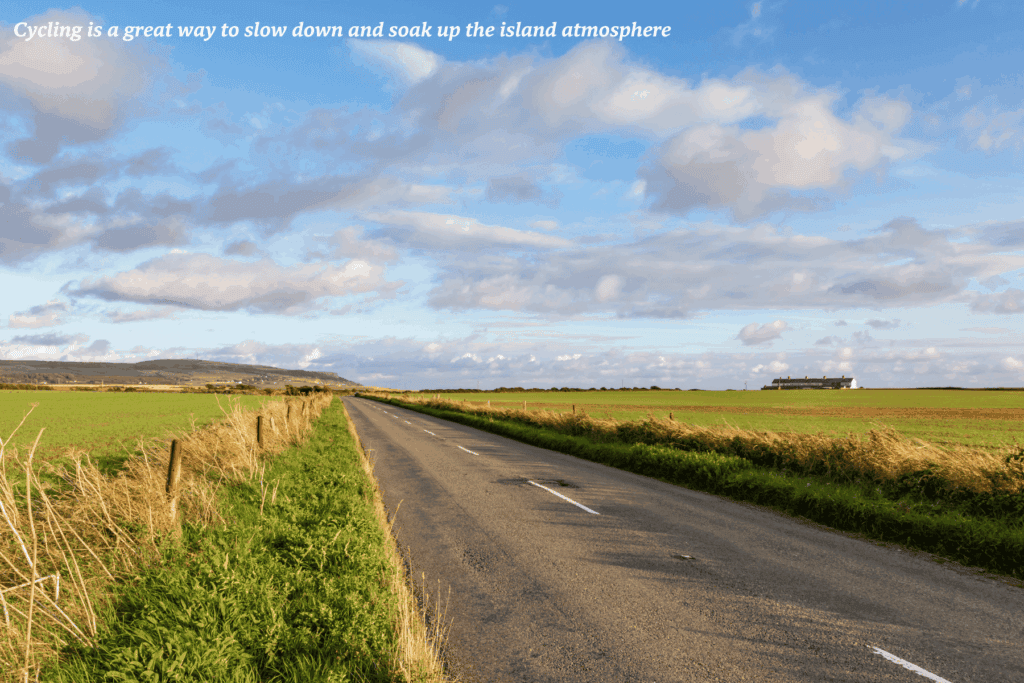
The Taste Round the Island route does just what it says and circles the Island for a total of 66 miles, almost entirely on roads and signposted all the way. This is a good route to follow to pick up most of the coastal sites of interest.
It was originally intended as a way to direct gourmands to places that promoted local food (farm shops, cafés) as they sojourned around the Island and hopefully, if rather optimistically, returned to their starting point ‘calorie-neutral’, but over time it has become more of a useful route for exploration.
It is handy for exploring little-visited hinterlands, such as the area northeast of Yarmouth, from Shalfleet to Cowes, as well as embracing a pleasingly scenic crescent behind Sandown, from Brading to Wroxall. With a couple of unavoidable exceptions (along the Military Road around Blackgang Chine and between Niton and Freshwater), it sticks to quieter roads.
A recommended attraction
Alongside its coastal scenery and historic towns, the Isle of Wight is also known for its thriving local producers and distinctive visitor experiences, making it a great place to discover something a little different during your stay.
Don’t miss:
The Red Squirrel Trail
If a cycle trail can be a poster child for two wheelers, then it would be the Red Squirrel Trail. This lasso-shaped route explores the east of the Island and is popular with families. The basic loop runs for 13 miles from Newport to Sandown and Shanklin, with the ‘noose’ of the lasso representing the extension up through Newport towards West Cowes and into Parkhurst Forest.
About 95% of the route is off-road, ranging from flat, former train lines to mud and puddles, and is suitable for trail bikes and mountain bikes, and bicycles with chunkier tyres. The route is really excellent for all age groups, so younger families can easily manage it with a trailer.
If you’re looking for a day’s family friendly cycling then hiring bikes to go from Newport to Dinosaur Isle and the Wildheart Animal Sanctuary on the edge of Sandown is one of those experiences that can leave you feeling like a good parent. Many visitors also combine cycling with stops at attractions such as Tapnell Farm Park or the Wight Steam Railway.
Discover more family days out on the Isle of Wight here.
The Island Chalk Ridge Extreme Trail
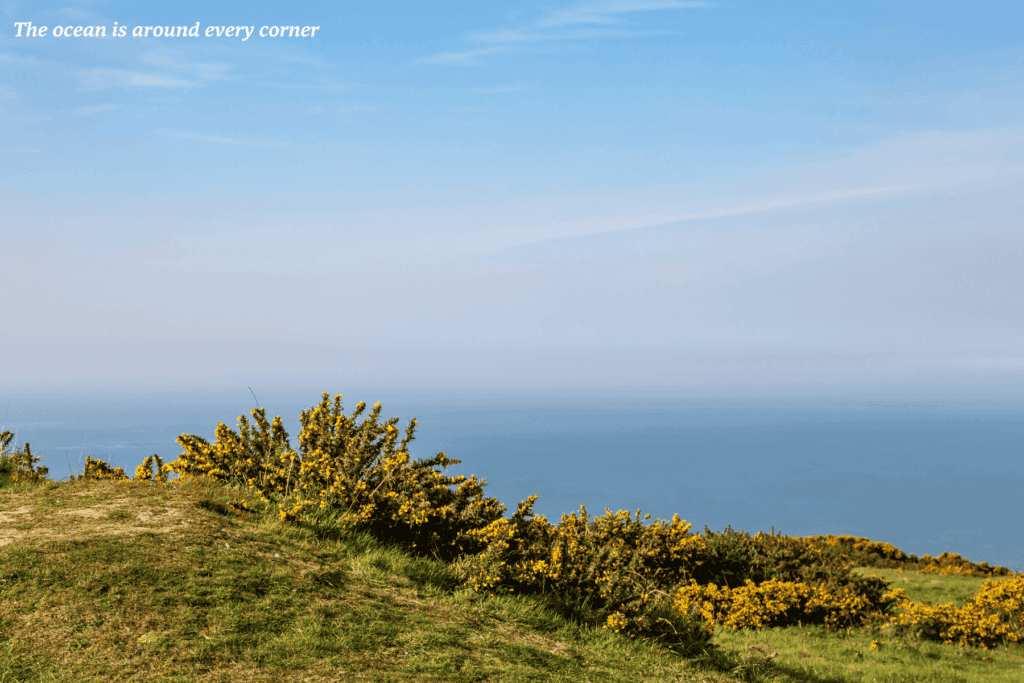
Just as the Island can get patronised by those unable to peer beyond the bucket-and-spade stereotype, so hardcore cyclists might sniff and fix their gaze determinedly towards hillier landscapes on the mainland. In which case, you might suggest that they try out the Island Chalk Ridge Extreme Trail: the route is aimed at cyclists with a slightly higher level of fitness as it follows the chalk ridge along the ‘back’ (in this case, this means the ridges set back from the coast) of the Island.
Across the entire 53 miles you will climb a total of 4,934ft: proper mountain-bike territory. Easier sections include those around Arreton and the Garlic Farm, where you can enjoy far-reaching views in a truly bucolic setting. The gradients kick in among the extended downland element of the trail, running from Chale Green, up above Brighstone and up and down Brook Down, Afton Down and Compton Down, where truly superb views are bookended by St Catherine’s Down to the east and Tennyson Down to the west and open sea to the south.
Be mindful that both this trail and the Red Squirrel Trail are shared with walkers.
Sailing
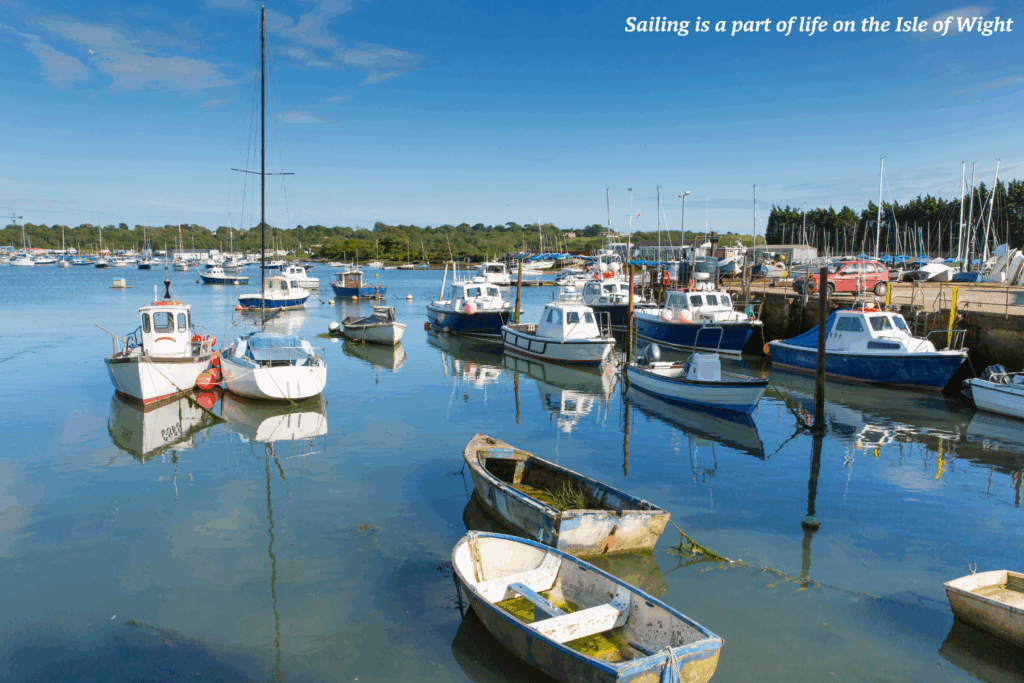
The Island that gave us Cowes Week is far from an exclusive haunt of salt-soaked sailors. If you plan to sail to or around the Island, the best initial contact is the Cowes Harbour Commission, which is a helpful source of information about berthing and slipways for small and medium-sized vessels. Many visitors arrive via Red Funnel Isle of Wight ferry travel services, making sailing and boating a natural extension of Island life.
Beginners’ courses are available if you want to get stuck in but don’t know your tack (sailing upwind) from your jib (sailing downwind). The United Kingdom Sailing Academy is based by the waterfront in Cowes and offers courses to satisfy both the confirmed landlubber and those dreaming of circumnavigating not only the Island but perhaps the globe. They also run a dinghy mini-course for children and extend their training to kayaking, windsurfing and kitesurfing.
Kayaking, paddleboarding and coasteering
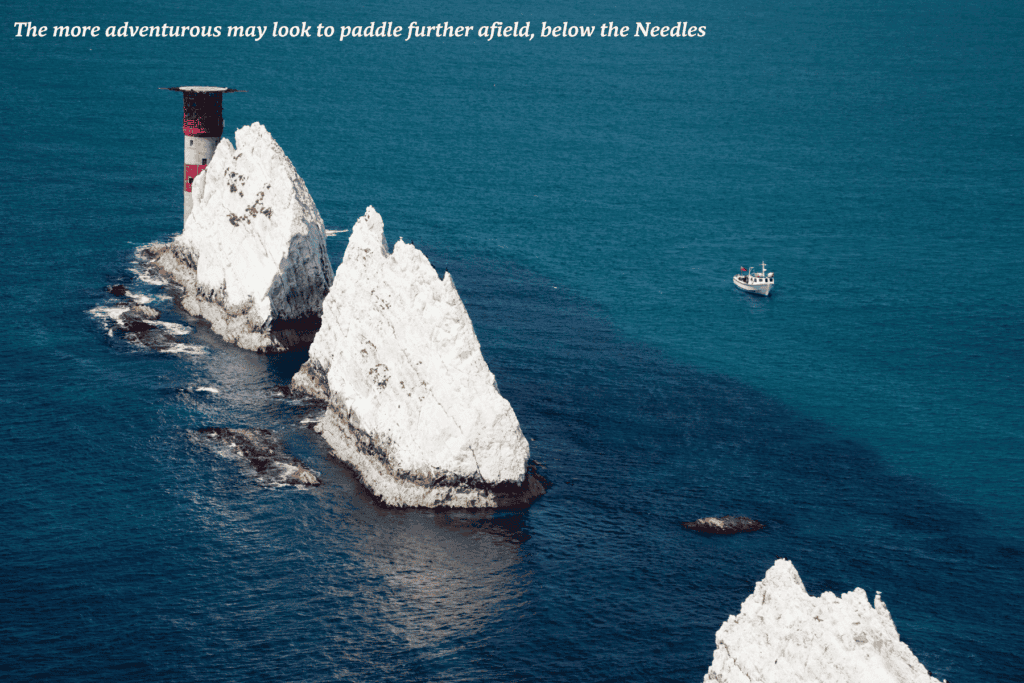
With sheltered coves in places such as St Helens and Newtown Creek, the Island is ideal for taking a canoe, kayak or paddleboard out on to the water. In decent weather, Totland, Freshwater and Colwell bays will provide unforgettable experiences, as will a sunrise sojourn at Bembridge beach or Seagrove Bay on the east coast.
The more adventurous may look to paddle further afield, perhaps below Tennyson Down and the Needles, or along Sandown Bay. If you do, seriously consider using a qualified instructor to guide you or provide advice. There is a handful of operators offering these services as well as coasteering.
Horseriding
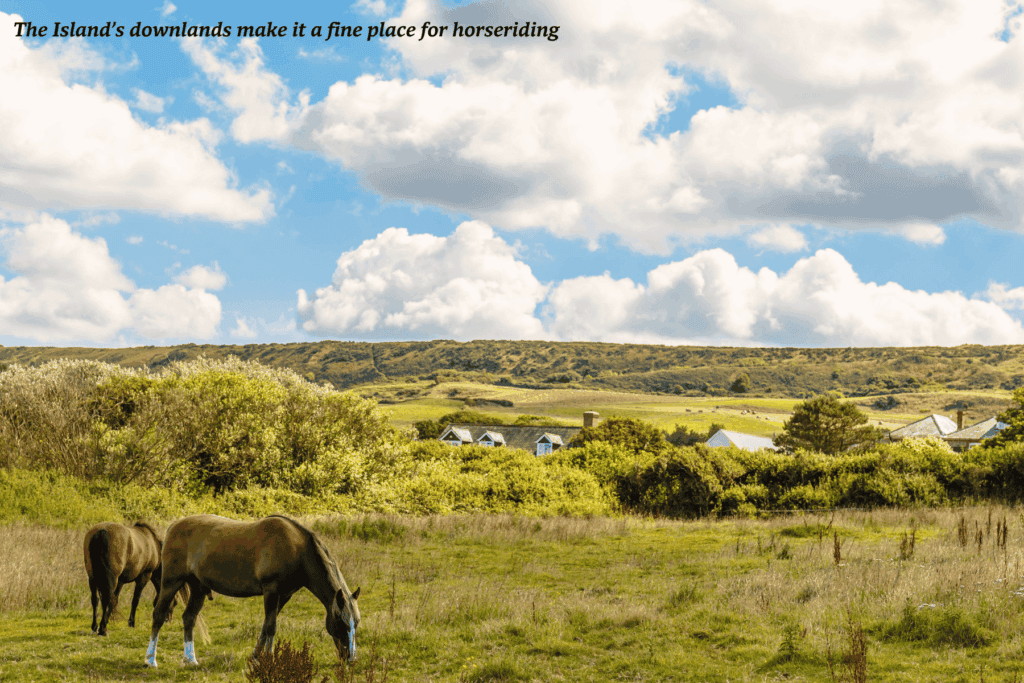
The Island’s downlands, beaches and quiet lanes make it a fine place for horseriding, with miles of bridleways crossing rolling countryside, chalk ridges and woodland tracks. Riding is a particularly rewarding way to experience the Island’s quieter side, whether on a gentle hack through rural farmland or a longer ride with views across the coast and the Solent.
The varied terrain means there are options for complete beginners as well as more experienced riders and several stables around the Island offer guided rides and lessons throughout the year. For visitors staying at a holiday park, horseriding can be a memorable way to explore the countryside at a slower pace.
Experienced riders as well as beginners can ride horses from the Island Riding Centre. The centre can also accommodate any horses you wish to bring with you.
- Recommended reading: the best hotels on the Isle of Wight

Fossil hunting
The Isle of Wight is one of the best places in the world to find fossils, with important discoveries regularly exposed along the coast, including everything from dinosaurs to ancient turtles. A guided walk is the best introduction for visitors and is really worthwhile: being told in a highly engaging manner what you are looking at can be like having a curtain drawn back to reveal something extremely special.
Guided walks are available from Dinosaur Isle at Yaverland, which offers tours of the cliff base and sands across the road from the museum. Wight Coast Fossils offers walking tours led by a team of young, often post-graduate, experts that are accessible to the curious, whether they be enthusiasts or novices. They tend to focus on Compton and Brook Bays and Hanover Point.
Interested in fossil hunting? Don’t miss this guide to the Jurassic Coast.

What will you do on the Isle of Wight?
Whether you’re exploring the coastline on foot, discovering quiet countryside trails on horseback, setting sail along the island’s stunning shores, or cycling through scenic routes, the Isle of Wight offers something for every kind of adventure.
With its mix of natural beauty, fresh sea air and relaxed island charm, it’s the perfect place to slow down, explore and make unforgettable memories.
Our guide to the Isle of Wight
For more information, check out our guide to the Isle of Wight by Mark Rowe: