
Nine Borneo facts you might not know
These Borneo facts offer insight into one of the world’s most extraordinary islands, from its impressive wildlife to its diverse cutulral history.
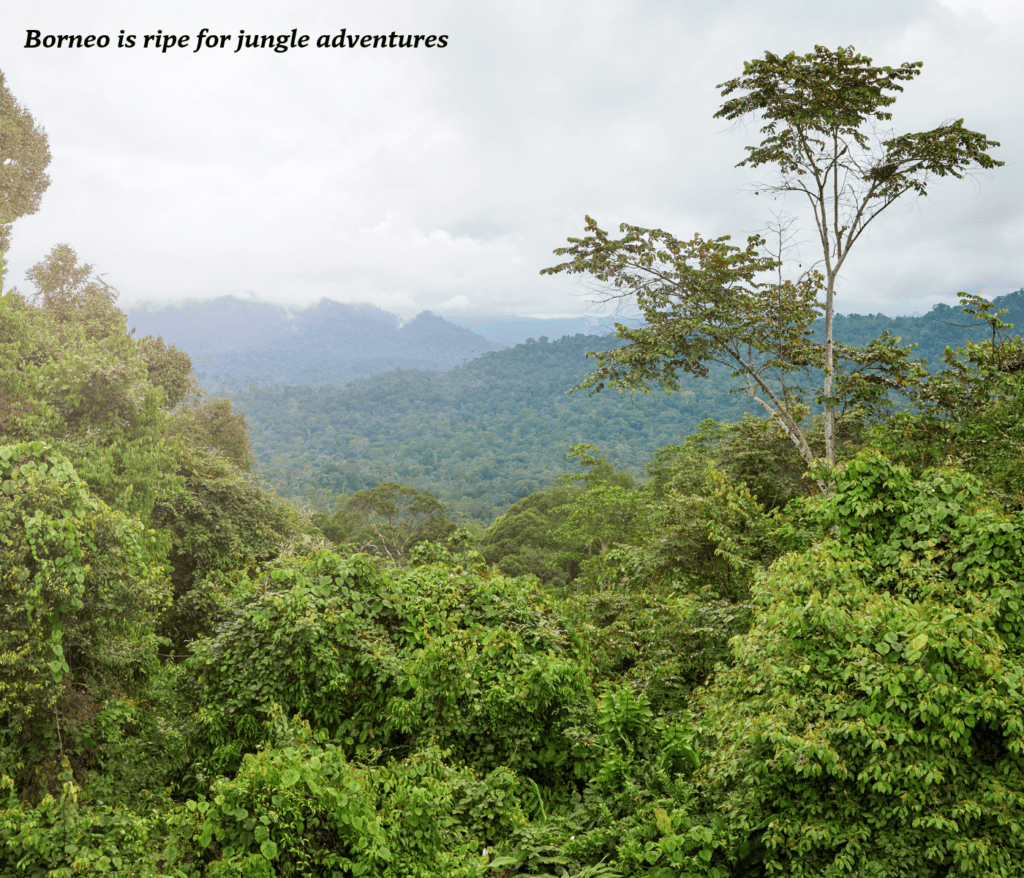
Borneo – the very name conjures up images of a steamy tropical island, brimming with mystery, maritime escapades and jungle adventures.
Situated at the junction of four seas, the island has a history shaped by ferocious headhunters, long-haul ocean migrations and seafaring invasions. Its story stretches from ancient trading networks and indigenous kingdoms to European colonial ambitions, leaving behind a remarkable mix of cultures, languages and traditions. The name ‘Borneo’ supposedly originates from a European twist on Bruni, a once-powerful Muslim trading post on the island’s west coast, today known as Brunei.
From its extraordinary wildlife and ancient rainforests to its distinctive customs and curious place names, here are nine fascinating Borneo facts that reveal more about what makes this island so remarkable.
Get the guide
Before you delve into the article, check out the Borneo travel guide that inspired it:
Fascinating Borneo facts that might surprise you
It is divided across three countries
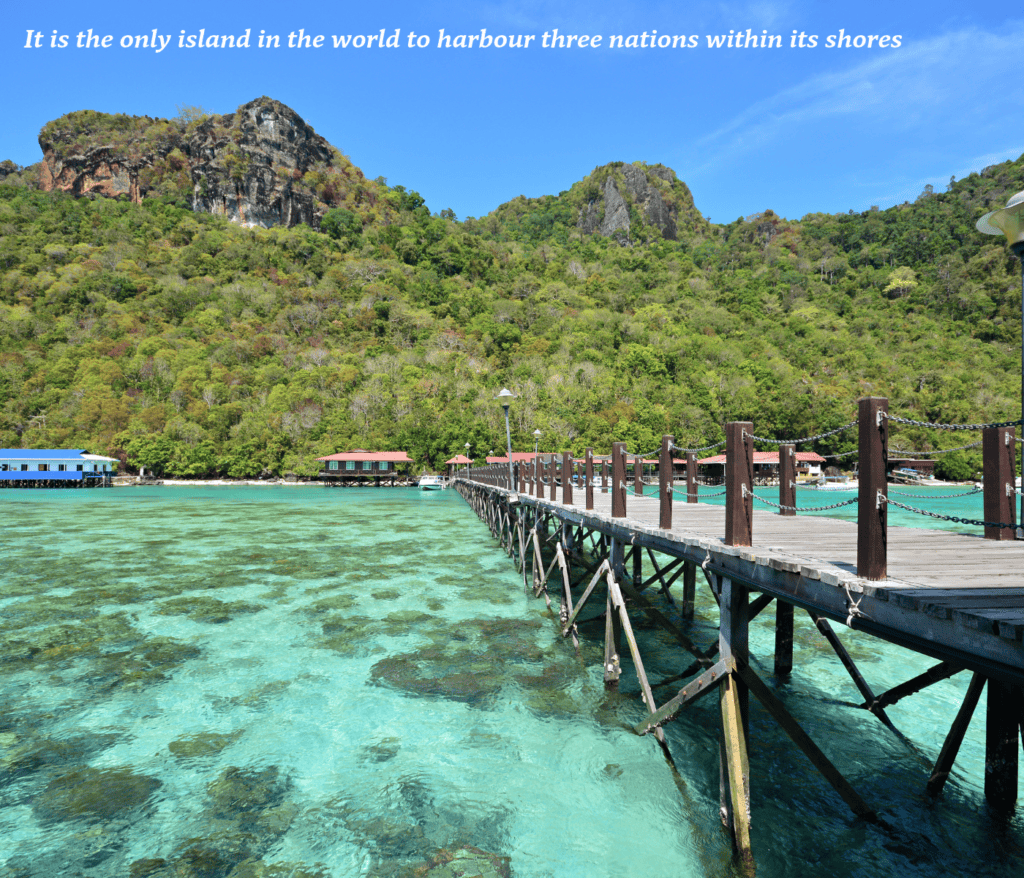
Straddling the equator between 4-7°N and 4°S, the remote island of Borneo lies in the humid tropical zone of southeast Asia, some 1,000km east of mainland Peninsular Malaysia. Three times the size of Great Britain – at 743,294km² – it is the only island in the world to harbour three nations within its shores: (East) Malaysia, the Sultanate of Brunei and Indonesia (Kalimantan). Clustered in the north and down the northwest coast, the Malaysian Borneo states of Sabah and Sarawak, together with Brunei, cover around a quarter of the island, while Kalimantan, occupies the rest.
Borneo’s geography is dipped in a melting pot of maritime influences: the South China Sea lies to the northwest, the Sulu Sea to the northeast, the Celebes Sea to the east and the Java Sea to the south. In shape, the island resembles a mythical dog: ears pointing towards the Philippines, paw extending across the Makassar Strait to Sulawesi, tail jutting westward towards Singapore and feet dipping down towards Jakarta.
Find out more on our Borneo travel information page.
Our recommended Borneo operator
Independent travel in Borneo is possible, but the island’s vast landscapes and remote regions can present unique challenges. Travelling with experienced local guides offers valuable insight, while helping ensure a safe and rewarding experience in this captivating destination.
Here is one of our favourites:
It is home to 90% of the world’s orangutans
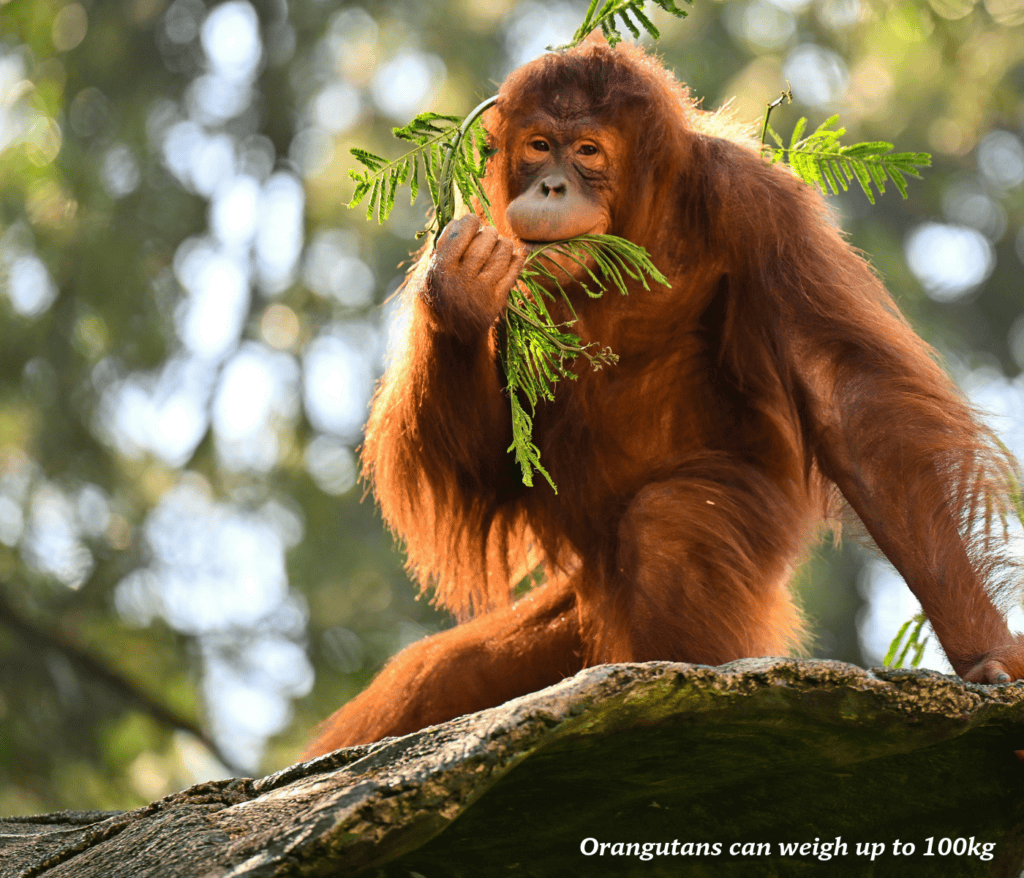
With its innate magnetism and undeniable appeal, the ‘man of the forest’ – from the Malay orang for ‘person’ and hutan for ‘forest’ – has become a mascot of Borneo, which is home to 90% of the world’s orangutans (with the remaining 10% inhabiting the tropical forests of neighbouring Sumatra). Sadly, this iconic status has not brought the species good luck at the hands of humans, with the future survival of the species looking increasingly grim.
Orangutans spend more time in trees than any great ape and males reach up to 100kg, making them the largest arboreal animal on the planet. They sometimes descend to the forest floor to traverse gaps in the trees, moving on all fours. Owing to their large size, they use a form of locomotion known as quadrumanual climbing, rather than the brachiating technique used by many other primates. This involves clambering through the trees grasping firmly with both hands and feet.
Orangutans are mostly active during the day. Every evening, they construct a sophisticated nest high in the trees, weaving thin branches together to make a flat sleeping platform complete with a ‘roof’ for shelter. As well as being Borneo’s most beloved creature, orangutans are an ‘indicator species’ – barometers of the well-being of the forest.
Why are orangutans orange?
The long, shaggy, bright-orange body hair of the orangutan is immediately striking and unmistakable. Individual variation is great and may change with age, from bright orange in infants to auburn and deep burgundy in adults.
Some say their distinctive colouring serves to announce their presence to other orangutans. On the other hand, while the fiery hues blaze in the sunlight, they virtually disappear in the shadows of the forest canopy. The dark skin underneath absorbs the light, obscuring the ape in an apparent blackness. This ‘trick of the light’ helps orangutans blend into their scenery, camouflaged from enemies but still visible to other members of the species.
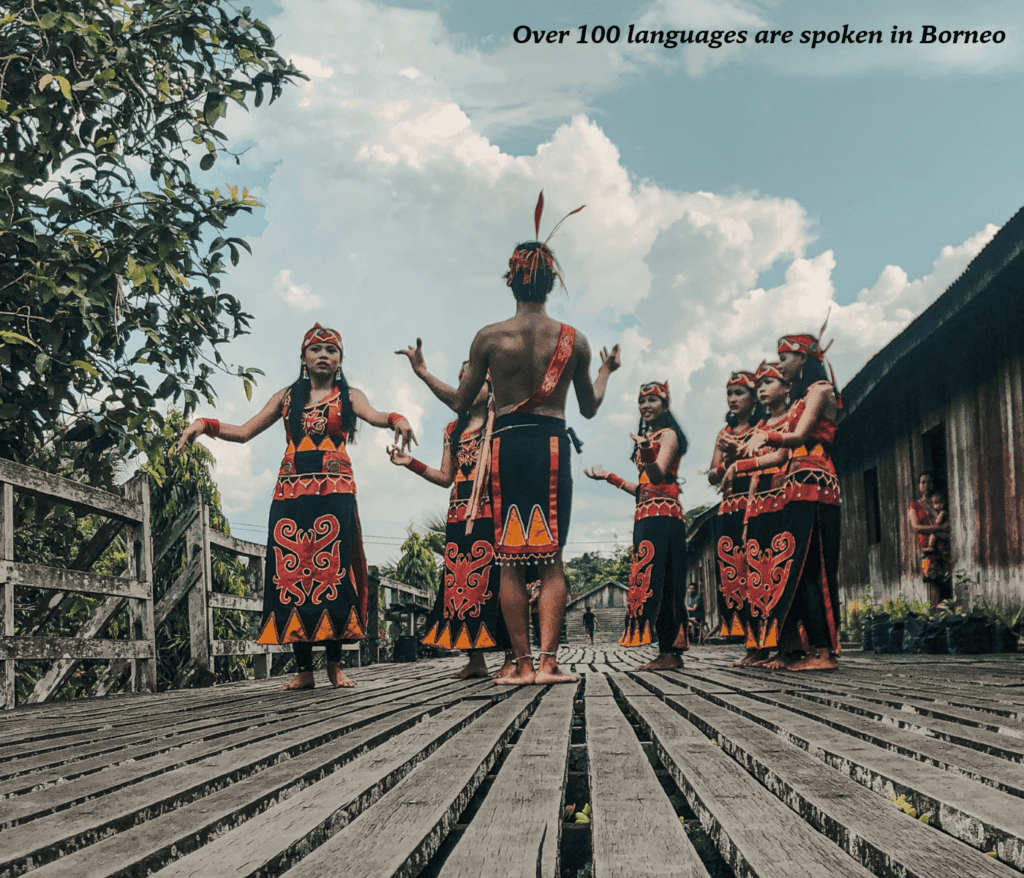
Over 200 indigineous tribes live there
With over 200 indigenous tribes – many of them descendants of ancient Chinese and Javanese empires – and large Chinese, Malay and Hindu populations, the island is a fascinating repository of ethnographic history.
Midway between China, the Indonesian Archipelago and the Pacific region, Borneo is an ancient sea thoroughfare. Southerly migrations through the island began tens of thousands of years ago, leaving a deep footprint on its DNA. The island today is a human rainbow of racial influences and multi-hued traditions. While the contemporary ethnic mosaics of Sabah and Sarawak are quite different in their intricacies, Borneo’s Malay indigenes (known as bumiputeras) most likely originate from a common ancestral stock, together with those of Sumatra, Java, Bali, Sulawesi Island, the Philippines and Malay Peninsula. Their ancestors possibly arrived in Borneo around the 15th century. Earlier tribes were wiped out by clan warfare or simply moved on to other shores.
Throughout Malaysian Borneo and Brunei alone, around 100 different regional and tribal dialects are spoken!
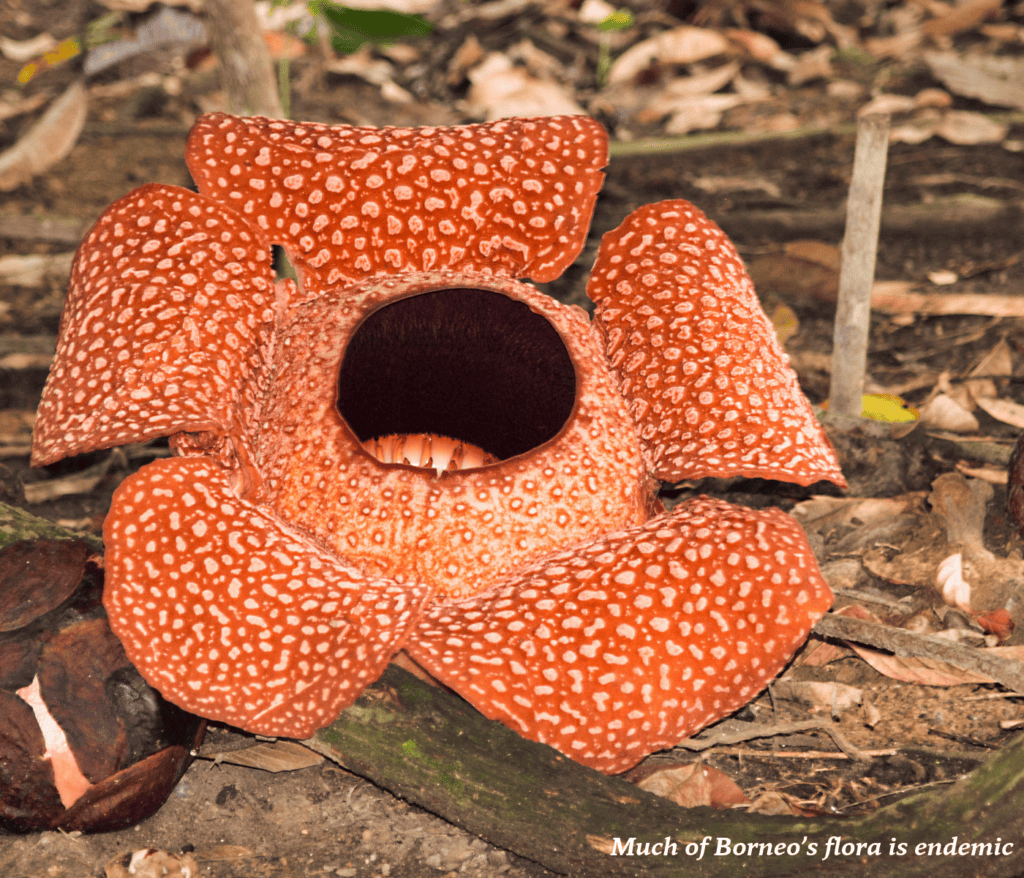
It has the highest plant diversity of any region on earth
Borneo’s natural wonders are undoubtedly its greatest asset. As a biodiversity hotspot, the variety and richness of its life forms are unparalleled. Just 10ha of Bornean rainforest can support 700 species of trees – as many as are found across the whole of North America. The island boasts as many bird species as Europe, and the same mammal count as Australia.
Despite extensive destruction of its natural environment through forestry and agriculture, Borneo remains a paradise of tropical forests filled with a staggering array of plants and animals. The world’s so-called biodiversity hotspots cover less than 1% of the earth’s surface, yet are home to over half of all the world’s plant and animal species. Borneo is among them, putting it on a par with the Amazon and equatorial Africa for species diversity.
Much of Borneo’s flora and fauna is endemic – that is, not found anywhere else. An estimated 5,000-plus flowering plants are unique to the island, as well as some 500 mammals, birds, reptiles and fish. The World Wide Fund for Nature (WWF) says Borneo may have the highest plant diversity of any region on earth.
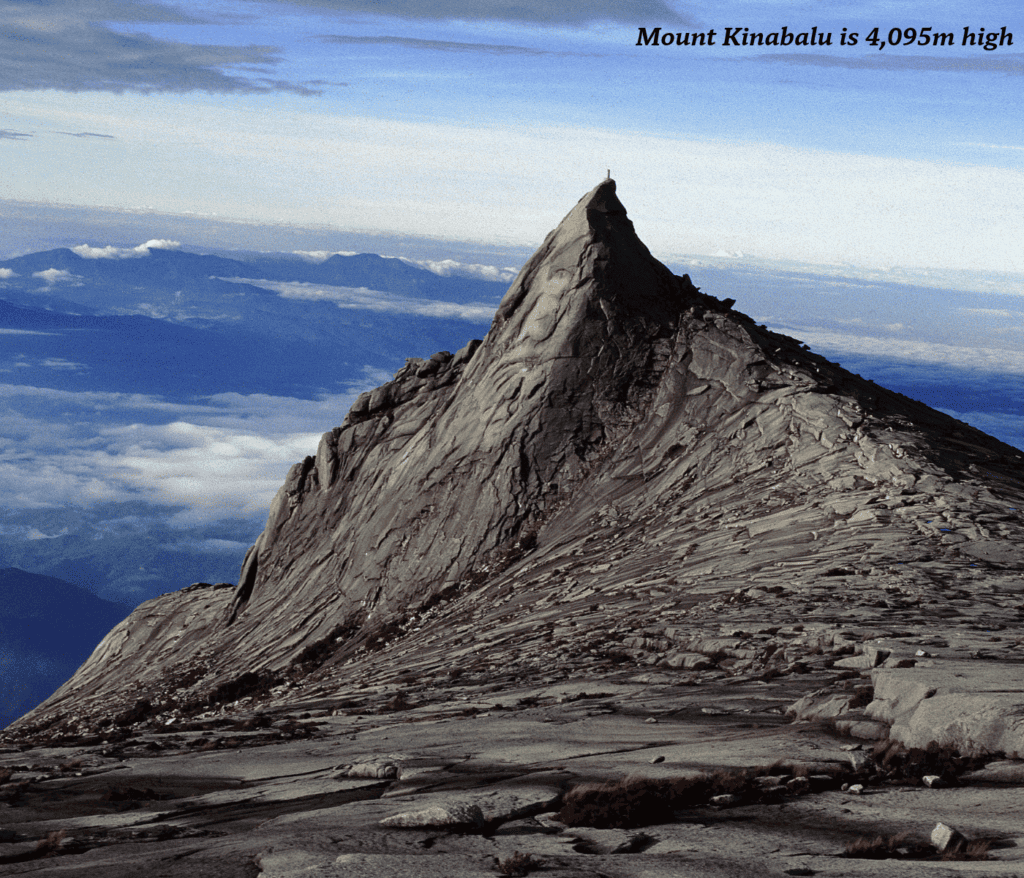
Mount Kinabalu passes through 12 climate zones
Mount Kinabalu was sacred to local indigenous communities long before Gunung Kinabalu National Park got UNESCO World Heritage Site status in 2000. For the Kadazandusun, the mountain is the resting place of their ancestral souls – indigenous climbers always make an offering to avoid being cursed. Sadly, lower zones of Gunung Kinabalu National Park are scarred by forestry, mining and slash-and-burn agriculture. The UNESCO listing did not come too soon – and some would argue, not soon enough.
Ascending from 600m to 4,095m above sea level, Gunung Kinabalu passes through 12 climate zones. Such variety bears a wealth of biodiversity, with flora and fauna adapting to the altering conditions, from conifers and lowland rainforest to alpine meadows. The massif comprises 16 granite peaks of various heights, culminating in the 4,095m summit, although it is apparently still growing, so the official height may change. It was baptised Low’s Peak after Sir Hugh Low, who led the first official expedition to the summit on 7 March 1851, when he was the colonial secretary of Labuan.
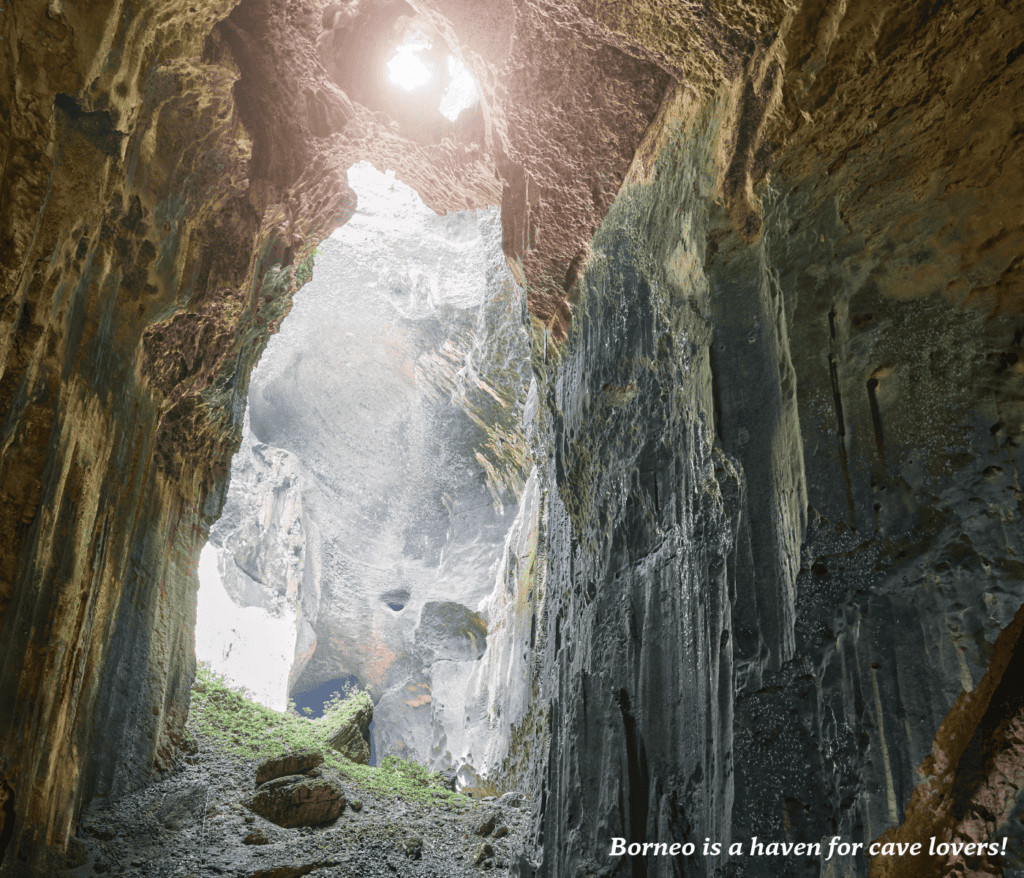
You’ll find the largest cave passage in the world there
Inland Sarawak hosts a spectacular array of limestone features, including pinnacles, protrusions and mega caves. Among the world’s largest and longest cave chambers and systems are found in Gunung Mulu National Park in northern Sarawak. Sculpted by the corrosive action of water flowing through limestone and sandstone mountains, the immense subterranean system is continually transmuting, as dripping water creates new features and rock is worn away by underground rivers.
All caves in Gunung Mulu National Park are reached via solid timber duckboards and a network of eco-lit cement paths. Walking the 3km stretch to Deer Cave and neighbouring Lang’s Cave is a lovely experience in itself, passing through rainforest, peat swamp, alluvial flats, streams and some spectacular limestone outcrops.
Lang’s Cave is the most impressive site for stalactites and other formations, while Deer Cave is the most amazing overall for its size and cavernous pit. At a staggering 2km in length, this is the largest cave passage in the world – its main chamber has enough room to fit five St Paul’s Cathedrals!
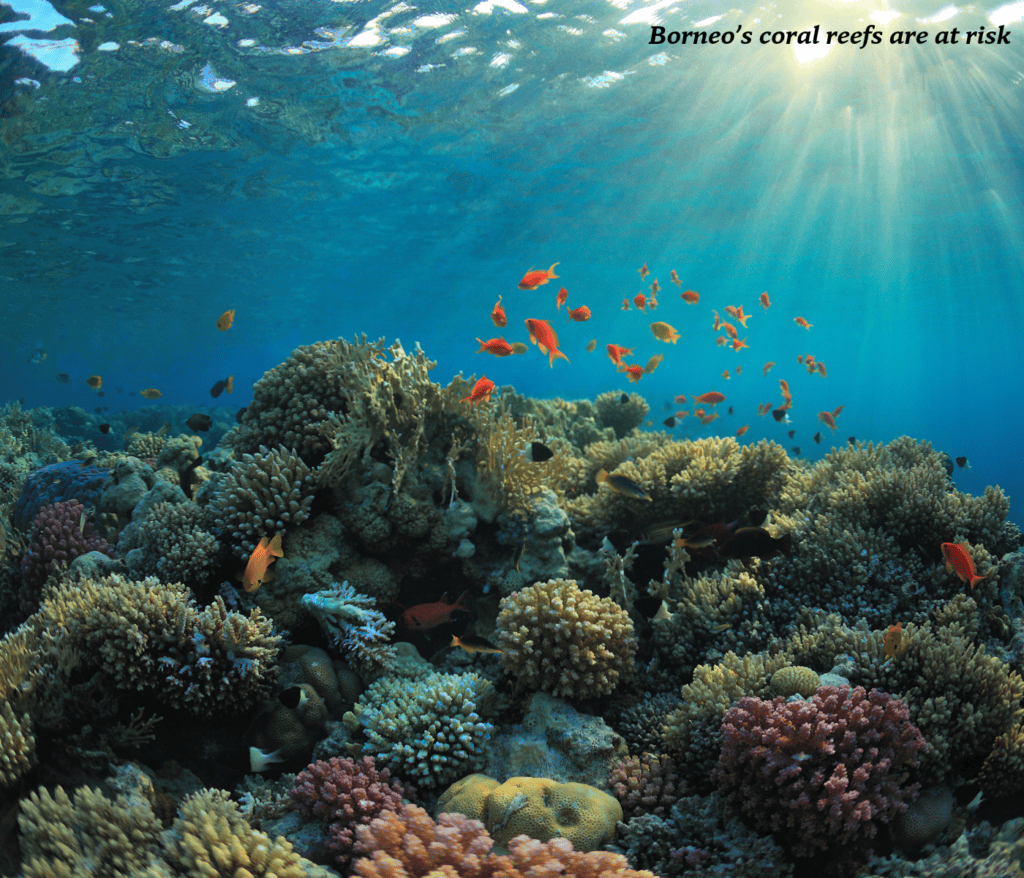
Its coral reefs are at serious risk
Coral reefs and seagrass beds are the two most important marine ecosystems in Borneo. The latter are important grazing grounds for dugongs (sea cows) and sea turtles, and provide vital nurseries for many species of fish. Coral reefs are equally vibrant ecosystems. Indeed, much of Sabah’s east coast and surrounding islands touch on an area dubbed the ‘Coral Triangle’, which encompasses the Sulu and Sulawesi seas. Over 1,800 species of fish have been recorded here, plus 400 species of algae, five of the world’s eight species of sea turtle, 22 marine mammal species and over 450 types of coral.
However, the reefs also face several challenges: the large rivers of Sarawak deposit sediment around the coast, hindering coral formation, and many of Sabah’s reefs have been damaged by the practice of dynamite fishing – using explosives to surface dead fish en masse – as well as coral bleaching, sedimentation, coastal development and overfishing.
Malaysian grassroots organisations and international NGOs are working with local communities to help them protect the seas around Borneo. WWF Malaysia has several conservation programmes in the region, and many efforts are underway to expand the protected marine zones.
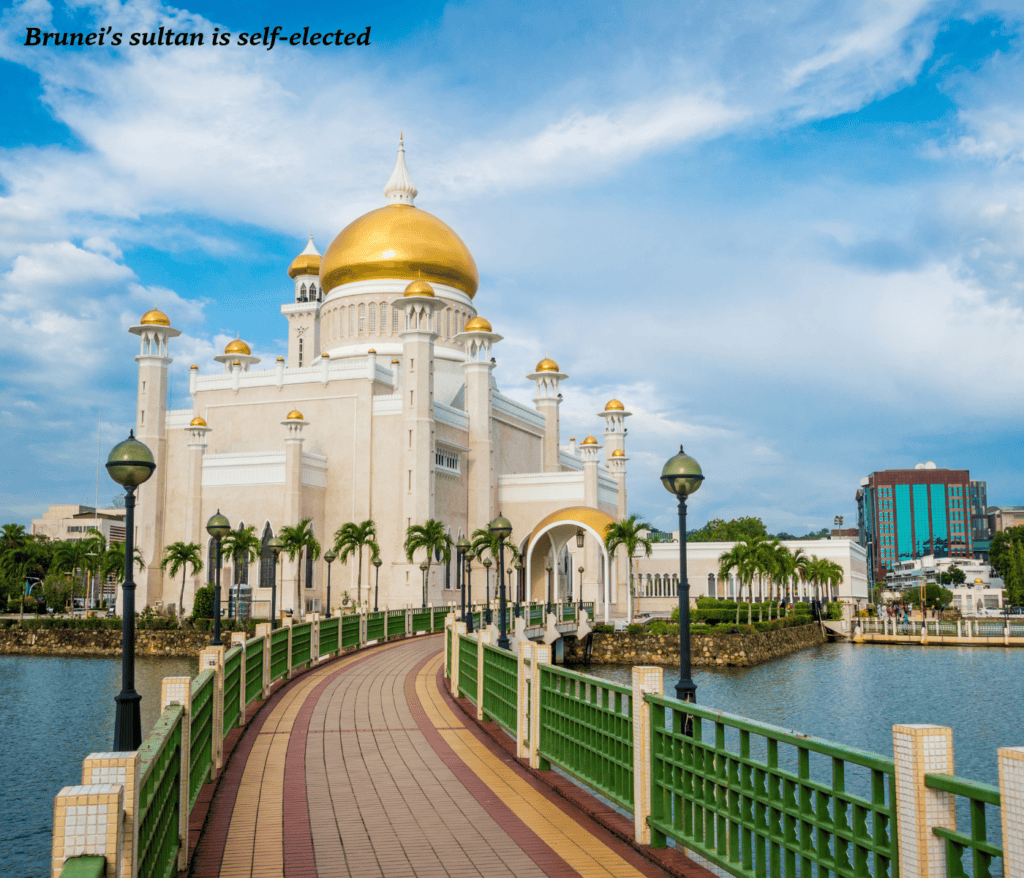
Brunei is (arugably) one of the world’s few remaining absolute monarchies
Constitutional sultanate or absolute monarchy…where do you draw the line?
Brunei describes itself as an independent constitutional monarchy, and the Sultan is its self-elected, supreme executive authority. Constitutional would seem to imply some level of official checks and balances – by an independent legal authority – but Sultan Haji Hassanal Bolkiah reigns over both the constitution and the courts. He is not only the sovereign ruler, but also prime minister, defence minister, finance minister and head of the Islamic faith. The 1959 constitution invested him with full executive authority, which was later amended to include full emergency powers.
There are no elections. The sultan is advised on national policy by several councils, all of which he appoints – a Council of Cabinet Ministers, a Religious Council, a Privy Council, a Council of Succession and a Legislative Council.
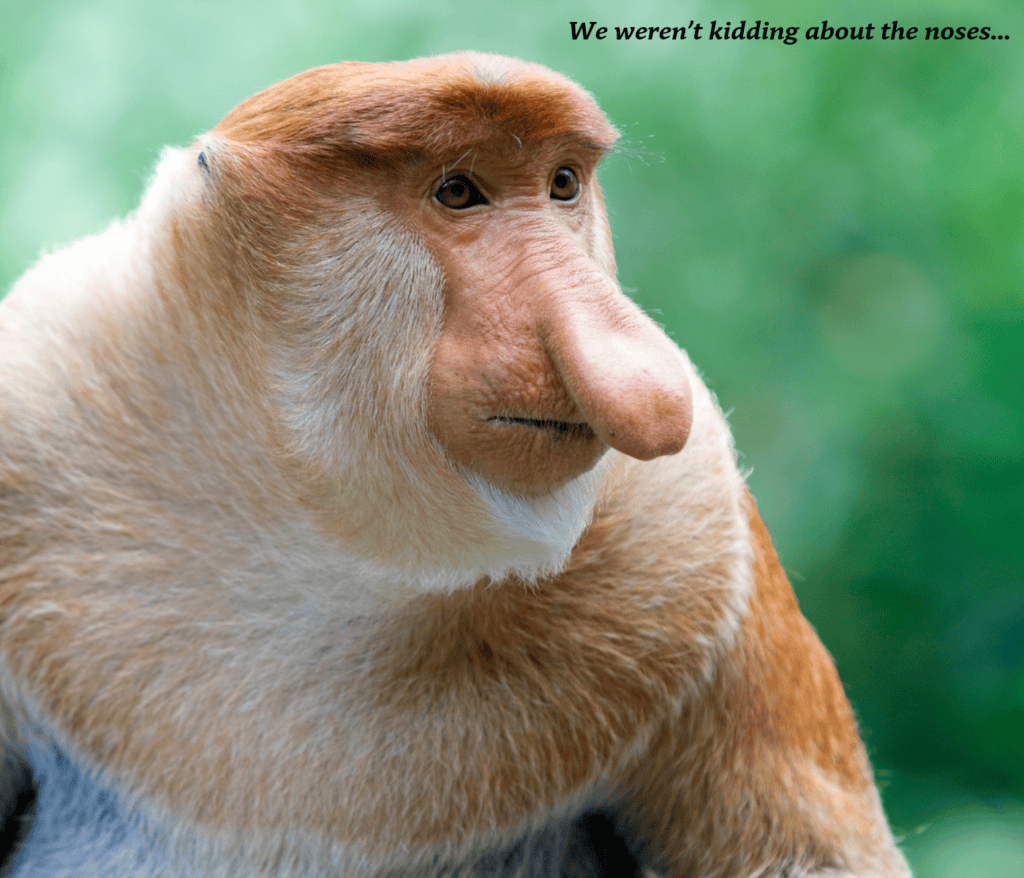
The monkeys here have giant noses
Well, some of them do.
The proboscis monkey lives only on Borneo and a few small islands close to its shores. Its most distinguishing feature is its nose: huge and fleshy in males, upturned and pixie-like in females. The male’s pendulous nasal feature grows continuously, in a Pinocchio-like manner, and may reach a quarter of his body length! The function of this strange facial appendage is uncertain, though it is thought to act as both an ‘organ of resonance’, amplifying the male’s strange ‘kee-honk’ vocalisation, and a thermoregulatory device. Females also seem to prefer males with larger noses…
Together with their potbelly and swaggering gait, the large nose led locals to nickname them kera belanda (‘Dutch monkeys’) – a rather unkind reference to the Dutch plantation owners of colonial times. Their bloated belly contains bacteria used to digest toxin-containing leaves. Their appearance when at rest – the spindly legs dangling beneath corpulent bodies – was once likened to someone wearing ‘a bomber jacket over ballet tights’!
- Recommended reading: the most unusual wildlife encounters in the world
Our Borneo travel guide
For more information, check out Tamara Thiessen’s Borneo travel guide: