
Things to do in Mostar: 48 hours in Herezegovina’s historic city
Explore the best things to do in Mostar in 48 hours, from visiting the Old Bridge and wandering the old town to discovering the city’s history, culture and local life.
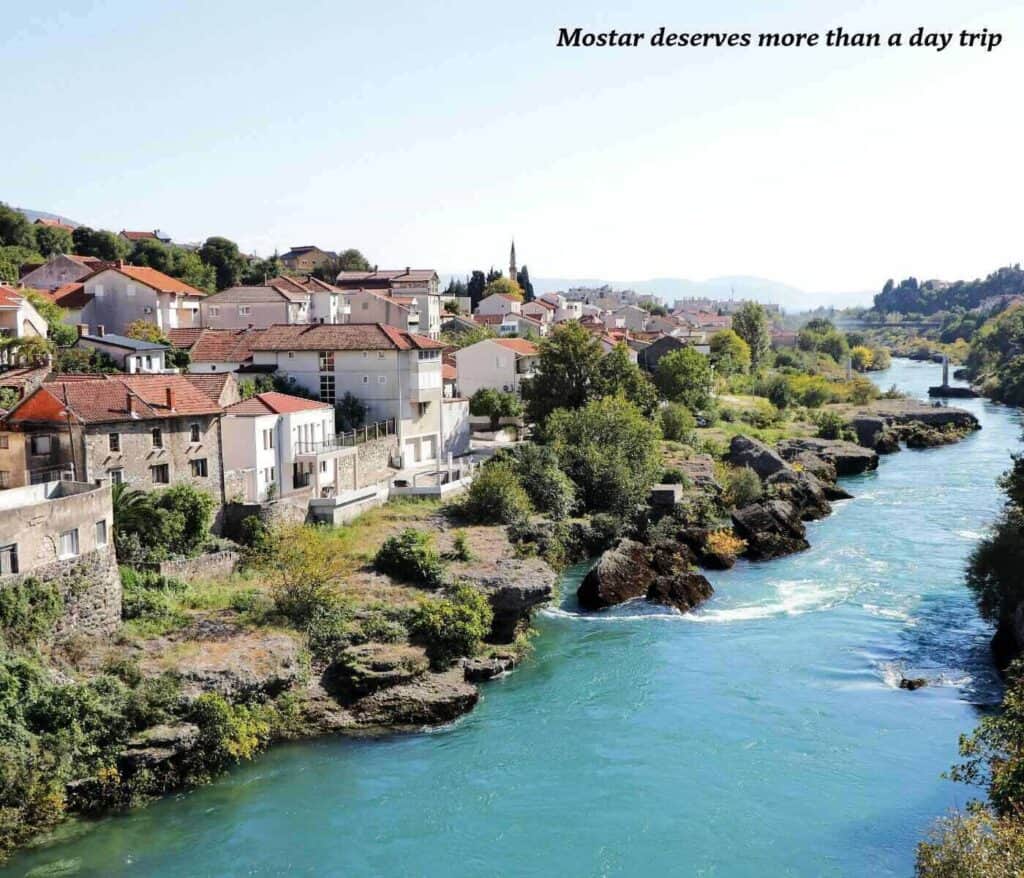
In the grand scheme of European tourism, Mostar is often considered little more than a day-trip destination from neighbouring Croatia and Montenegro, or a quick stop-off when travelling to Sarajevo. While this has undoubtedly made it one of the most visited cities in Bosnia and Herzegovina, most tourists barely scratch the surface of what Herzegovina’s enchanting capital has to offer.
Those who spend a little longer, or at least stay overnight, will be rewarded with the chance to experience the town at a slower pace, once the day-trippers have left, as well as discover the many cultural and adventure-filled excursions in the surrounding area.
From wine tourism to ziplining, Mostar makes an excellent base for exploring the wider region. It deserves more than a brief stop, and you may be surprised by just how much there is to discover. Read on to discover the very best things to do with 48 hours in this historic city.
Get the guide
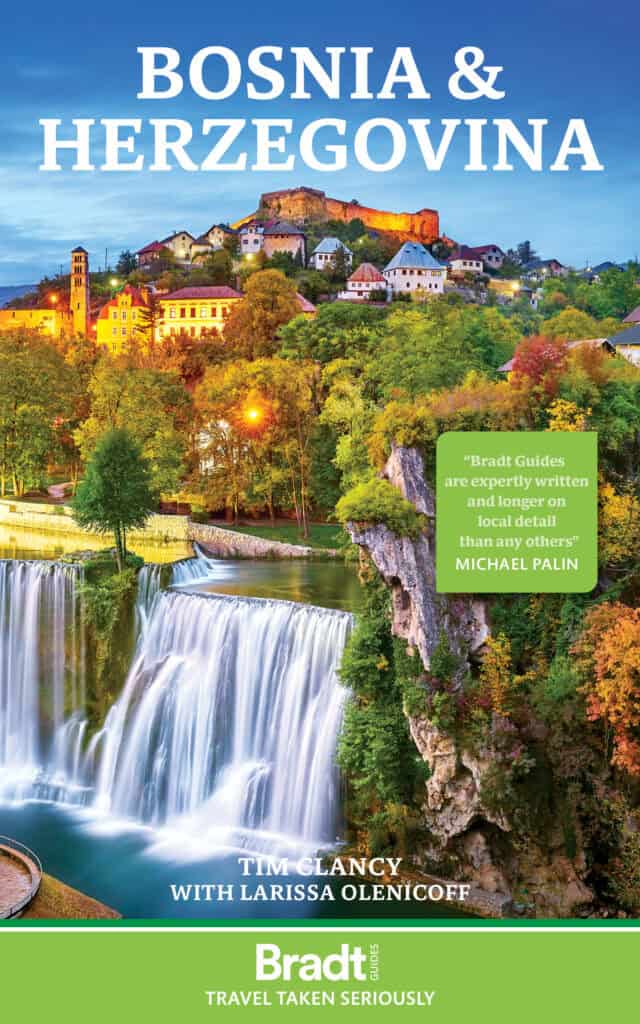
Before you delve into the article, check out the Bosnia & Herzegovina guidebook that inspired it:
Things to do in Mostar with 48 hours
Cross the Old Bridge
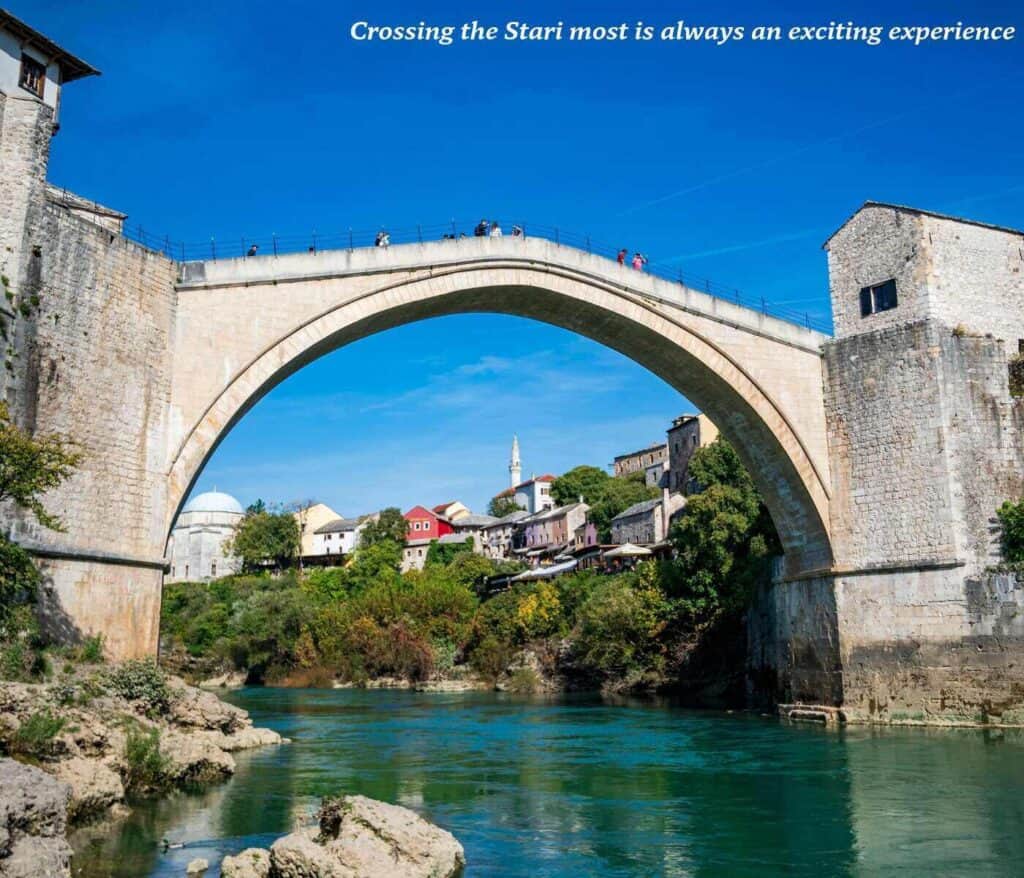
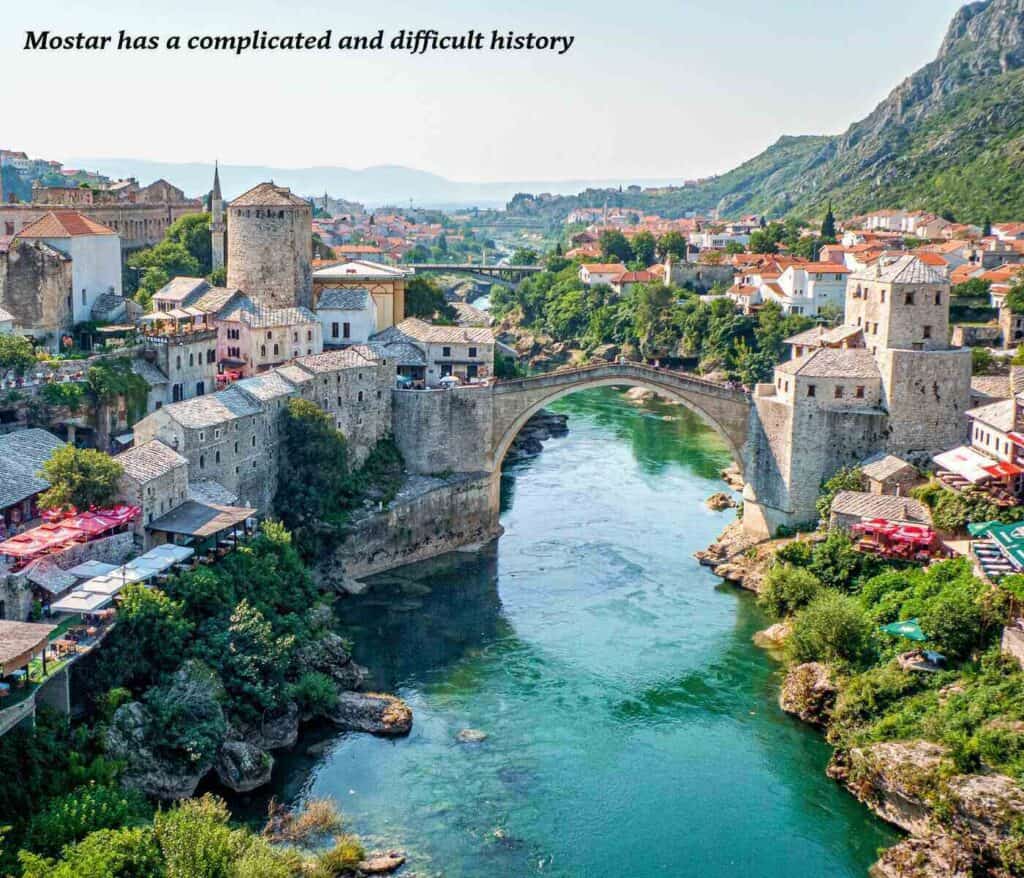
No matter how many times one crosses the Stari most (Old Bridge), it always seems like an exciting experience. This single-arch stone bridge is an exact replica of the original that stood for over 400 years, and that was designed by Hajrudin, a student of the great Ottoman architect Sinan.
Year-round, though especially during spring and summer, you can catch some of the daredevils from the Bridge Divers’ Club jumping off the bridge from a height of 24m straight into the Neretva. Locals have been doing this for over 450 years, though these days it’s less about tradition and more about the entertainment (and tips) of tourists – the divers are cheeky crowd funders and will rarely jump for less than 60–100KM. It’s quite something to witness, particularly from the beach below the bridge, and each summer two big diving competitions are held here.
For the truly brave and slightly insane, there is also the possibility to make the jump yourself for a fee of around 100KM, which includes mandatory training (and requires a lot of courage).
Our recommended Bosnia & Herzegovina operator
Independent travel in Bosnia & Herzegovina is certainly possible, but travelling with a knowledgeable local operator can make your experience even more rewarding. Experienced guides offer valuable insight into the country’s diverse landscapes, rich history and vibrant culture, while helping you discover places and experiences you might otherwise miss.
Here is one of our favourites:
Wander along Kujundžiluk
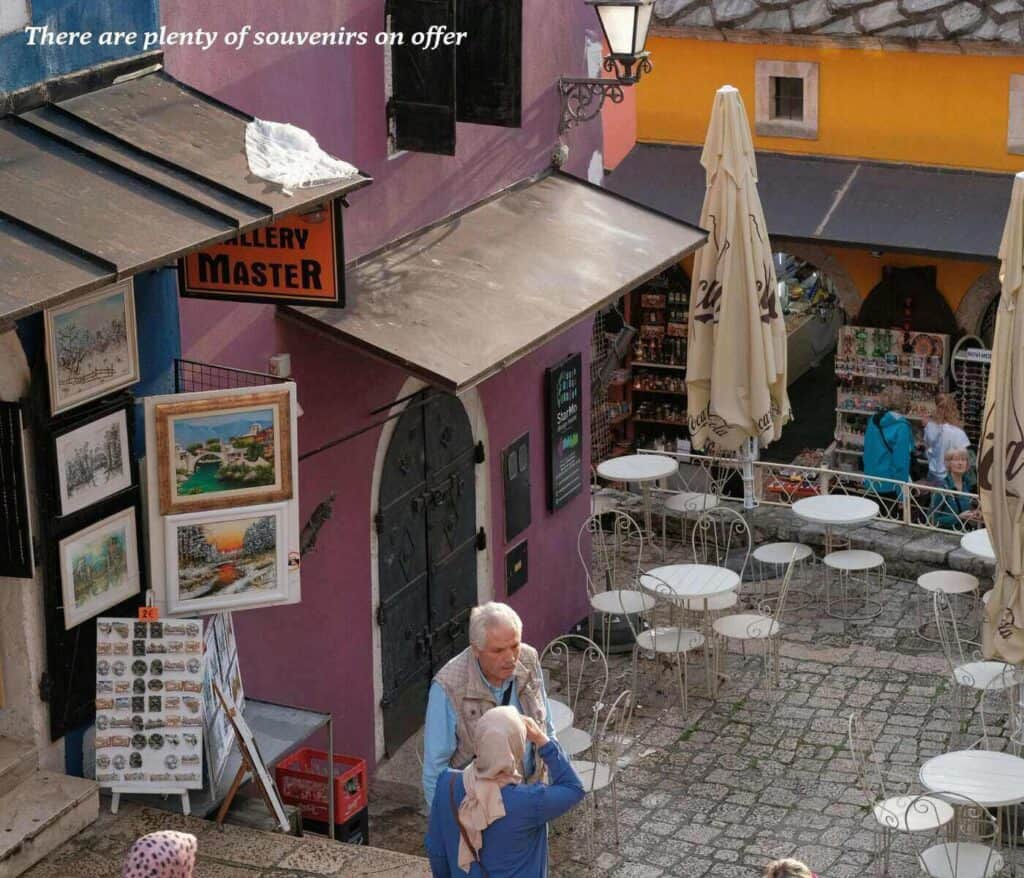
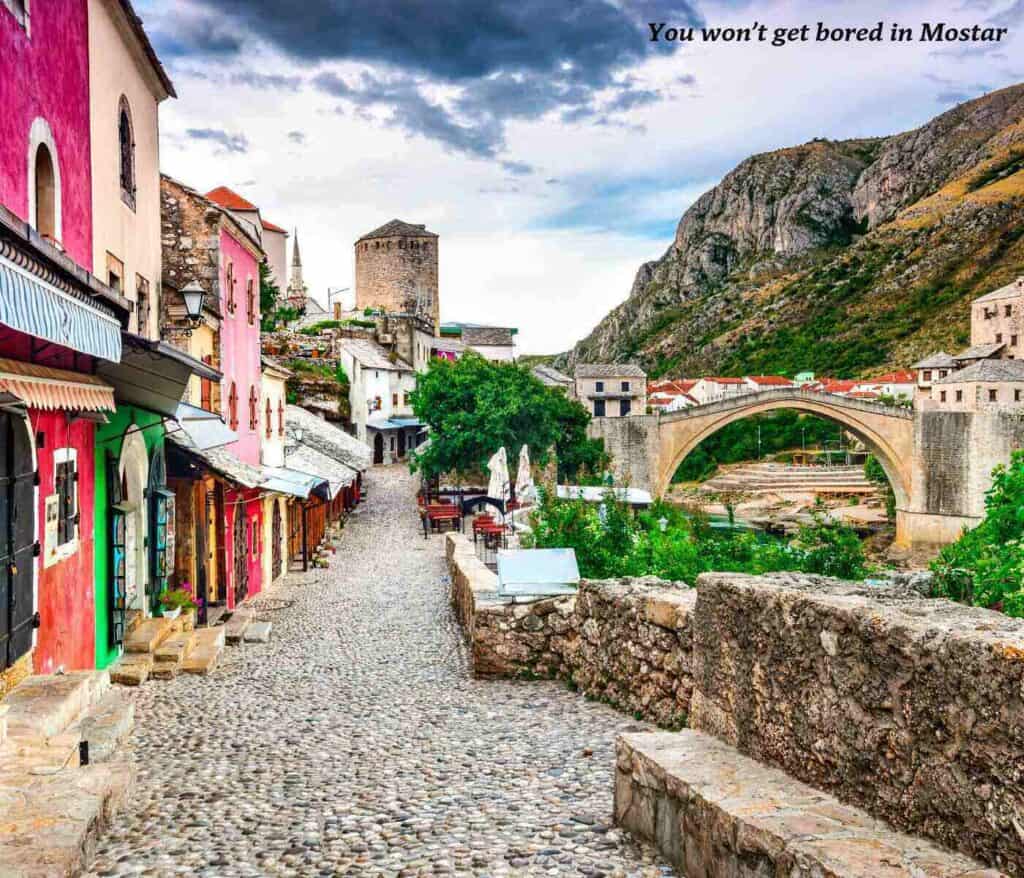
Doubling back down the stairs, you come to the ancient trading street of Kujundžiluk. This is the best place in town to find authentic paintings and copper or bronze engravings of the Stari most, pomegranates – the natural symbol of Herzegovina – or the famed stećci.
Carpet-makers, coppersmiths and antique collectors all continue to pass on the tradition of stari zanati (old crafts) from father to son. You will find craftsmen working in their shops, not just for show but as part of a traditional way of life that refuses to die in these parts. Kujundžiluk heads slightly uphill and here is the best photo opportunity to catch the awesome grace and beauty of the Stari most.
Visit the Koski Mehmed-Pasha Mosque
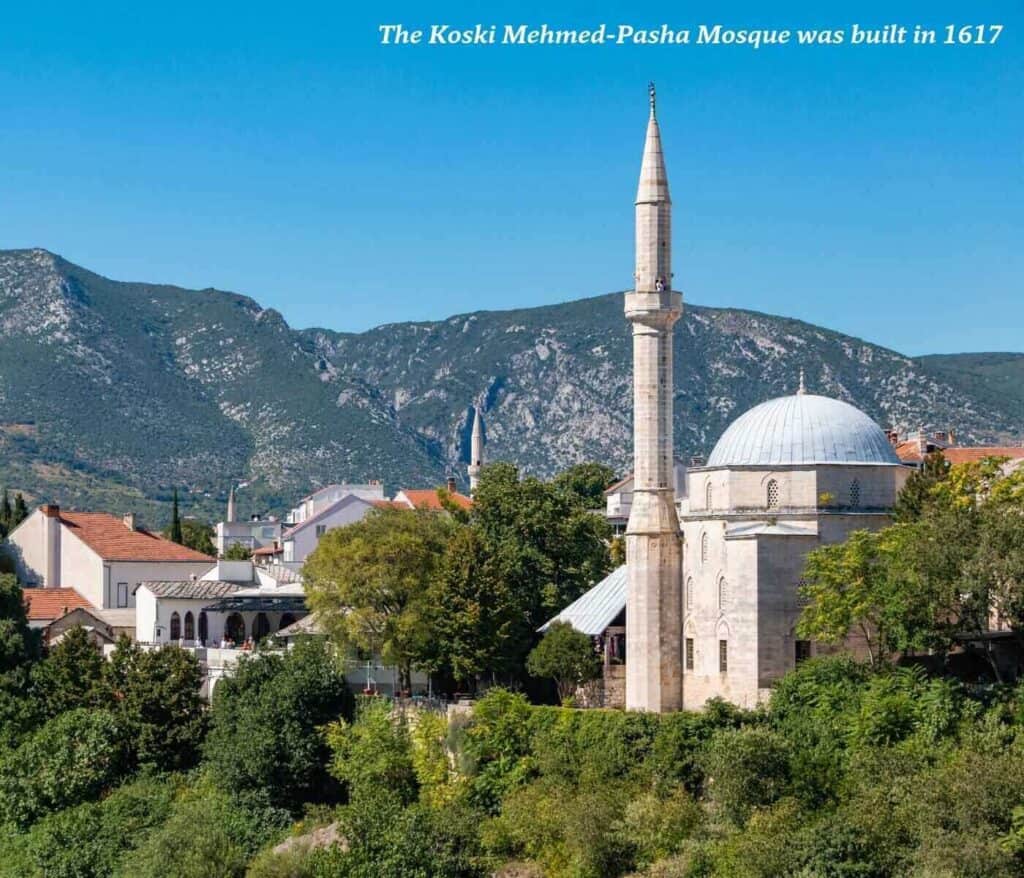
The Koski Mehmed-Pasha Mosque was built in 1617. It is open to visitors and you can climb the minaret for a small fee. Feel free to walk down to the šadrvan (fountain) and have a cool drink of water. Visitors may enter the mosque and take photos with a paid ticket. It is customary to remove one’s shoes before entering, and modest dress is required. Women are typically provided with headscarves and wraps at the entrance to cover their shoulders and knees.
The paintings inside are typical of Ottoman design, and the doors’ detailed woodwork is an Ottoman trademark. For those willing to endure the dizzying spiral to the top, the minaret is also open to the public and accessible from inside the mosque. The view speaks for itself!
Find out more on our Bosnia & Herzegovina travel information page.
Browse Tepa Market
Tepa Market has been a busy marketplace since Ottoman times. It now sells mostly fresh produce grown in Herzegovina. When in season, the figs and pomegranates can’t be beaten. Be sure to look for local honey produced in sunny villages all over Herzegovina.
Learn about the city’s wartime past
Located inside the western tower of the Old Bridge, this modest yet powerful exhibition houses a collection of black and white photos taken during the 1992–95 war by Wade Goddard. Having made it his life’s mission to cover the break-up of former Yugoslavia, this New Zealand photojournalist captured the horrors of the time and provides any visitor with a better understanding of the unthinkable destruction Mostar faced, far beyond the damage that is still visible.
For those looking for more insight into the city’s past, the Museum of War and Genocide Victims 1992-1995 is perhaps one of the most moving museums in the country. Through short documentaries, photos, testimonies, victim statements and personal items found in mass graves, one cannot help but viscerally feel the sheer horror of what actually happened and better understand the human toll that this tragic period of history took on Mostar and its surroundings.
Visit the Stari most Museum
Beyond the War Photo Exhibition and across the bridge to the left is the main entrance to the Stari most Museum, which is housed in the Tara Tower. Upstairs, there are a few exhibitions with excellent views of the bridge. The stairs to the right lead down to the underbelly of the Old Bridge and offer a fascinating peek into how the old structure was built. At the end of a labyrinth is a small viewing room with a UNESCO film by Bosnian film-maker Jasmila Žbanić about the reconstruction of the Old Bridge.
Absorb the atmosphere at Bišćevića House
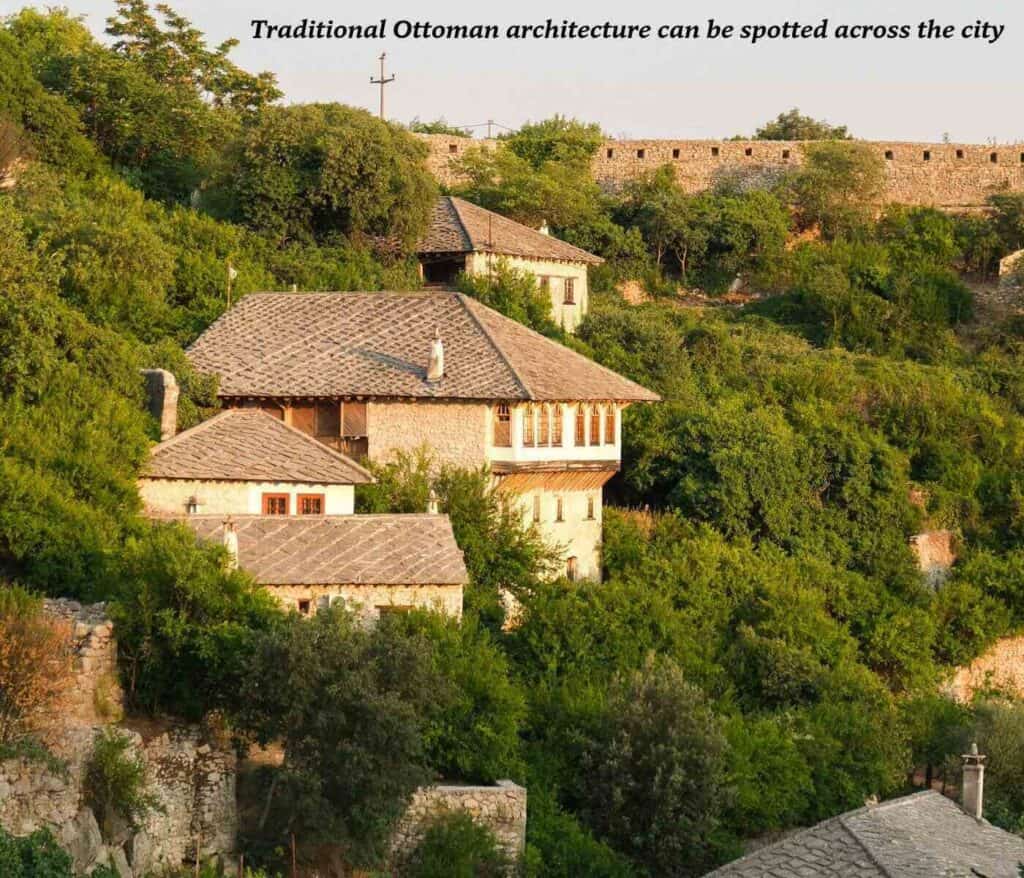
Built on a side street that leads down to the Neretva River, this 17th-century Ottoman house, partially supported by 5m-long pillars, is one of three well-preserved Ottoman homes to visit in Mostar. The home is still owned by the Bišćević family, who proudly give guided tours.
The main attraction is the large gathering room, or divanhan, which was designated for men to talk business. It is preserved in its original Ottoman style. Still privately owned by the Bišćević family, it is a staple on most group tours.
Experience Ottoman architecture at Muslibegović House
Arguably the finest example of Ottoman architecture in BiH, the Muslibegović House is one of Mostar’s premier attractions. The house itself is an exquisite model of 17th-century Ottoman architecture. The original house was built in the 16th century, but it was later expanded and upgraded. The owners have adopted the Spanish model of national-monument homes and have opened the house as a boutique bed and breakfast.
The museum visit is a 20-minute tour of the middle part of the house (the other parts house guests) that includes interesting historical facts and anecdotes. The true experience, however, is to spend the night and live like a beg (nobleman) for an evening.
Admire Mostar’s religious buildings
The old Catholic church of Saint Peter and Paul, which was renovated in 2000 and saw the addition of a Franciscan monastery, is nearly impossible to miss. Originally built in the second half of the 19th century during Ottoman times, the church was heavily damaged in the most recent war. Its library contains over 50,000 ancient volumes from both the Western and Eastern worlds, the largest collection of its kind in all of Herzegovina.
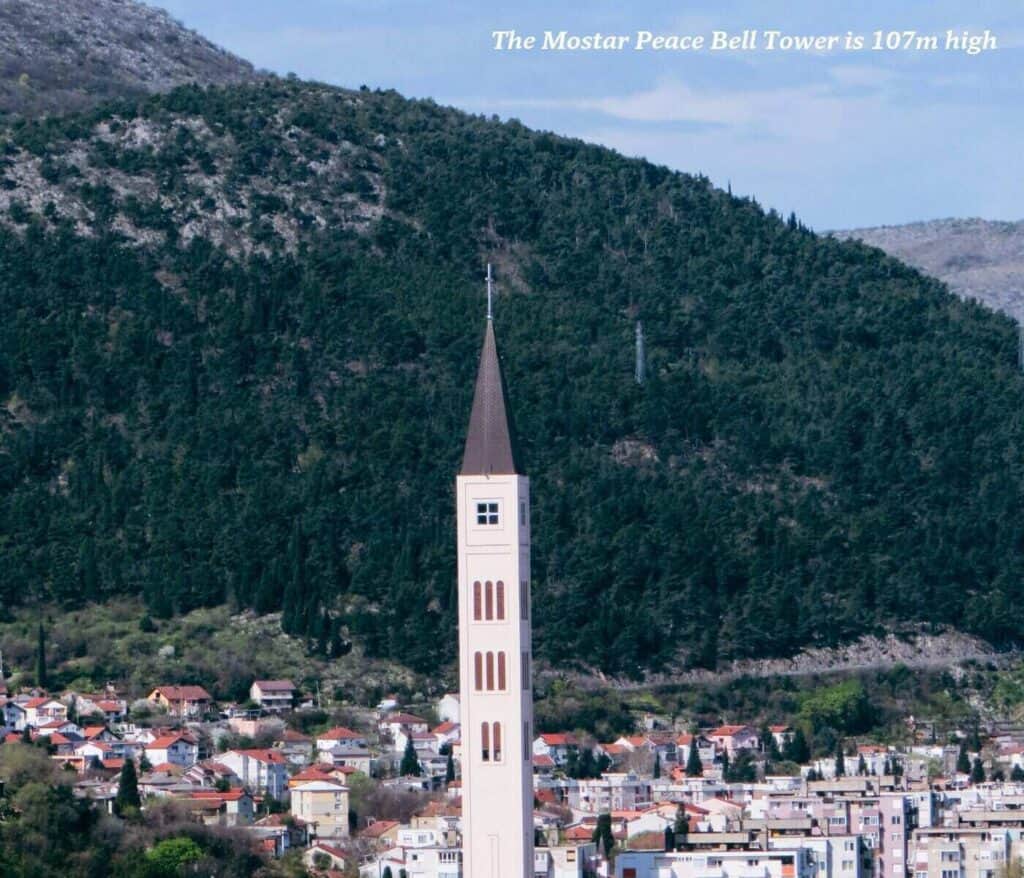
The adjacent Mostar Peace Bell Tower dominates the skyline at approximately 107m high. For 10-15KM you can visit the top observation deck, which is reached by climbing a few hundred steps or taking a short ride in a lift. The view of Mostar is probably one of the best you will find.
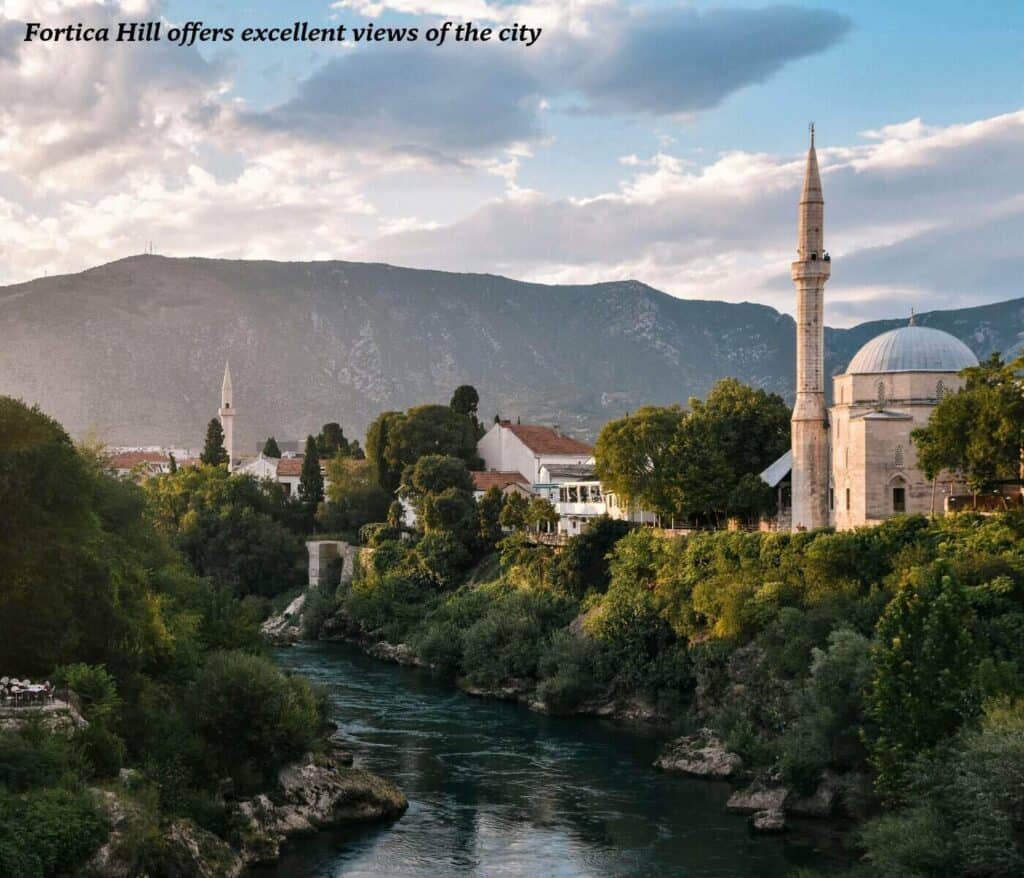
Head to Fortica Adventure Park for panoramic views
For those seeking an adrenaline rush, the Fortica Adventure Park on Fortica Hill overlooking Mostar is a major highlight. Aside from an incredible panorama over the town and a former Italian bunker-turned mountain lodge that serves traditional refreshments, the park boasts the longest zipline in the country (570m) and a 15m-long glass-bottomed Skywalk.
Launched and run by the MTBA mountain bike association, it also has marked climbing and cycling routes and a swing over the ravine. Discover more outdoor activities in Bosnia & Herzegovina here.
Day trips from Mostar
If you have some additional time to spare, Mostar is well-located as a base for several day trips around the Herzegovina region.
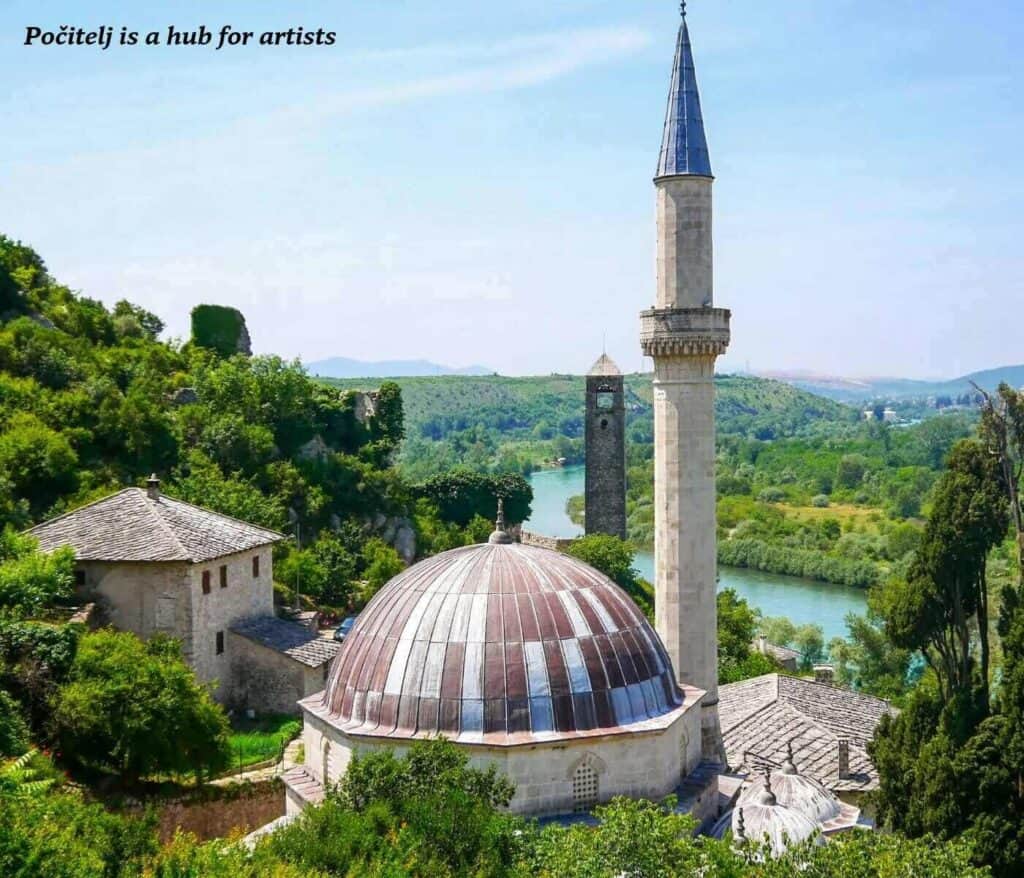
Počitelj
A great half-day trip on your way to the coast or to Hutovo Blato, this quaint Ottoman-style town is located about a half-hour drive from Mostar, less than 30km south on the M17 road towards the Adriatic. The skyline is now dominated by the massive Herzegovina Bridge (also known as the Počitelj Bridge), a 945m-long engineering marvel on the A1 motorway that towers 100m above the Neretva River. This unique settlement was heavily damaged during the war but its reconstruction has returned the town to its former glory, and it has been listed as a tentative UNESCO World Heritage Site for quite a while.
Besides its stunning Ottoman architecture and Ottoman feel, it also hosted the longest-operating art colony in southeast Europe, which reopened in 2003 after years of inactivity due to the war. Artists from around the world continue to gather here to paint the likes of the shiny red pomegranates and figs that grow in abundance on the hills of Počitelj.
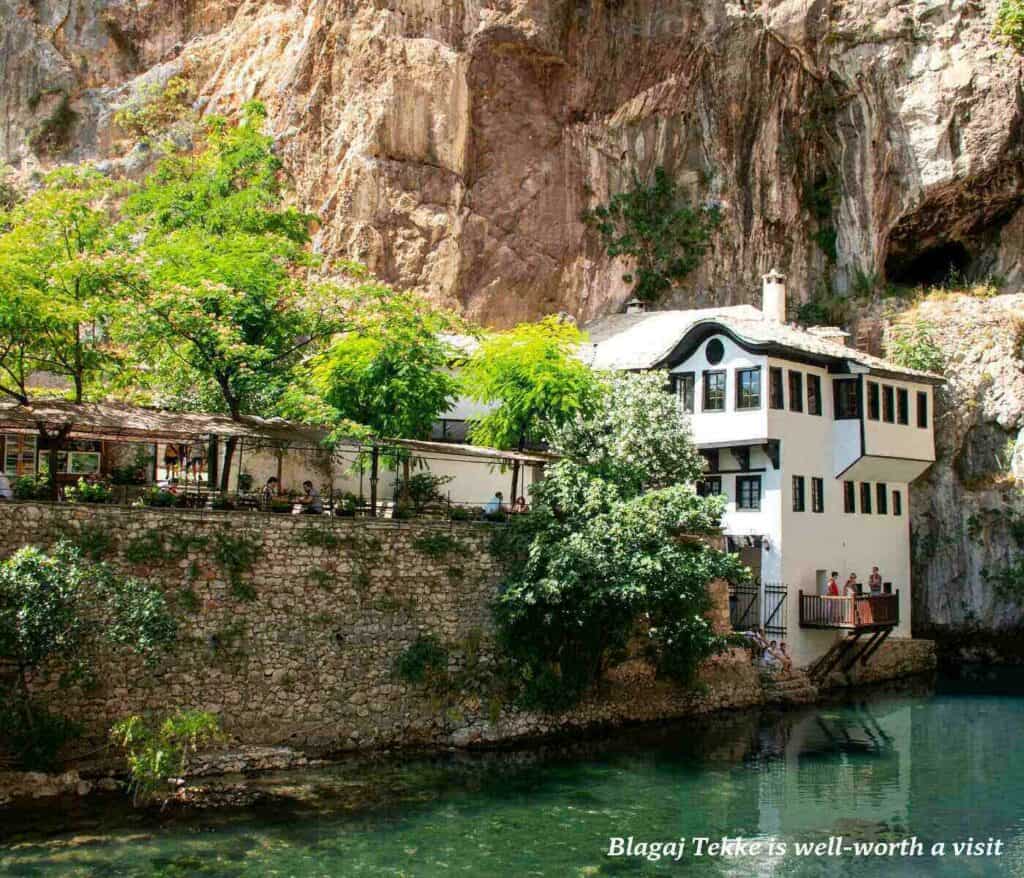
Blagaj/Buna Spring
Vrelo Buna (Buna Spring) is the source of the Buna River near the town of Blagaj, less than 20 minutes south of Mostar. Both the spring and Blagaj itself are worth visiting, whether for a full-day trip or a long lunch at one of the riverside trout restaurants.
This natural and cultural oasis is still one of the country’s most photographed spots, and ancient human remains found in a nearby cave date back 12,000 years, attesting to the fact that the Buna and its iconic spring have long protected human settlements.
Podveležje
Among the rich tourist destinations of Herzegovina this is one of the least-known gems. Resting between the towering peaks of Velež and the city of Mostar, the Podveležje Plateau has been home to highland shepherds and a traditional way of life for centuries. The landscape is now also home to a major wind farm, introducing modern renewable energy into the harsh arid karst, dotted with small forests of beech and oak trees. Podveležje has even more sunny days than Mostar. Situated at 700m above sea level, it makes a pleasant escape during hot weather.
The small village of Smajkići is an ideal base for walking, mountain biking, medicinal herb picking, and challenging treks to Velež’s highest peak at 1,980m. Here one can witness many of the old methods of traditional life, including sheep-shearing; milk, cheese and butter production; honey making; meat drying and wool sewing. It is a modest and undeveloped place, but quiet and far from the crowds of tourists in Mostar. There are miles of asphalted roads across the plateau with almost no traffic.
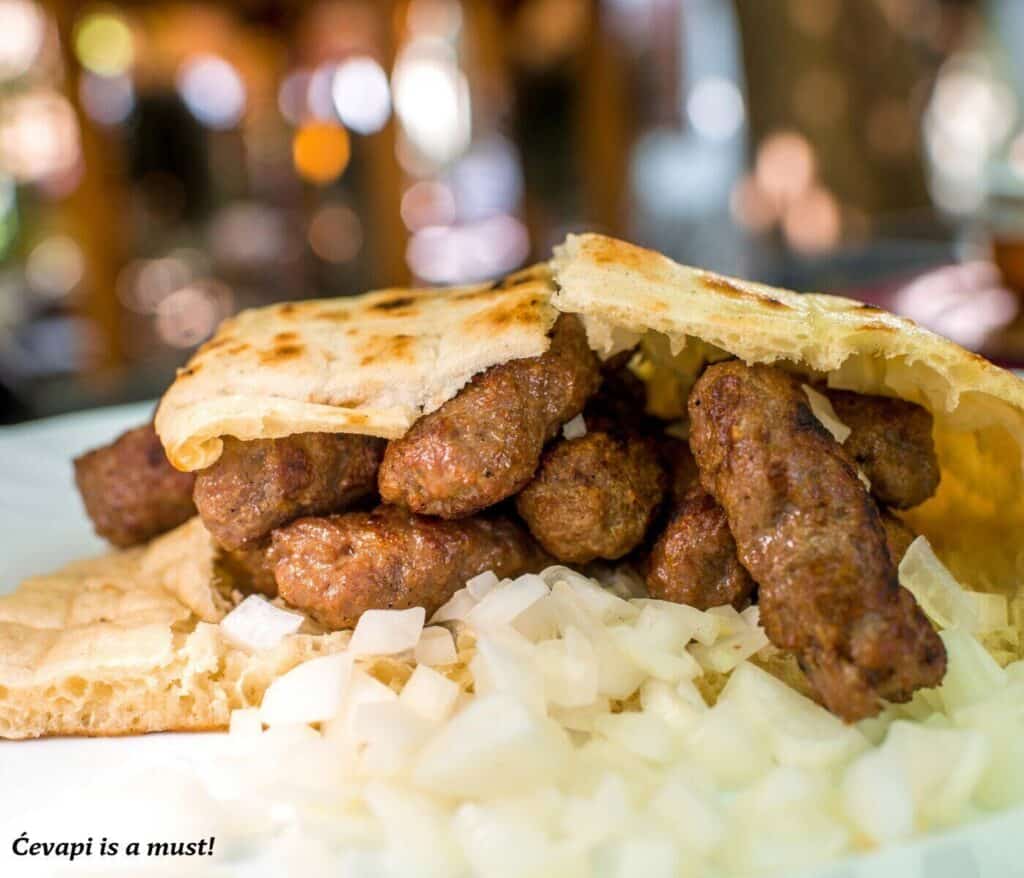
Food and drink in Mostar
Mostar has long been known for its good local food, though its popularity with visitors means the old town now also has its share of restaurants aimed mainly at passing trade. Café culture is as strong here as anywhere in Bosnia and Herzegovina, and most restaurants are happy to serve only coffee or a cold drink. Ask for a menu, however, and the traditional dishes and generally fair prices may persuade you to stay.
Traditional Herzegovinian menus lean heavily on mountain cheeses, grilled meats and slow-cooked dishes, while Dalmatian influences, especially sea fish, have long had a place in this inland Mediterranean city. Herzegovina’s long winemaking tradition means local bottles can be very good value, particularly the whites made from Žilavka and reds from Blatina or Vranac.
Don’t miss Restaurant Mimar for its traditional Bosnian cuisine with a modern twist and atmospheric setting near the Old Bridge, or Romanca for relaxed dining among the vineyards, with excellent food and a good selection of local wines.
Where to stay in Mostar
For its relatively small size, Mostar has a fair number of hotels and a growing quantity of guesthouses, apartments and hostels. The standards tend to be pretty good, and there is now at least one genuine 5-star option in town. It is an increasingly popular tourist destination, especially from late spring to early autumn, and in peak months the crowds can swell to the point where the main pedestrian streets can get clogged with foot traffic, so central old-town places often need to be booked well in advance.
Most hotels have rooms with private facilities, a bar, restaurant, reserved parking, and accept credit cards. Private guesthouses or apartments, hostels and camping sites are more variable, so it’s good to check payment terms and parking arrangements beforehand. In Mostar, prices for hotels are still reasonable by regional standards. High season and event weekends bring the highest rates, while shoulder season usually offers much better value.
Our guide to Bosnia & Herzegovina
For more information, see Tim Clancy’s guide to Bosnia & Herzegovina: