
The expert guide to things to do in Seville
Looking for the best things to do in Seville? Spain’s enchanting Andalucian capital offers a captivating mix of history, culture, architecture and cuisine.
Whether you’re wandering through centuries-old palaces, watching passionate flamenco performances, or sampling traditional tapas in lively plazas, Seville promises unforgettable experiences at every turn.
Things to do in Seville: an introduction
The capital of Andalucía was accurately described in the 16th century as having ‘the smell of a city and of something undefinable, of another greatness’.
While the fortunes of this one-time mercantile powerhouse have waxed and waned, its allure has not; even within Spain its name is spoken like a mantra, a word laden with sensuality and promise.
Delving beyond the famous icons – the horse carriages, the oranges, the flamenco, the haunting Semana Santa celebrations – you find a place where being seen is nothing unless you’re seen to be having fun, a place where the ghosts of Spain walk the streets, be they fictional, like Don Juan or Carmen, or historical, like Cervantes, Columbus, Caesar or Joselito.
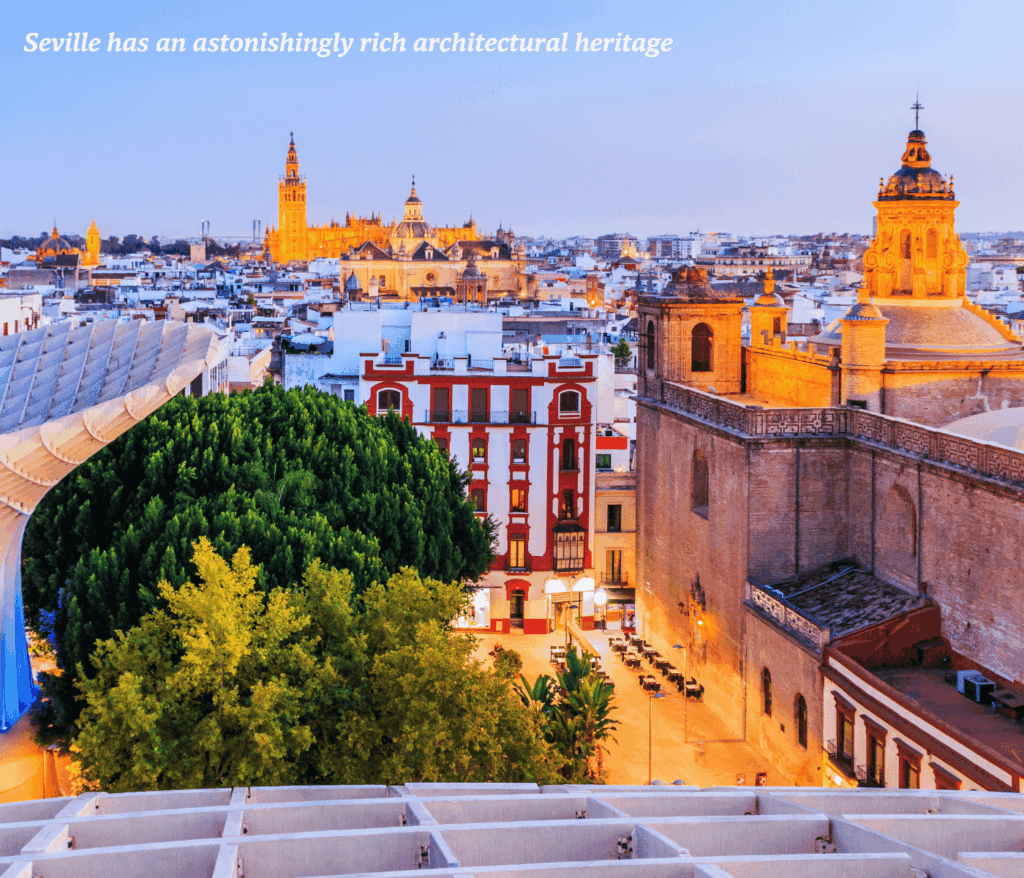
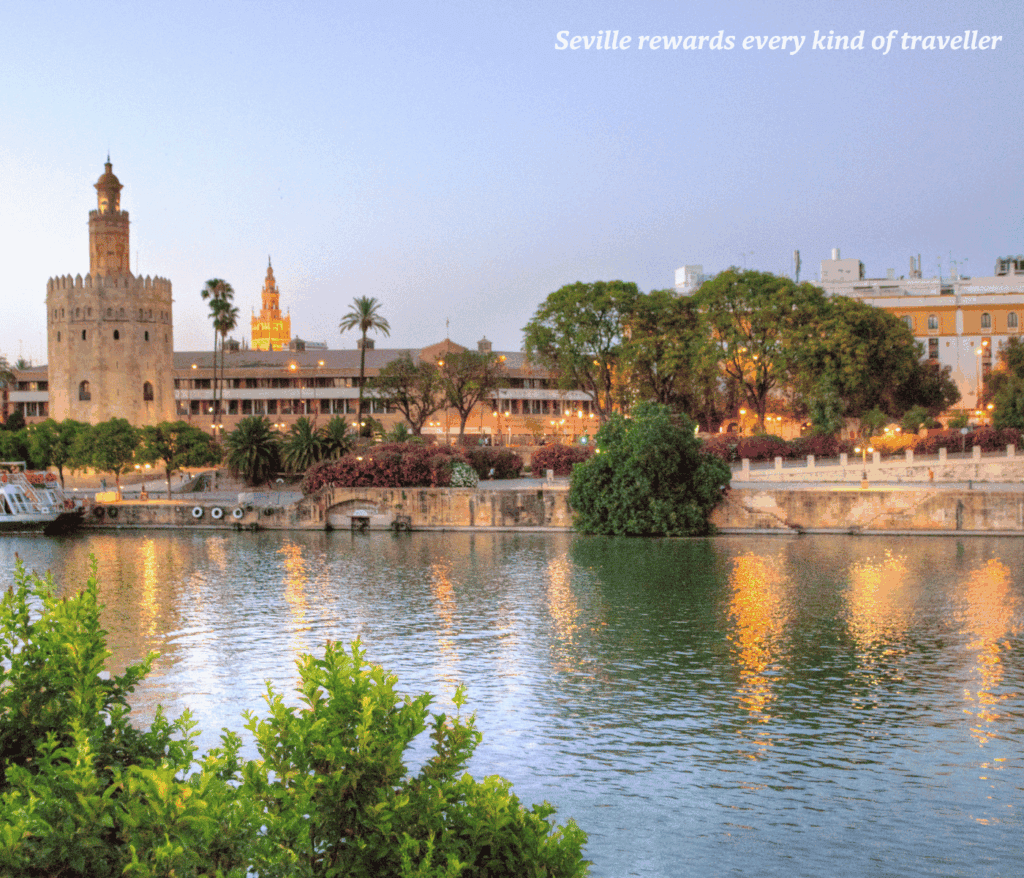
Seville has an astonishingly rich architectural heritage within its enormous old town, still girt by sections of what was once Europe’s longest city wall. The bristling Moorish tower of the Torre del Oro, the Baroque magnificence of numerous churches, the gigantic Gothic cathedral and the mudéjar splendours of the Alcázar: these and much more are ample reason to spend plenty of time in Seville – you could spend weeks here and not get to see all the sights.
But the supreme joy of the city is its tapas. They claim to have invented them here, and they are unbeatable; you’ll surely find that your most pleasurable moments in this hot, hedonistic city come with glass and fork in hand.
Whether you’re visiting for a weekend break or a longer Andalucian adventure, allow us to share the best things to do in Seville to experience the city at its most captivating.
Get our guide to Seville
Before you dive into the article, check out the Seville travel guide that inspired it:
The best things to do in Seville
Visit the Cathedral
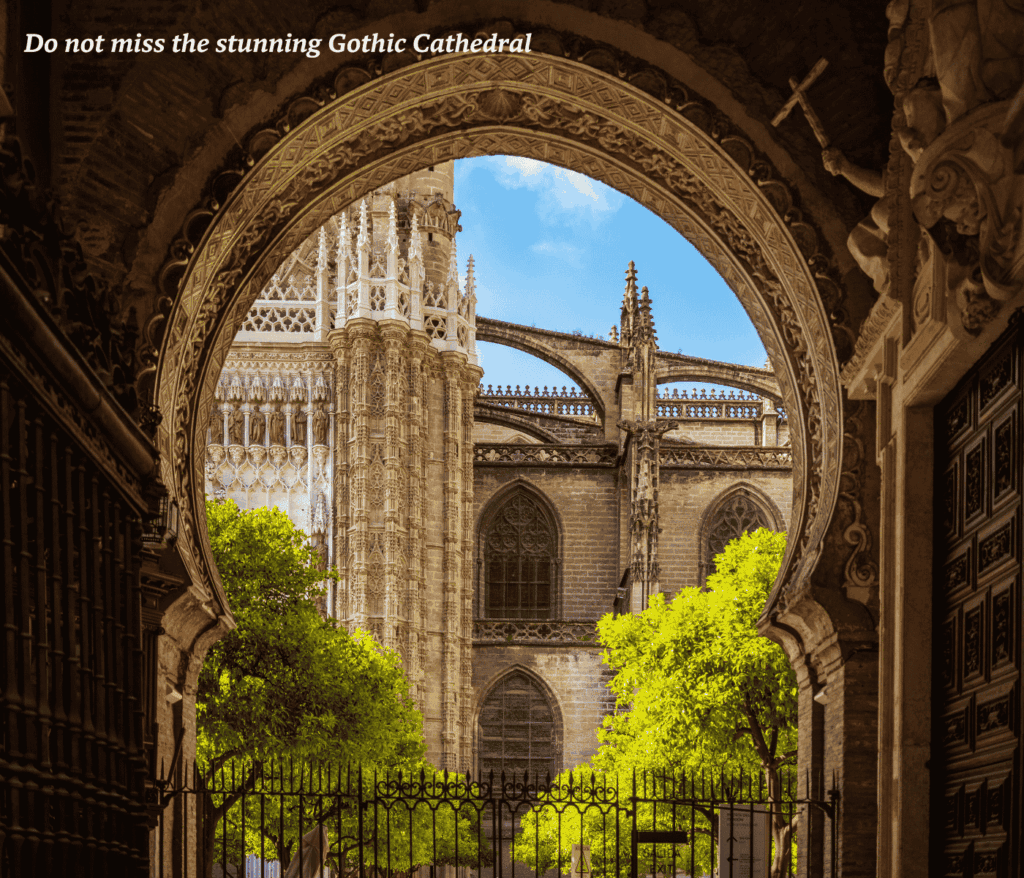
Seville’s cathedral is a marvellous Gothic edifice on a monumental scale that imposes by its sheer bulk.
Its numerous side chapels are a wonderful repository of art, while its Moorish-Renaissance tower, the Giralda, and the weather vane atop it are famous city landmarks.
When approaching the cathedral, try to start from Plaza de San Francisco, behind the Ayuntamiento. Taking Calle Hernando Colón, another Moorish feature will soon become apparent – the Puerta del Perdón gateway, with fine stucco decoration and a dog-toothed horseshoe arch. Turning left and walking around the whole structure will let you appreciate the Giralda and the many fine 15th-century Gothic doorways in all their glory.
It’s impossible to list here all the works of artistic merit contained within the huge five-naved space. Entering through Puerta de San Cristóbal, the first chamber is a small museum with several excellent pieces including a head of the Baptist by Juan de Mesa; a Roldán Joseph and Child; a San Fernando by Murillo; and a Zurbarán depicting the Baptist in the desert.
Explore Real Alcázar
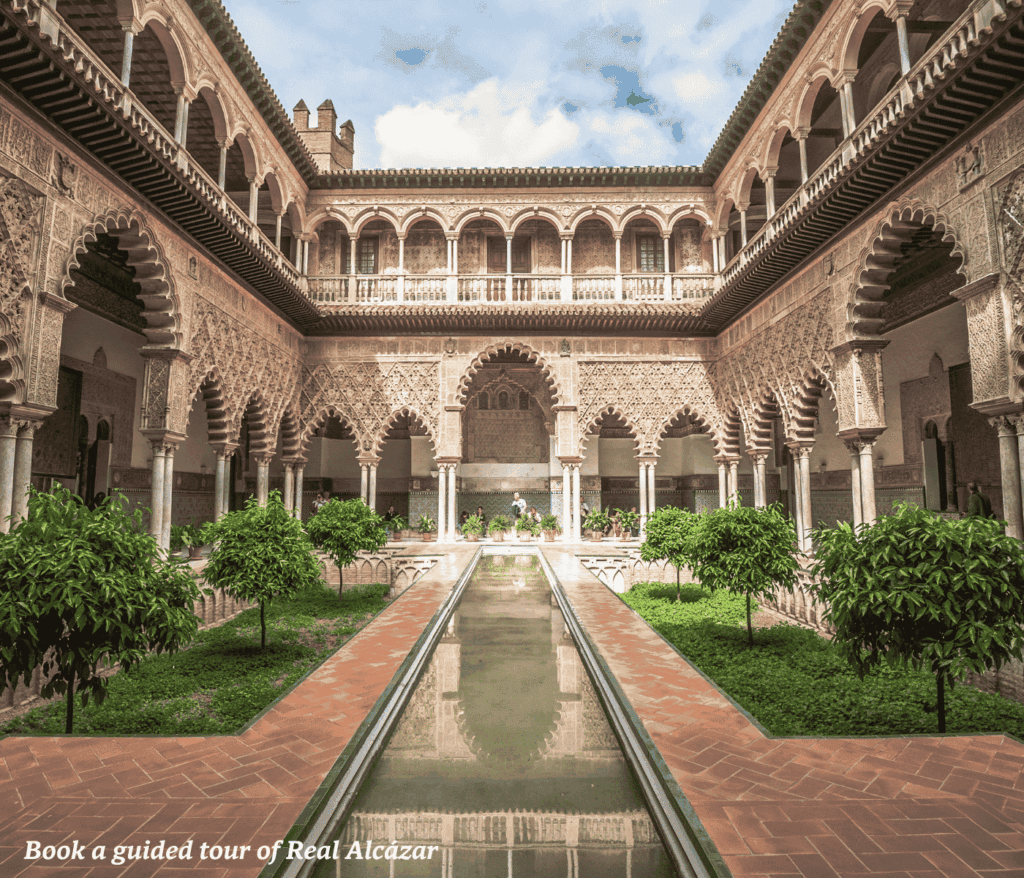
Built mostly after the Reconquest in Gothic, Mudejar and Renaissance styles, Real Alcázar is a handsome palace and a fortress of the kings of Castile that boasts a series of chambers featuring beautifully detailed stucco work, calligraphy and arches, and a sumptuous walled garden.
Pass through the chunky walls in the dramatic red Puerta del León entrance gate, named for the tiled king of beasts guarding it, and you’ll emerge on to a large courtyard dominated by the impressive façade of the main palace of the Castillian kings. Before heading into this, investigate the Patio del Yeso to the left, one of the few remaining Moorish structures, where lobed arches face horseshoe ones across a pool surrounded by myrtle hedges.
Opposite, across the courtyard, are chambers built by Fernando and Isabel to control New World affairs. From this main courtyard, you access tours of the upper floor (Cuarto Alto) of the palace, still sometimes used when Spanish royals are in town. A series of elaborately furnished chambers are visited on the guided tour which you can prebook online for €5.
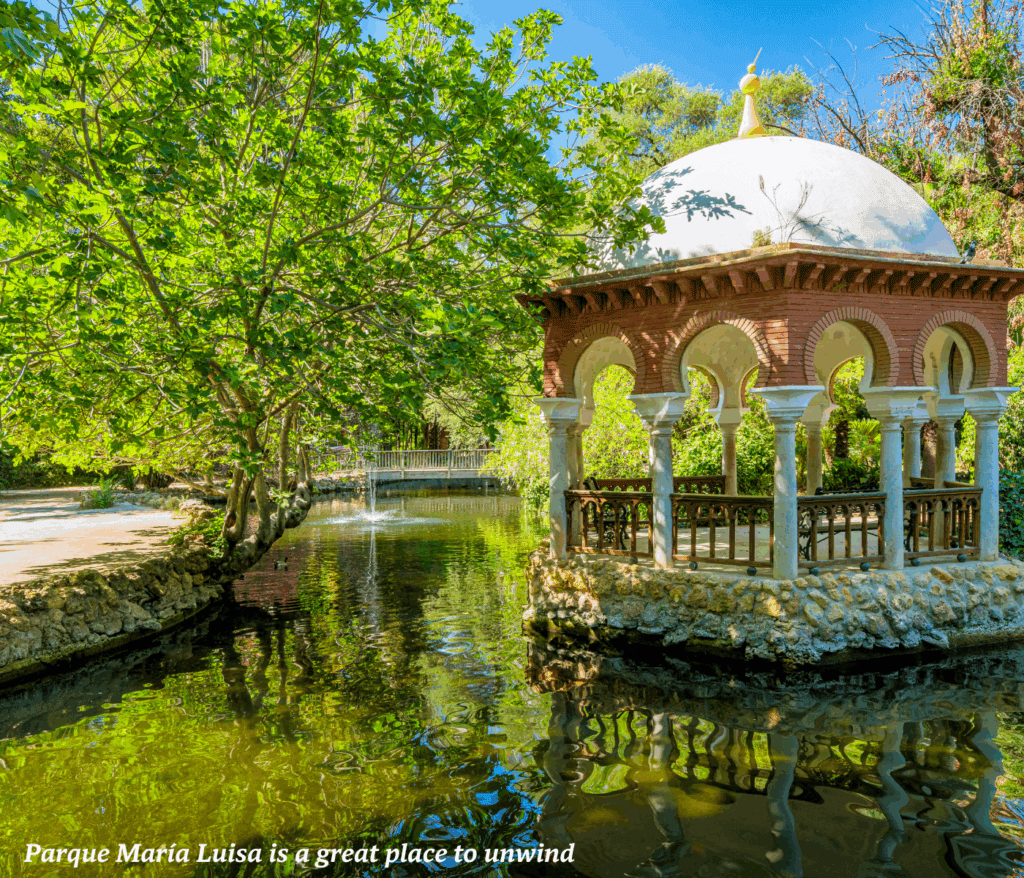
Soak up the atmosphere at Parque María Luisa
This beautiful and peaceful space is Seville’s best park.
It’s full of quiet corners, even on busy days, and a series of informative plaques detail the huge range of exotic trees and plants on show.
Around the park are dotted various buildings erected for the Ibero-American Exhibition held here in 1929.The most grandiose of these is the Plaza de España, envisaged as a second Giralda, a symbol of a new, dynamic Seville. The semicircular area is backed by a massive brick and marble building that curves around to two proud towers. A small canal used for leisurely rowing is crossed by four bridges.
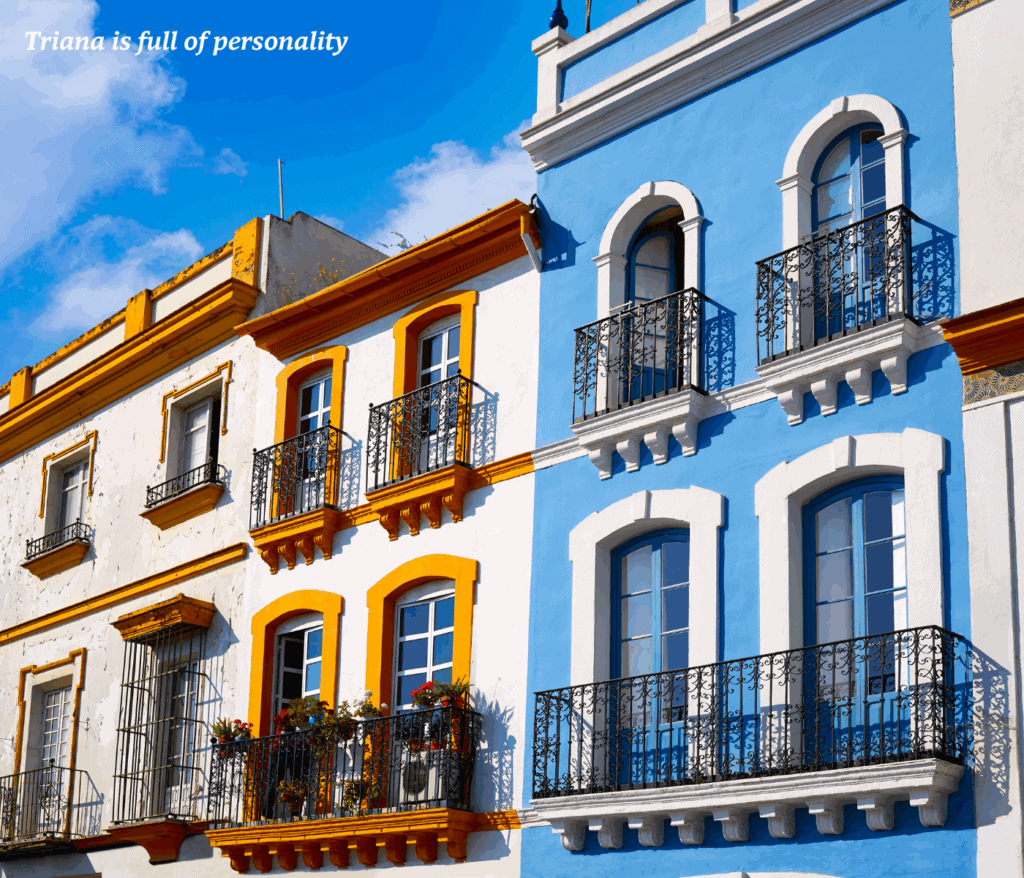
Get off the tourist trail in Triana and La Macarena
These working-class barrios are imbued with the true essence and character of Seville, and make fantastic places for a stroll.
Many visitors find that Triana becomes their favourite part of Seville. It’s redolent with history from every epoch of the Christian city as well as having a picturesque riverfront lined with terraced bars and restaurants. It was for a long time the gypsy barrio and as such the home of flamenco in Seville. Although most of the gypsies were moved on in the 1950s, its backstreet bars are still the best place to catch impromptu performances.
Triana is also famous for ceramics; most of the azulejo tiles that decorate Seville’s houses so beautifully come from here, and there are still some workshops in the area.
The large barrio of La Macarena, once one of the poorest slums in the peninsula, is an enticing web of narrow streets and numerous churches and chapels, occupying the northern portion of the old town. One church is home to Seville’s best-loved Virgin, La Esperanza de la Macarena (known as La Macarena). She gives her name to many of Seville’s women, one of whom was the subject of the bestselling Latin hit of all time, by the ageing duo Los del Río.
Still a working-class zone, La Macarena is home to much of Seville’s alternative culture. It’s still demarcated by a long section of the city wall, the best-preserved chunk of what was once one of Europe’s mightiest bastions.
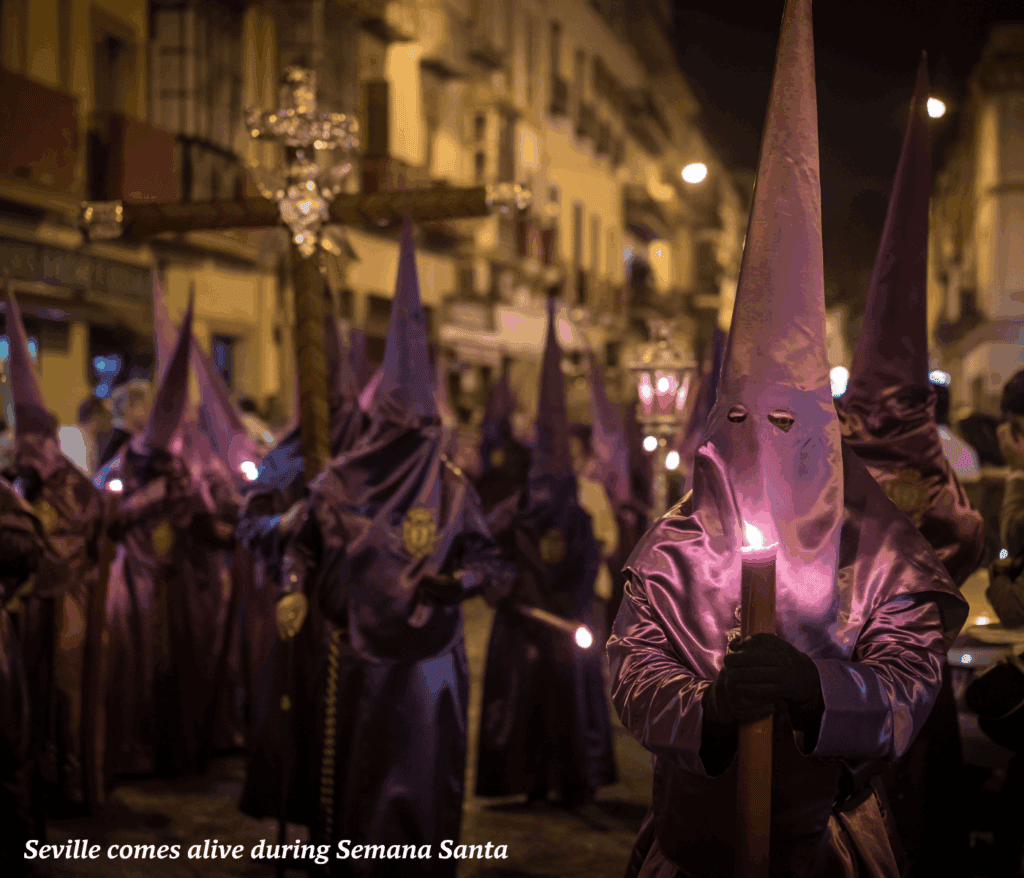
Attend Semana Santa
Seville’s Holy Week processions are an unforgettable sight. Mesmeric candlelit lines of hooded figures and cross-carrying penitents make their way through the streets accompanied by the mournful notes of a brass band and two large pasos, one with a scene from the Passion, one with a statue of Mary.
These scenes aren’t unusual in Spain but what makes it so special is the sevillanos’ extraordinary respect and interest for the event and devotion to the sculptures. The Semana Santa processions originated in medieval times, becoming firmly established in the 16th century. The brotherhoods wanted to demonstrate their faith with a display of penitence, while the eerily lifelike wooden effigies by master sculptors were designed to engage the public and teach them about the final days of Christ’s life, and his death and subsequent resurrection.
Today, members of 60 cofradías (brotherhoods) practise intensively for their big moment, when they leave their church and walk through the streets to the carrera oficial.
If you’re in Seville for the week, you’ll see plenty of processions. Just pick a few each day, and then go at it hard on the Thursday night. The busiest places are near the cofradía’s own church and the cathedral.
Your best bet for a good view, if you’d prefer to avoid the crowded streets (good-natured, but fairly intense) is to either book a hotel or apartment near, or to book a balcony online, often with snacks and drinks provided. You can always pop downstairs and venture into the streets to take in the charged atmosphere, then nip back up to enjoy your vantage point.
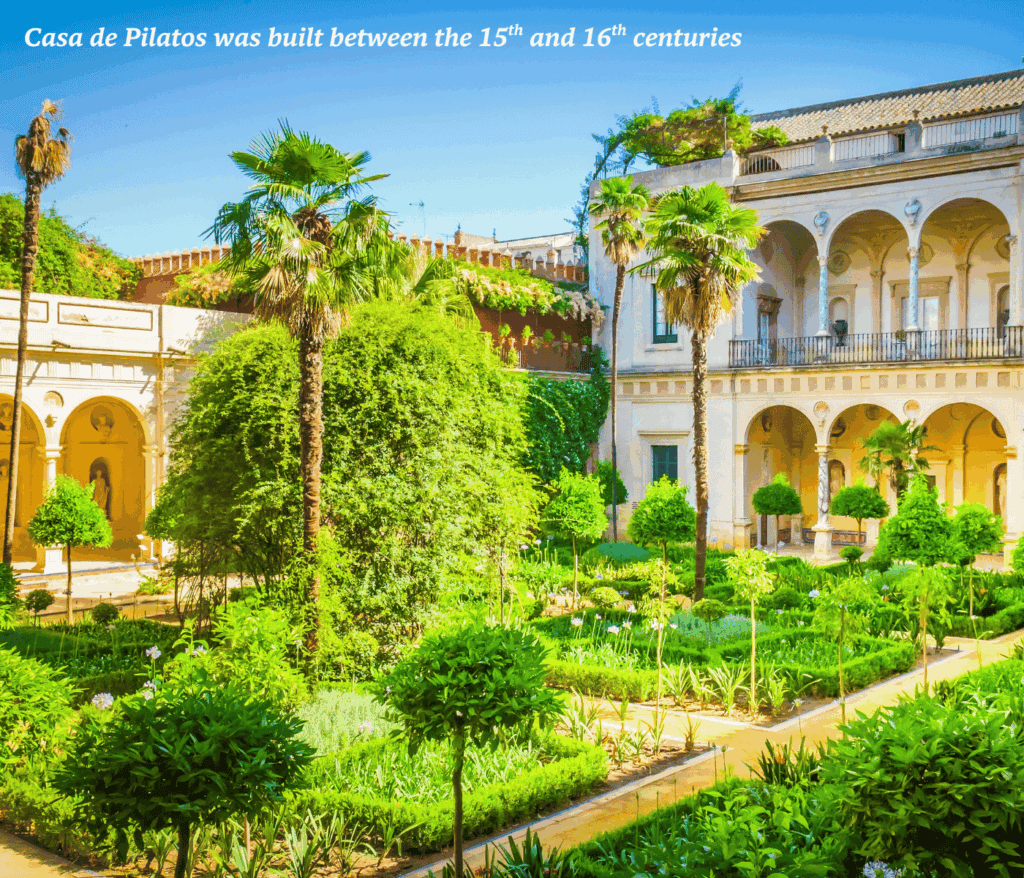
Brush up on your architectural knowledge at Casa de Pilatos
The stunning Casa de Pilatos is still partly inhabited by members of the family of the Dukes of Medinaceli, who built most of it in the late 15th to early 16th centuries.
It owes its name to the story that the Duke, on a pilgrimage to Jerusalem, was so struck by the former residence of the Roman governors that he decided to model his own house on it. The profusion of classical sculpture decorating the courtyards and gardens, some of it original, certainly gives the house a Roman air, but the architecture is principally an attractive blend of Renaissance classicism and mudéjar styles.
The highlight of the visit is the central courtyard, reached from the entrance by passing under a thriving purple cascade of bougainvillea. It’s a stunning combination of azulejos and stucco work; the Italianate central fountain is overseen by statues, including an excellent Athena Promachos.
On the walls are mounted a series of Roman portrait heads, obtained by the dukes from Italy. The gardens are beautiful and peaceful; one even has a small grotto with tinkling water.
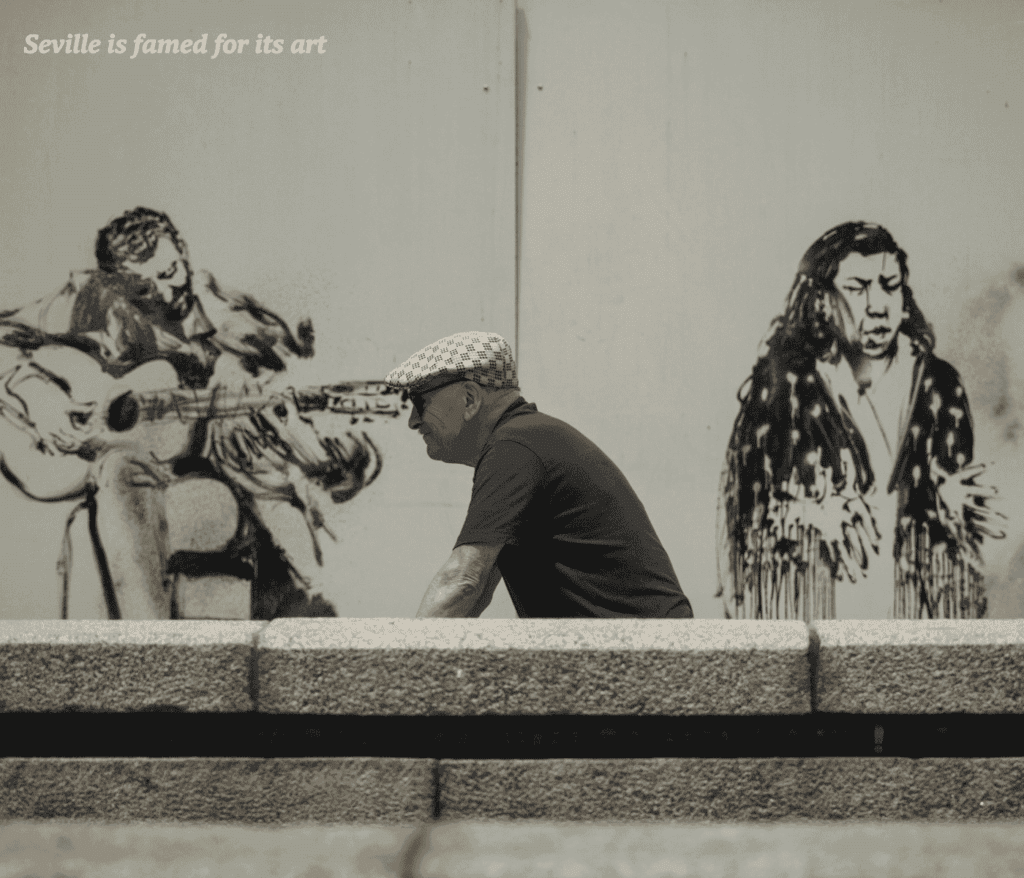
Spend a morning at Museo de Bellas Artes
The Museo de Bellas Artes has a wonderful collection of Spanish paintings in a characterful former monastery. Local boy Velázquez is represented, but the gallery is particularly notable for its brilliant works by the giants of Seville’s Golden Age of art: Zurbarán and Murillo.
The collection is thoughtfully laid out and thankfully uncluttered. Early pieces include a fine work from the monastery of San Agustín by Martín de Vos showing the awakening dead being sorted by angels and demons. In the same room there’s also an El Greco – a good portrait of his own son.
The 19th- and 20th-century rooms have works by Sevillian proto-Impressionist Gonzalo Bilbao as well as a portrait of the haunted Romantic poet Gustavo AdolfonBécquer, famously and sensitively portrayed by his brother Valeriano, while two good portraits by the Basque painter Ignacio Zuloaga and a fiesta scene by Gustavo Bacarisas round off the superb collection.
Wander the ruins of Itálica
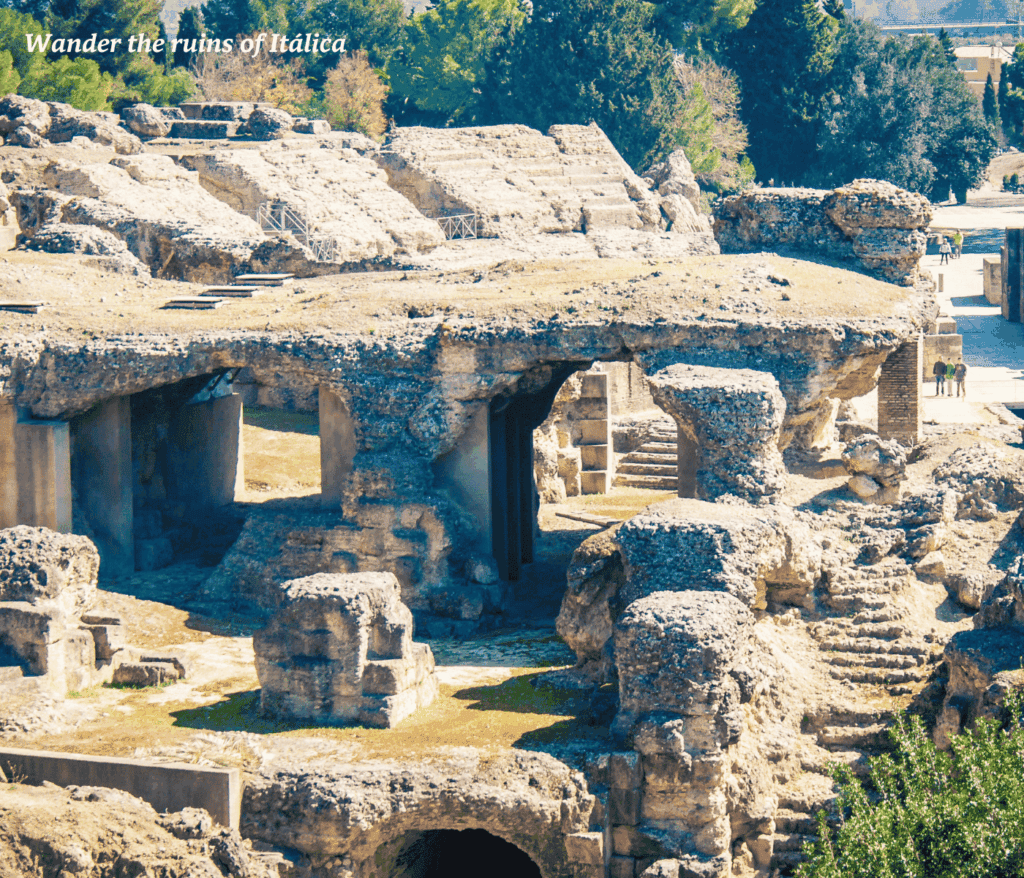
It’s hard to believe, wandering around the ruins of Itálica, that this was once one of the Roman Empire’s largest and most influential cities. In truth, little of it has been excavated; what you can walk around today is the partially revealed remains of the nova urbs (new town; a relative term these days) built by Hadrian in the early second century AD, while the vetus urbs (old town) lies under the village of Santiponce.
Your visit starts in the small visitor centre near the entrance, with a brief, context-setting film about Hadrian. The famous wall builder pimped up the city, adding lavish public baths, expanding the theatre and amphitheatre, and holding grand processions to honour the gods. Outside, head right for the main attraction: the huge amphitheatre which seated 25,000. Although much of the seating has been removed over the years, the terraces are still very clear.
One fascinating find is displayed in a side chamber: a bronze tablet inscribed with norms for gladiatorial combat imposed by Marcus Aurelius and his son (who else but Commodus, Russell Crowe’s sworn enemy in Gladiator).
The other highlights are the mosaics on display on the floors of some of the excavated houses. The House of Neptune’s mosaic features sea creatures, including the god himself, while the outer edges depict a Nilotic hunting scene; it’s not without its humour, as the large crane doing an injury to a hunter’s backside attests.
- Also in Spain: how to walk the Camino de Santiago
Sample the city’s tapas scene
In few countries around the world are culture and society as intimately connected with eating and drinking as in Spain, and in Seville, the spiritual home of tapas, this is even more the case.
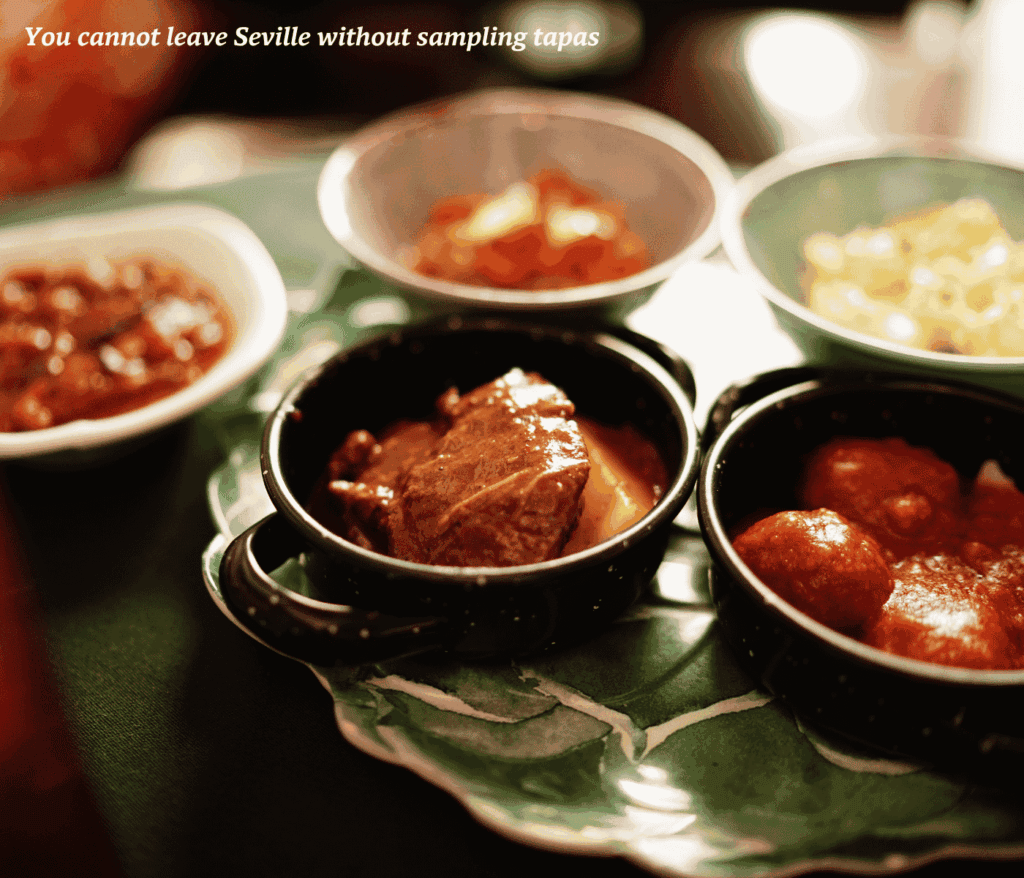
The great joy of eating out in Seville is going for tapas – bar food, served in saucer-sized tapa portions typically costing €3-6. Tapas are available at lunchtime, but the classic time to eat them is in the evening.
To do tapas the Andalucian way, don’t order more than a couple at each place, taste each others’ dishes, and stand at the bar. Locals know what the specialities of each bar are; if there’s a daily special, order that. Also available are raciones, substantial meal-sized plates of the same fare, which also come in halves, medias raciones.
Classic tapas bars will be adorned with hanging hams, bulls’ heads and Semana Santa posters, while gastro bars – with modern takes on small dishes – will be more contemporary, ie minimalist, in décor.
- Recommended reading: notes from Italy’s food valley
Venture outside of the city
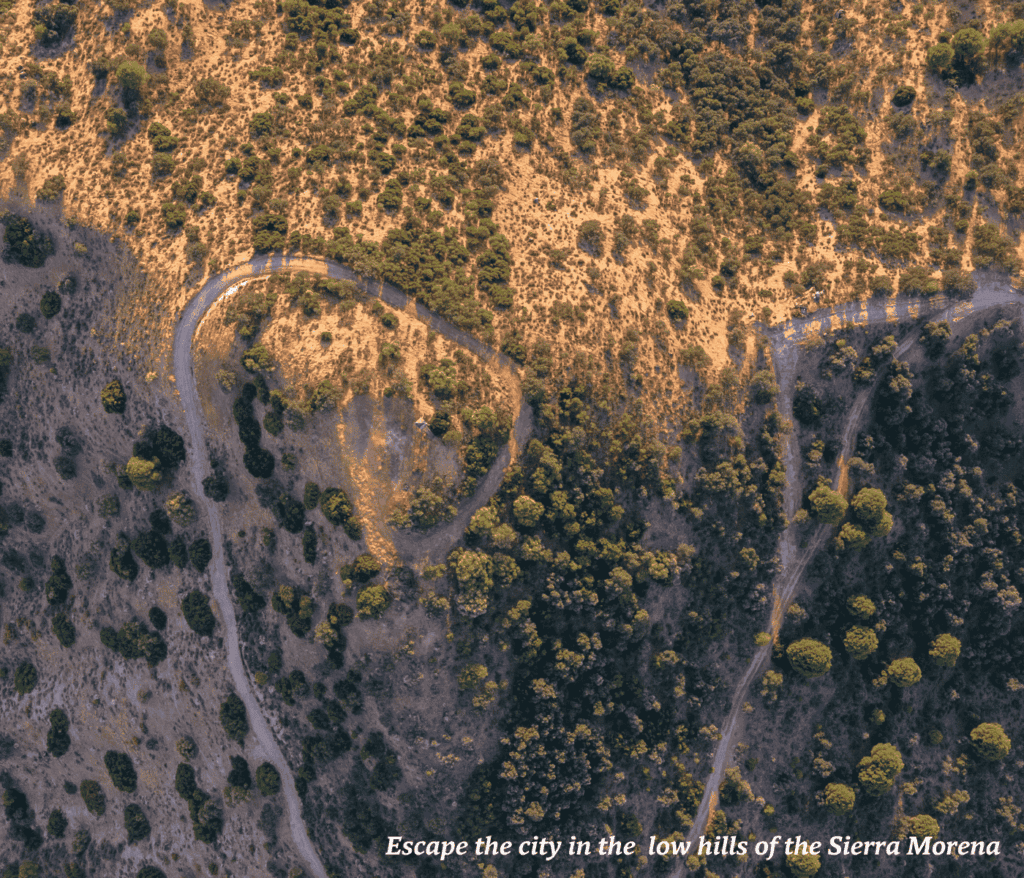
The bulk of Seville province is undulating farmland, and there’s not a great deal of scenic interest. However, north from Seville City are the low hills of the Sierra Morena, with lightly forested slopes and valleys making this a great walking destination.
Cazalla de la Sierra is a pleasing whitewashed town and the most useful base for exploring the northern reaches of Seville’s province. The local church, Nuestra Señora de la Consolación, is worth a look. Massive in scale, it’s a real mixture of styles, with a keep-like main section featuring layered brick and stone walls.
Elsewhere, Constantina is said to be named after the emperor Constantine, and is a likeable village topped by a medieval castle with Moorish origins. In the narrow streets of the morería below are several fine mansions, while the parish church of Santa María de la Encarnación has a mudéjar tower and a Plateresque doorway. The town is the main centre for the Sierra del Norte natural park, which covers some 1650km² of the Sierra Morena.
Keen to explore more of Spain? Here are the best places to visit in the Basque Country and Navarre.
So, what are the things to do in Seville you shouldn’t miss?
With its dazzling mix of history, culture, architecture and gastronomy, Seville rewards every kind of traveller. Whether you’re marvelling at centuries of Moorish and Christian heritage, wandering atmospheric neighbourhoods, watching a flamenco performance or lingering over tapas in a bustling plaza, the city offers experiences that stay with you long after you’ve left.
The beauty of Seville lies not only in its famous landmarks but also in its rhythm of life – unhurried, sociable and deeply rooted in tradition.
However long your visit, these essential things to do in Seville will help you experience the city at its very best.
Our guide to Seville
For more information, read our guide to Seville by Fiona Flores Watson: