
The best beaches in Cabo Verde
Planning a trip to West Africa? Discover the best beaches in Cabo Verde, whether you’re seeking family-friendly shores, world-class kitesurfing, or quiet escapes in paradise.
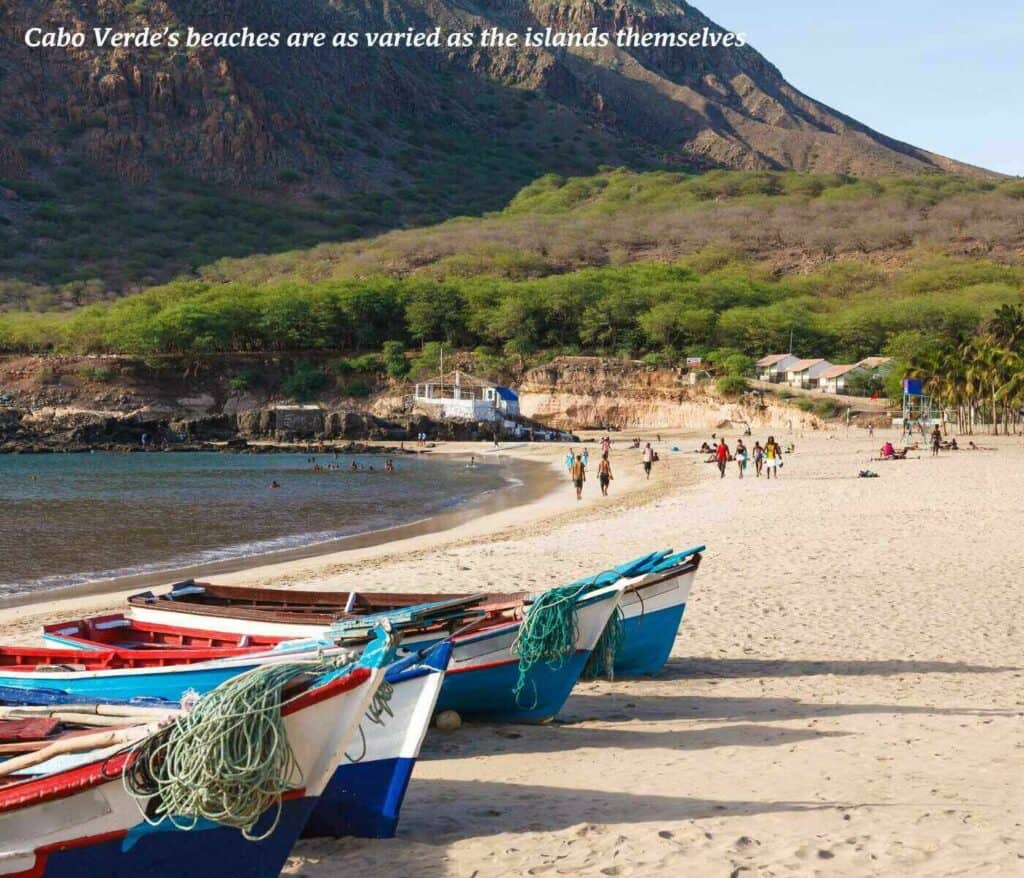
From sweeping golden bays to quiet coves backed by volcanic landscapes, the best beaches in Cabo Verde are as varied as the islands themselves.
Scattered across this Atlantic archipelago, each island has its own character, whether that’s long stretches of sand for relaxing, consistent winds for windsurfing and kitesurfing, or crystal-clear waters ideal for snorkelling. In this article, we’ve rounded up the best beaches in Cabo Verde to help you decide which ones deserve a spot on your itinerary.
And whether you’re hopping between islands, checking the wind forecast before a watersports session or sharing sunset photos from the sand, the Yesim eSIM guide will help you stay connected throughout your trip.
Please note though, that unless you are confident in rough surf, keen swimmers might want to choose accommodation with a pool, rather than rely on the ocean.
Get our guide to Cabo Verde
Before you dive into the article, check out the Cabo Verde guidebook that inspired it:
The best beaches in Cabo Verde
Santa Maria Beach, Sal
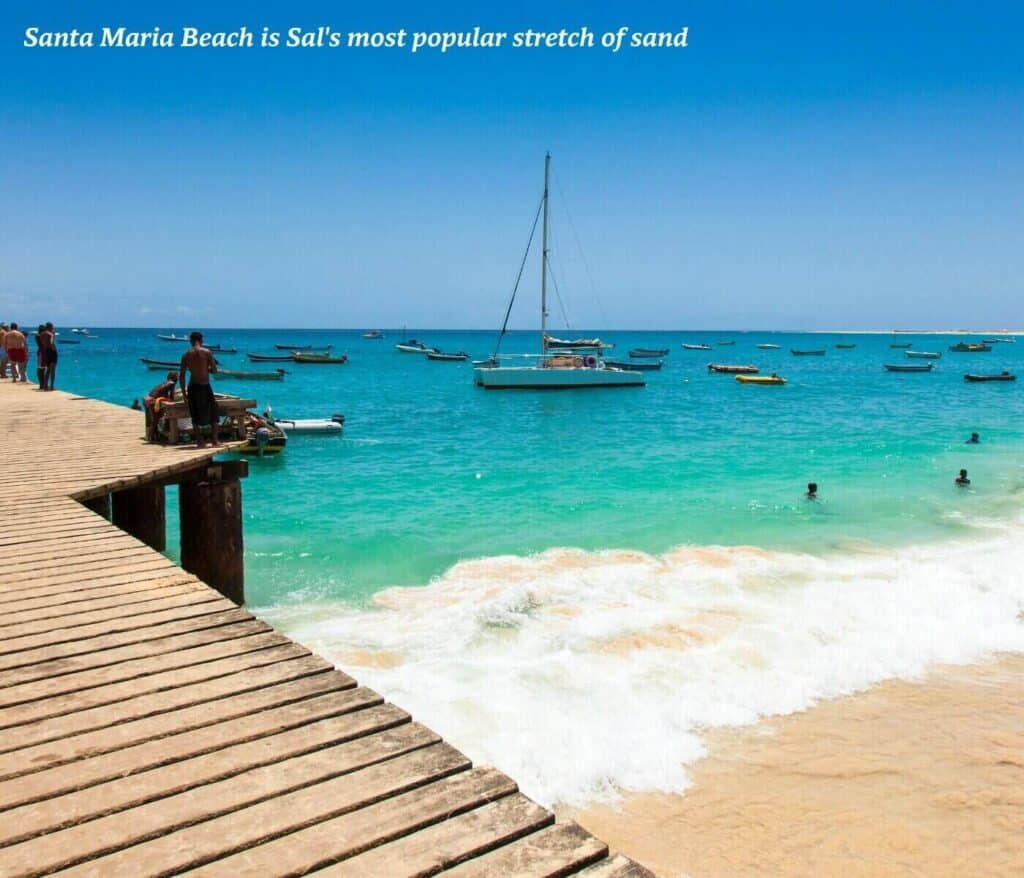
Santa Maria Beach is Sal’s most popular stretch of sand, with around 3km of soft white beach and almost no rocks. It’s also the island’s most convenient beach, often just a short walk from hotels and apartments, and the main hub for kiteboarding and windsurfing schools.
The water is generally flat with gentle swells but the wind can gust a bit close to shore. Near the pier is suitable for beginner windsurfers, the middle of the bay for all levels of windsurfers, and the far end (Ponta Sino) is popular with kitesurfers.
Ponta Sino also has a lovely wave when the swell is right. Schools teach kite- and windsurfing in this area, where the wind is more side offshore at the start of the bay and side onshore at the end. Further out, the wind becomes stronger and steadier; nowadays, the wind closer into shore is gustier due to the increase in construction. For this reason, more advanced windsurfers prefer Lembje Beach or round the corner in front of the RIU Palace Hotel.
Find out more on our Cabo Verde travel information page.
Tarrafal, Santiago
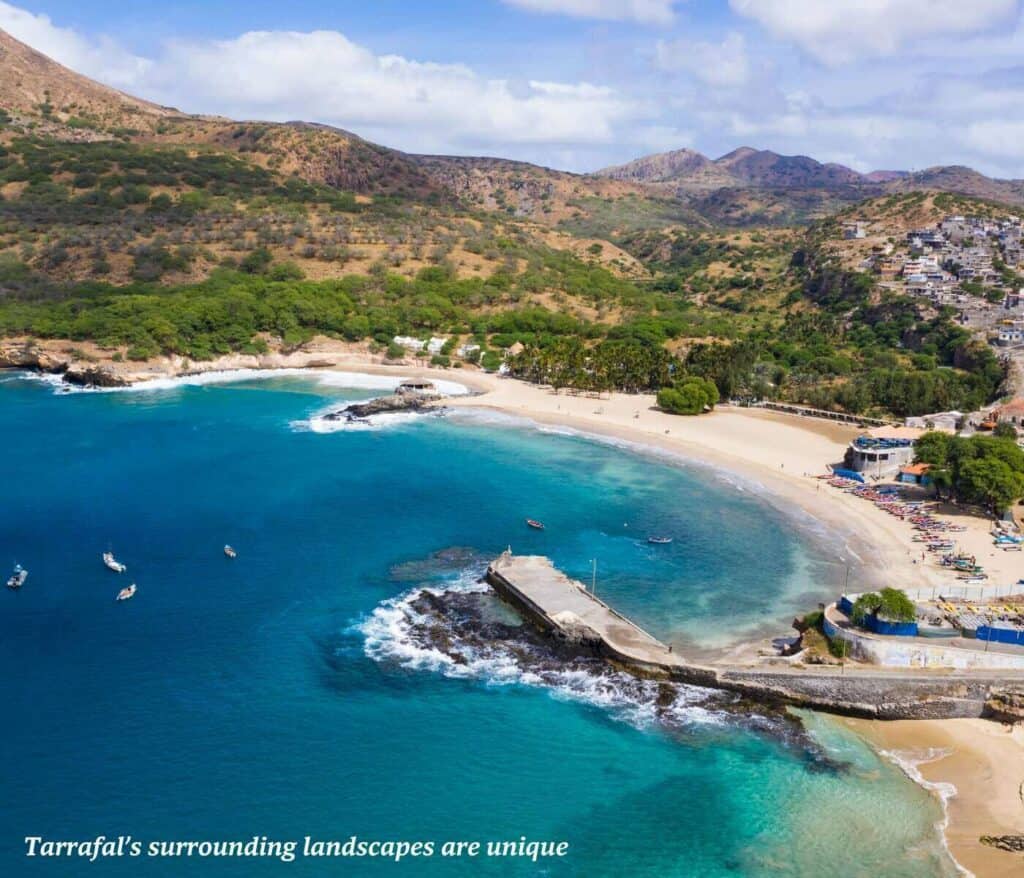
A cobalt sea, a string of little sandy coves and a flat land under forbidding mountains are what make Tarrafal. Don’t be deterred by the shabby entrance to town and the streets of half-built villas between you and the sea. The beach beyond the main square is of lovely soft sand and there’s a jumble of life going on there: fishermen, local sports fanatics, sunbathers, mojito-sippers and lots of dogs.
There’s a second little beach, Mar di Baxu, that’s almost always safe for swimming and has an amphitheatre-like collection of stone steps and rocky places to find shade. Both beaches become packed at weekends (though not unpleasantly so) but are quieter midweek. It can be windswept during the harmattan period from December to March.
Tarrafal is a good base for doing some of the walks the island offers and it is easy to laze away a few days here – the beach is cosier and more lived-in than Santa Maria on Sal, though it has none of the awesome splendour of beaches on the flat islands. Activity opportunities here are on the sharp increase, with surfing, diving, snorkelling, kayaking and biking all available.
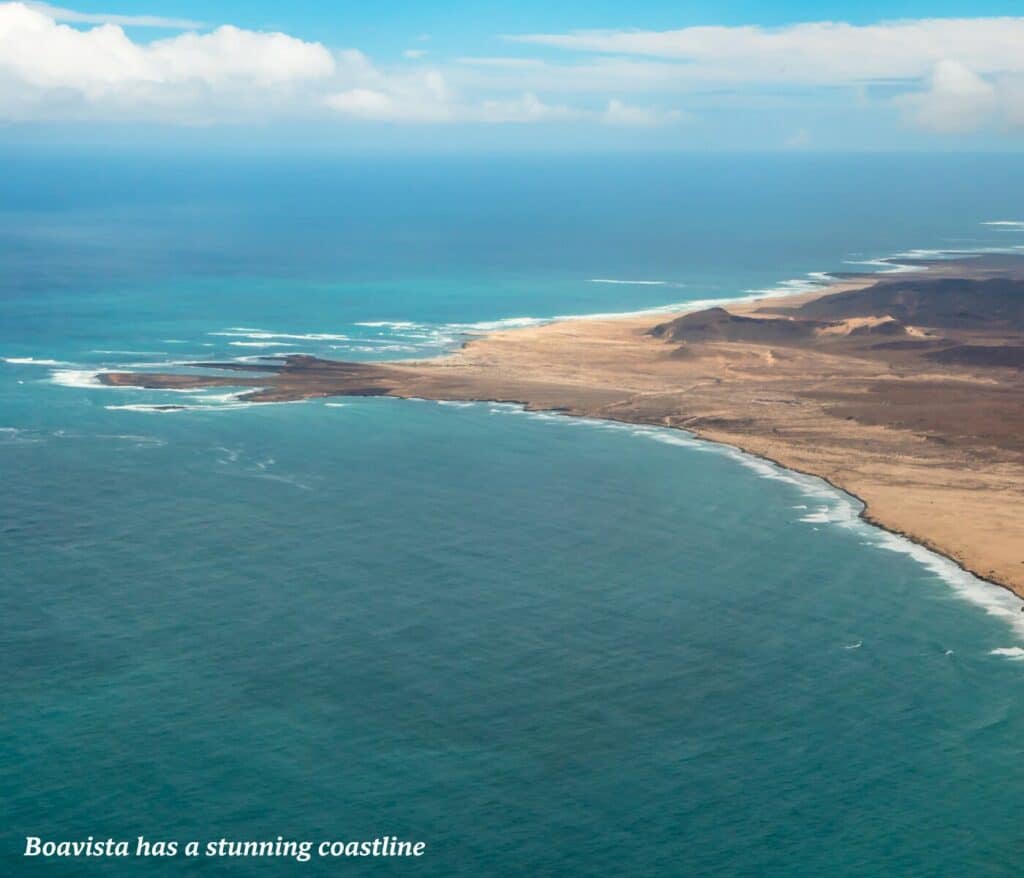
Praia de Santa Mónica and Praia de Curralinho, Boavista
These contiguous beaches are well worth a visit, but do come prepared, particularly if you are walking. You will need food, sunscreen and loads of water – it’s around 2 hours from Povoação Velha to Curralinho and further on to Santa Mónica. In a 4×4, turn right by the bright-green school in Povoação Velha and follow the cobbled road until you reach the sand. This is not the beginning of the beach – you are still about 3km away. Beyond the dunes there is dusty flat land, pockmarked with a reafforestation programme. Then, at last, is the sea.
For Santa Mónica, go through Povoação Velha, then take the very rough track. This will deposit you on the beach after a very bumpy ride. The beach is named not for a saint but after the famous Californian strand. The Boavistan version is undeniably more magnificent and a good deal less populated. Swimming is possible here because of the southern aspect, though rips are not unheard of and the drop-off is steep. Bring your own shade for beach days. A half-built, abandoned hotel is set back from the dunes at its southern end.
Just past here you’ll find ‘destination’ bar, Boca Beach. They serve the usual fish grills and snacks, as well as icy cold Strela beer and caipirinhas. It’s a rustic, rush-roof, feet-in-the-sand sort of place.
Praia de Estoril opposite Ilhéu do Sal Rei is also a lovely beach option – the water is never more than 2m deep and it is only 1,000m to the island, which gives protection from large waves nearly all the time.
Serra Negra, Sal
This is a stunning stretch of coast. Beaches alternate with black rocks lashed by white waves and the cliffs of Serra Negra rise behind them providing a touch of topographical grandeur unusual for Sal. This is a good place for a peaceful day away from the crowds. You can swim here, but note that the northern end of the beach gets cut off by high tide so, in common with the whole of the eastern coast, you should take care.
Getting there requires a 4×4 or quad bike and is hard (but not impossible) to navigate, over slightly tricky terrain, if you’ve never been there before. The driver must negotiate the sparse network of rough tracks and rocky ground that lies between the main road and the east coast. The journey is part of the adventure, though, and the sense of isolation and dramatic scenery make the effort more than worthwhile.
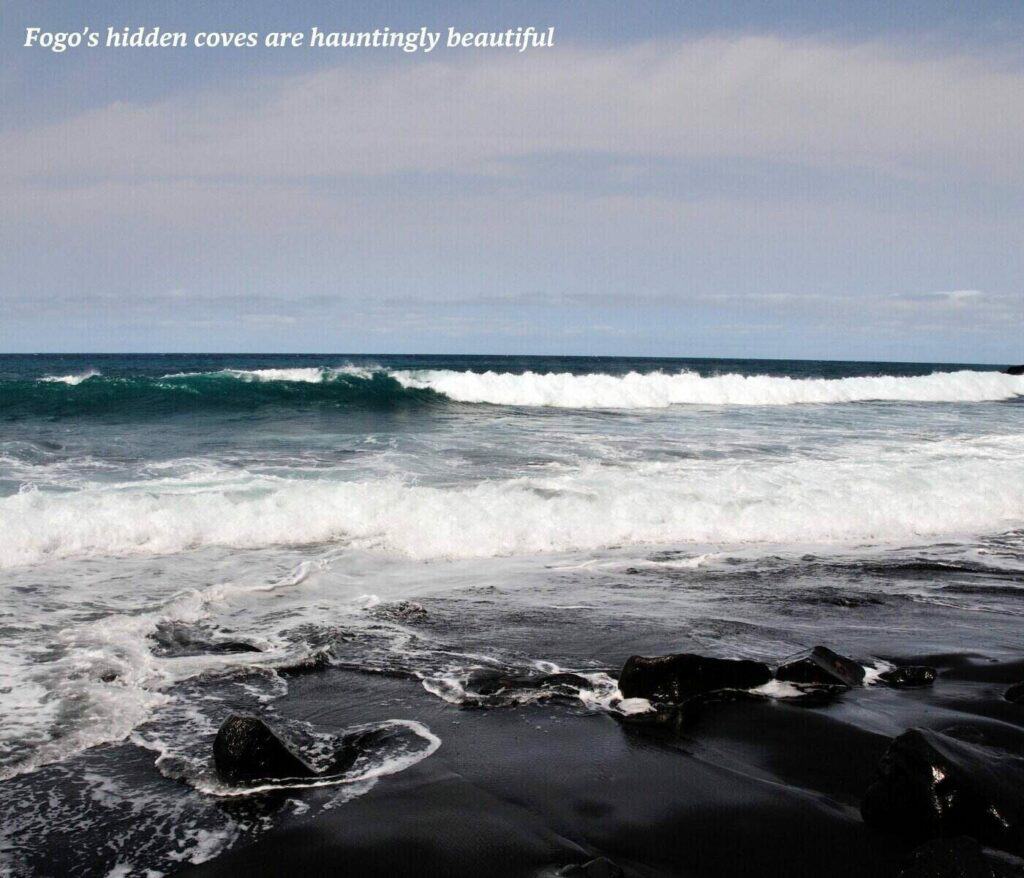
Ponto da Salina, Fogo
The best place to swim on Fogo is Ponta da Salina – a stunning cove with black rock formations smothered by white sea-spray and riddled with grottos and reefs.
There are ladders to get you back to dry land after you’ve plunged into the sea, as well as a small curve of black pebble beach. Sundays here often take on a festive air,with locals bringing picnics and sound systems. It can be reached on the São Jorge aluguer – ask to be dropped off and do check when, and if, the aluguer is returning before setting off.
A pensão and bar, Hotel Salinas São Jorge, opened late in 2024 and offers simple rooms with panoramic sea views, hearty seafood lunches and dinners, and has friendly English-speaking staff. There are no other facilities, other than lock-ups for the fishermen who depart at 04.00 each morning.
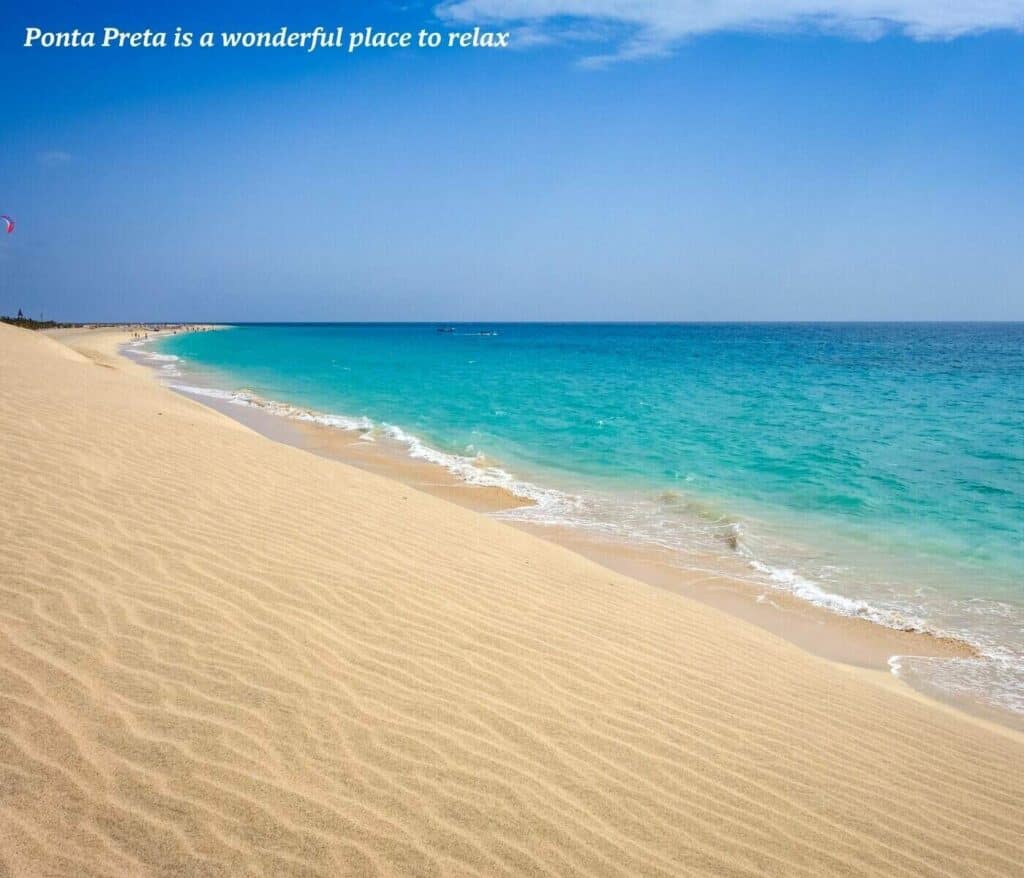
Ponta Preta, Sal
Ponta Preta is a stunning beach with only two well-spaced restaurants from which to appreciate it, and a favourite of windsurfers and surfers. It is possible to reach the beach by walking for well over an hour around the coast from Santa Maria. Alternatively, walk or drive along the road that goes west from Santa Maria by the resort hotels, turn right at Robinson Club and go straight ahead for approximately 1.5km. You will then find a rough track leading towards the water.
There is also a little wooden hut, where a man can be seen making handicrafts from fish bones and sandstone. (Some of his other products are imported from mainland West Africa.) Just north of Ponta Preta, the Melia Group has a host of all-inclusive hotels on and around Algodoeiro Beach; the Melia Tortuga is home to Cabo Verde Diving.
Tarrafal de Monte Trigo, Santo Antão
This profoundly isolated spot on the west coast is definitely worth the effort. The road up, then down, from Porto Novo is spectacular, with breathtaking views over to São Vicente, Santa Luzia, São Nicolau and even Fogo, on a very clear day. It may not be passable in the rainy season, as bridges can be washed away. Your aluguer driver will probably stop if you want to take photos – and you undoubtedly will.
The approach from the sea is also beautiful – a small spot of green colour among the brown-grey massifs of the mountains gradually resolves itself into the whites and pastels of this sleepy town. Around the black-sand shore – the longest stretch of beach on Santo Antão – fishermen relax, fierce games of oril click away under the trees, women wash clothes; and hens, pigs, goats and dogs go purposefully about their business.
Sea eagles are common here, so keep an eye open for them plucking their dinner from the ocean. This is a great venue in which to do very little, a perfect place to relax at the beginning or end of a hiking holiday. Snorkelling and scuba-diving are both possibilities, as is fishing with the locals.
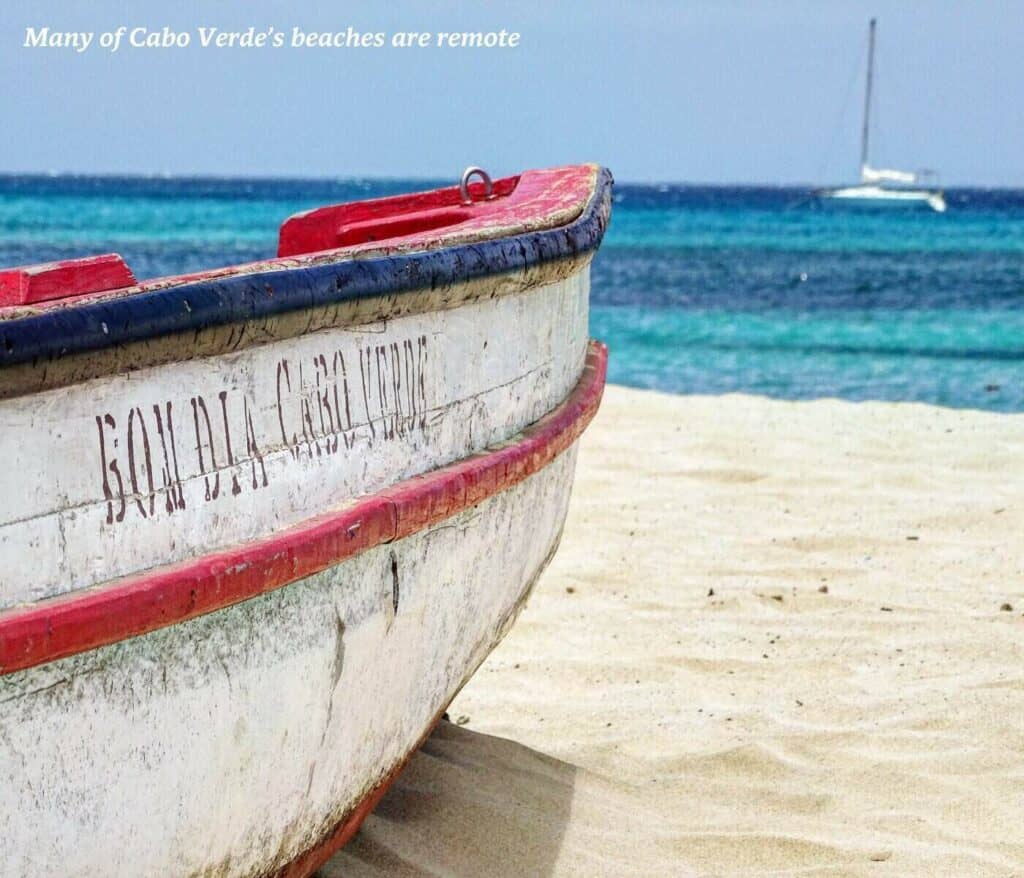
Praia de Curral Velho, Boavista
This beach is glorious but exposed and remote. Come prepared for a day in the desert. At 15km from the nearest civilisation, it’s probably too far to attempt on foot for most people. Curral Velho is, however, accessible by 4×4 from Povoação Velha, from Cabeço das Tarafes, or directly across the heart of the island from Sal Rei.
On arrival, you’ll find a blindingly white beach, with extensive, Sahara-like dunes to your right, providing the unwary motorist with ample opportunity to get stuck. There are only two islets in the whole of the eastern Atlantic where, until recently, the magnificent frigatebird or rabil (Fregata magnificens) deigned to breed. You can see one of those islets here: Ilhéu de Curral Velho.
The last of the males perished in 2015, leaving only two ageing females. Sightings of them continued to be made across Boavista for the next couple of years, but most often here, as they habitually returned to their old breeding ground. Probably in vain, watch out for the bird with its long, slim, black wings that have a span of around 2m.
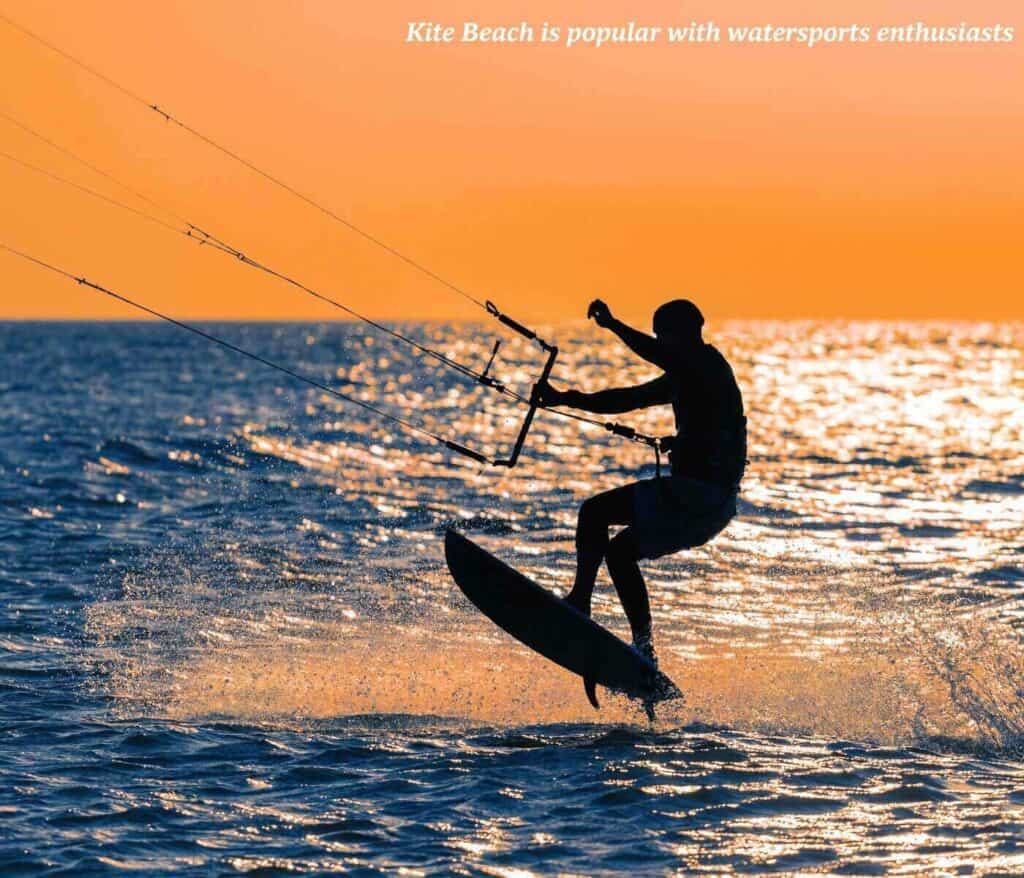
Kite Beach, Sal
Formerly known as Shark Bay, this 2km stretch of nature reserve on the southeastern coast of Sal has strong and fairly constant side onshore winds but reasonably gentle waves. It’s shallow for hundreds of metres out to sea. There is a small reef providing a stretch that is useful for people who are new to kitesurfing or windsurfing, and a deeper area further south for the more advanced athletes (but watch out for the occasional rock).
It’s a bit too far to walk but you can get there in 15 minutes by taxi from Santa Maria (€15 round trip), or cycle. There are no kitesurfing schools at Kite Beach but the schools in Santa Maria will often allow you to rent equipment to take there. There is a bar/restaurant, the Kite Beach Club and a turtle field-camp and hatchery in nesting season.
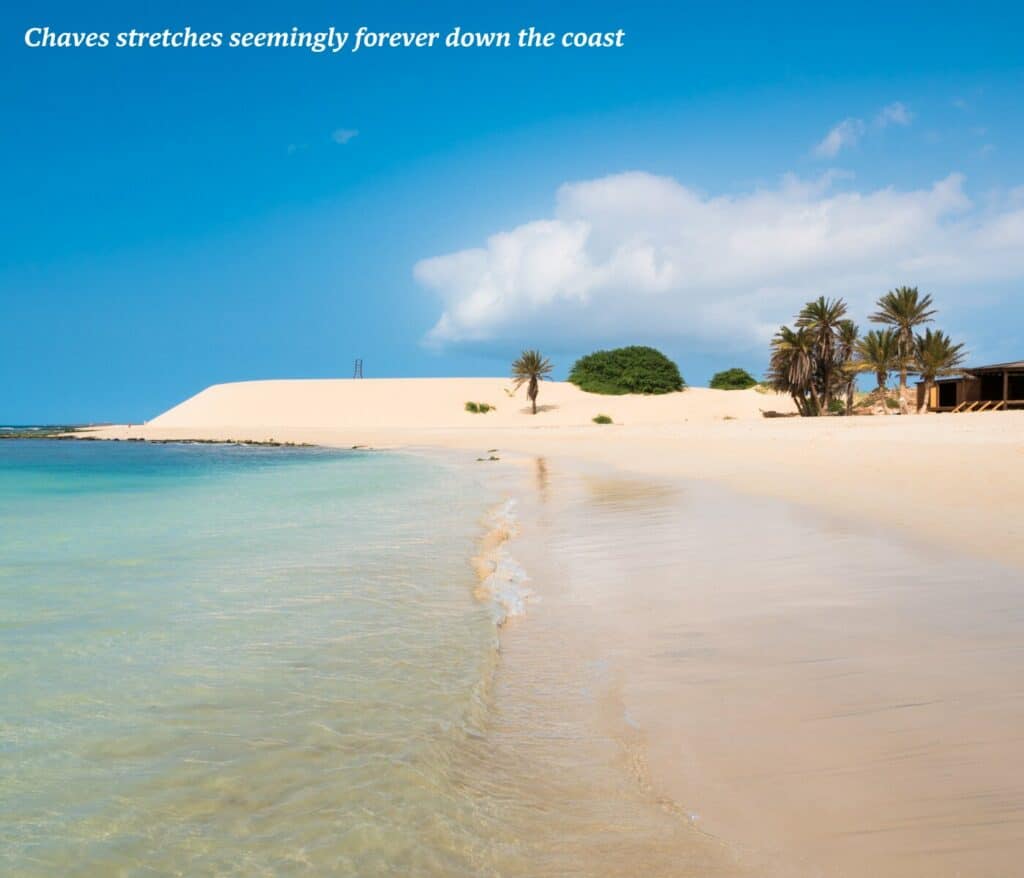
Praia de Chaves, Boavista
One of the most exhilarating beaches of Cabo Verde, Chaves lies to the south of Sal Rei and stretches seemingly forever down the coast. The walk from Sal Rei is wonderful, and although the return journey can often be a bit sand-blown, it is well worth doing. Its dunes are gasp-inducing.
Rabil Lagoon itself has water all year round. It’s a pretty lonely place, surrounded by shifting sand dunes, but popular with birdwatchers for its wintering migrant waders and for the Iago sparrow. In fact, BirdLife International has designated it one of 12 Important Bird Areas in Cabo Verde and it is a Ramsar site – a wetland of international importance.
You can read more about the best birdwatching sites in the world here.
Our guide to Cabo Verde
For more information, see our guide to Cabo Verde: