
The best of Albania’s historic highlights
Beyond its size and scenery, Albania’s historic highlights reveal what makes this small Balkan country unique.
Few destinations pack as much history into such a compact landscape as Albania.
From ancient Greek and Roman ruins to medieval castles, Ottoman-era towns and remnants of the communist period, Albania’s story has been shaped by centuries of change. Traces of these different eras can still be seen in archaeological sites, historic cities and cultural landmarks, several of which are recognised as UNESCO World Heritage Sites.
This fascinating blend of ancient heritage and living tradition makes it a rewarding destination to explore, and these historic highlights reveal the remarkable influences that have shaped the country’s identity.
Here’s what not to miss.
Get our guide to Albania
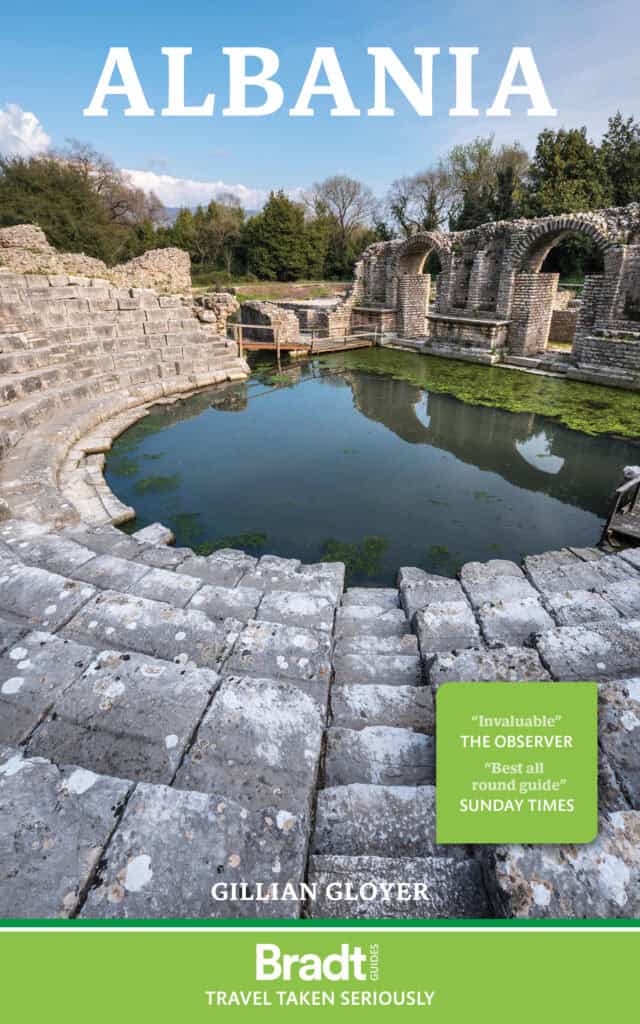
Before you delve into the article, check out the Albania travel guide that inspired it:
Albania’s historic highlights: what not to miss
Gjirokastra
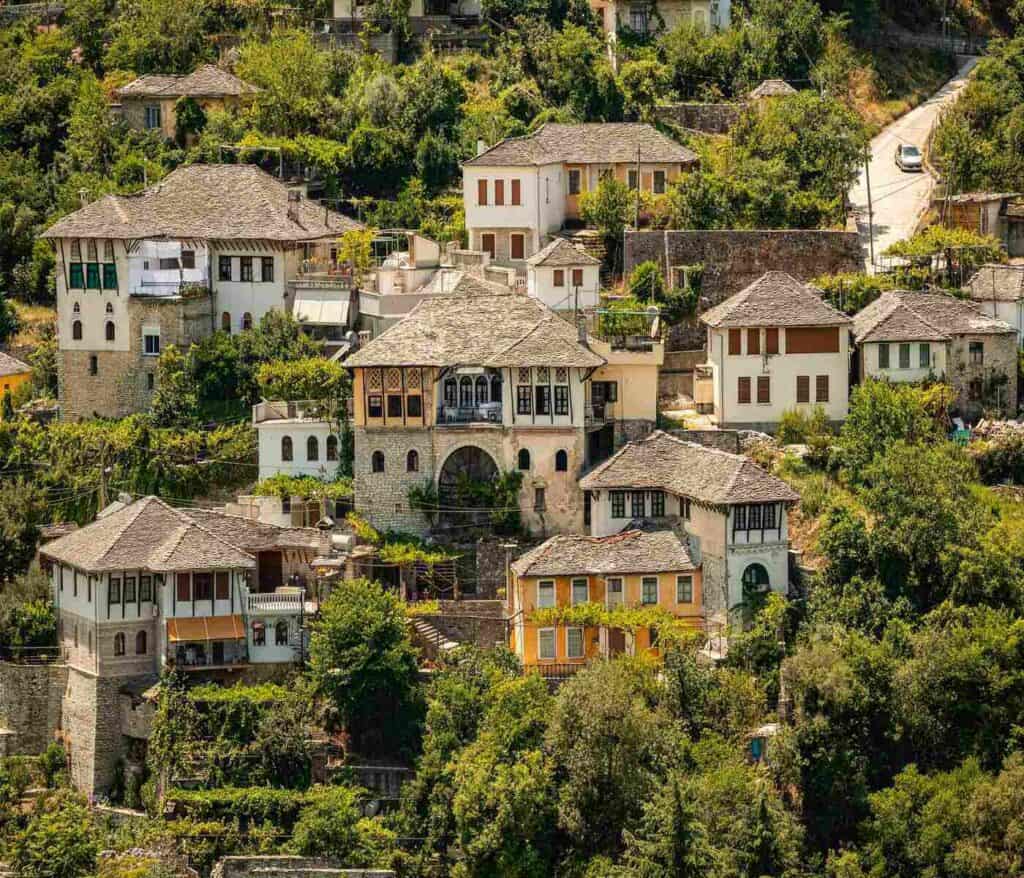
The austere and beautiful town of Gjirokastra began to spread downhill from its castle in the 13th century. The castle still broods on its hill, overlooking the whole city and the river valley below. From that vantage point, the grey stone of the houses below and the grey slates of their roofs blend into the hillside, distinguished from it only by their whitewashed walls.
Gjirokastra became a UNESCO World Heritage Site in July 2005, allowing it to preserve its architectural heritage. It is most famous for its castle, which perches above the city. The castle is no longer inhabited, unlike the citadels of Kruja and Berati, but it was used as a garrison and a prison until very recently. It is now home to the Museum of Armaments and its collection of weapons, as well as the Museum of Gjirokastra, which gives an extensive overview of the city from its prehistory to the very recent past.
Another distinct draw for visitors to Gjirokastra is the city’s beautiful and unique 19th-century houses. No traditional house is quite like another, although they have been classified according to certain design characteristics such as the number of wings that they have. The Kadare house has now been rebuilt and opened to the public. The ground floor and basement have been painstakingly reconstructed and you can see the rainwater cistern, the pantry and the beautiful external staircase.
Durrësi’s Roman amphitheatre
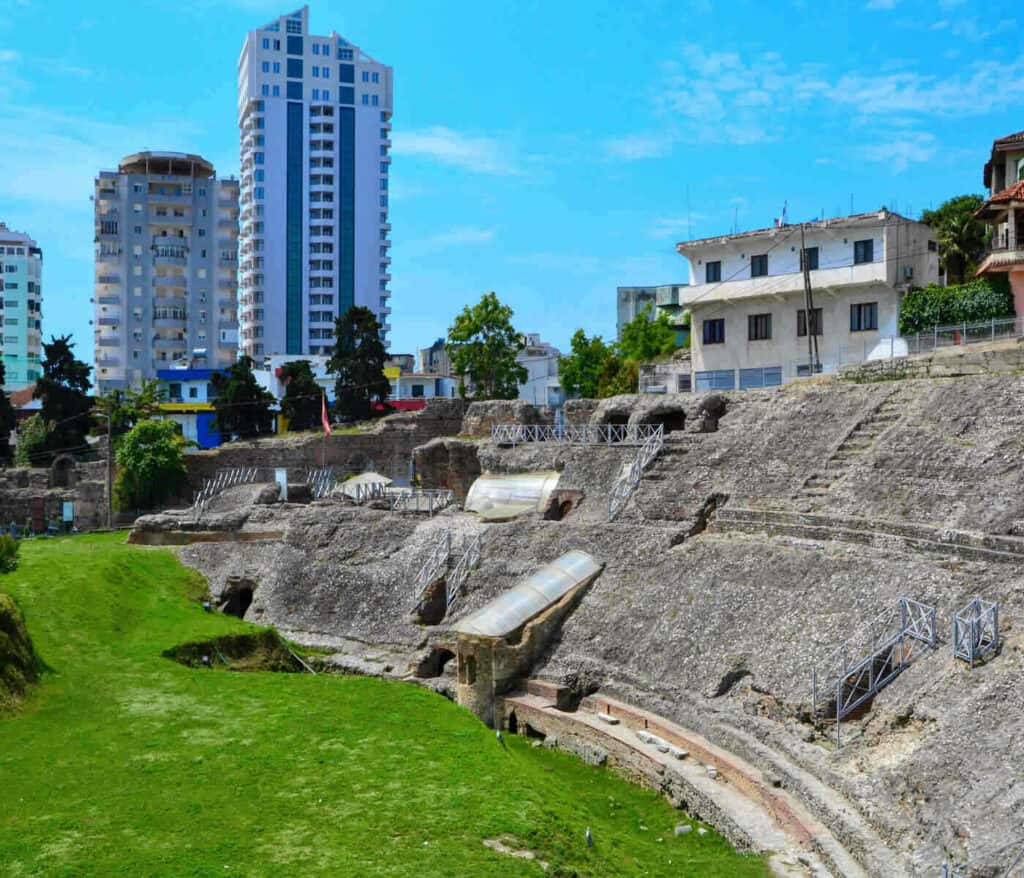
The huge Roman amphitheatre, which is one of Durrësi’s main attractions, was built in the early 2nd century AD. The largest in the Balkans, it is elliptical in shape, about 130m at its longest point, with the arena itself measuring about 60m by 40m across. On the terraced seats there would have been room for about 15,000 spectators, about a third of the capacity of the Colosseum in Rome!
Today, visitors can go down into the vaults below the rows of seats – the original steps, supplemented with less slippery modern ones, are just after the ticket booth – and see how the amphitheatre was constructed. The Romans alternated rows of brick with opus incertum, a mixture of stones and mortar, a technique designed to resist earthquakes. The technique was evidently quite successful, since most of the amphitheatre is still standing, despite Durrësi being hit by several strong earthquakes over the centuries.
When gladiatorial combat was banned in the 5th century, the amphitheatre took on a new life as a Christian funerary space. The arena became a cemetery and small chapels were created in the galleries. One of these has 10th- or 11th-century mosaics of saints and archangels on the walls. They are the only wall mosaics ever found in Albania.
Discover more on our Albania travel information page.
Our recommended Albania tour operators
There is much more to Albania than its historic sites. With rugged mountains, dramatic coastlines, remote valleys and scenic countryside, it is also an excellent destination for active travellers looking to explore on foot or by bike.
Walking, cycling and trekking offer a different way to experience the country, taking you beyond the main tourist sights and into landscapes where traditional villages, local life and Albania’s natural beauty come together.
For travellers looking to discover a more active side of Albania, local expertise can make all the difference. Here is our favourite tour operator for those seeking a different, more adventurous Albania experience:
Kruja Castle
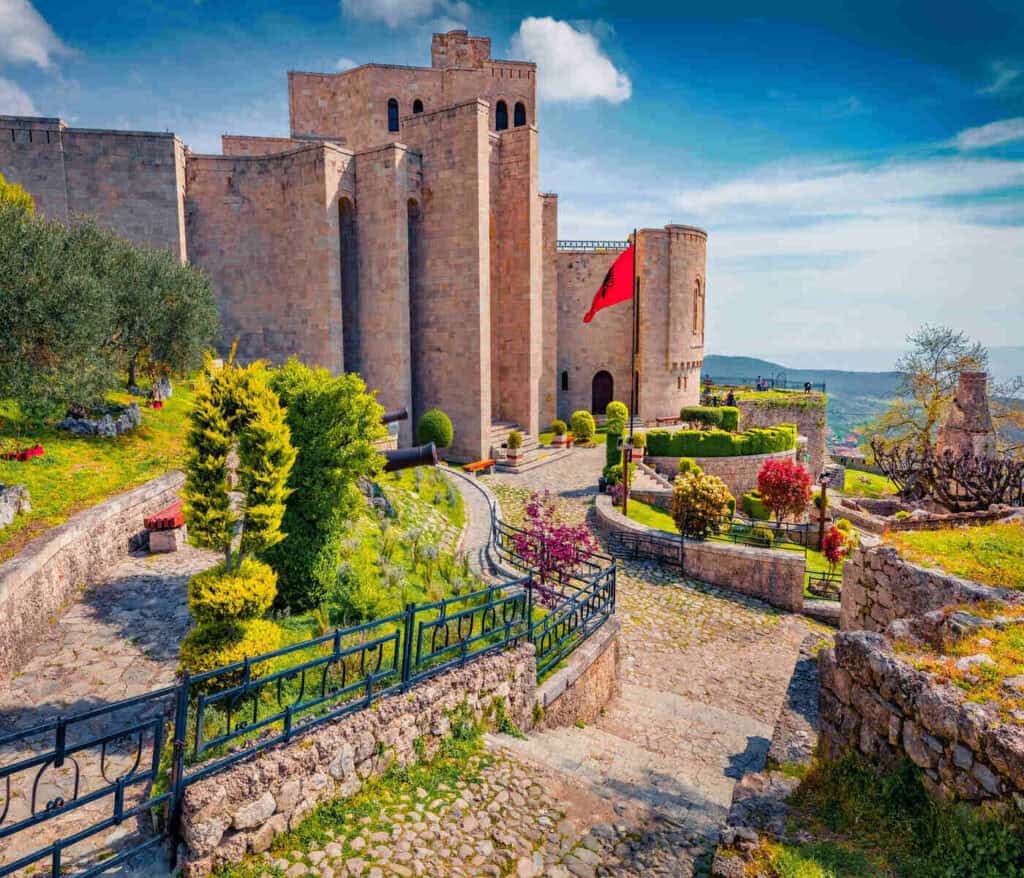
Kruja Castle stands on a crag overlooking the plain below the town of Kruja, with views on a clear day out to the Adriatic (it can sometimes be seen from the plane as you approach Tirana International Airport).
Within the castle walls are two very different museums and several other places of interest; you could easily spend several hours visiting these and wandering around the cobbled streets.
Between the museums are the ruins of the mosque built within the castle walls by the Ottomans in 1481, just three years after their final conquest of Kruja. Damaged and rebuilt several times, now only the minaret and traces of the walls remain. A network of cobbled alleyways spreads downhill from the open area where the museums are. Down one of these is the castle’s beautiful little Bektashi teqe.
Bektashism is a Sufi order, founded in Persia in the 13th century; it was introduced to Albania in the wake of the Ottoman conquest and became widespread there in the early 19th century. The Kruja teqe was built in 1770 and is one of the oldest in the country.
Berati
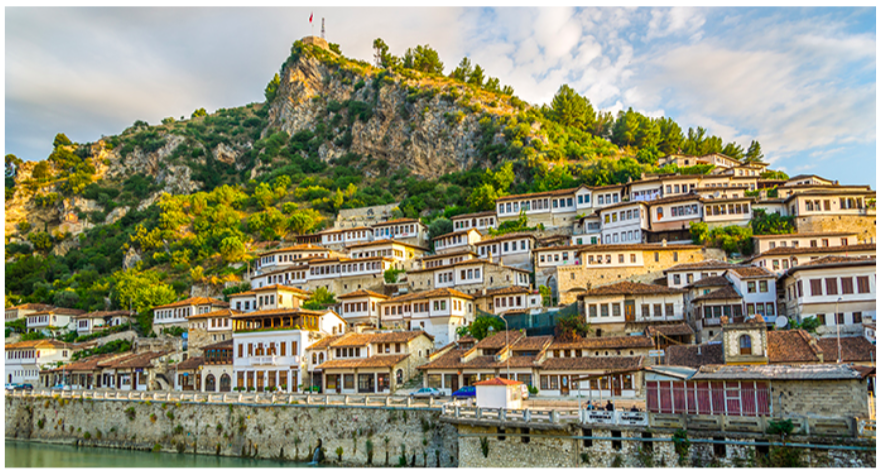
Berati is one of the oldest cities in Albania and one of the most attractive; the view of its white houses climbing up the hillside to the citadel is one of the best-known images of the country. The citadel walls themselves encircle the whole of the top of the hill. Within them are eight medieval churches, one of which houses an outstanding collection of icons painted by the 16th-century master Onufri.
Berati also has an excellent Ethnographic Museum and several other interesting buildings, including two of the oldest mosques in Albania. Thanks to their historical value, the religious buildings in the citadel were protected from the worst ravages of the atheism campaign, and in 1976 the government designated Berati a ‘museum city’, which saved the town centre from communist urban planning.
Berati has been inhabited since the Bronze Age, over 4,000 years ago. The great Tomorri massif, which rises behind it, was a sacred mountain from very early times and it still hosts a huge Bektashi festival every August. The first traces of building on the citadel date from the second half of the 4th century BC, when the Illyrian Parthini controlled the area.
Only interested in modern history? Read about Albania’s best communist heritage sites here.
Rozafa Castle
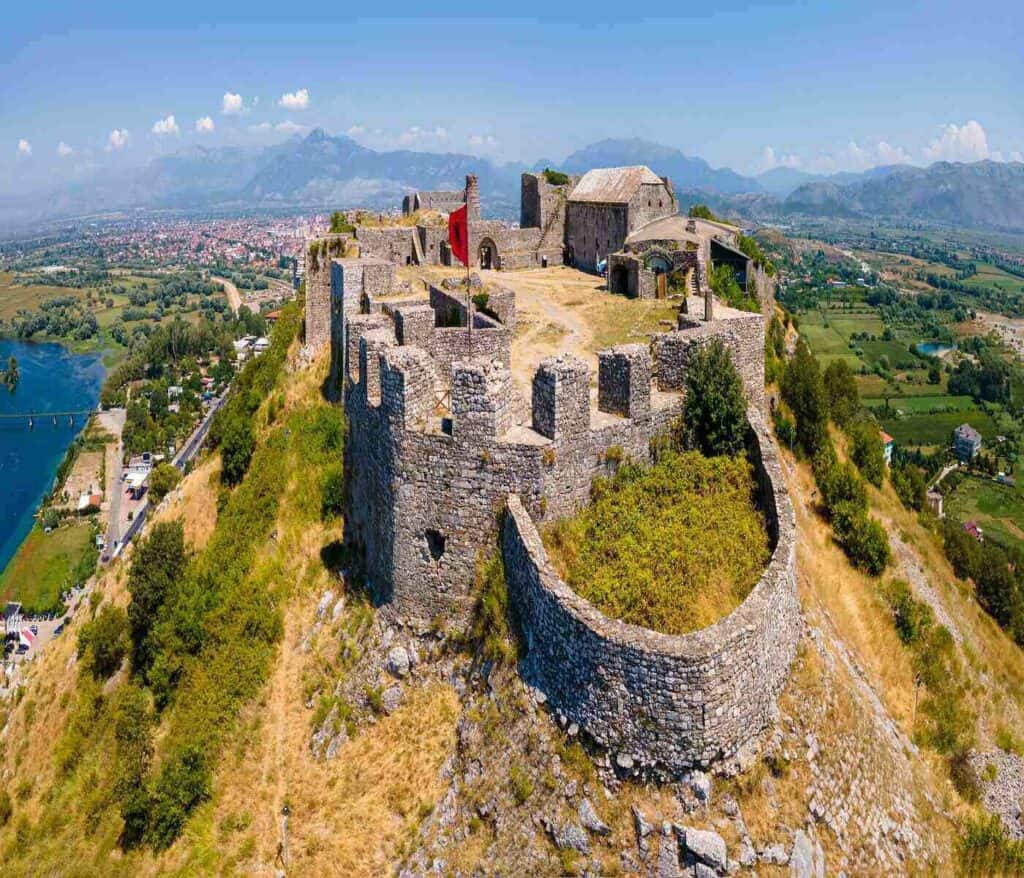
Shkodra’s castle stands above the confluence of its three rivers, the Drini, the Kiri and the Buna, and thus controls all but the northern approach to the city. It is an excellent place for a castle and has been fortified since Illyrian times, when the Ardiaean queen Teuta launched her attacks on the Romans from it. Traces of the Illyrian walls, constructed of large stones with no mortar, can still be seen at the entrance to the castle.
Most of what remains is Venetian and Ottoman. The outer walls follow the line of the hill; within, successive lines of fortification create three distinct areas, of which the most secure and easily defensible is the section at the narrowest part. The views from the citadel are wonderful, across Lake Shkodra to Montenegro, out to the Adriatic, and down towards Lezha.
Rozafa was the last fortress in Albania to fall to the Ottomans. Two-and-a-half thousand Shkodrans chose to leave under the terms of the surrender and were granted pensions by Venice. The new rulers continued to use the castle as a military and administrative centre; it was the vizier’s residence and, from 1840, was the capital of the whole northern Albanian province.
Butrint
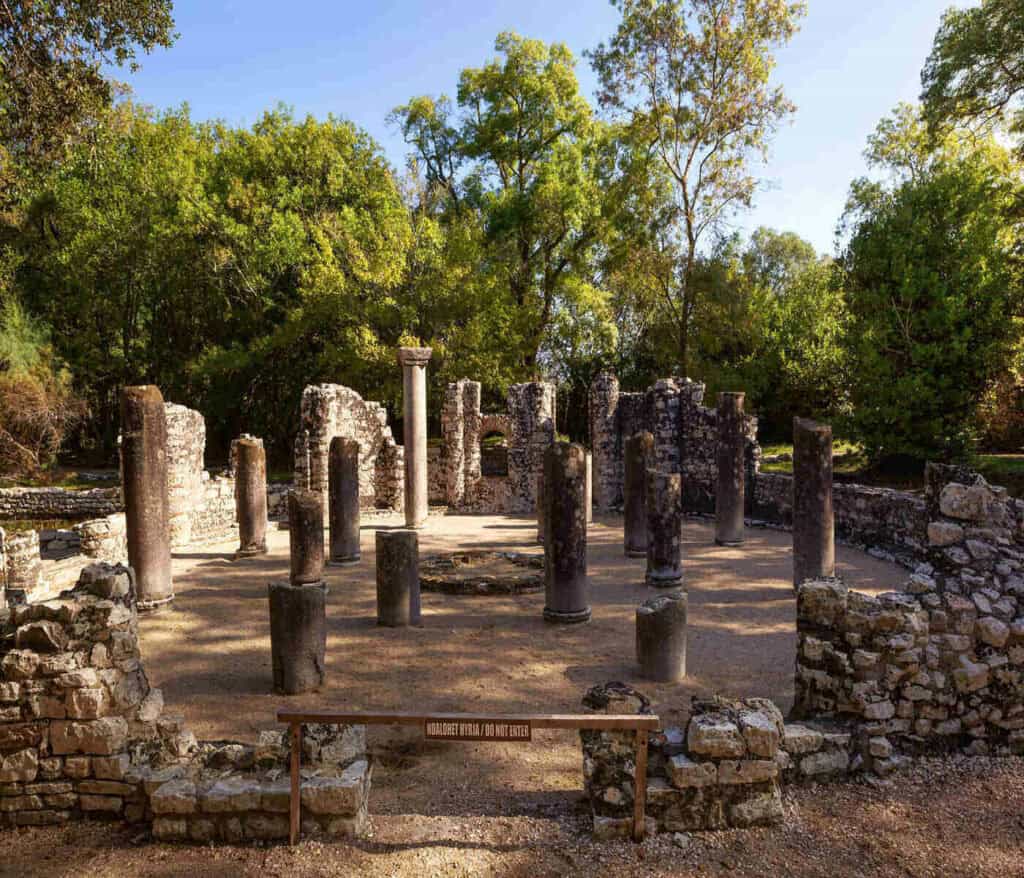
The ancient city of Butrint, one of UNESCO’s World Heritage Sites, is far and away the most-visited archaeological site in Albania, with visible remains spanning 2½ millennia – from the first settlers in the late 6th or early 5th century BC to Ali Pasha Tepelena at the beginning of the 19th century AD.
Informative and well-presented panels guide the visitor through the city; the small museum, on what was once the acropolis, illustrates Butrint’s history through beautiful artefacts; further interesting sites lie across the Vivari Channel, which connects Lake Butrint with the sea, and can be visited on foot or by boat. There is so much to see in and around Butrint that anyone with more than a fleeting interest in history or archaeology could easily spend a whole day (or more) there.
You could also spend an afternoon visiting the monumental centre, which used to be a sanctuary to the god of medicine, or exploring the remains of the defensive wall which was built around the lower city. There are also important Christian structures such as the Great Basilica and the associated, though not adjacent, Baptistery, which was the largest baptistery east of Rome.
Apollonia
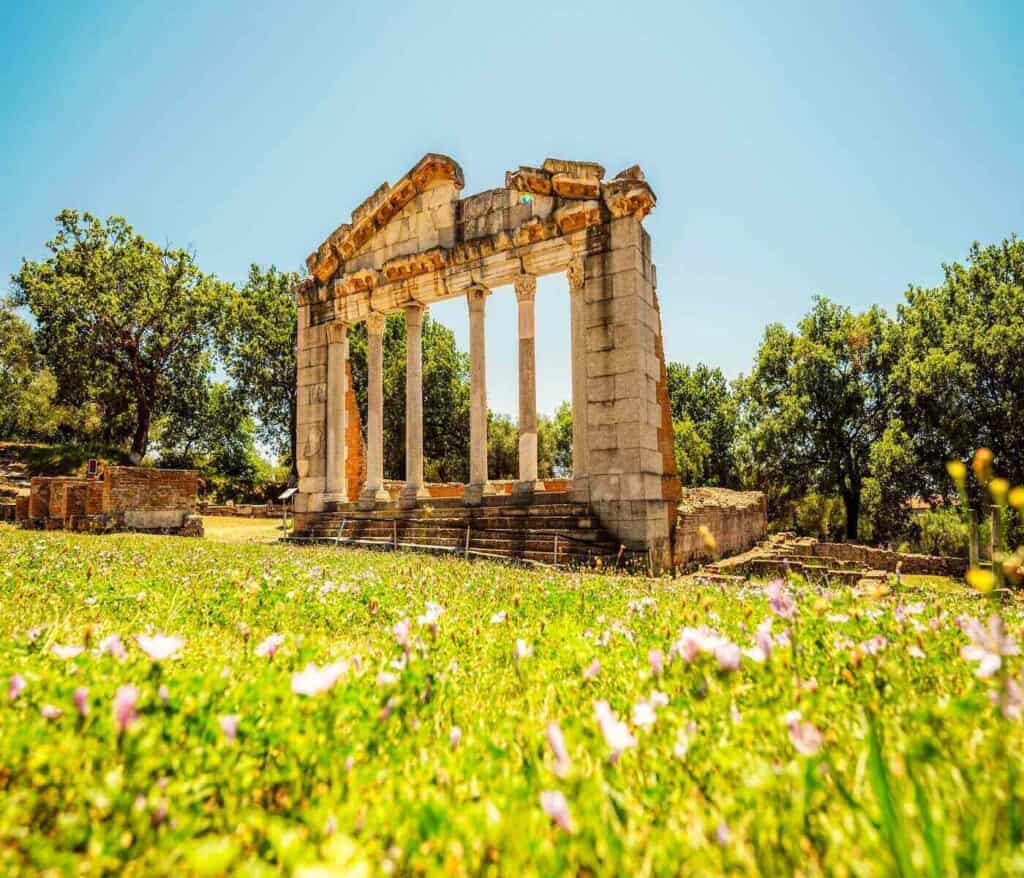
The city of Apollonia was the second Greek settlement on the Illyrian mainland, after Epidamnos (now Durrësi) and it was founded, according to tradition, in 588BC and named for the god Apollo.
Apollonia is a complex, multi-layered site, and it is estimated that only about 10% of the city has been excavated to date. Good information panels, in Albanian and English, have been installed around the site, with computer-generated images of how archaeologists believe the buildings would have looked at the time they were being used. These make it very much easier to get a sense of the layout of the city.
The site museum, located on the first floor of the monastery building, is full of well-presented information about the history of Apollonia and its excavations. There are three rooms of lovely, interesting artefacts: imported and locally made Greek vases, bronzes and busts; armour, including a 4th-century shield, which was excavated in hundreds of pieces and took 27 years to restore; a case of coins minted in Apollonia and elsewhere; and, in the gallery outside, burial markers (stelae) with fascinating inscriptions. You should try to allow at least 45 minutes to look around the museum. Outside, the 13th-century church and the14th-century refectory are also well worth a look.
Our guide to Albania
For more information, read our guide to Albania by Gillian Gloyer: