
Highlights of Montenegro: what not to miss
Discover the highlights of Montenegro, from its Adriatic coastline and historic towns to its mountains, traditional villages and must-see attractions.
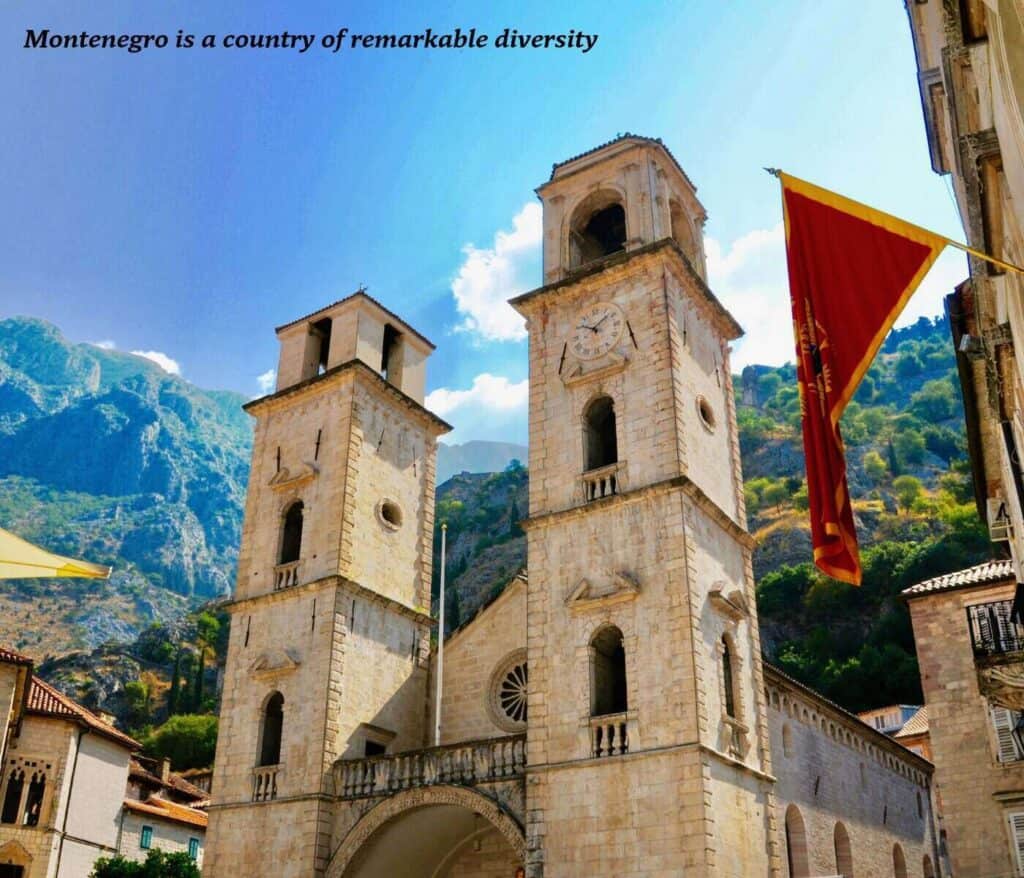
Montenegro is a country of remarkable diversity, where the Adriatic coastline meets a mountainous interior of deep canyons, high peaks and glacial lakes.
Along its 293km coast, resort towns such as Budva, Petrovac and Ulcinj offer beaches, restaurants and historic centres, while the Bay of Kotor is home to the walled city of Kotor and the old port towns of Perast and Herceg Novi. Inland, five national parks showcase a different side of the country, from the birdlife of Lake Skadar and the forests of Biogradska Gora to the peaks and canyons of Durmitor and Prokletije.
There are opportunities for walking, cycling, skiing and exploring quieter rural communities throughout the year. Montenegro’s history is equally varied, with archaeological sites, medieval monasteries, Ottoman mosques and Venetian architecture reflecting the many cultures that have shaped the country.
From its historic coastal towns to its remote mountain landscapes, these are the highlights of Montenegro you won’t want to miss.
Get the guide
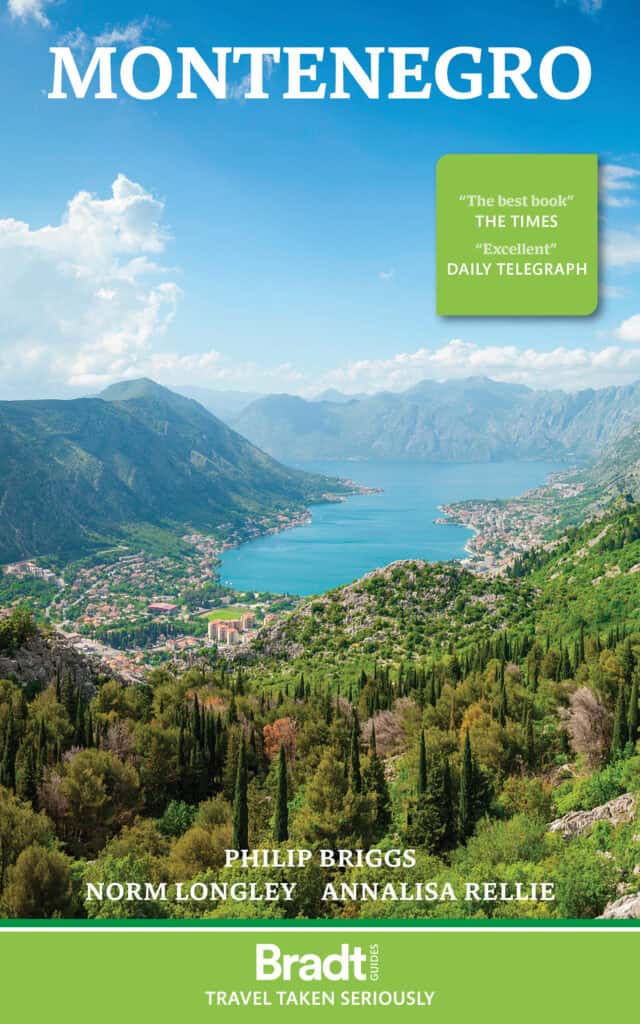
Before you delve into the article, check out the Montenegro guidebook that inspired it:
Highlights of Montenegro
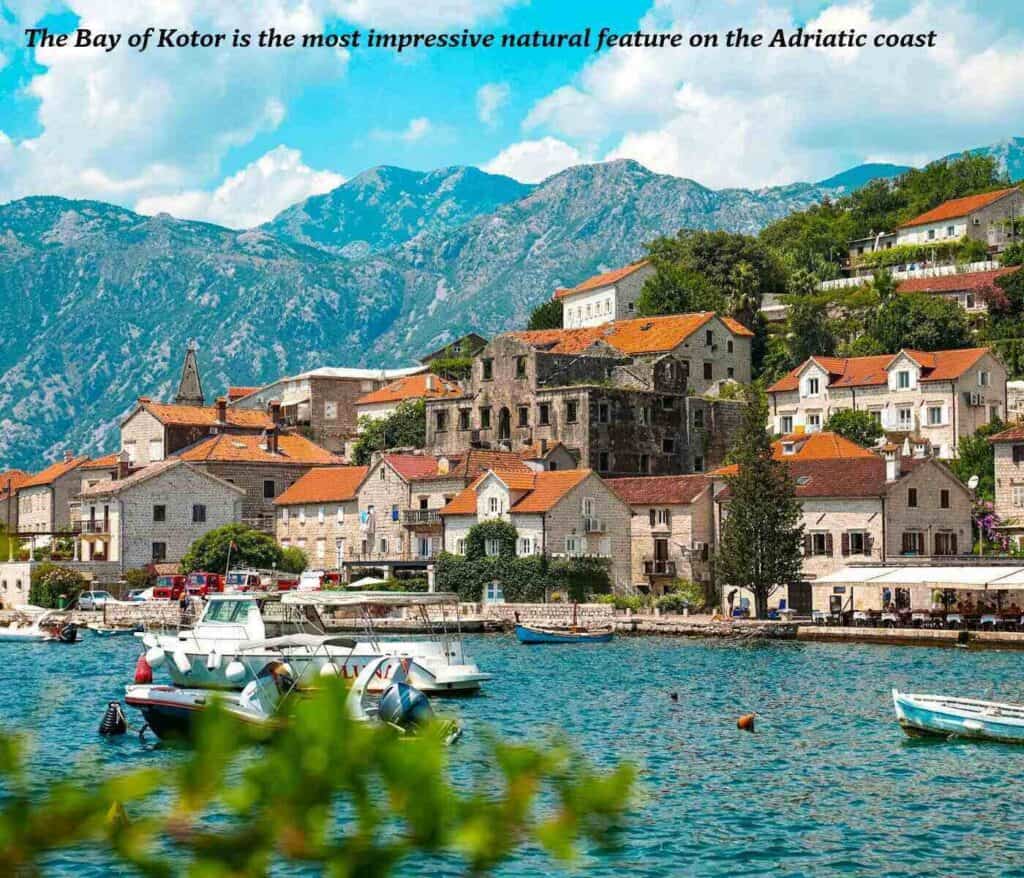
The Bay of Kotor
Dominating the seaboard of western Montenegro, the Bay of Kotor (Boka Kotorska) is undoubtedly the single-most impressive natural feature along the entire Adriatic coast. Indeed, in terms of sheer scenic beauty, this 87km² bay is hard to beat anywhere in Europe.
Massive green mountains sweep down into the transparent blue water, while behind the peaks of the sheer Orjen and Lovćen massifs rise to highpoints of 1,894m and 1,748m respectively. The bay is also surrounded by a mosaic of calm swimming beaches, ancient evergreen and deciduous forests, and enchanting and well-preserved old towns such as Kotor, Perast and Herceg Novi.
Have time to explore? Don’t miss our guide to driving around Boka Kotorska.
Kotor
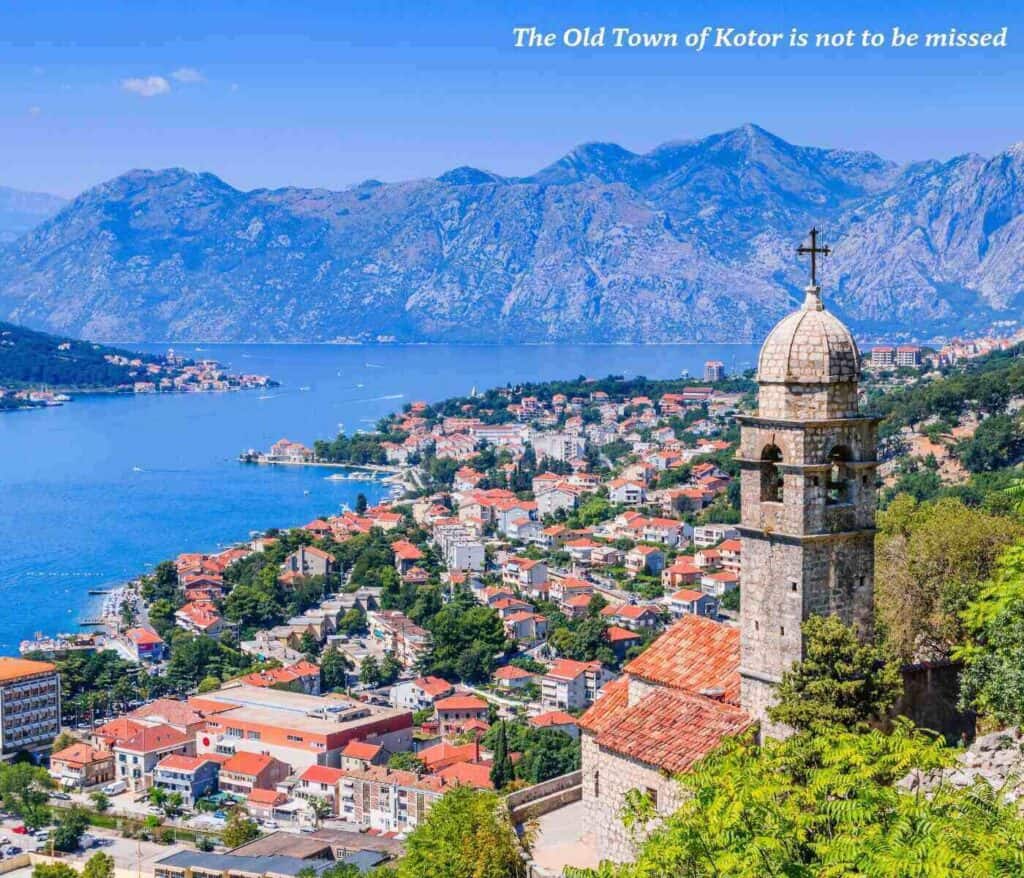
The indisputable jewel of the Boka Kotorska, Kotor is a medieval walled town set on a small triangular wedge at the southern tip of a long narrow bay sandwiched in by Mount Lovćen to the east and Mount Vrmac to the west. Once one of the busiest ports in Europe, both commercially and militarily, it formed part of the Venetian Republic from 1420 to 1797, when it was known as Cattaro.
Today, the picturesque harbour mainly funnels cruise ships, while the compact Old Town thrives as a tourist hub and an integral part of two UNESCO World Heritage Sites. The Old Town of Kotor is not to be missed. This enchanting warren of smooth stone-paved alleys is dotted with irregularly shaped squares (whose delightful names, such as Milk Square, Flour Square and Salad Square, reflect the trades or crafts once practised there) as well as an assortment of old churches and other handsome buildings dating to its Venetian heyday.
True, the Old Town can get swamped at the height of summer, particularly when large groups of day trippers pile off the liners that dock in the harbour, but even so its essential charms remain undiminished.
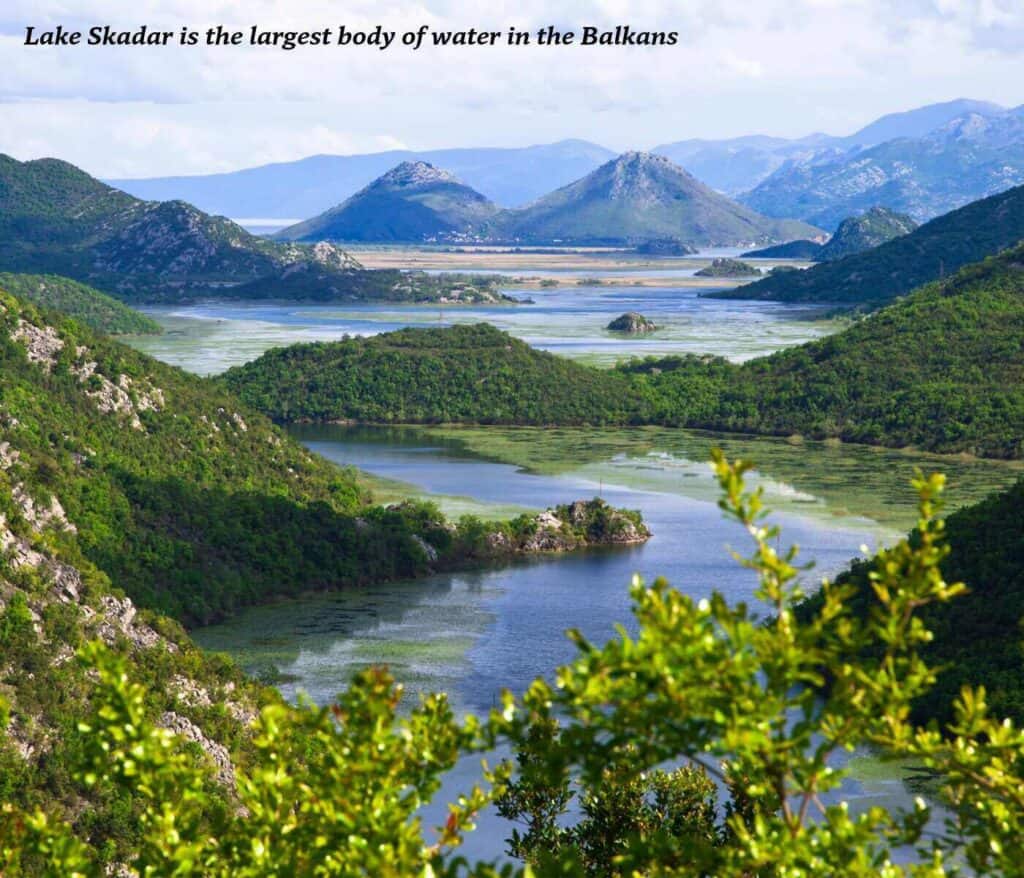
Lake Skadar
Lake Skadar is the largest body of water in the Balkans – with a surface area that can fluctuate from 370km² in summer to 540km² in winter – and one of the most beautiful. Enclosed on three sides by bare-topped karst mountains, Skadar possesses an eerie, almost magical presence; timeworn villages and monasteries dot the lakeshore, beneath which shallow blue waters, reflecting the myriad colours of vegetation, shimmer through the thin summer heat-haze.
Roughly two-thirds of this gorgeous lake lies within Montenegro (the remainder is Albanian); this has been protected since 1983 in the country’s second-largest national park, and it is also recognised as an Important Bird Area and Ramsar Wetland of International Importance. The shallowest part of Lake Skadar is the northern shore. This is characterised by large swathes of marshland where reed groves and willow clusters provide refuge to myriad flocks of aquatic birds and burst forth with white and yellow waterlilies in spring.
By contrast, the more remote southwestern shore lies at the base of craggy Mount Rumija and its sharply indented bays are studded with the rocky island monasteries that form the lake’s foremost cultural monuments. Because Skadar’s shoreline is mostly either mountainous or marshy, and prone to wide seasonal fluctuations, it hosts few towns of note other than Škodra, the historic Albanian city after which it is named.
Find out more on our Montenegro travel information page.
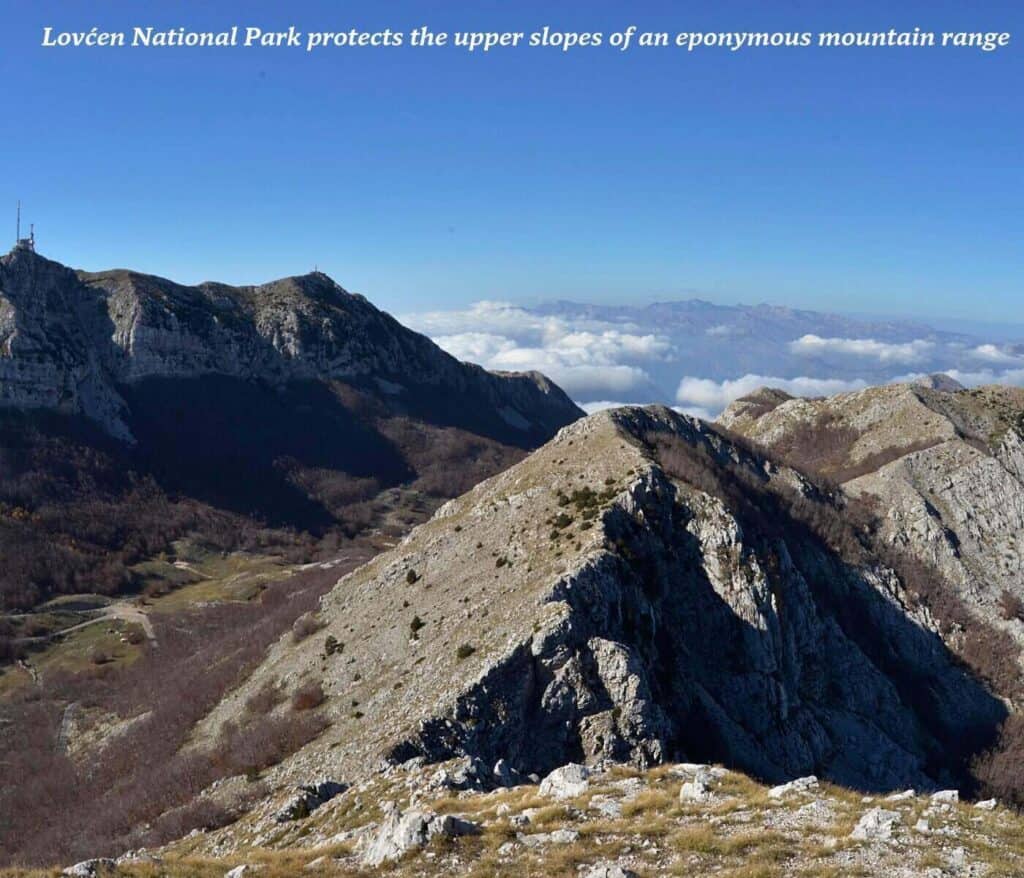
Lovćen
Proclaimed in 1952, Lovćen National Park protects the upper slopes of an eponymous mountain range that rises precipitously from the Adriatic coast immediately north of Budva and east of the Bay of Kotor. The rocky limestone slopes of Lovćen are incised with massive crevices, fissures and depressions, and adorned with sparse clusters of pine, hornbeam, birch, beech, juniper, sycamore and wild rose. Dominating the heart of the park are the twin peaks of Štirovnik (1,748m) and Jezerski (1,657m).
The former is rather unceremoniously topped by a telecommunications tower, whereas the latter is crowned by a magnificent mausoleum that forms the final resting place of Petar II Petrović-Njegoš. Offering spectacular views in all directions, this mountaintop mausoleum was until recently the main reason why people visited the national park. Since 2023, however, it has been usurped as Lovćen’s main attraction by the Kotor Cable Car, which offers breathtaking views over the Bay of Kotor as it ascends the western slopes.
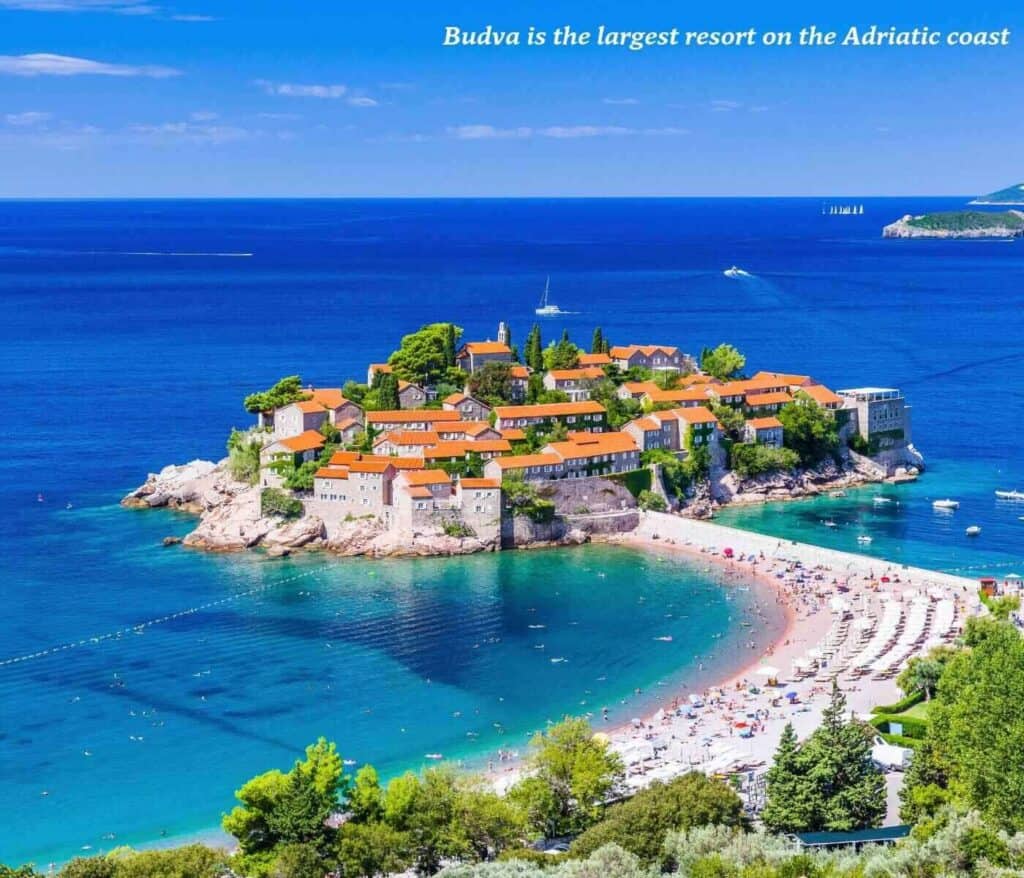
Budva
Budva is the largest, busiest and most developed resort along Montenegro’s Adriatic coastline. During summer, the town is jam-packed with tourists drawn to its array of fine beaches and associated watersports, as well as the many museums and churches spread around its small but delightful Old Town.
If you’re thirsting for a drop of culture, there’s more than enough to keep you occupied within the confines of the Stari Grad (Old Town), which occupies a small promontory at the southwest end of the modern town centre and Slovenska Beach. Entirely Venetian in style and character, the Old Town feels almost too spruce to be true. The huge ramparts, which enclose all but the sea-facing side of the Old Town, conceal a maze of cobbled streets and squares shined to a slippery buff, tightly packed ranks of houses tinted honey and red, and plenty of cafés, restaurants and boutique shops.
Roughly 1km south of Slovenska Beach, uninhabited St Nicholas’s Island is easily reached by water taxis that shuttle back and forth from the marina next to the Old Town during summer. If you fancy a good leg stretch, a clear footpath climbs through heavily wooded slopes to a 121m summit that offers excellent clifftop views of the coast and the olive-covered hills beneath the spurs of Lovćen.
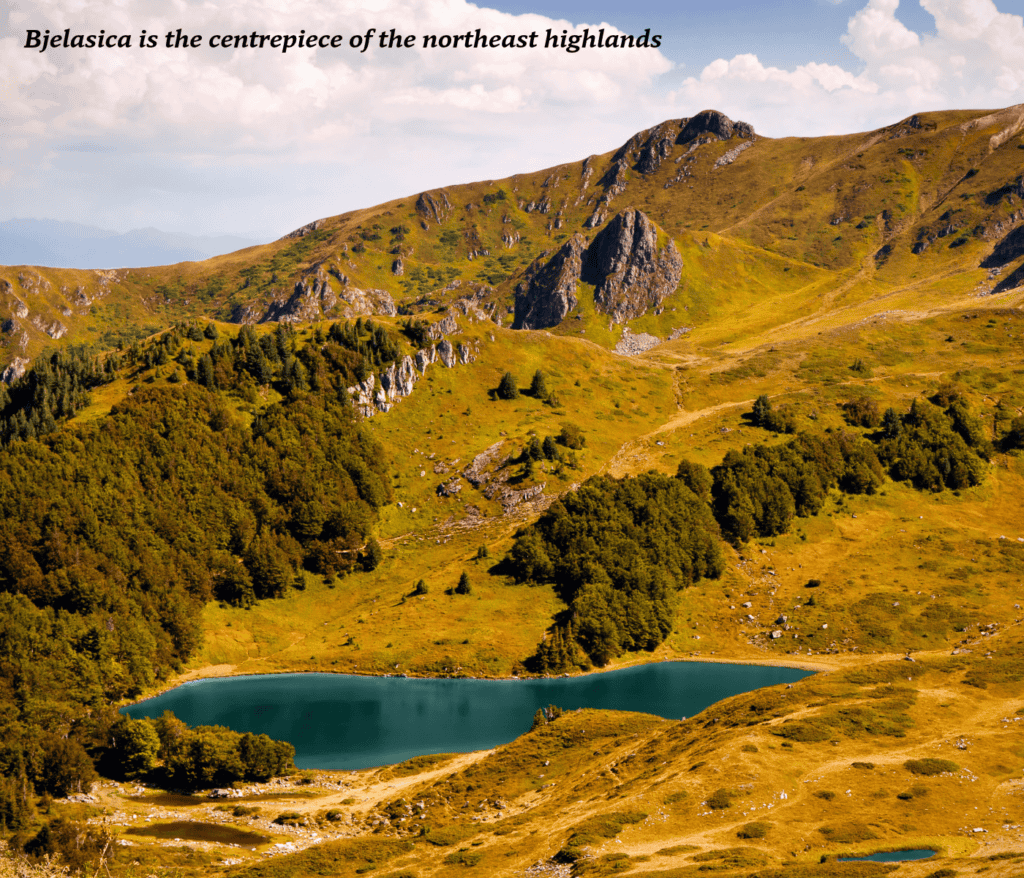
Bjelasica and Biogradska Gora
The centrepiece of the northeast highlands is Bjelasica, a beautiful mountain range bounded by the Lim River to the east and Tara to the west. Although Bjelasica is widely regarded to be Montenegro’s most extensive mountain range, it is far from the highest, with the tallest of ten peaks topping the 2,000m mark being 2,139m Crna Glava (‘Black Head’), which is considerably lower than its counterparts in Prokletije, Durmitor and Komovi.
Bjelasica also differs from Montenegro’s other predominantly karstic mountains in being composed mainly of volcanic and metamorphic rock, which has resulted in rich fertile soil and relatively smooth grassy peaks that are very accessible to hikers. Despite this, the upper slopes are blanketed in snow for much of the year, a phenomenon that is visible from afar and informs the name Bjelasica, which derives from a South Slavic term meaning ‘White Mountain’.
In winter, the focus moves from Biogradska Gora to a pair of popular ski centres (Kolašin 1450 and Kolašin 1600) just outside its southern border. Take note, however, that the area around these ski slopes, though relatively quiet in summer, also offers some great hiking (particularly out of Vranjak), as well as the opportunity to take a chairlift (which operates all year round) to above 2,000m on Troglava Peak.
Durmitor National Park
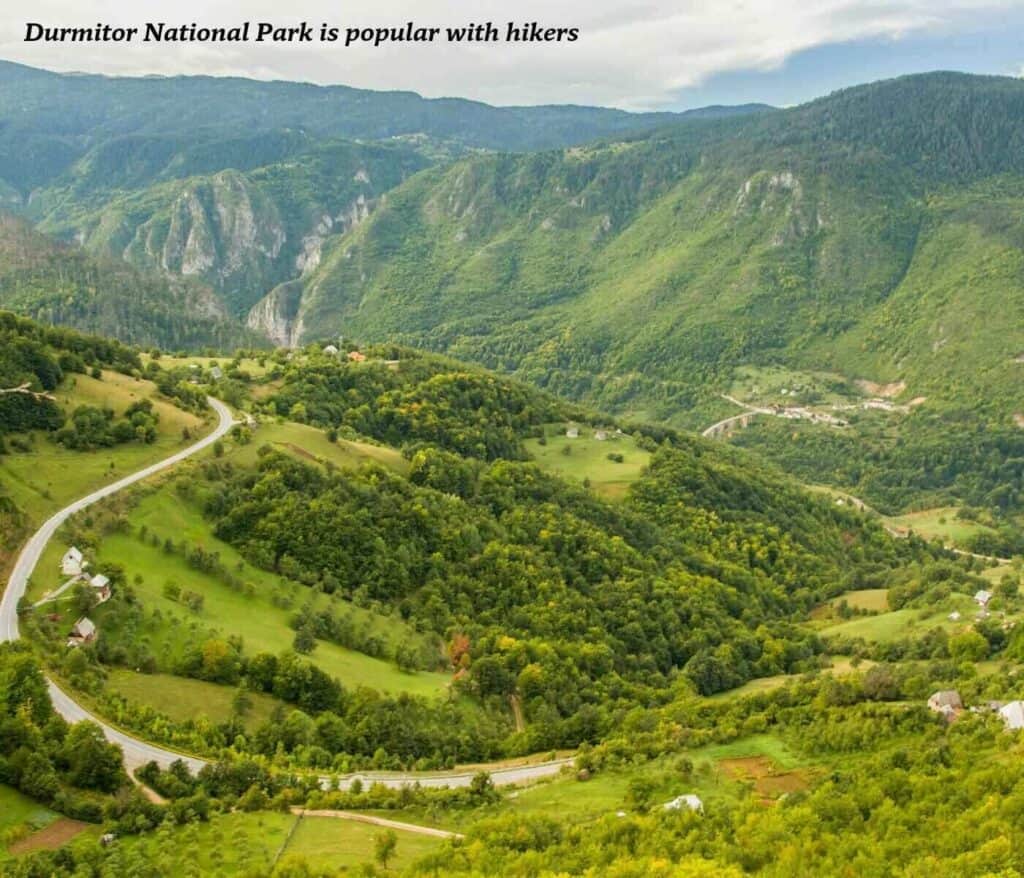
The siren draw of Montenegro’s interior is Durmitor National Park, which protects a spectacularly wild and mountainous region of saw-toothed peaks, deep canyons, alpine pastures and glacial lakes. The largest of the country’s five national parks, Durmitor was gazetted in 1952 and is now a UNESCO World Heritage Site.
Durmitor National Park comprises two distinct sectors that are quite different in character and all but mutually inaccessible. The larger western sector, which rises immediately west of Žabljak and comprises the upper slopes of the Durmitor Massif, is a popular hiking and skiing destination that can also be explored by car on a road loop known as the Durmitor Ring. The smaller eastern sector, which lies a few kilometres east of Žabljak, is focussed on the Tara River Canyon, where Đurđevića Tara Bridge, on the main road to Pljevlja, vies with Šćepan Polje as Montenegro’s most popular white-water rafting hub.
Prokletije National Park
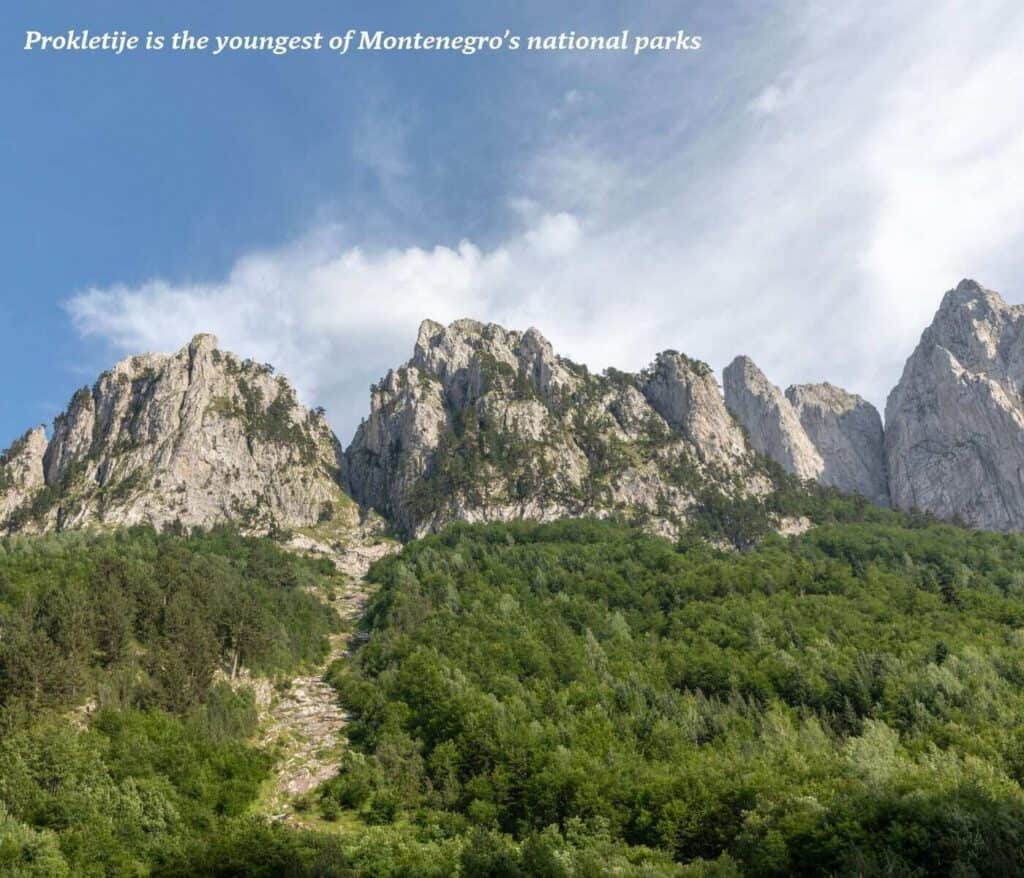
Montenegro’s youngest national park – designated in 2009 – extends for 166km² across the Prokletije Mountains, a gloriously wild and rocky cross-border range whose deep glacial valleys, sharp cliffs and saw-toothed peaks provide some of the most challenging and rewarding hiking and climbing opportunities in the Balkans.
Today the mountains are shared between a trio of national parks in Montenegro, Albania and Kosovo, with the latter two countries respectively accounting for 60% and 30% of the total protected area. The tallest summit, Maja Jezercë (2,694m), lies entirely within Albania, but the Montenegrin sector incorporates several peaks that top the 2,400m mark, most notably Zla Kolata (2,534m), which is the highest point anywhere in the country.
The park supports an exceptionally rich flora, thanks partly to the sharp altitudinal contrasts between valleys and peaks, and more than 1,700 plant species – many endemic – have been recorded across habitats that range from beech and conifer forest to grassy pastures and alpine turf. Large mammals, though seldom observed, include brown bear, grey wolf, lynx and chamois, while a checklist of 160 bird species includes raptors such as golden eagle, short-toed snake-eagle, Eurasian goshawk, Eurasian griffon vulture and peregrine falcon.
Ulcinj
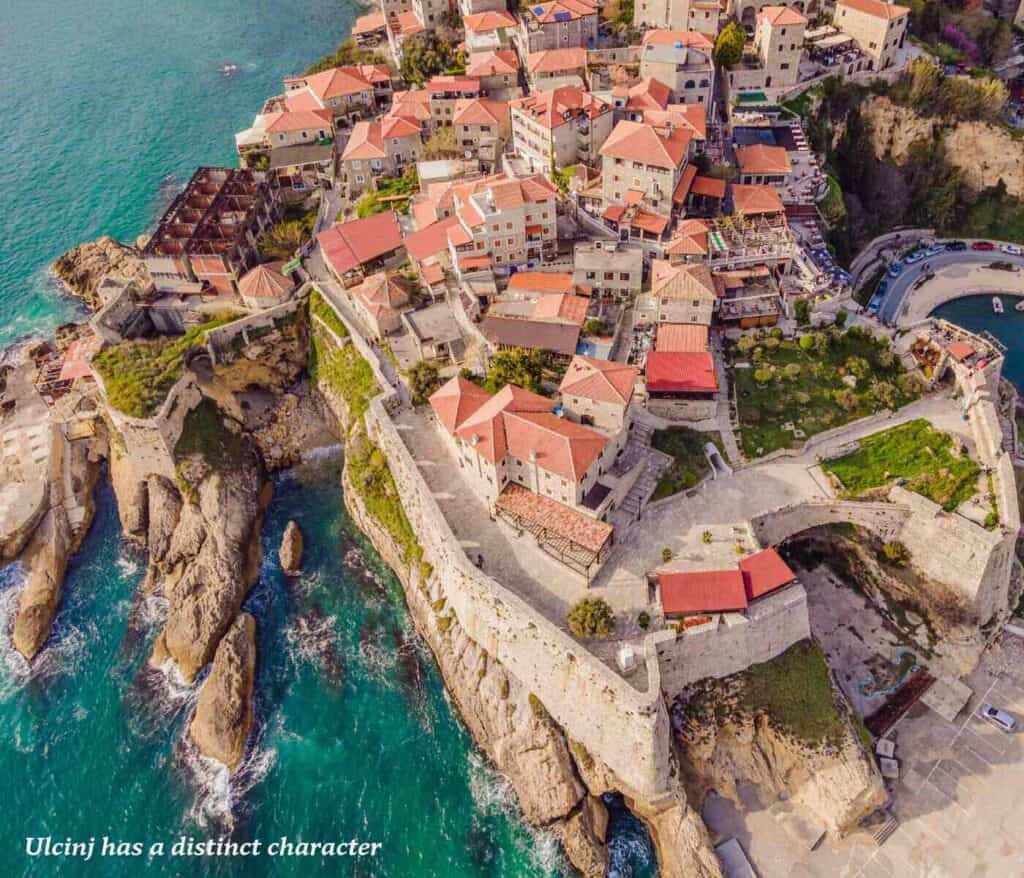
Coming from anywhere else on the Adriatic coast of Montenegro, Ulcinj immediately feels different. This is the country’s most southeasterly seaside town, situated just 18km shy of the Albanian border, and instead of the overt Venetian influence dominant elsewhere along the coast, it has a distinctly Muslim flavour. This is little surprise given that it formed part of the Ottoman Empire for a full three centuries prior to 1878, and even today roughly 60% of the town’s population is ethnically Albanian and almost 70% identifies as Muslim.
Turkish-style houses huddle around the bay in the cramped Old Town and up in the surrounding hills, and there are no fewer than 26 mosques in the town and surrounding municipality. Beyond the Old Town and beachfront, the centre is a pleasantly incoherent maze of traffic-clogged streets lined with a ragbag assortment of shops and cafés.
While Ulcinj is not exactly flush with sights, its distinct Muslim character and excellent nearby beaches make it well worth a day or two of your time.
- Recommended reading: the best historic sights in Albania
Ostrog Monastery
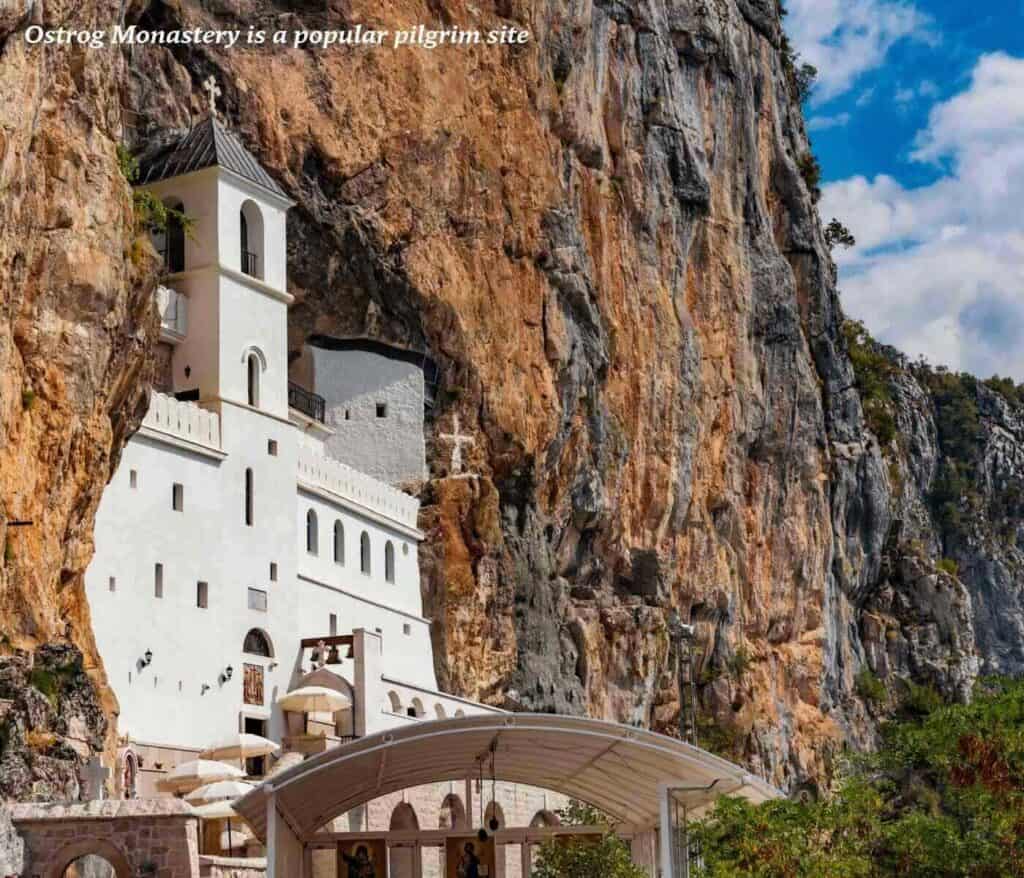
One of the most venerated religious sites in the Balkans, Ostrog Monastery is perched dramatically on a vertiginous cliff face overlooking the Bjelopavlići Plain roughly midway between Danilovgrad and Nikšić. Visible from miles around as a white painted speck grafted on to the sheer grey rock face, the monastery probably started life as a small cave church back in the 9th century AD, but gained its present significance in the 1650s when it became the ipso facto episcopal seat of St Basil of Ostrog.
The monastery is renowned as a place of miraculous healing, one that attracts a steady stream of pilgrims from all over the Balkans. A combination of the unforgettable setting, intriguing rock-hewn architecture and exceptional frescoes also make it an important cultural and historical landmark, whose heritage is protected by a small community of monks.
The main point of interest at Ostrog, carved into the cliff face at an attitude of 900m, is the Upper Monastery, whose bold white façade hides two diminutive rock-hewn cave churches. The first one you’ll pass is the Church of the Holy Cross, whose rock walls feature some splendid frescoes – depicting revered saints, scenes from the life of Christ and religious holidays – attributed to the great Serbian artist Zograf Radul. Just past this, the tiny and plainer Church of the Presentation is where the sacred relics of St Basil are kept.
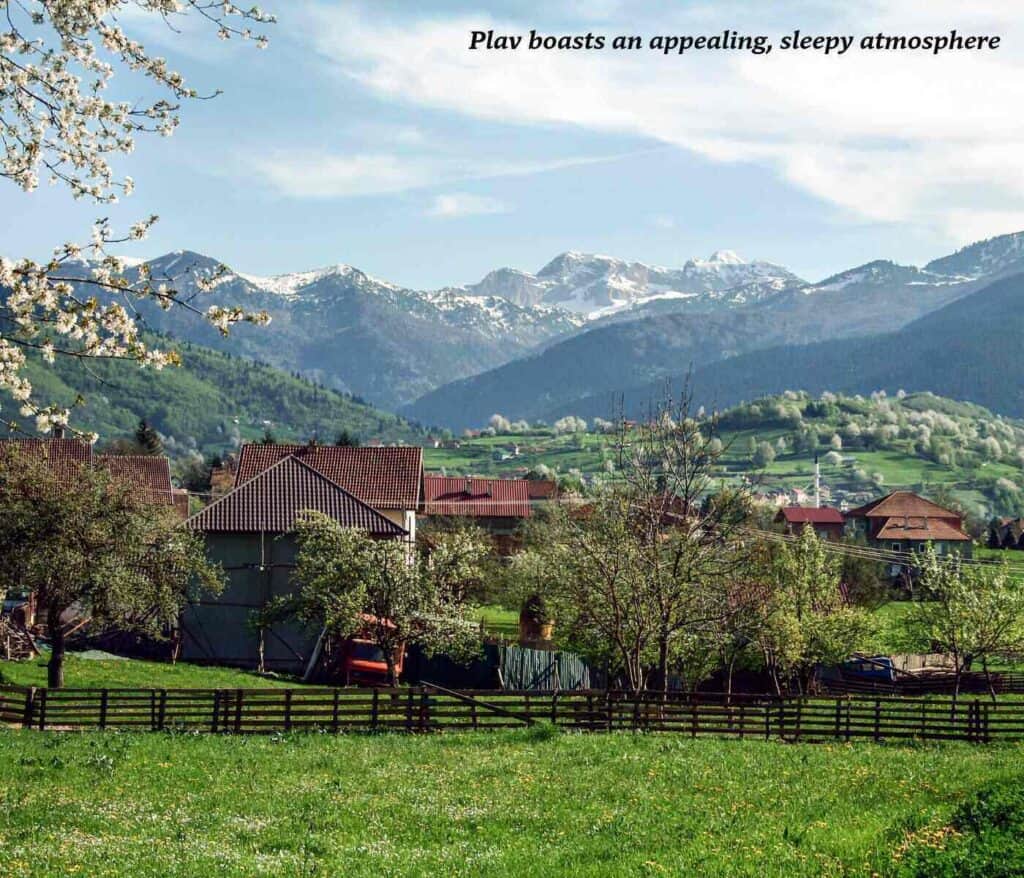
Plav
Plav (simply meaning ‘blue’) is a historic small town with an attractive lakeside location in a mountainous wedge of Montenegro bordered by Kosovo to the east and Albania to the west and south. In recent years, Plav has established itself as a popular base for hikers wanting to explore Prokletije National Park as well as other parts of the Peaks of the Balkans.
Other attractions of Plav include some fascinating architecture and several beautiful lakes and mountains. Plav is also associated with two major annual events. The wonderful blueberry festival, usually held over ten days in late July, celebrates a local harvesting tradition and involves concerts and folklore performances. And Lake Plav is the starting point of the Lim Regatta, a fast and furious white-water rafting competition that occurs over three days, usually in late May or early June, and follows the eponymous river for 134km to the Serbian town of Prijepolje via Andrijevica, Berane and Bijelo Polje.
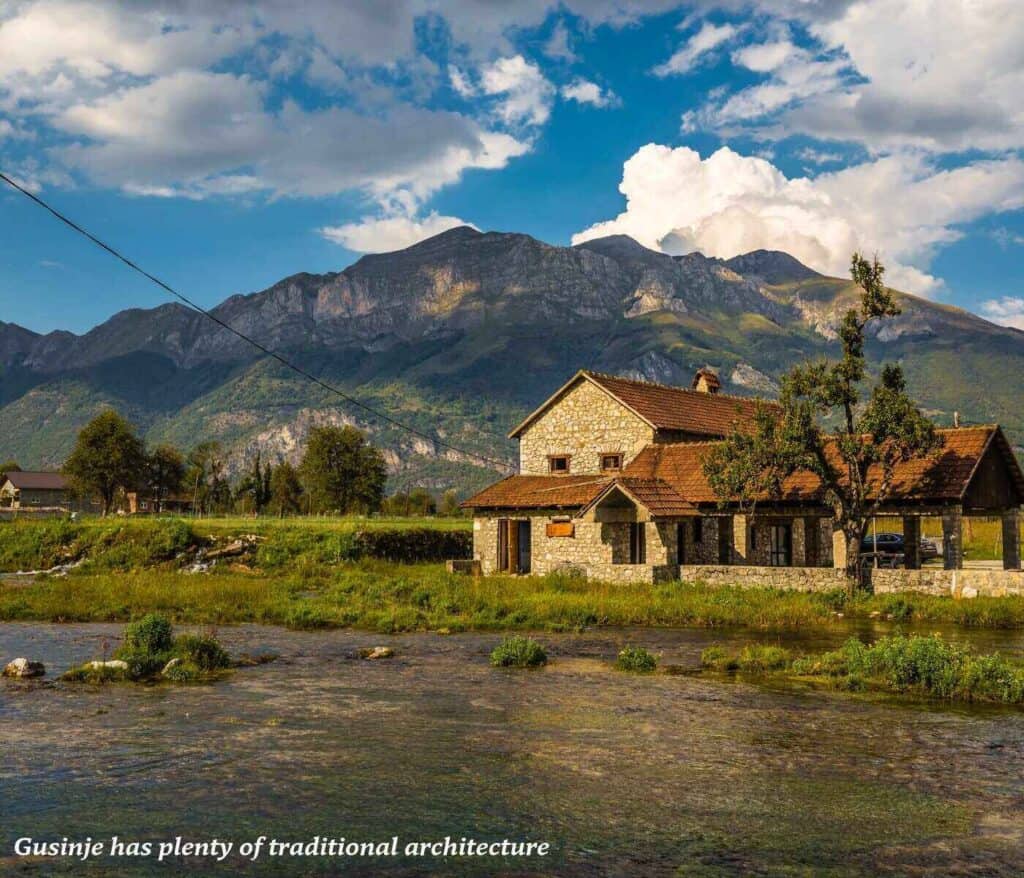
Gusinje
Gusinje is a historic, compact and very pleasant small town spotted with traditional stone-built houses and venerable buildings. Boasting a stunning location at the base of the Prokletije Mountains, it offers wonderful views towards the (often snow-capped) peaks that run along the border with Albania. Despite this, the town itself has a flattish location on rich agricultural land at the pivot of a deep three-pronged valley where the Vruja and Grnčar rivers merge to become the Ljuča.
Gusinje dates back to medieval times, when it was an important stop on the caravan route between Kotor and Peć. Today, this friendly little town is small, but its central square is still lined with cafés, bars and shops, and it forms the main gateway to Prokletije National Park. Some 5km south of Gusinje, Vusanje is a rustic and rather unfocused hillside village that sprawls attractively in a green valley flanked by the Prokletije Mountains and flowed through by the pretty Grlja River.
Our Montenegro guidebook
For more information, see our Montengero travel guide: