
Historic places in Scotland you might not know
From 14th century abbeys to the stone circles of Calanais, these lesser-known historic places in Scotland offer a captivating insight into the country’s past.
Scotland’s rich and sometimes turbulent past offers countless opportunities for fascinating short breaks, with historics sites revealing stories that span thousands of years. This article explores five places where you can discover the country’s heritage, from prehistoric settlements to destinations that shed light on the 20th century.
Whether you’re interested in archaeology, local history or simply exploring somewhere with a story to tell, these historic places in Scotland offer plenty of reasons to venture beyond the usual tourist trail.
Get our guide to Historic Weekends: Scotland
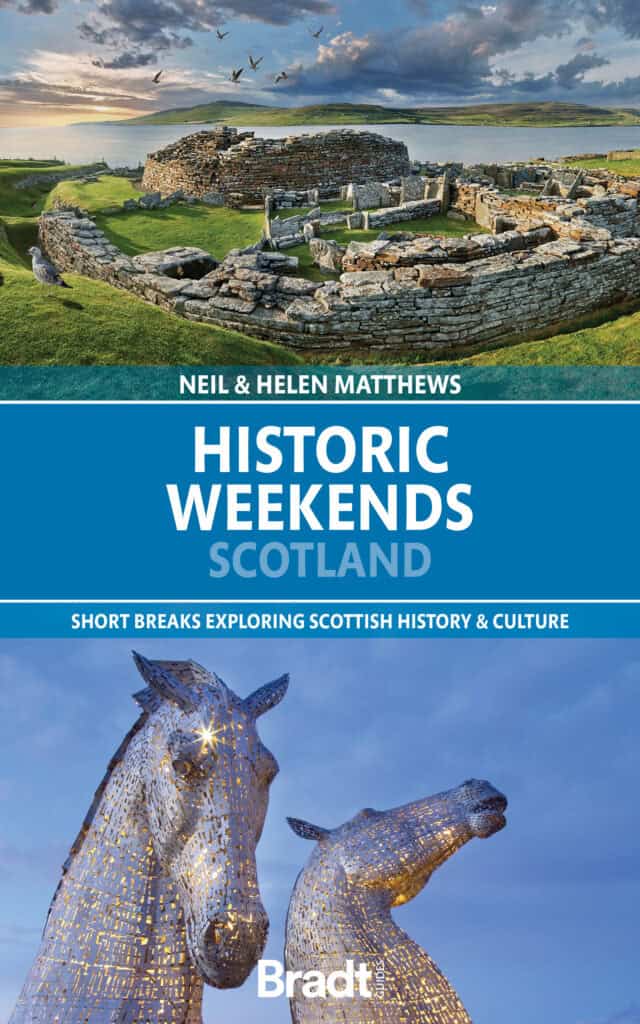
Before you delve into the article, check out the Historic Weekends Scotland guidebook that inspired it:
Lesser-known historic places in Scotland
Falkirk and Bo’ness: industry, innovation and Irn-Bru
In Scotland’s centre, between Glasgow and Edinburgh, Falkirk played a key role in the nation’s industrialisation. Scotland’s first large-scale factory (later Europe’s largest iron works) opened here; two canals linked the west coast to the east coast; and Scotland’s first intercity train line passed this way. In 1875, Falkirk was also the birthplace of Scotland’s ‘other national drink’, Irn-Bru.
Just west of the city centre is Falkirk Wheel, the world’s only rotating boat lift, whose shape observers have likened to a set of double-headed axes, a fish spine, a whale’s ribcage and a ship’s propeller. It reconnects the Forth and Clyde Canal and the Union Canal, which enabled Scotland’s late 18th and 19th century industries to transport goods, opening up trade with Scandinavia and the Low Countries – and gave thousands of passengers a day out.
After years of decline and decay, the canals are restored and open again, and the Wheel replaces flights of locks that once connected them. Take a round trip via the Wheel, on which your boat travels along the aqueduct at the top, then through a tunnel and back. Travel on the wheel is slow and surreal, with great views of the surrounding area (weather permitting).
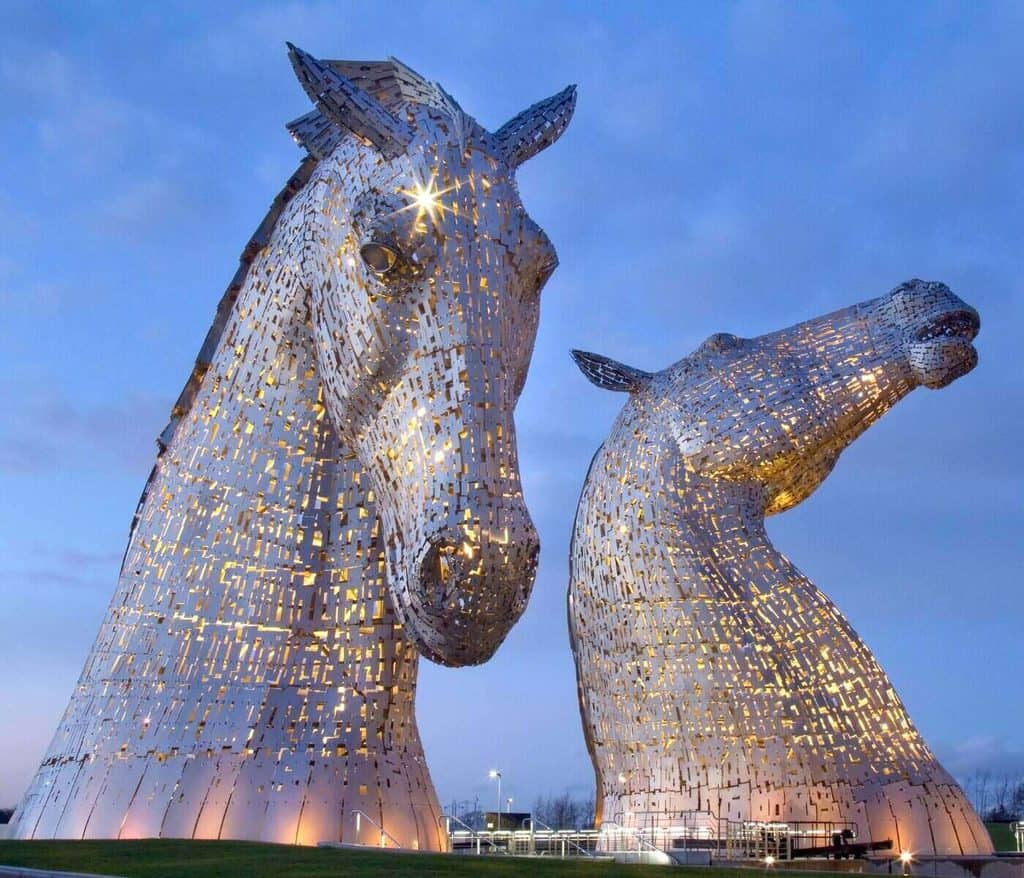
From here, stroll along a 3½-mile public footpath or take a short bus trip two miles east of central Falkirk to The Helix Park and The Kelpies. These astonishing sculptures of two horses’ heads, one at rest and the other with its head up, stand 98ft tall and weigh 300 tonnes each. Building them required 928 individual and unique plates of stainless steel. Their creator Andy Scott wanted to celebrate Scotland’s traditional heavy industries (hence the stainless steel) and the large Clydesdale horses that worked on the canals, ploughed fields for many local farms and pulled carts for local businesses such as Barr Soft Drinks, the makers of Irn-Bru.
Other local highlights
Arbroath and St Vigeans: letters and symbols
On the North Sea coast between Edinburgh and Aberdeen, Arbroath is associated with perhaps the most important letter in Scotland’s history, while nearby St Vigeans hosts an astounding collection of ancient stones whose meaning remains a mystery.
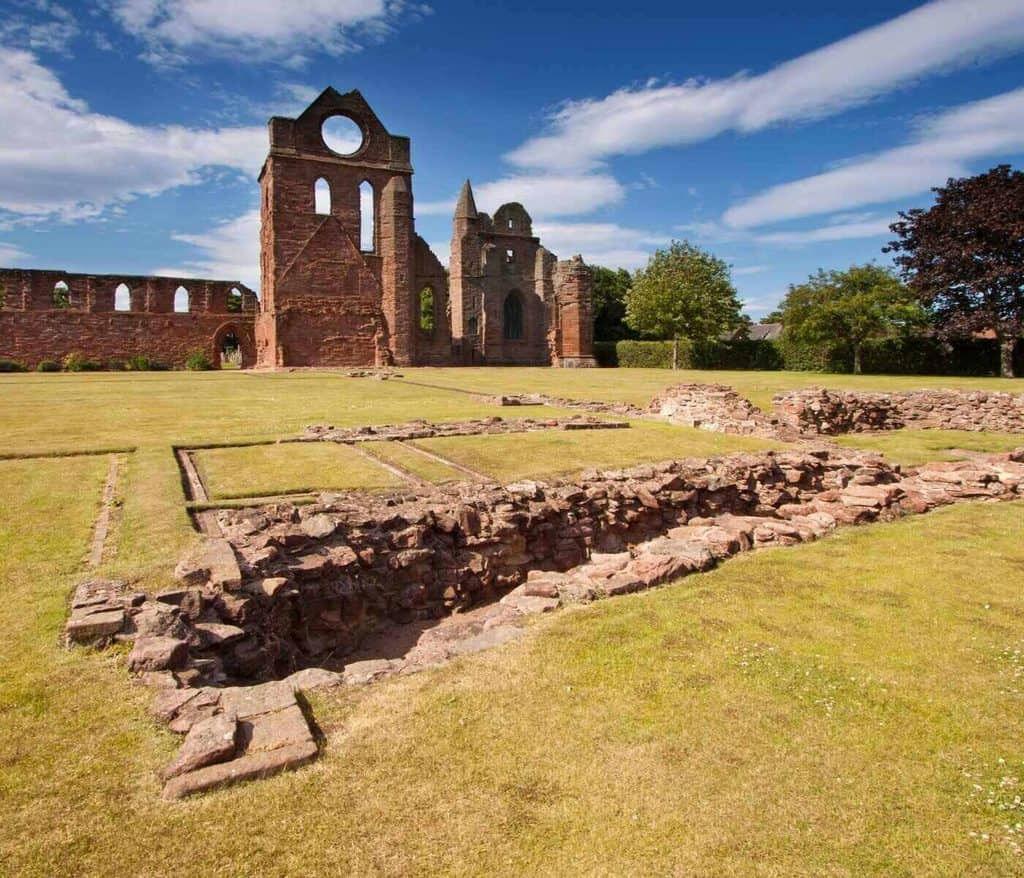
Start at the top of Arbroath’s High Street with Arbroath Abbey, built on the orders of Scotland’s William I. The abbey’s displays highlight its most significant moment in 1320, when Scotland’s barons wrote to the Pope. Their letter set out Scotland’s credentials as an independent nation; listed the crimes of Edward I of England, whom the Scots had (most unwisely) invited to arbitrate in their succession crisis of the 1290s; claimed that Robert the Bruce had ‘due consent and assent of us all’ as King; and demanded that the Pope recognise Scotland’s independence and stop the English from attacking Scotland. One section remains famous for its eloquence:
As long as a hundred of us remain alive, never will we on any conditions be subjected to the lordship of the English. It is in truth not for glory, nor riches, nor honours that we are fighting, but for freedom alone, which no honest man gives up but with life itself.
A mile north of central Arbroath, in the peaceful parish of St Vigeans, there’s a remarkable collection of over 30 Pictish stones survives in St Vigeans Museum. After the Romans left Britain, Picts occupied land to the north of the rivers Forth and Clyde. Today, the Picts are almost unknowable. The most enduring evidence of their culture comes from their artwork and particularly sculptured stones carved with geometric, animal and, later, Christian motifs. The museum’s exhibits include stone Number 7, a tall reddish cross-slab, depicts St Anthony and St Paul sharing the Last Supper, above a carving of a man kneeling to drink a bull’s in the hope of a fertile year for his crops (a Roman ritual from the 2nd century AD).
Other local highlights
The charming Signal Tower Museum charts the development of Arbroath and its harbour, and demonstrates the importance to its fishing industries of the local women (‘fishwives’ as they became known). On Arbroath’s western side, the eccentricities of the Memorial Chapel are well worth a look; few buildings have two sundials.
Caithness: the long haul
Hundreds of millions of years ago, the northernmost part of Scotland was covered by a large lake. Referring to Caithness’s largest town Thurso, geologist Hugh Miller wrote that ‘Thurso is built on dead fish’. Everything here, whether natural or manmade, seems to be ready for the long haul.
Much of Caithness, and neighbouring Sutherland, is covered by the Flow Country, a thick layer of wet peatland. Before coal and electricity were available, peat was the only fuel here. People used it to build and heat their houses, and for hot water and cooking. The peatland stores around 400 million tons of carbon – more than double the amount in all Britain’s woodlands.
Just over 20 miles south of Thurso are the Grey Cairns of Camster – reconstructions of two of Scotland’s oldest stone monuments, a long cairn and a round cairn built about 5,000 years ago. Discoveries of pottery, flint tools and animal bones over the years, along with signs of burning in the centre of the round cairn suggest that local communities used these cairns to connect with spirits and ancestors whose remains they housed inside. Even on a sunny, calm day, the setting – and the journey through deserted Flow Country to get here – is quietly eerie.
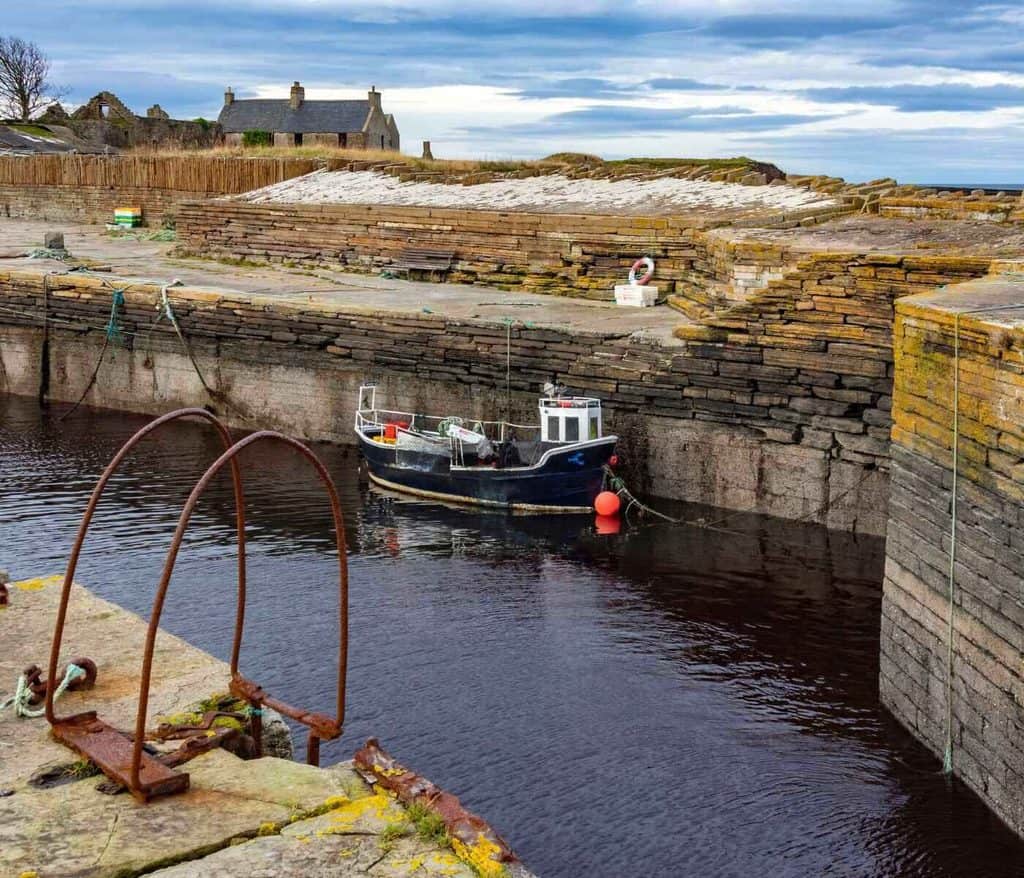
The other longlasting element round here is Caithness sandstone, which is relatively easy to split into thin slices and is extremely strong and hardwearing. From this solid material came flagstone, which travelled around the world, including Australia and South America. In Castletown, a few miles east of Thurso on the north coast, you can follow a Flagstone Trail around sites associated with the flagstone industry and find out more at the Castlehill Heritage Centre.
Castletown also played a part in defending north British coastal waters during World War II. The Centre’s most remarkable exhibit is the engine from a Hurricane fighter plane that collided with another during formation flying practice, coming down in the Flow Country in August 1941. The Norwegian pilot parachuted out, survived…and was later a PoW in Stalag Luft III.
Discover other things to do in northern Scotland here.
Other local highlights
Afew miles east of Castletown, the Castle & Gardens of Mey was built in the 16th century and later became the holiday home of Her Majesty Queen Elizabeth, the Queen Mother (the mother of the late Elzabeth II). In Thurso, the North Coast Visitor Centre is an excellent introduction to local history. It includes a reconstruction of the control room of the nuclear reactor at nearby Dounreay, which is now being slowly decommissioned.
Got more time to spare? Don’t miss our guide to the best railway journeys in Scotland.
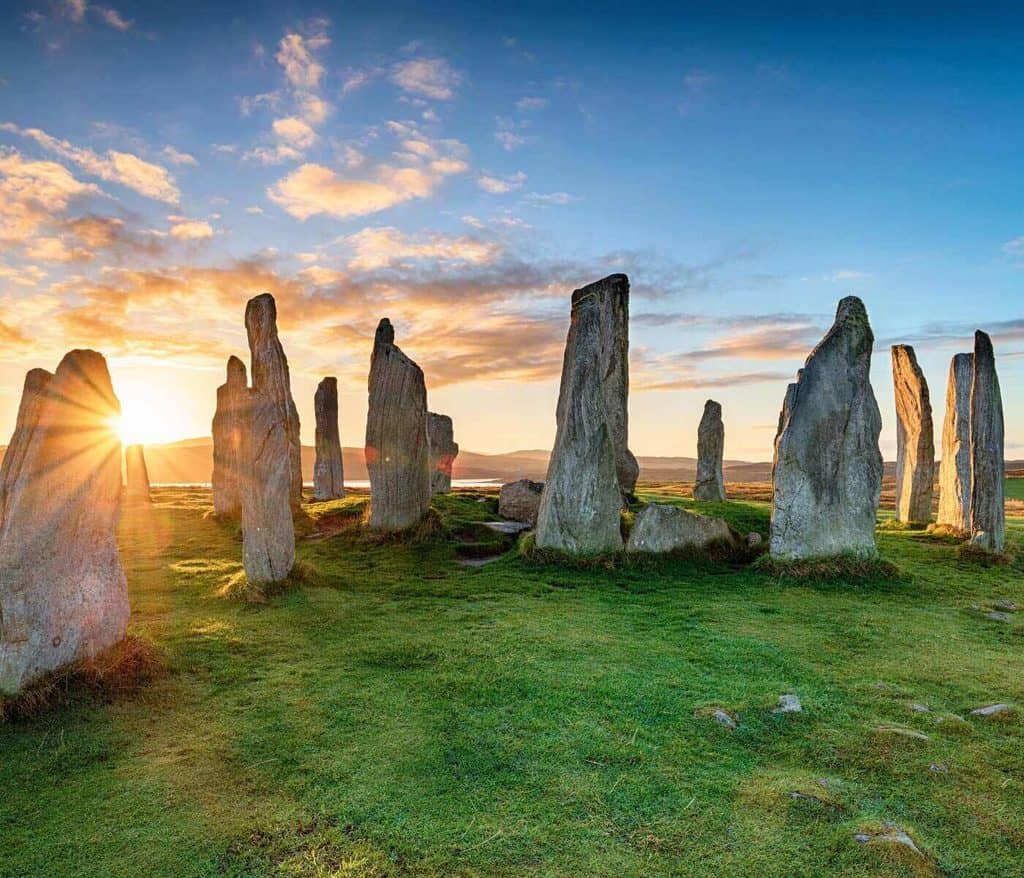
Lewis: the resilient islanders
Home to over three-quarters of the population of the Outer Hebrides, the story of Lewis – the northern two-thirds of the island of Lewis and Harris – is that of the various people who have made their home and livelihood on the island.
On Lewis’s western coast, the stone circles of Calanais form part of a major ceremonial complex, part of the same megalithic culture that built Stonehenge. At the main site, Calanais I, the stones are arranged approximately like a Celtic cross. The earliest farmers began cultivating the land here c3,500BC; over the next 1,500 years, their descendants built a ring of Lewisian gneiss stones with a central monolith and a burial chamber. The purpose of the stones remains a mystery. Builders of similar monuments across northwest Europe frequently oriented monuments according to astronomical events such as the midwinter sunrise and sunset. Whatever the truth, it’s a spectacular sight.
Six miles north of Calanais along the coast, Dun Carloway is an excellent example of an Iron Age broch. It was probably built around 200BC, but saw later use as a pottery kiln and as a shelter for cattle raiders. Brochs are a type of Iron Age building unique to Scotland, constructed during the middle Iron Age. They were drystone towers with two thick concentric walls tapered towards the top, giving brochs a distinctive ‘cooling tower’ shape. The purpose of brochs is still a subject of archaeological debate, but they may have been defensible dwellings rather than military forts, and were probably status symbols for local chieftains.
Three miles north of Dun Carloway, Geàrrannan Blackhouse Village is a restored village in which the houses on the site probably date from the late 19th century, and the last residents moved out in the 1970s. Two of the houses form a museum – one is furnished as it would have been in the early 20th century, with a peat fire burning.
The other shows a film about cutting and drying peats, and weaving Harris tweed on a Hemingway loom. Blackhouses featured a central peat fire on the floor with no chimney (or just a hole in the roof), meaning the interior filled with smoke before it drifted out through the thatched roof. The blackening of the walls and the underside of the thatch may explain the name ‘blackhouse’.
Other local highlights
Uig Museum on Lewis’s western side, and Museum nan Eilean, inside Lews Castle near the capital Stornoway in the east, both tell a range of stories about Lewis, its people and its past. Highlights of both include the Lewis chess men, mysterious relics of Scotland’s Viking age.
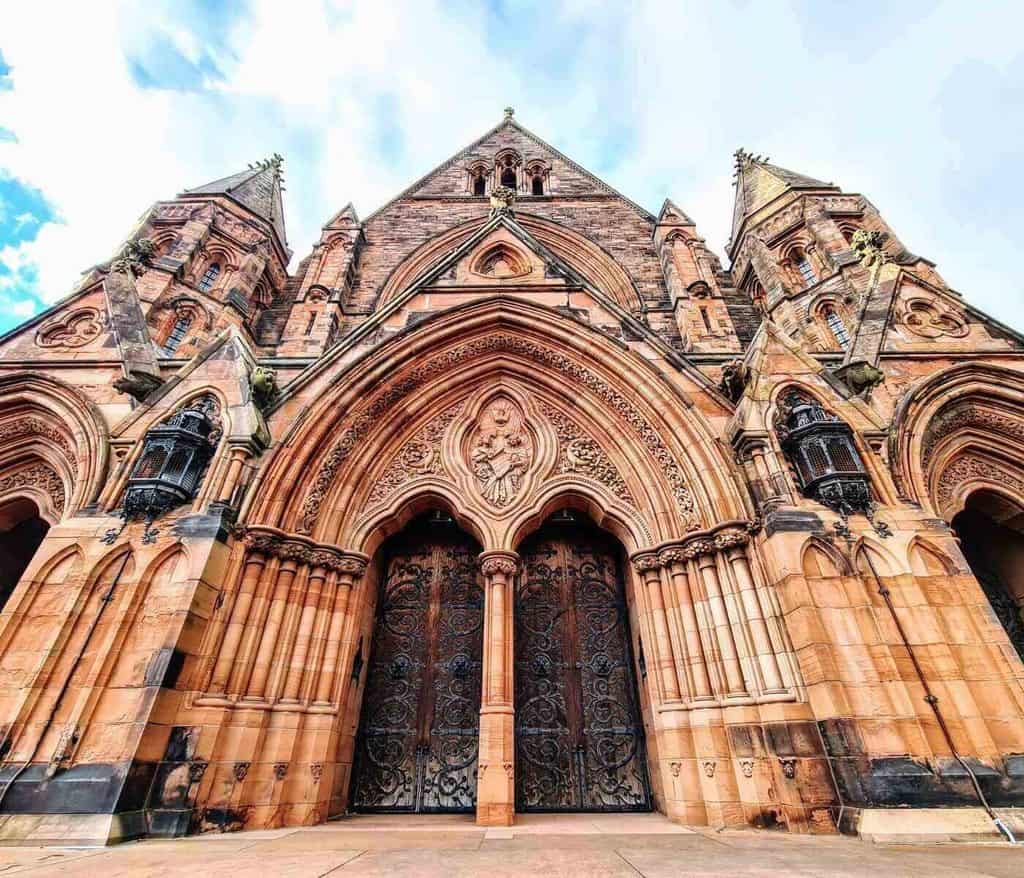
Paisley: silk secrets
Seven miles west of Glasgow, Paisley first found fame as a place of pilgrimage, initially to the shrine of St Mirin, who brought Christianity to the area in the 6th century, and later to its Abbey. Today the town is synonymous with the tear-drop pattern that its weavers adopted in the 18th century (imitating and mass producing a Kashmiri design) and more generally with textiles and threadmaking.
Along Witherspoon St, on the left, is Sma’ Shot Lane, and the restored Sma’ Shot Cottages. A sma’ shot was a binding thread that held together the famous patterned shawls. There are four cottages: a small row of three 19th century mill workers’ cottages and a hand-weaver’s cottage, one of only two remaining in Paisley, to the rear. The latter was built in the 1750s and is furnished as it would have been in the heyday of the home weaving industry, when up to eight members of the Lawson family lived in one room. The adjoining room housed the loom and a caged linnet to entertain the weavers. Remarkably, the looms are the originals – weavers used to dismantle and store them in the loft when there was no work, and a later resident rediscovered them.
For a glimpse into the industry’s more recent history, visit Paisley’s Abbey Mill Business Centre. The Paisley Thread Mill Museum, telling the history of the 19th-century business that became J&P Coats, thread manufacturers, is on the first floor. Exhibits include examples of crocheted and embroidered textiles produced by workers in local mills, and a conewinding machine, a fully automated way of producing cones of thread for the industrial market.
- Recommended reading: a weekend in dog-friendly Glasgow
Other local highlights
The origins of Paisley Abbey lie in the 12th century, when the King’s High Steward invited 13 Cluniac monks to establish a priory here. Marjory Bruce, daughter of Robert, and her grandson Robert III are buried in the choir. After a major redevelopment, Paisley Museum is due to reopen in 2027.
Our guide to Historic Weekends Scotland
For more information, see our guide to Historic Weekends Scotland: