
Is Namibia worth visiting?
In this guide to the country’s diverse wildlife and unique landscapes, we answer a simple question: is Namibia worth visiting?
Namibia has no idyllic sandy beaches or warm tropical waters, but it does have huge tracts of pristine wilderness. For those drawn to extraordinary landscapes, unique wildlife and wide-open spaces, there is plenty to discover.
Home to the world’s oldest desert, the Namib, the country boasts remarkable plants and animals, from the ancient Welwitschia mirabilis to elusive desert-dwelling species. Its vast open areas include national parks and conservancies, offering opportunities to experience wildlife in protected natural habitats.
Namibia is also an appealing destination for independent exploration. Travellers can drive through endless plains, towering mountain ranges and spectacular canyons, or choose guided trips with expert local knowledge. For those planning a safari, experienced guides can help bring the country’s wildlife and landscapes to life, while lodges and camps offer opportunities to explore more remote regions.
With its remarkable natural diversity, relatively uncrowded wilderness and range of ways to explore, Namibia offers a travel experience unlike many others in southern Africa.
Get our guide to Namibia
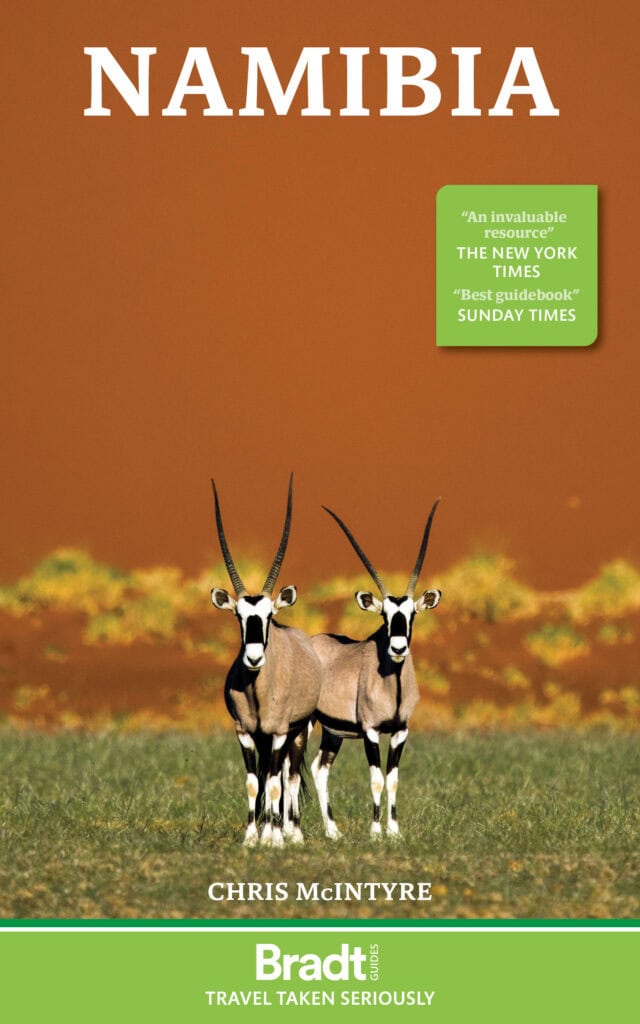
Before you delve into the article, check out the Namibia guidebook that inspired it:
Reasons to visit Namibia
To go on safari
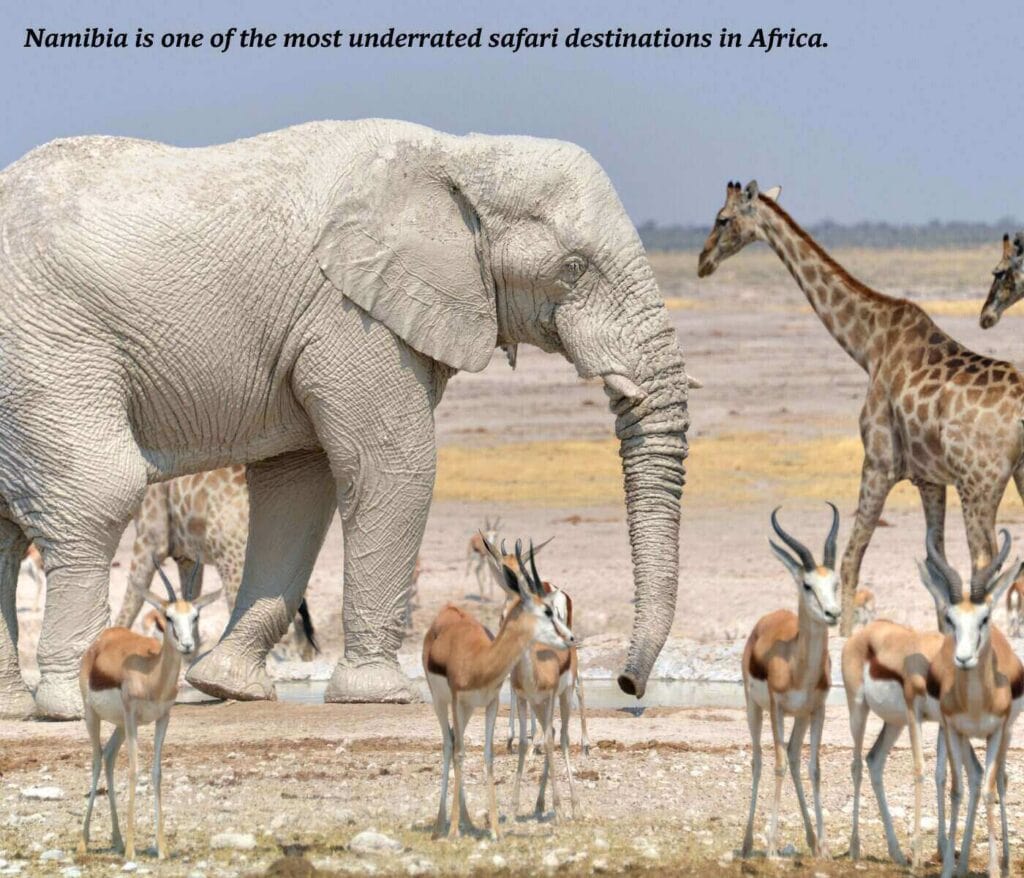
Namibia is one of the most underrated safari destinations in Africa.
Despite its aridity, the country is full of fascinating wildlife. Its national parks and concession areas have protected their flora and fauna effectively and offer some superb big game, far from the tourist hordes of more conventional safari countries. Namibia has also been the most successful country in the world at protecting its black rhino population, and has Africa’s largest population of cheetahs.
Because the Namib is one of the world’s oldest deserts, the extraordinary way that plants, animals and even human populations have adapted and evolved in order to survive here is fascinating. There are many endemic species: animals and plants not found anywhere else. From beetles and birds to big game like the famous ‘desert elephants’ and strange welwitschia plants, the diversity is astounding.
One of Africa’s best game reserves, Etosha National Park protects a vast shallow bowl of silvery sand more than three times the size of Greater London, along with its surrounding bush. It excels during the dry season when huge herds of animals can be seen amid some of the most startling safari scenery in Africa.
Our recommended Namibia operator
Independent travel in Namibia is possible, but a knowledgeable tour operator can help you make the most of your trip, from navigating the country’s vast landscapes to discovering its wildlife. If you’re planning a safari, or hoping to explore more remote parts of the country, an experienced operator can help you find the right experiences and take the stress out of planning.
Here is one of our favourites:
To explore the Zambezi region
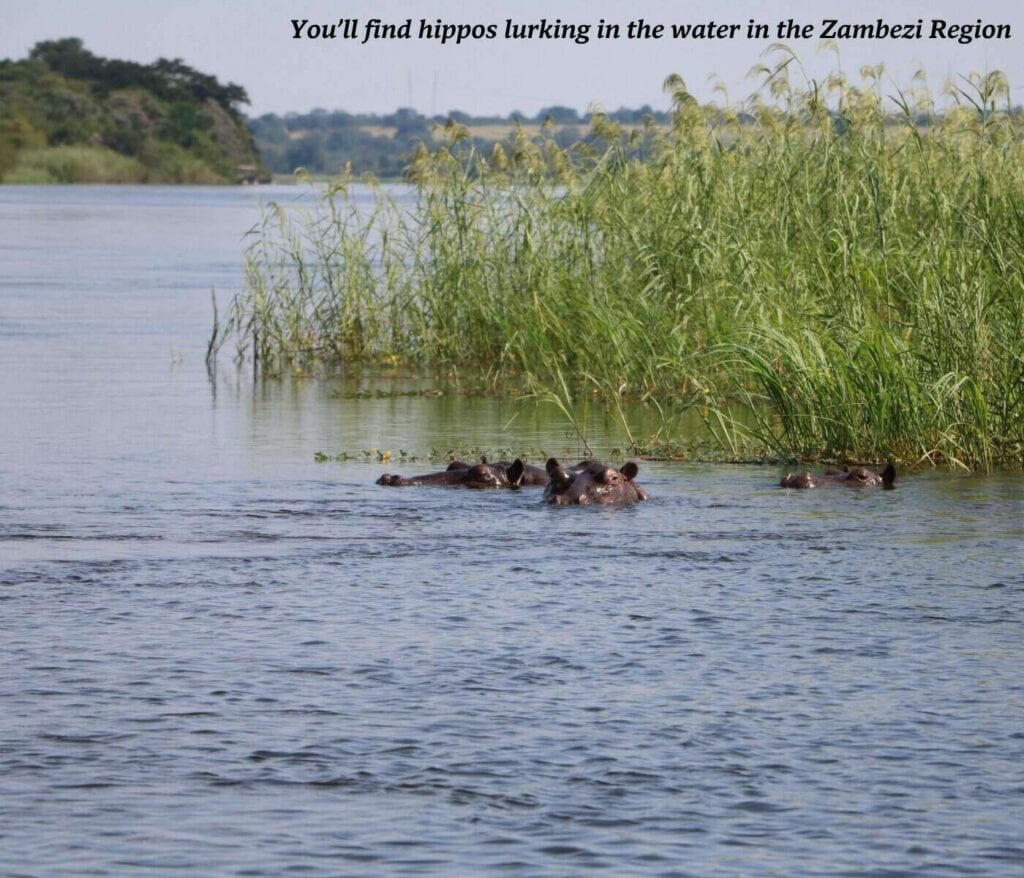
This narrow stretch of land in the northeast of Namibia, still widely known as the Caprivi Strip, offers a great contrast to the country’s other landscapes and some exciting birdlife. Watered by a generous annual rainfall, it’s a lush environment, with chances to see wildlife not found elsewhere in Namibia; among others, look out for crocodile and hippo.
Unlike much of the rest of Namibia, the Zambezi region feels like most Westerners’ stereotypical image of Africa. You’ll see lots of circular huts, small kraals, animals, and people carrying water on their heads. By the roadside you’ll find stalls selling vegetables, fruit or woodcarvings, and in the parks you’ll find buffalo hiding in the thick vegetation.
This area is much more like Botswana, Zimbabwe or Zambia than the rest of Namibia, which is only what you would expect if you look at a map of the subcontinent, or read the history of the area: it really is very different from the rest of the country.
Find out more on our Namibia travel information page.
To drive along the Skeleton Coast
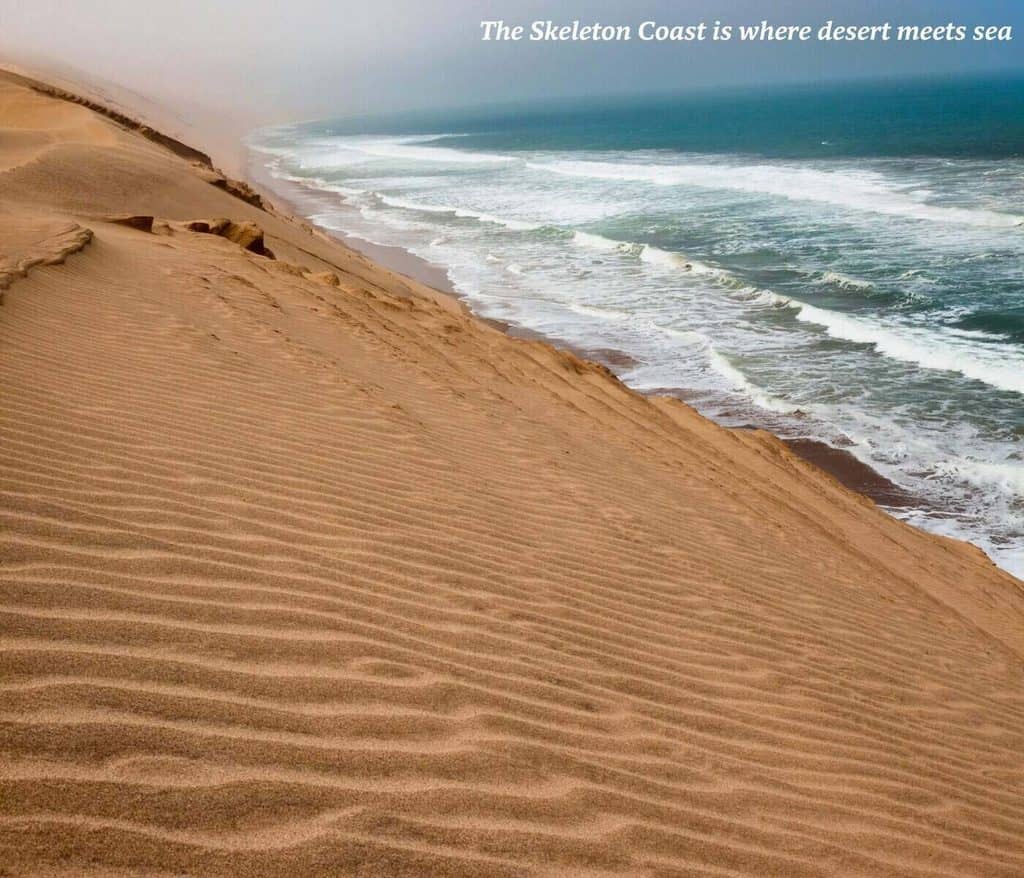
Driving north from Swakopmund, it’s easy to see how this coast earned its name. Treacherous fogs and strong currents forced many ships on to the uncharted sandbanks that shift underwater like the desert’s sands. Even if the sailors of yesteryear survived the shipwreck, their problems had only just begun.
The coast here is a barren line between an icy, pounding ocean and the Namib Desert. The present road, the C34, runs parallel to the ocean, and often feels like a drive along an enormous beach – with the sea on one side, and the sand – or gravel – continuing forever on the other. It’s testament to the power of the ocean that, despite the havoc wreaked on passing ships, very few wrecks remain visible.
For the first 300km or so, from Swakopmund to about Torra Bay, there are almost no dunes. Then, around Torra Bay, the northern dune sea of the Namib starts, with an increasingly wide belt of coastal dunes stretching north to the Kunene River. But nowhere are these as tall, or continuous, as the Namib’s great southern dune sea, south of the Kuiseb River.
At first sight it all seems very barren, but watch the amazing wildlife documentaries made by the famous film-makers of the Skeleton Coast, Des and Jen Bartlett, to realise that some of the most remarkable wildlife on earth has evolved here.
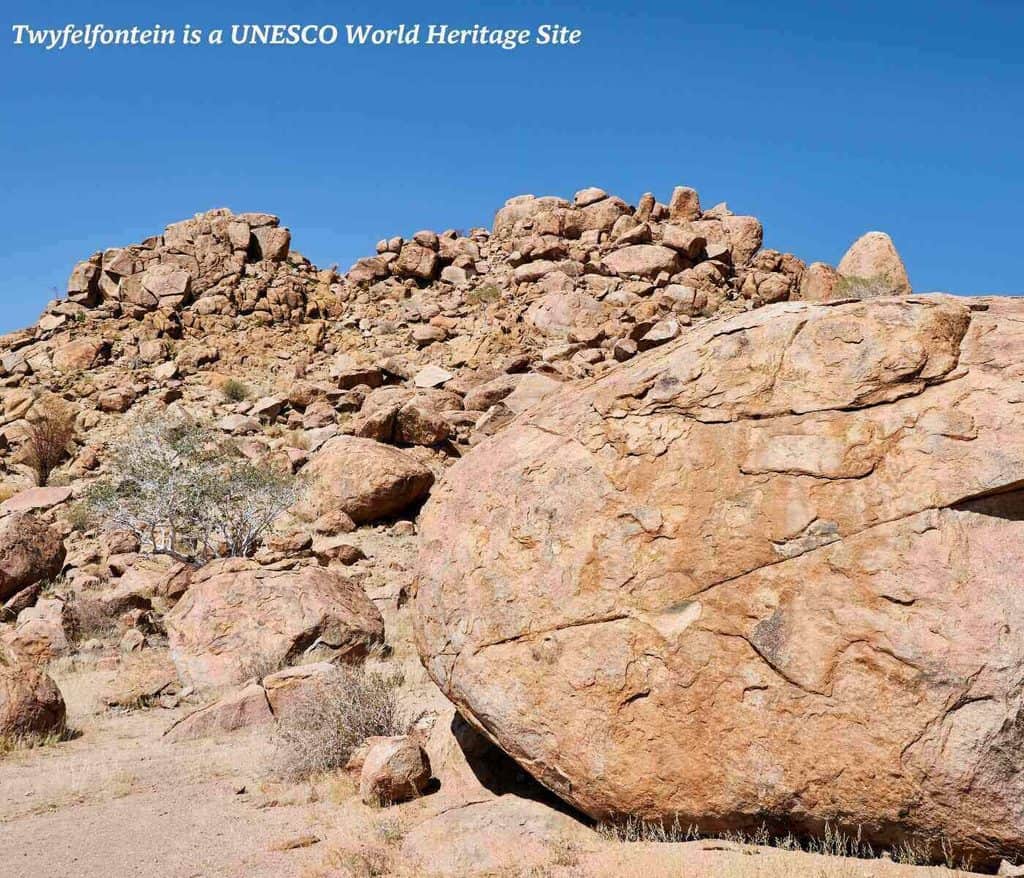
To see rock art at Twyfelfontein
The slopes of Twyfelfontein, amid the flat-topped red-granite mountains typical of Damaraland, conceal one of the continent’s greatest concentrations of rock art. At first look, it seems like any other hillside strewn with rocks, but the boulders that litter these slopes are dotted with thousands of paintings and ancient engravings, classified as a UNESCO World Heritage Site.
The engravings depict wildlife such as giraffes, elephants and rhinos, alongside footprints and geometric patterns. Created by hunter-gatherer communities, they offer a glimpse into the lives and beliefs of the people who once inhabited this region. Today, guided walks help visitors explore the rock art and understand its cultural significance, making Twyfelfontein a fascinating stop for anyone interested in Namibia’s history and heritage.
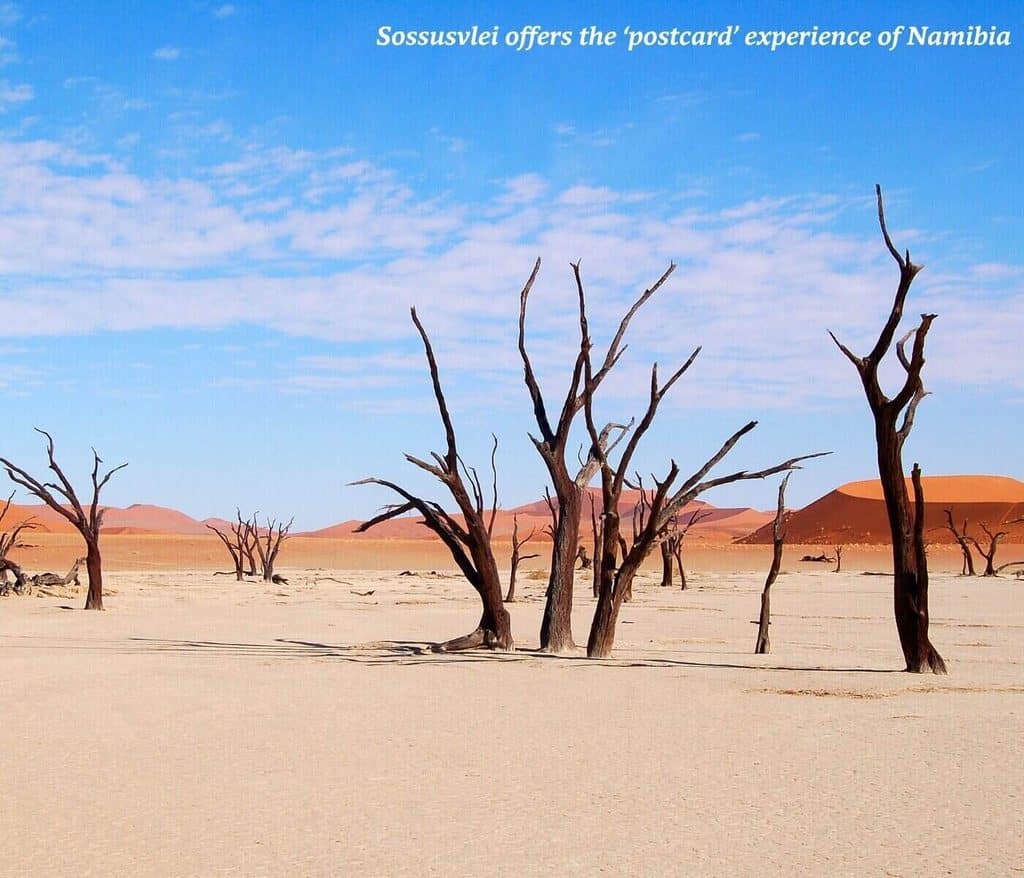
To climb sand dunes in Sossusvlei and Sesriem
When people speak of visiting the Namib Desert, this is often the area they mean.
The classic desert scenery around Sesriem and Sossusvlei is the stuff that postcards are made of – enormous apricot dunes with gracefully curving ridges, invariably pictured in the sharp light of dawn with a photogenic oryx or feathery acacia adjacent.
Sesriem and Sossusvlei lie on the Tsauchab River, one of two large rivers (the other being the Tsondab, further north) that flow westward into the great dune field of the central Namib, but never reach the ocean. Both end by forming flat white pans dotted with green trees, surrounded by spectacular dunes – islands of life within a sea of sand.
Climb the dunes at sunrise to catch the best light for your photos or consider a hot air balloon ride for an experience you will likely never forget.
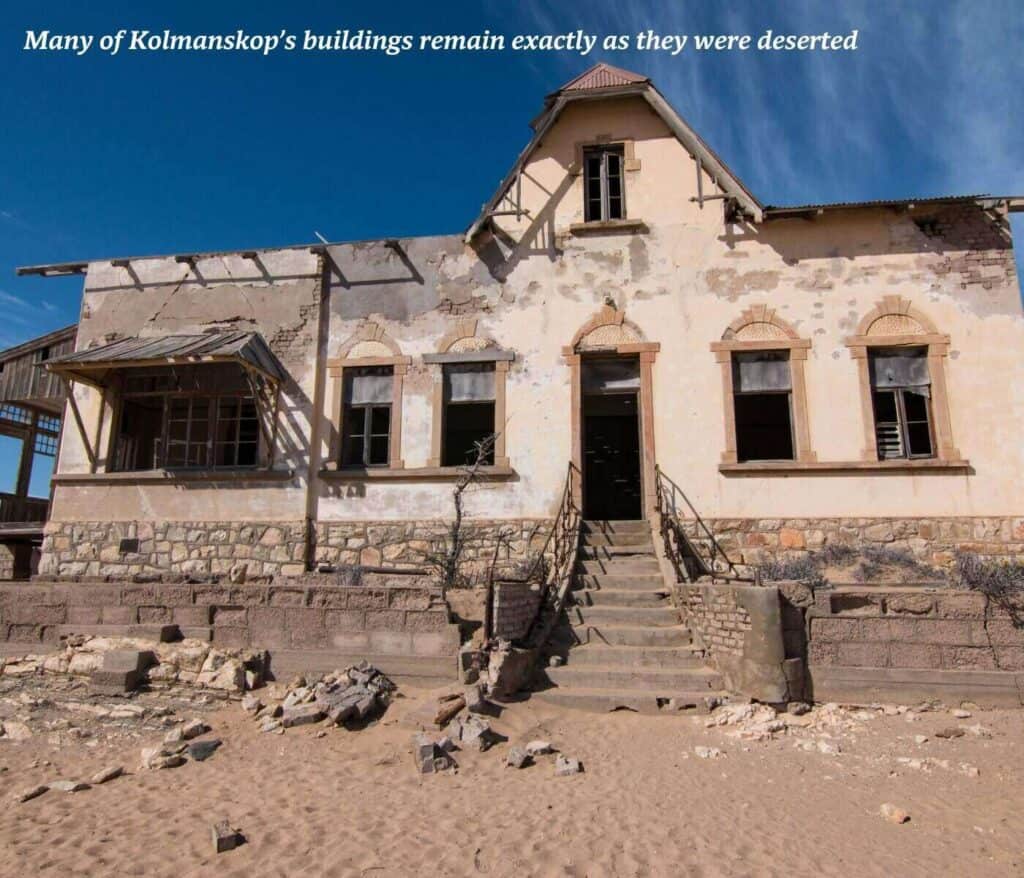
To experience the ghost town of Kolmanskop
This ghost town, once the principal town of the local diamond industry, was abandoned around 70 years ago and now gives a fascinating insight into the area’s great diamond boom.
In truth, most travellers come to Lüderitz just to visit this now- famous ghost town, named after the kopje, or small hill, where a delivery rider named Kolman used to rest his horses. It was abandoned in 1956 – with the final three families admitting defeat in 1959 – but in its heyday, the town was home to over 300 adults and 44 children, and luxuries included a bowling alley, iced refrigerators and even a swimming pool. A few of the buildings, including the imposing concert hall, have been restored, but many are left exactly as they were deserted, and are gradually being buried by the surrounding dunes.
A century since diamonds were first discovered here, it’s now possible to buy diamonds in the ‘Diamond Room’. There’s also a display charting the history of the diamond boom and the people with whom it is inextricably linked. Recent additions include a boutique selling high-end leather goods, jewellery and clothing, and the Ilford Galerie exhibiting photographs of Kolmanskop and other Namibian landscapes and wildlife.
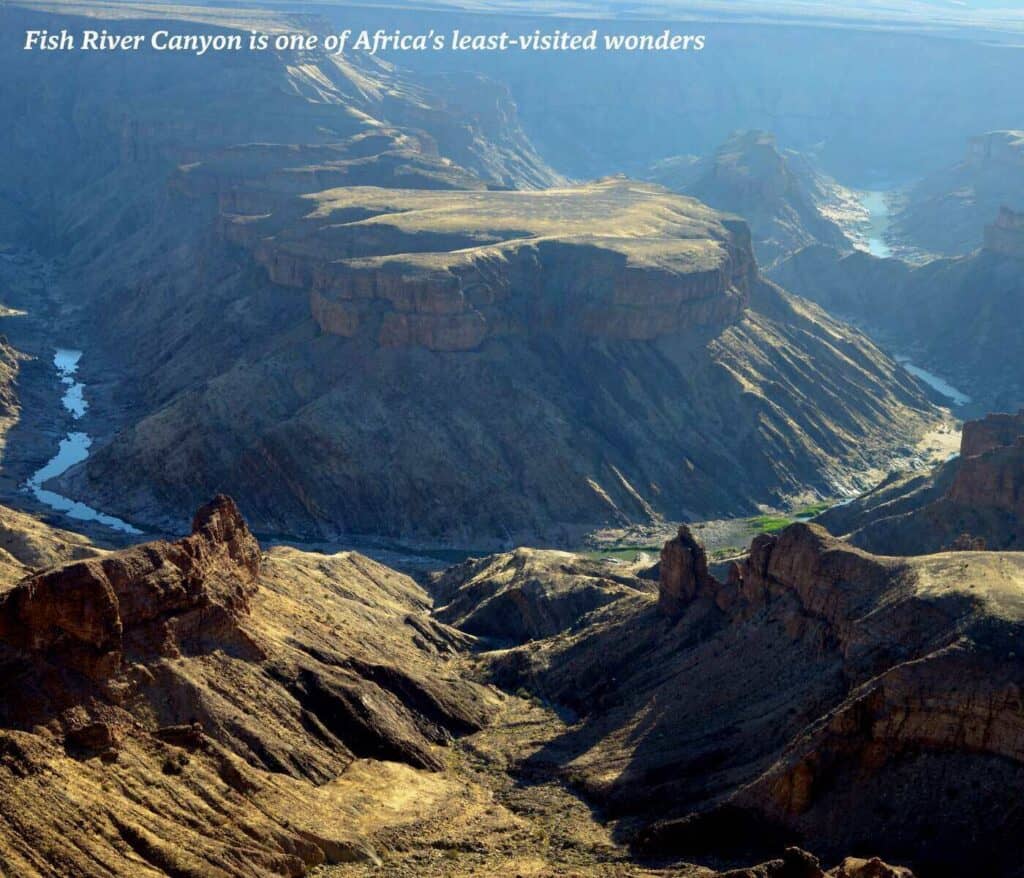
To take in the views at Fish River Canyon
At 161km long, up to 27km wide, and almost 550m at its deepest, the Fish River Canyon is arguably second in size only to Arizona’s Grand Canyon – and is certainly one of Africa’s least-visited wonders. This means that, as you sit dangling your legs over the edge, drinking in the spectacle, you’re unlikely to have your visit spoiled by a coachload of tourists – at least, as long as you walk away from the main two viewpoints. In fact, away from the busier seasons you may not see anyone around here at all!
The canyon itself starts about 7km south of Seeheim, winding its way south to Ai-Ais. From Hobas through to Ai-Ais it is protected within the Ai-Ais Richtersveld Transfrontier Park, while immediately to the north, protection continues through private reserves on both sides of the river.
For fit, experienced and self-sufficient backpackers, the Fish River Canyon is the venue for one of southern Africa’s greatest hikes: a chance to follow the river within the national park where vehicles never venture, a distance of about 80–90km from Hikers’ Viewpoint to Ai-Ais. However, numbers are limited and hikes must be arranged months in advance with the NWR, so you need to work out your logistics carefully long before you get here.
- Recommended reading: the most impressive geological features in the world
To unwind in Swakopmund
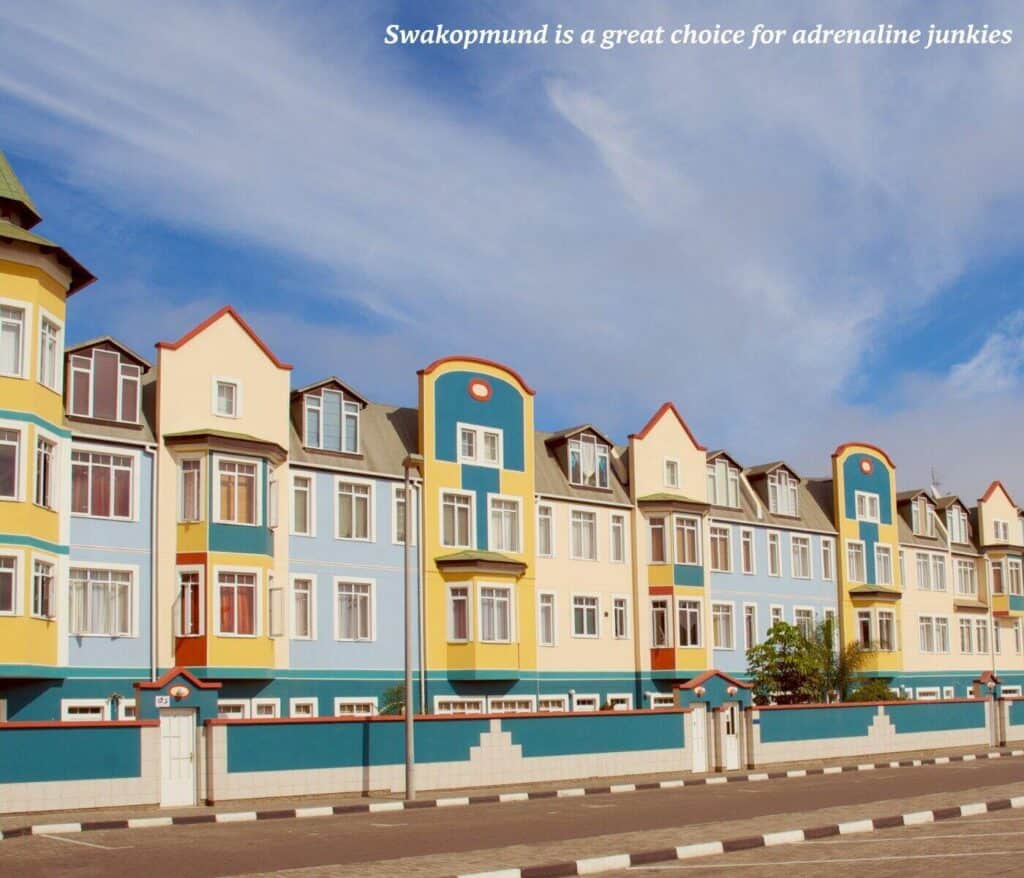
Considered by most Namibians to be the country’s only real holiday resort, this old German town spreads from the mouth of the Swakop River out into the surrounding desert plain, and is climatically more temperate than the interior. The palm-lined streets, immaculate old buildings and well-kept gardens of the centre give Swakop (as the locals call it) a unique atmosphere, and make it a hugely pleasant oasis in which to spend a few days.
Unlike much of Namibia, Swakopmund is used to tourists, and has a wide choice of places to stay and eat, and many things to do. The town has also established a name for itself as a centre for adventure travel, attracting visitors seeking ‘adrenaline’ trips to take part in options ranging from free-fall parachuting to dune-bike riding and sandboarding. This is still too small to change the town’s character, but is enough to ensure that you’ll never be bored.
To visit a Himba village
Getting to know people of a radically different cultural background is one of the most compelling reasons to travel to Namibia, and a visit to a Himba village can be an enlightening experience.
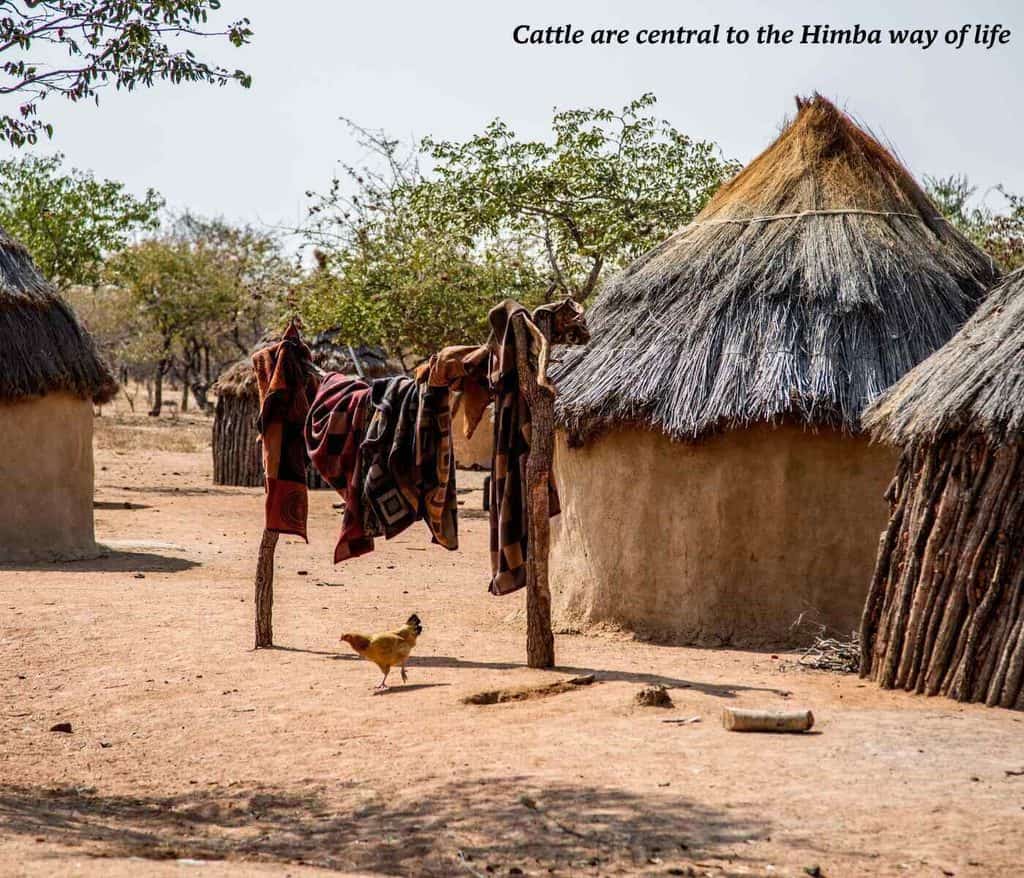
The Himba people (or Ovahimba) share a common ethnic origin and language with the Hereros, having split from the main Herero group on the Namibia–Botswana border and moved west to present-day Kaokoland in the northern Kunene in search of available land. Cattle are central to their way of life, with the size of the herd an indication of wealth and prestige – but overgrazing of the poor soils is a major problem. Thus these people are semi-nomadic, moving with their cattle in search of suitable pasture.
Of all Namibia’s ethnic groups, the Himba – or at least, Himba women and children – are probably the most photographed. Himba women adorn their skin and hair – and often that of their children – with deep-red ochre powder mixed with fat, both for protection against insects and the sun, and for cleanliness; water for washing is a rarity. Their striking appearance is further enhanced by elaborate headdresses and jewellery, much of it symbolic, while their clothes are limited to a simple goatskin skirt, and – for warmth – a rough blanket. As in many traditional societies, the men tend the cattle, so are usually absent during the day, leaving the bulk of the work to the women.
Our guide to Namibia
For more information, see Chris McIntyre’s guide to Namibia: