
The best reasons to visit Tajikistan
From stunning natural landscapes to remarkable Silk Road architecture, there are plenty of reasons to visit Tajikistan.
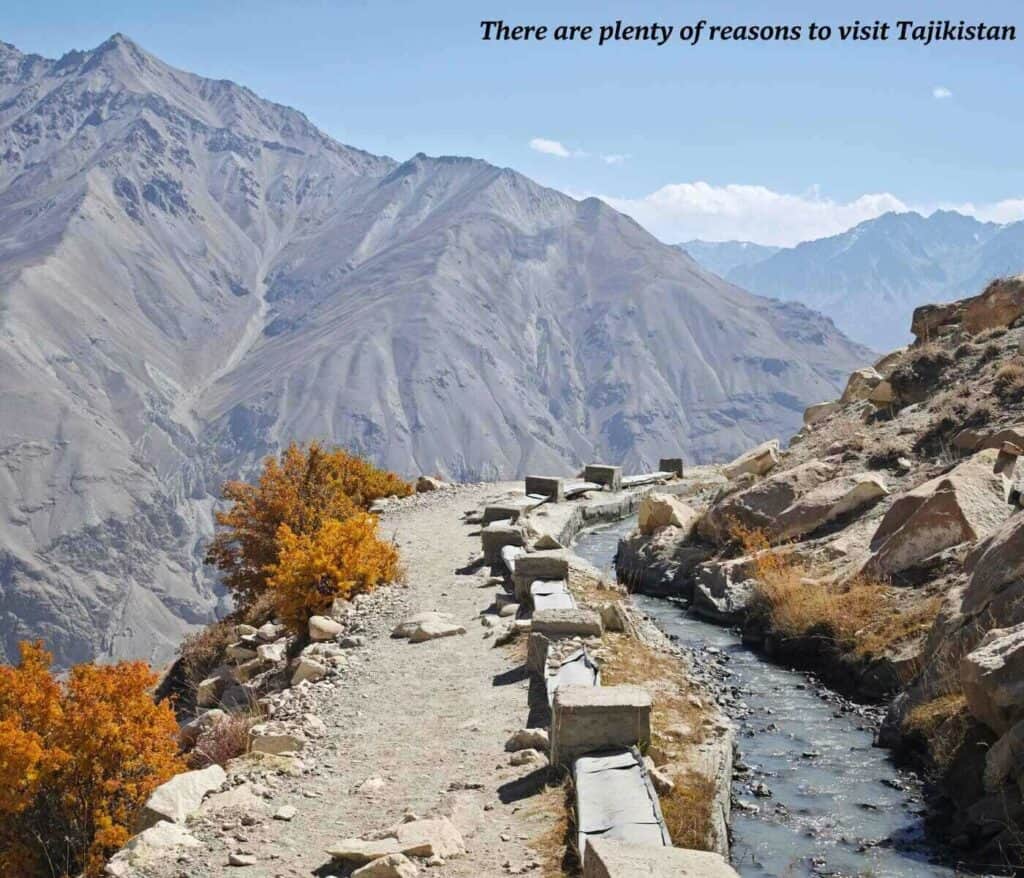
Tajikistan is the roof of the world. When you first start to read about the country, this same cliché pops up time and again. But when you stand atop a peak in the High Pamir, staring down as a concertina of meringue-like peaks unfolds beneath you, you too will find the same phrase tripping off your tongue.
For those visitors for whom battling the elements holds limited appeal, the country has somewhat more to offer. Its numerous attractions build a picture of a country at a crossroads: where tectonic plates collide, the world’s fiercest armies fought and most successful merchants traded.
Nature has bestowed breathtaking beauty on Tajikistan: mountains and glaciers, lush river valleys, dense forests and alpine meadows bursting with the bright colours of spring flowers. Its rich past has left ample mark on the present, too. Once at the centre of the Silk Road and the meeting point of mighty empires, Tajikistan’s people and cities thrived culturally and financially. Today, the country remains a resilient place, where exceptional beauty is found through every tunnel and mountain pass, and a rich history meets a changing future.
From its spectacular mountain landscapes to its ancient Silk Road heritage and evolving cultural identity, here are some of the many reasons to visit Tajikistan.
Get our guide to Tajikistan
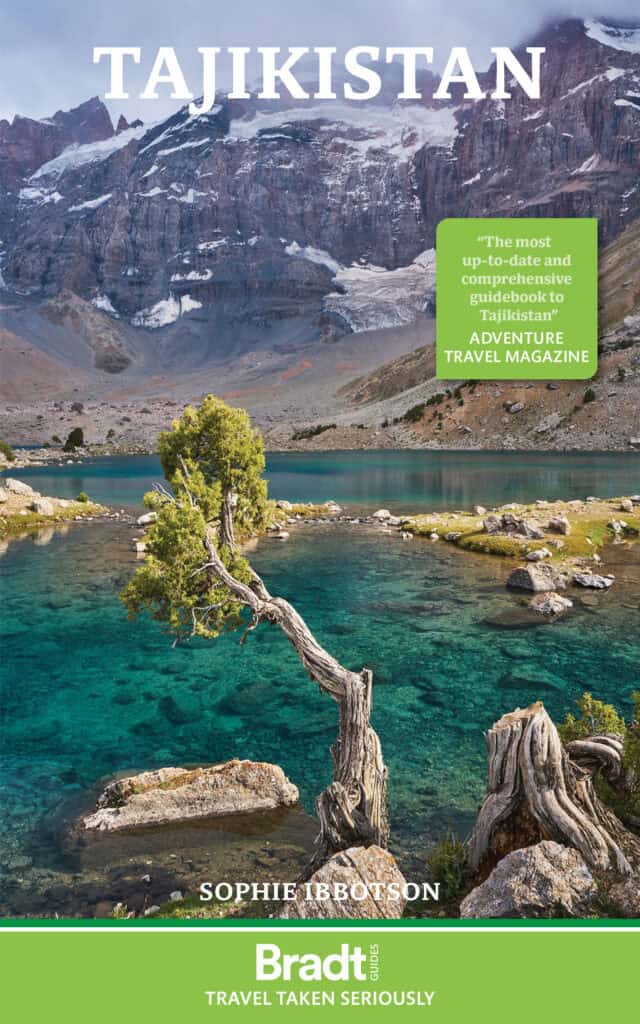
Before you delve into the article, check out the Tajikistan guidebook that inspired it:
Reasons to visit Tajikistan
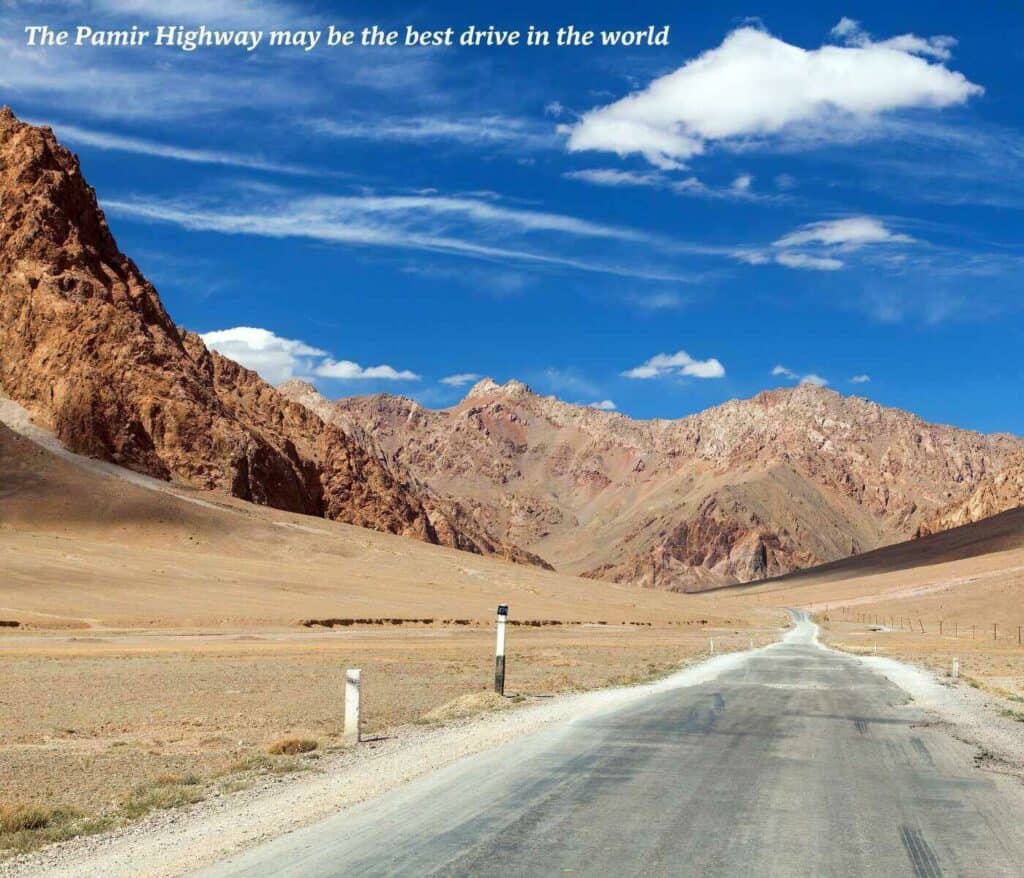
To travel along the Pamir Highway
The prize for the world’s best drive is hotly contested, but the Pamir Highway certainly comes close to perfection (at least in terms of thrills and views). Magnificent mountains, gushing rivers and waterfalls, summer settlements with nomads and sheep, and scarcely another vehicle in sight are all points in its favour.
The eastern section of the Pamir Highway between Khorog and Osh, Kyrgyzstan, was built by Soviet military engineers in the early 1930s. Its construction was a phenomenal achievement. It is the second-highest international road in the world (after the Khujerab Pass between Pakistan and China), and primary construction took just three years. It was significantly upgraded to allow improved military access for the Soviet invasion of Afghanistan in 1979, as this was one of the most important routes for the ill-fated campaign.
However, the road appears to have received little love and attention since, and this is a challenging route requiring a sturdy vehicle and a lot of patience. If using apps to map your route, expect the journey to take considerably longer than the estimated duration, and take your time – the views are beautiful, and the odd memorial is a stark reminder that it is more important to reach your destination safe, albeit a little later than planned.
While it’s not a route for the faint-hearted, if you have the physical and mental stamina it’s a once in a lifetime experience whether you’re travelling the Pamir Highway by two wheels or four.
To sample a unique cuisine
Tajikistan runs on bread and tea. Wherever you are, from a customs post to a shepherd’s hut, there will always be a kettle on the boil and a few china tea bowls filled with a light, steaming tea.
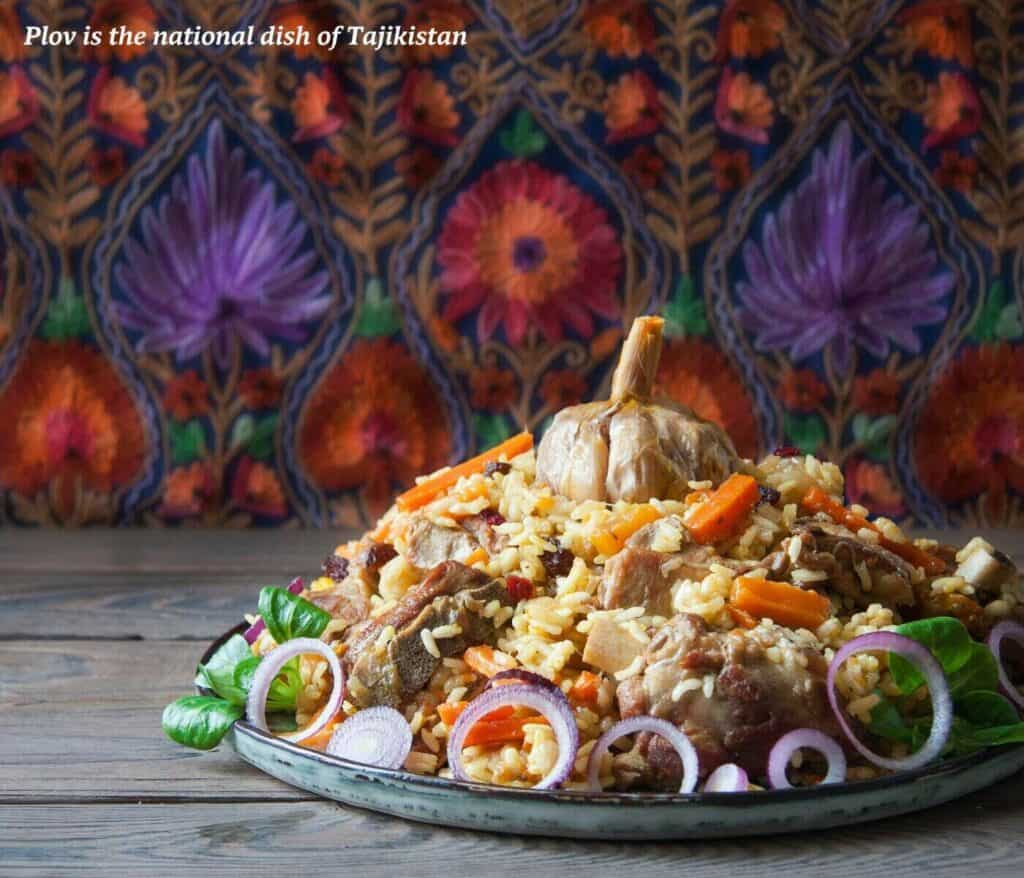
Tajik cuisine is definitely Central Asian (plenty of grilled meats and dairy products), but with an influence from Afghanistan and Russia too. The national dish, as far as there is one, is plov or osh, an oily rice-based dish with shredded carrot, meat and occasionally raisins, roasted garlic or nuts.
Equally popular is qurutob, the only Central Asian dish unique to Tajikistan. Balls of intensely salty dried yoghurt (qurut) are dissolved in water and poured over dry, flaky flatbread (fatir). The dish is then topped with meat, tomatoes and herbs, like a bread salad; a half portion usually satiates two people. Shakarob similarly uses fatir, soaked in a lighter yoghurt sauce without meat. Soup in the Tajik language translates as shurbo and is one of the most popular parts of any meal.
Every meal is accompanied by round, flat bread called non. Non is treated almost reverentially: it is hand-ripped and saved after every meal, dipped into tea to revive when stale, and finally, given to the birds after it becomes impossibly hard.
Find out more on our Tajikistan travel information page.
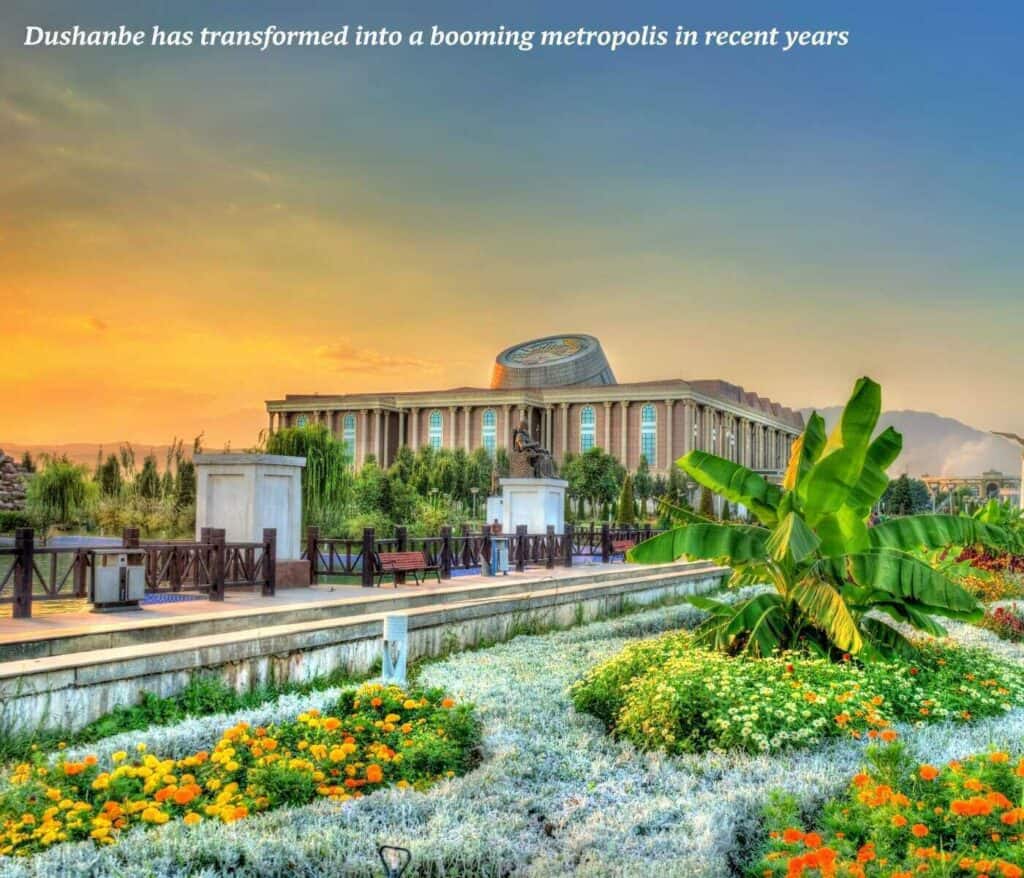
To explore Dushanbe
With its style caught somewhere between stark Soviet-era and laid-back Western café culture, Tajikistan’s capital city in recent years has rushed to transform from a market town to a booming metropolis. Public buildings are demolished then rapidly resurface in outsized forms, the parks and gardens have lush landscaping and impressive water features, and its skyline, as yet unscraped by a distinctive tower, abounds with construction cranes and blandly interchangeable high-rises, accented by the world’s now fifth-tallest flagpole.
Without centuries of Silk Road wealth or the patronage of indulgent emperors, Dushanbe’s façades have historically been far humbler than others in Central Asia, though that is changing with the controversial push towards bigger, bolder buildings: the opulent Navruz Palace, immense National Museum and illuminated Parliament among them. But the geography of the valley, the paths of the rivers, and the acres of parkland and trees still define the shape of the bustling city.
At 812m above sea level, Dushanbe is undoubtedly a mountain capital, and it is therefore no surprise that easy day trips from the capital put you up close with an impressive landscape. The three gorges – Romit, Shirkent and Varzob – are all picturesque picnic spots with fine trekking opportunities, and the 19th-century Hisor Fortress confirms the importance of the mountains as a natural defence against attackers.
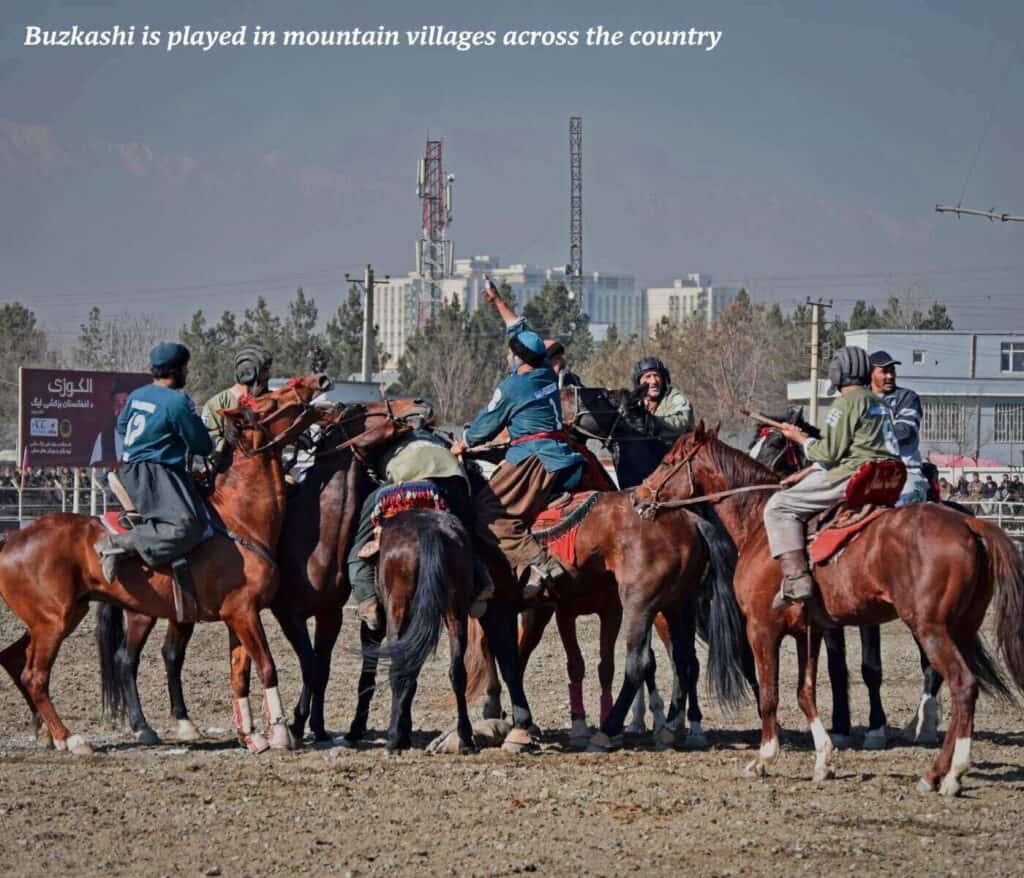
To watch a Buzkashi match
The traditional sport of buzkashi (‘goat-pulling’), aka dead goat polo, is an adrenalin-fuelled rugby scrum on horseback played in mountain villages across Central Asia.
Derived from goat raiding, teams (almost entirely men, often from rival villages) race and wrestle the decapitated carcass of a goat with the aim of throwing it into a goal at the end of the pitch. Your best chance of seeing a match is at Navruz (which coincides with the vernal equinox in late March) and, following that, on other public holidays in spring and summer.
You can also catch a game of buzkashi in winter in villages around Shahristan or the outskirts of Khujand in the north, or in the Rasht Valley, particularly in Lakhsh.
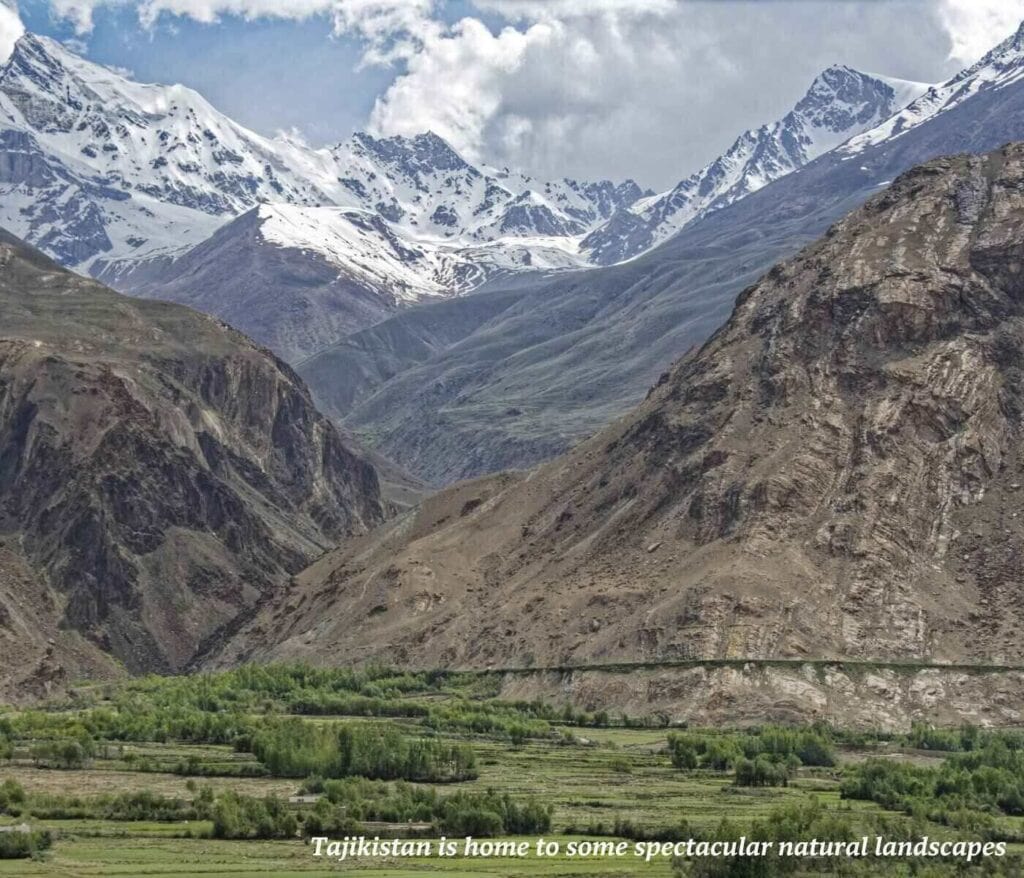
To trek through the Yagnob Valley
The word Yagnob (or Yaghnob) is thought to be derived from the Tajik adaptation of the Yagnobi phrase ‘ix-i nou’, meaning ‘ice valley’ or ‘ice river’. Until the Russians blasted the road through the mountains, the Yagnob Valley was almost entirely cut off from the outside world, accessible only on foot when the weather would allow.
It remains one of Tajikistan’s most wild, unspoilt spots and a fascinating anthropological microcosm, and was declared a national park in 2019 to preserve this nature and cultural heritage.
Tajikistan is a paradise for nature lovers and those who spend time in the great outdoors, and this is never more true than in the Yagnob Valley. Zamin Karor (the Yagnob Wall, which translates as ‘quiet ground’) can be found in the Yagnob Valley. The dramatic cliffs can be seen for miles around and are often home to climbing competitions. There are eight distinct peaks with altitudes ranging from 3,709m to 4,767m, with western and northwestern walls providing the most complex mountaineering routes.
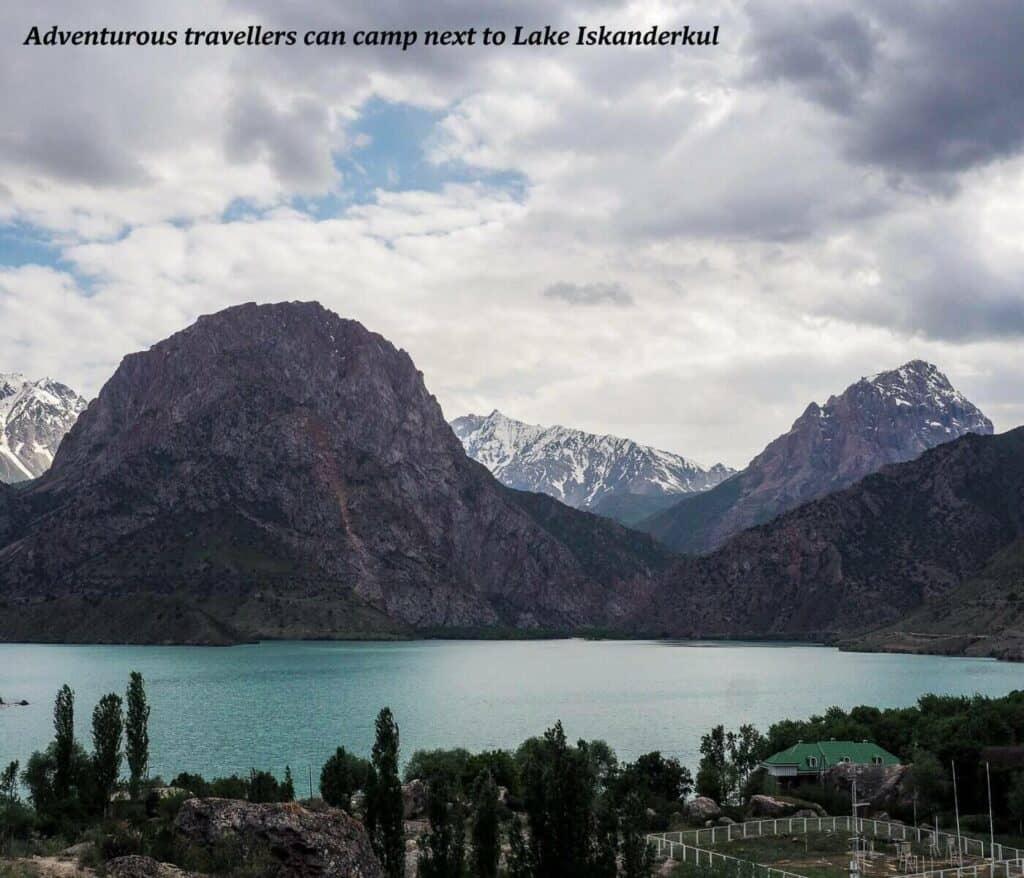
To camp beside Lake Iskanderkul
This turquoise-blue lake surrounded by the snow-capped peaks of the Fann Mountains is an understandable favourite with Tajik day trippers and foreign trekkers alike. Easily accessible from Dushanbe it can be combined with the Seven Lakes for a five-day trek or, for those seeking something a little less strenuous, it’s an idyllic spot to have a barbecue and rent a boat on the lake.
There are areas where you can camp and watch spectacular sunrises over the mountains, or you can drive past the presidential summer residence and stay in peaceful villages with breathtaking views through the valleys.
If you are camping here during a full moon, do keep your eyes fixed on the surface of the water: it is said that the ghost of Alexander the Great’s favourite horse, Bucephalus, rises from the lake and comes ashore to graze!
You can see our full list of the most impressive lakes in the world here.
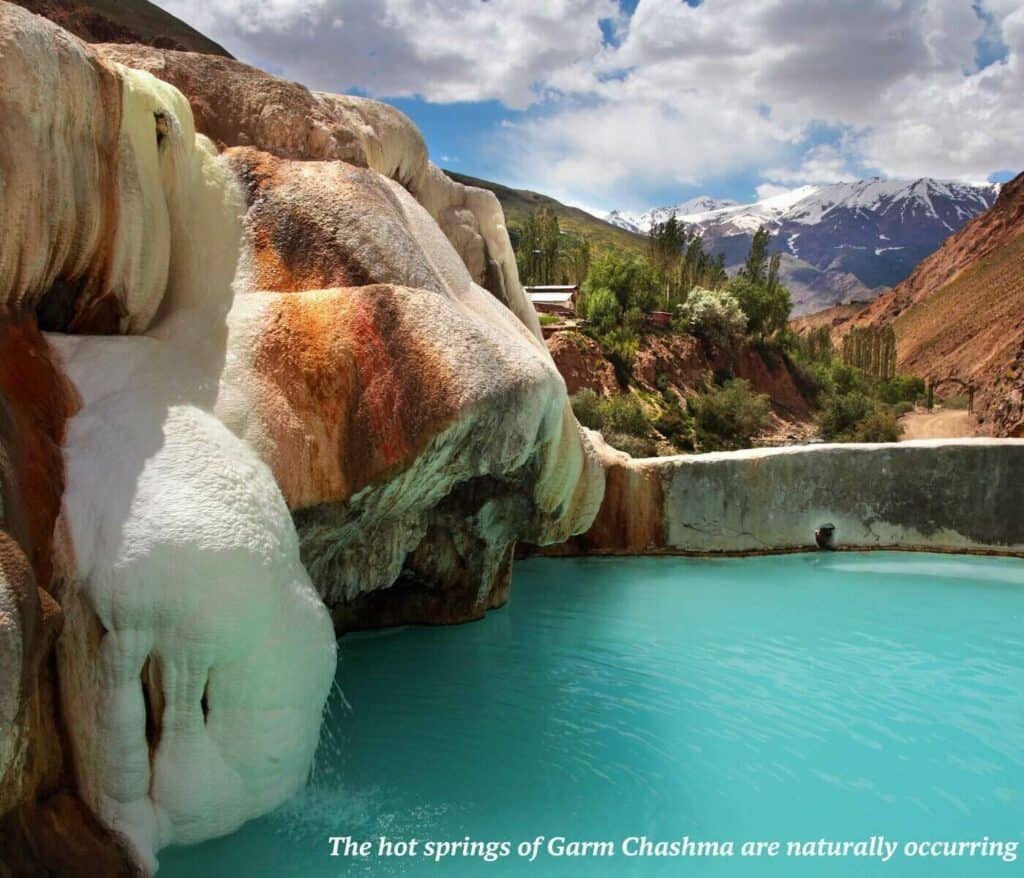
To soak in natural hot springs
The hot springs of Garm Chashma, just south of Khorog, are naturally occurring. Over thousands of years the mineral deposits have created a giant rock meringue, and you can sit and soak at the heart of it while staring up at the hillside in nothing more than your birthday suit.
Legend has it that Ali struck the ground with his sword while fighting a dragon, and hot water spewed forth. The springs are reputed to treat 72 different types of illness, the primary ones being dermatological and orthopaedic conditions.
They are used in turn by men and women; if you arrive during the other sex’s session you can either wait or use the covered (and far less dramatic) side pools. It is expected that you will bathe naked, and the salts and sulphur leave your skin feeling remarkably soft. There aren’t many better ways to relax and soothe tired muscles after a bumpy, dusty drive along the Pamir Highway.
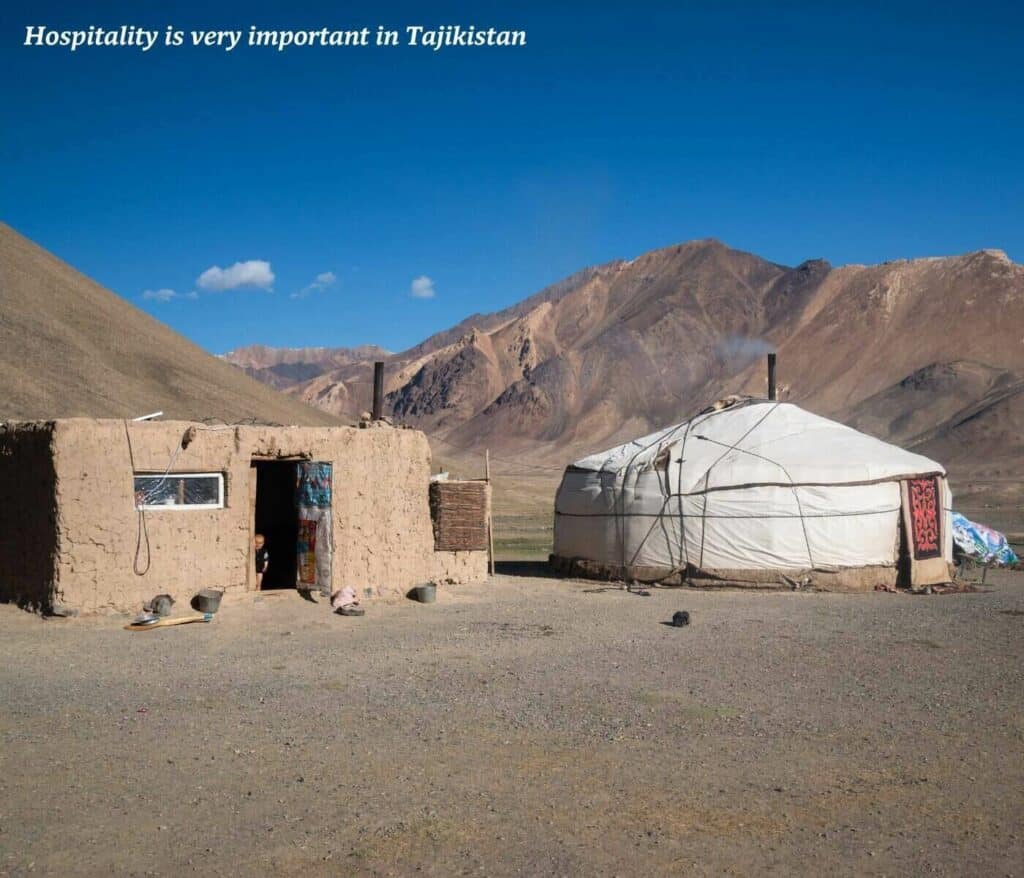
To experience local hospitality
Hospitality is very important in Tajikistan: this was historically a country of traders and nomads, after all, and with a relatively hostile climate, especially in the winter months, it was expected that you would welcome strangers into your home to keep them safe.
If you meet someone during your travels, you might well be invited into their home to meet their family. Note that an invitation to go to someone’s house for ‘a cup of tea’ invariably means something more substantial, often a full meal. If you take a small gift with you, it will be much appreciated. It doesn’t have to be something expensive, or even particularly imaginative: a box of sweets or chocolate, or a cake from the bakery, is ideal. Your host might initially decline the gift, but persist: this denial and insistence (taarof), often repeated two or three times, is a Tajik tradition.
On entering a home in Tajikistan, step over the threshold, not on it, as otherwise you will bring bad luck on the household. The same is true if you hug or kiss your host in the doorway: instead, step into the room before you embrace. Whether you are visiting an ethnically Tajik family or a Russian one, you should remove your shoes at the door.
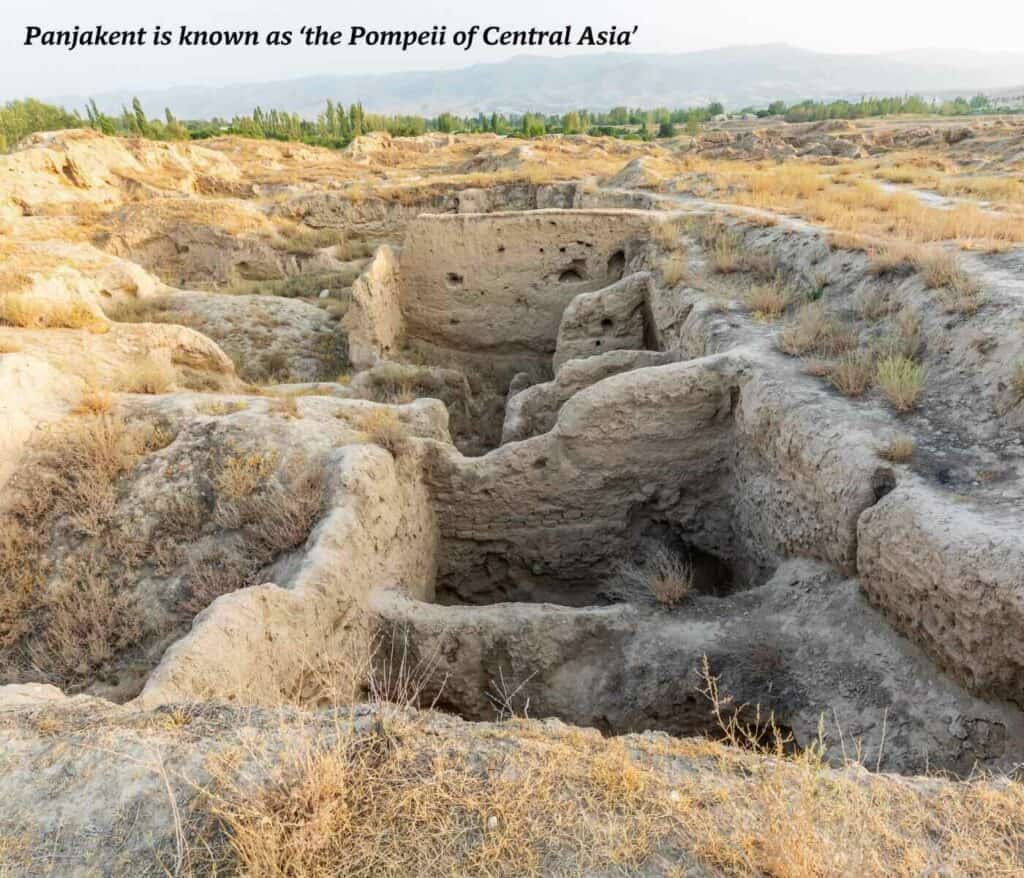
To marvel at Ancient Panjakent
The superb archaeological sites of Ancient Panjakent and nearby Sarazm have earned it the moniker ‘the Pompeii of Central Asia’ and are potent reminders of its historical importance and erstwhile wealth.
The ancient city is remarkable due to the state of its preservation. Having been abandoned suddenly and never built over, the streets are still laid out much the same way as they were the day the Arabs came. At its height in the 8th century, the city covered around 20ha, and about half of this area has been carefully excavated.
While some finds have been removed to the National Museum in Dushanbe and the local Rudaki Museum, the frescoes in the Blue Hall of the fortress can be seen in the Hermitage Museum in St Petersburg, the only place deemed to have the space and expertise to conserve and display them appropriately. Most impressive among the buildings are the citadel on top of the hill overlooking the city, the necropolis, and the fine, once multi-storeyed buildings where the famous frescoes were discovered.
- Recommended reading: the best Silk Road sites
Our guide to Tajikistan
For more information, see Sophie Ibbotson’s guide to Tajikistan: