
How to spend a week in Angola
Spend a week in Angola exploring Luanda, relaxing on Mussolo’s beaches and spotting wildlife in Quiçama National Park.
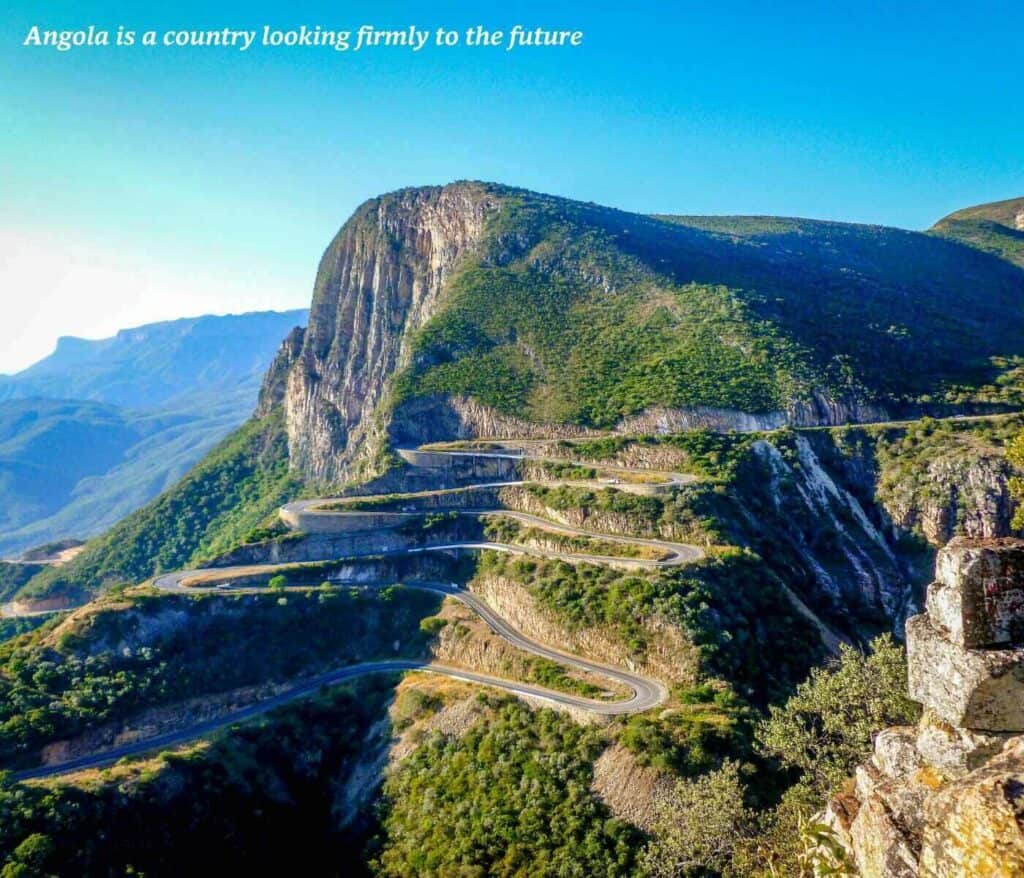
For many people, Angola is still associated with the long civil war that followed independence from Portugal in 1975. But the conflict ended in 2002, and today’s Angola is a country looking firmly to the future, with growing cities, improving infrastructure and a renewed sense of confidence.
Visitors will discover the vibrant capital, Luanda, alongside spectacular beaches, tropical rainforest, vast savannah and dramatic desert landscapes, all complemented by the warm hospitality of the Angolan people.
Angola is not a destination for first-time travellers. Tourist infrastructure remains limited outside Luanda, and travelling around the country requires time, patience and flexibility. Yet those willing to venture off the beaten track will be rewarded with remarkable scenery, fascinating history and one of Africa’s least-visited destinations.
This article shows you how to spend one week in Angola, combining the highlights of Luanda with wildlife, beaches and unforgettable landscapes to make the most of your visit.
Get our guide to Angola
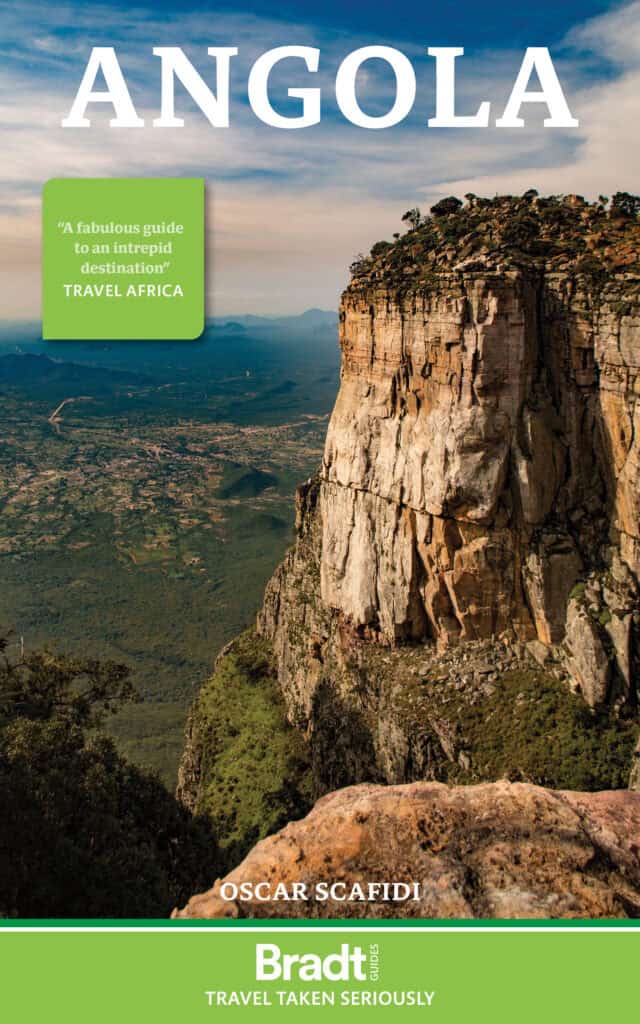
Before you delve into the article, check out the Angola guidebook that inspired it:
How to spend a week in Angola
Explore Luanda
Situated about a quarter of the way down Angola’s Atlantic coast, Luanda is a vast and sprawling city and the perfect place to commence your week in the country.
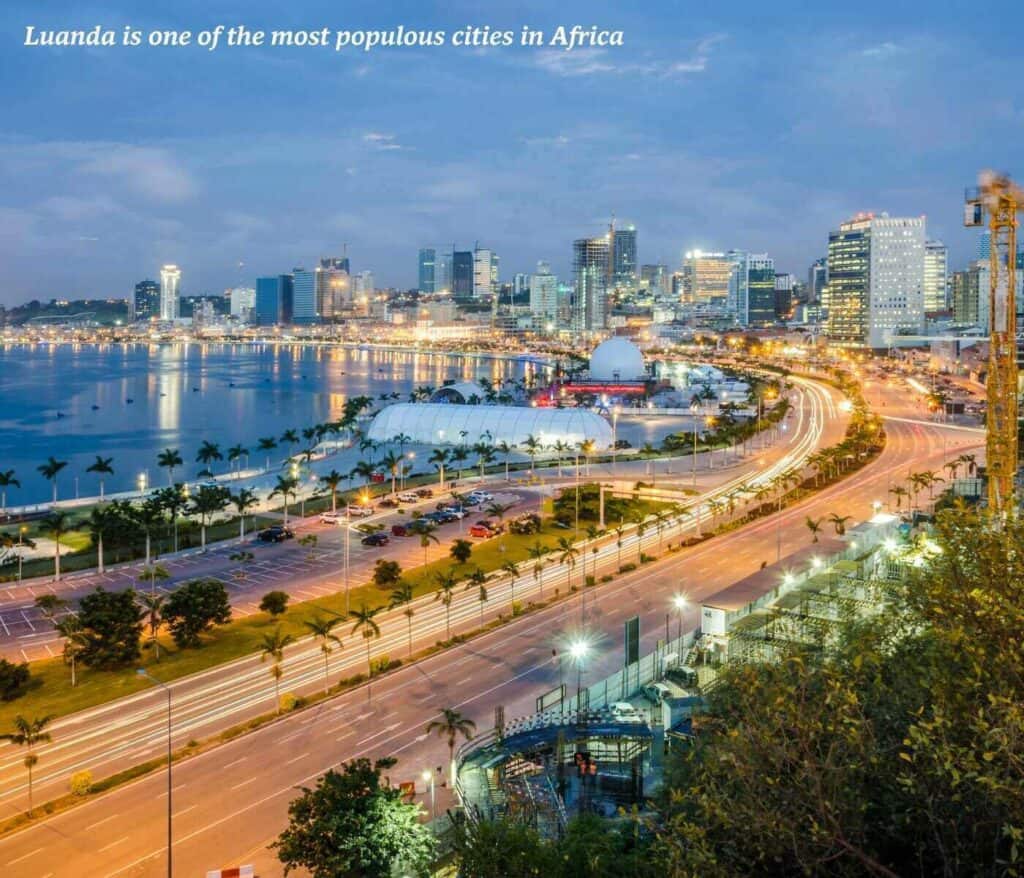
Luanda is one of the most populous cities in Africa, and one of the five largest Lusophone cities in the world (the rest all being in Brazil). Since the end of the civil war in 2002, vast amounts of money have been spent to repair the city, but much still needs to be done. The shiny tower blocks owned by the oil companies stand in stark contrast to the modest houses and slums where the vast majority of Luandenses live.
Traffic is a major feature of life here – personalised Hummers and 4x4s, owned by rich Angolans, compete for limited road space with the ubiquitous blue-and-white candongueiro collective taxis used by the majority of the population. At least sitting in traffic you can appreciate the real lives of Angolans as they go about their daily business: the brightly dressed, often plump, languid zungueiras (female street vendors) with fruit and veg piled on their heads, and babies, legs splayed, strapped on their backs; the lean and hungry, but always smiling, street lads trying to sell anything and everything.
You can watch an entire world from the window if you pay attention.
Find out more on our Angola travel information page.
Our recommended Angola operator
Independent travel in Angola is possible, but experienced guides can make all the difference when navigating remote regions, discovering the country’s diverse landscapes, and gaining a deeper understanding of its rich history and vibrant cultures.
Here is one of our favourites:
Wander around Miramar
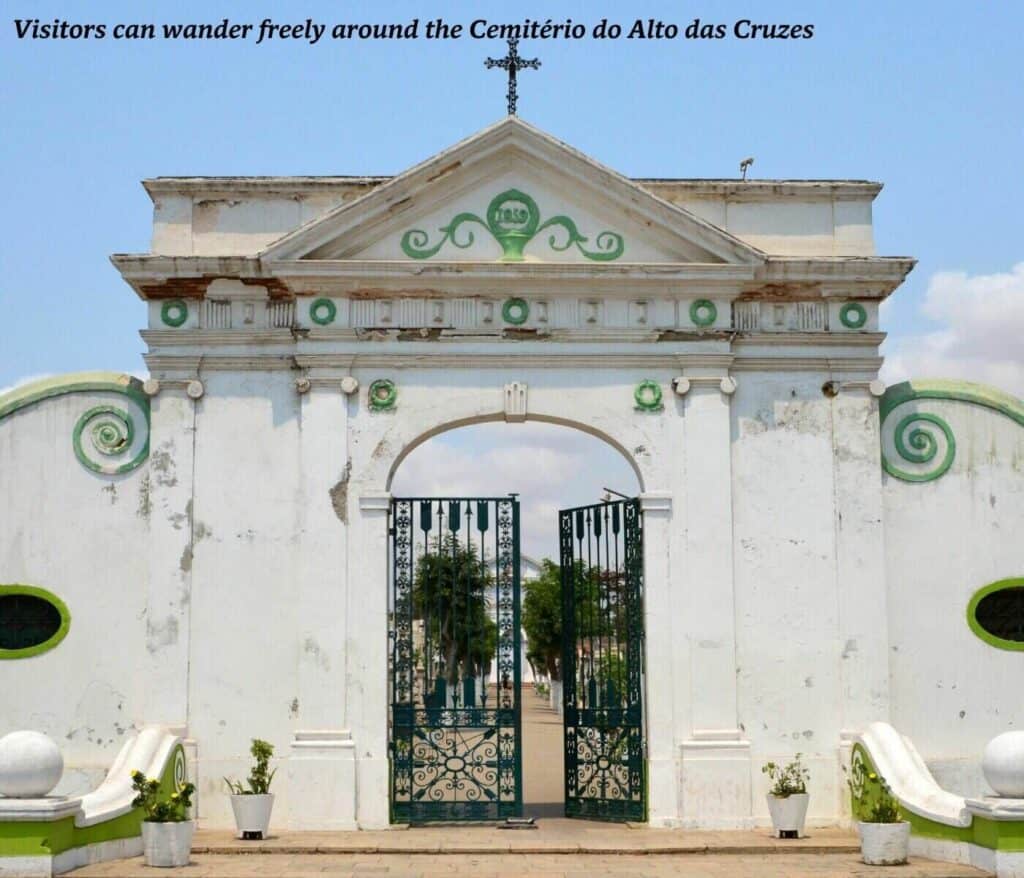
The wealthy suburb of Miramar (meaning ‘sea view’) sits on top of a hill overlooking the port, the Baixa and the slums of Boavista. The light breeze keeps the air a little cooler than in the city below, making it a pleasant place to catch your breath. Miramar is dominated by the imposing American Embassy, which some believe to have been built on the site of an old British cemetery and sits directly opposite the Cemitério do Alto das Cruzes. The latter is free to stroll around, the former not so much.
The Avenida Presidente Houari Boumedienne provides good views over the city and port below. Most days you can count more than 40 ships anchored in the bay or out to sea awaiting a berth in the congested port. In the foreground you will see the railway which has been refurbished by the Chinese and serves commuters travelling in from the town of Viana some 20km to the east. In the background you will see all 8km of the Ilha and the cream walls of the Fortaleza de São Miguel.
There is also the abandoned Miramar open-air cinema which is worth a visit just to imagine how wonderful it must have been in the 1970s watching a film against the backdrop of Luanda Bay.
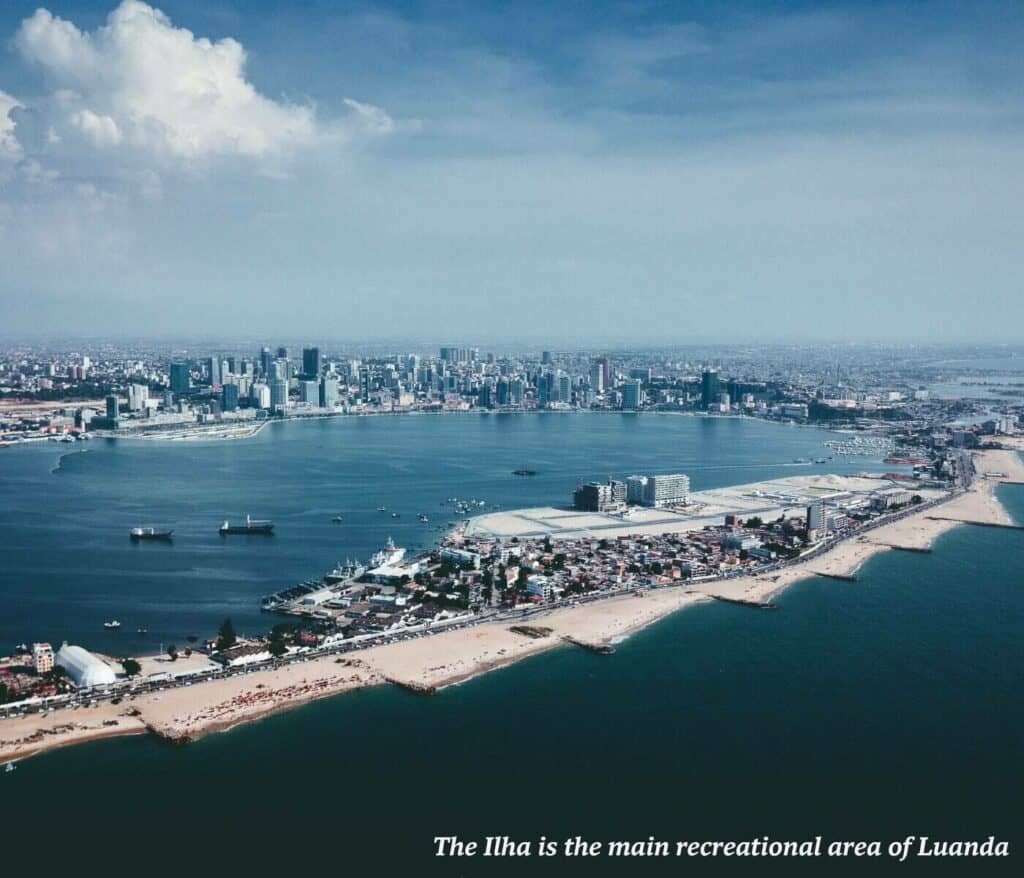
Experience nightlife on the Ilha
The Ilha is an 8km-long peninsula that is about 500m at its widest point and 100m at its narrowest point and forms the outer arm of Luanda Bay, separating it from the Atlantic.
Today the Ilha is the main recreational area of Luanda. The nicest and most popular restaurants and nightclubs are on the Ilha and attract the glitterati of the oil industry and wealthy Angolans.
Although the prices of all these places to eat and drink are high and therefore out of reach of the vast majority of residents of Luanda, the Ilha still has plenty to offer those who do not earn international salaries.
Ordinary Luandans flock to the beaches as they are the closest to the city and are easily accessible. The water on the Atlantic side is cleaner than the bay, which is polluted. Beach sports on offer include beach football and volleyball towards the Fortaleza-end of the Ilha. For those with their own tackle, fishing is also available, especially at the Ilha’s tip. The food stalls here are very popular with Angolans; indeed the smell of freshly barbecued meats and grilled fish is very tempting.
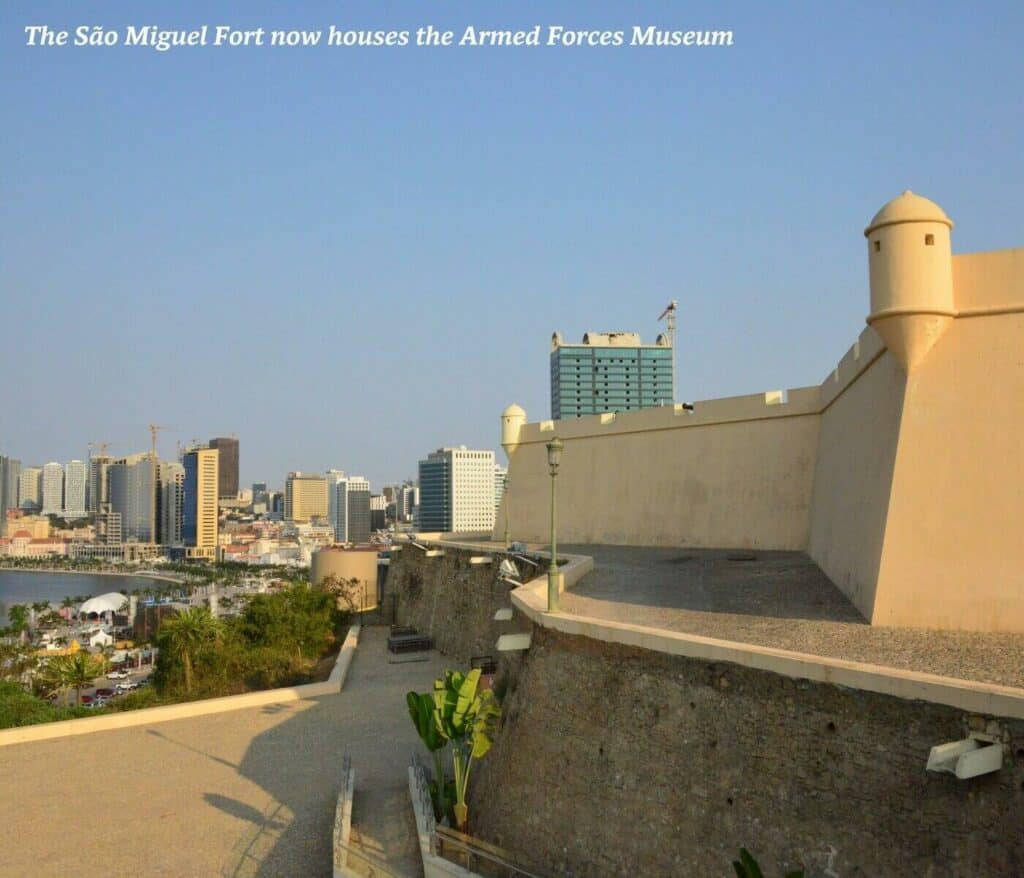
Take in the views from The Citalde Alta
The Cidade Alta is a pleasant, airy and calm suburb above the rest of the city. It commands good views over the bay, the Ilha and the Baixa.
The Presidential Palace is here together with the office of the prime minister, the ministries of Defence, Immigration, Justice and Health, and the British Embassy. Members of the former president’s extended family and senior government officials live in splendid isolation close by. Security is tight, with soldiers and police everywhere, and regular patrols carried out by the president’s heavily armed elite guard. You’ll need to resist the urge to take photos anywhere here.
The Cidade Alta’s main attraction is the São Miguel Fort (Fortaleza de São Miguel). Although closed for a number of years for renovation, it has now reopened as the Armed Forces Museum. If you only have limited free time in Luanda, you should head for the fort and its panoramic views of the city. Late afternoon is a good time to visit to catch the sunset.
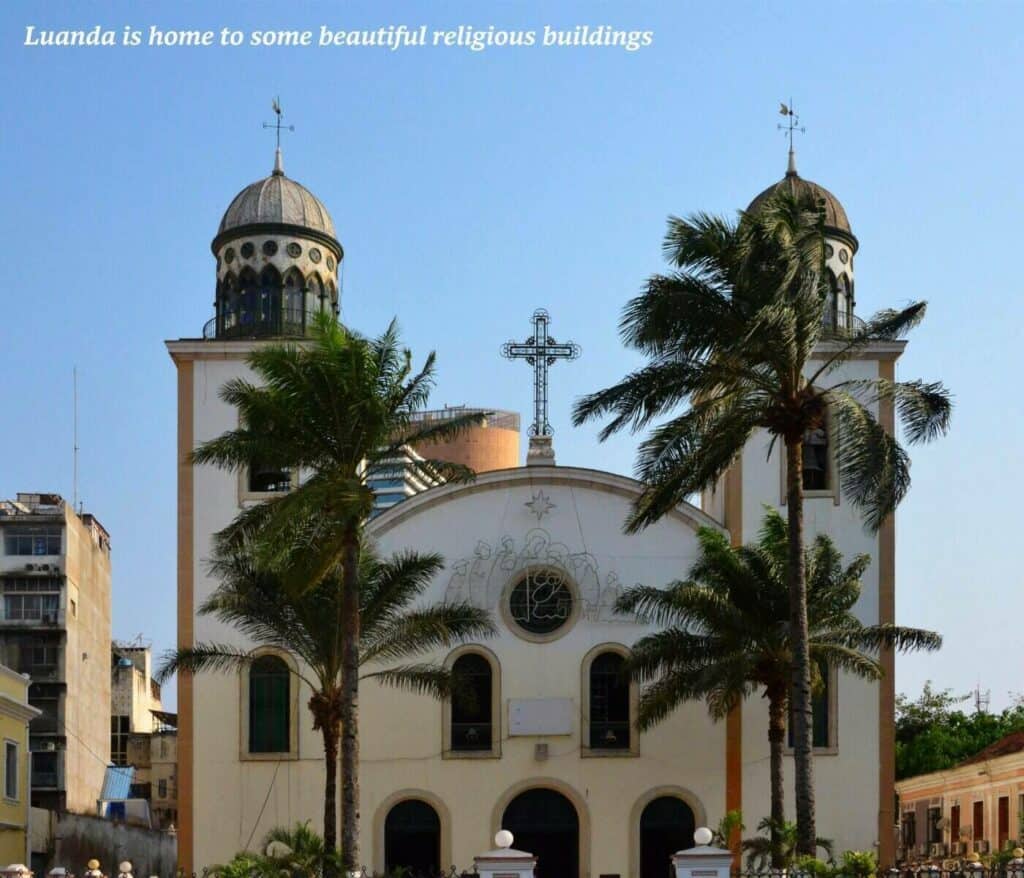
Visit the city’s churches
Some of the best-preserved buildings in Luanda are churches, all built in Portuguese colonial style and mostly painted white with blue edgings. For the full experience, visit on a Sunday to see and hear the congregation, dressed in its colourful finery, singing hymns. At other times, the churches are often locked. Entrance to churches in Luanda is free.
The Church of Our Lady of Nazareth and The Church of Our Lady of Remedies are two of the most picturesque. It’s worth popping inside the latter to see the high wooden ceiling and paintings above the altar alone.
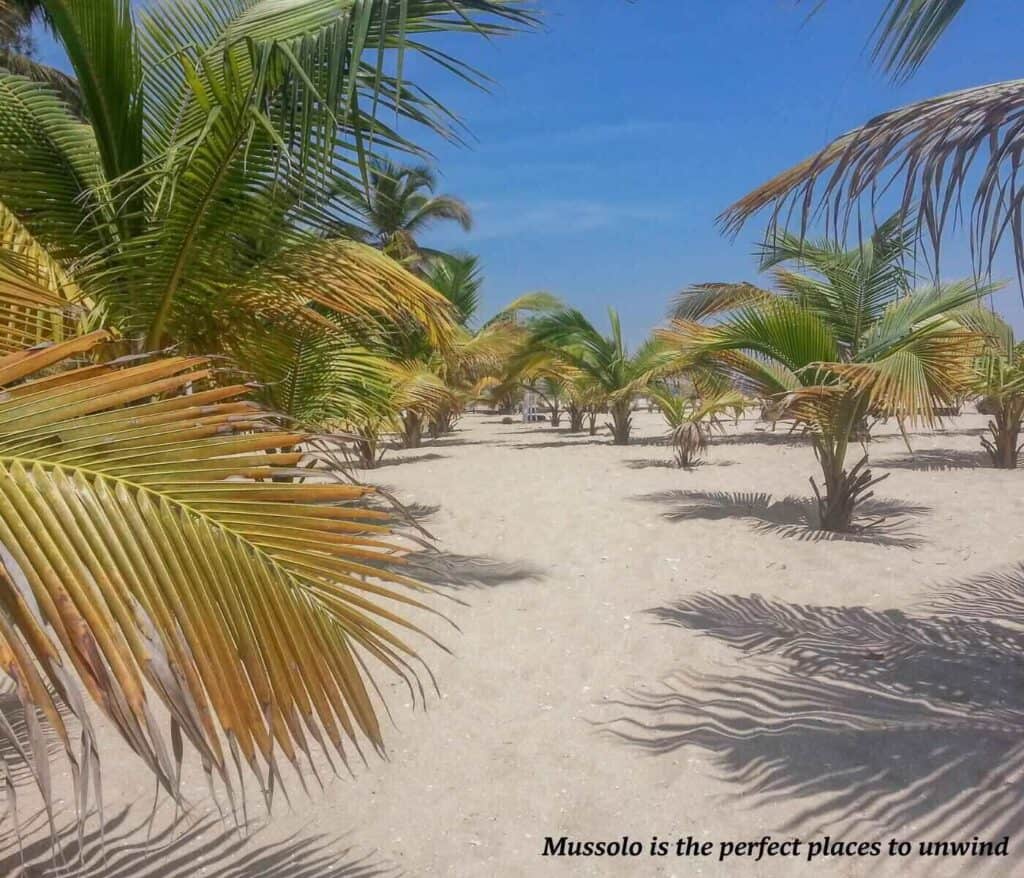
Relax on the beaches of Mussolo
When you are bored of lobster and cocktails on the Ilha, it’s time to head south to the beaches of Mussulo.
A favourite pastime for Angolans and expats alike is to spend Saturday or Sunday there. Mussulo is a 35km-long sand spit that runs parallel to the coast, forming a shallow bay and ending about 9km south of the capital. The spit was formed by the gradual deposit of sediments constantly being washed north in a longshore drift from the Kwanza River.
Within the bay are a number of small islets, the largest of which, Priest’s Island (Cazanga), used to have a church. The second largest is the Ilhéu dos Pássaros, a protected nature reserve, important for its mangroves and a key habitat for migratory birds which feed on the crabs and molluscs in the nutrient-rich sediments.
While Mussulo is not quite the unspoilt paradise that it used to be, if you want to enjoy a nice meal, drink an ice-cold beer on the beach and paddle occasionally, it’s still well worth the effort of getting there.
Angola is on our list of the world’s most unique places to visit!
Getting to Mussolo
There is no public transport to Mussulo so you’ll need to arrange a car or go with friends or contacts. It’s very easy to get lost leaving Luanda so you should try to go with someone who has been before.
The port is a lot less chaotic than it used to be since the inauguration of the Terminal Marítimo Capossoca in 2014. The 3.5km crossing used to be done on fishermen’s boats, at a negotiated rate of around 1,000Kz. An Angolan or a Portuguese-speaker may get this down to 500Kz. Now there is a proper terminal with a ticket desk and more seaworthy looking vessels will take you over for 1,000–3,000Kz. If you choose to take the informal route and jump in a local boat, be sure to choose the boat that looks the most seaworthy and ensure there are sufficient life jackets as the boats are often overloaded.
You can also hire one of these boats for the full day, which is useful if you want to explore more of Mussulo or go over to the Atlantic side of the sand spit (the Contra Costa) for a little more privacy. Those with a more adventurous spirit can walk (there are no cars) to the other side of the spit. There you’ll find clean, white beaches and the Atlantic roaring in all the way from Brazil. Other than the occasional fishermen sitting in their palm cubatas (shelters), it’s completely deserted and the perfect place to sunbathe and unwind.
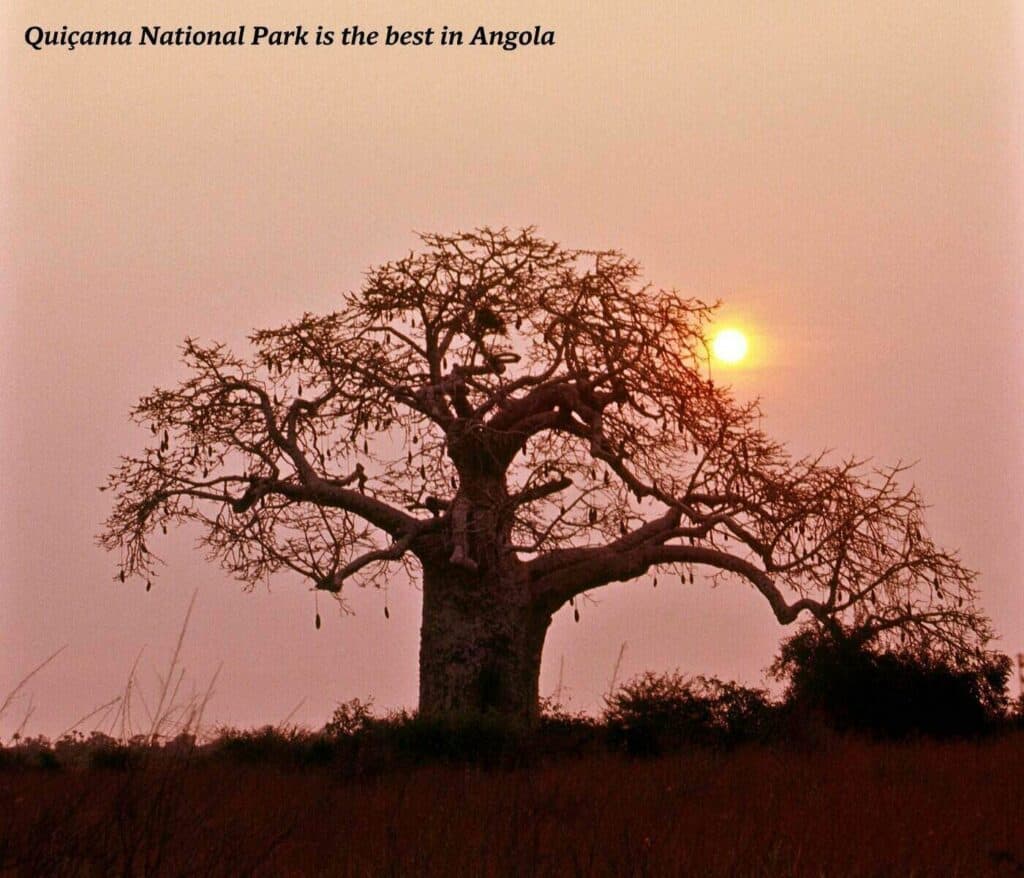
Get close to wildlife at Quiçama National Park
Quiçama National Park is the most accessible national park in Angola and the ideal place to end your week in the country.
Although not quite comparable with those in Kenya, Namibia or South Africa, Quiçama is the best that Angola has, offering stunning views of the Kawa River, a tributary of the Kwanza. Within the park you will find elephant, hippo, wildebeest, giraffe, macaque, zebra, buffalo and a variety of bird species. Out on the river you may even see the endangered African manatee.
The attraction of Quiçama is that it’s possible to visit in a day trip from Luanda but it’s preferable to stay overnight in the park in one of the bungalows of Quiçama Lodge. Spend a night or two listening to the wildlife around you. And if you remembered to bring your fishing tackle, try your luck at reeling in tarpon, giant African threadfish and dorado – but be sure to bring your camera, otherwise the folks at home won’t believe your tales of record-breaking catches.
Quiçama is open all year round but the most comfortable time to visit is in the cooler months of May to October. During the rainy season the tracks are almost impassable and you should not attempt to visit unless you are experienced and fully kitted out, or go with a local travel agent (the park is vast and poorly staffed so if you get into trouble it could be several days before you are missed). Even in the dry season a 4×4 vehicle is essential as the last 40km inside the park are across sandy and muddy tracks.
The park is bordered in the north by the flood plains and extensive mangrove forests of the Kwanza River. The Longa River forms the marshy southern border and the Atlantic Ocean with its protected turtles, alongside the Luanda–Sumbe highway, forms the park’s 120km-long western border. To the east is a belt of dense, tall thicket and in the interior of the park there are enormous baobab trees, acacias, palm trees and euphorbia woodland.
What’s next?
While one week in Angola is enough to experience some of the country’s highlights, there’s plenty more to discover if you have extra time.
With ten days, you could add a visit to the imposing rock formations of Pungo Andongo or the spectacular Kalandula Falls. If you have two weeks, explore the laid-back coastal towns of Porto Amboim and Sumbe, take a trip to Binga Waterfalls, or hike the dramatic Gabela Escarpment, one of Angola’s premier birdwatching destinations.
Travellers with a month or more – particularly those with a 4×4 – can embark on a true overland adventure. Head south towards Namibe, stopping at the historic Boer cemeteries of Humpata and Barracões, the breathtaking Tundavala Gap, and the Christ the King statue overlooking Lubango. Venture into the bush to reach the remote Hunguéria Falls before driving the spectacular Serra da Leba Pass into Namibe Province.
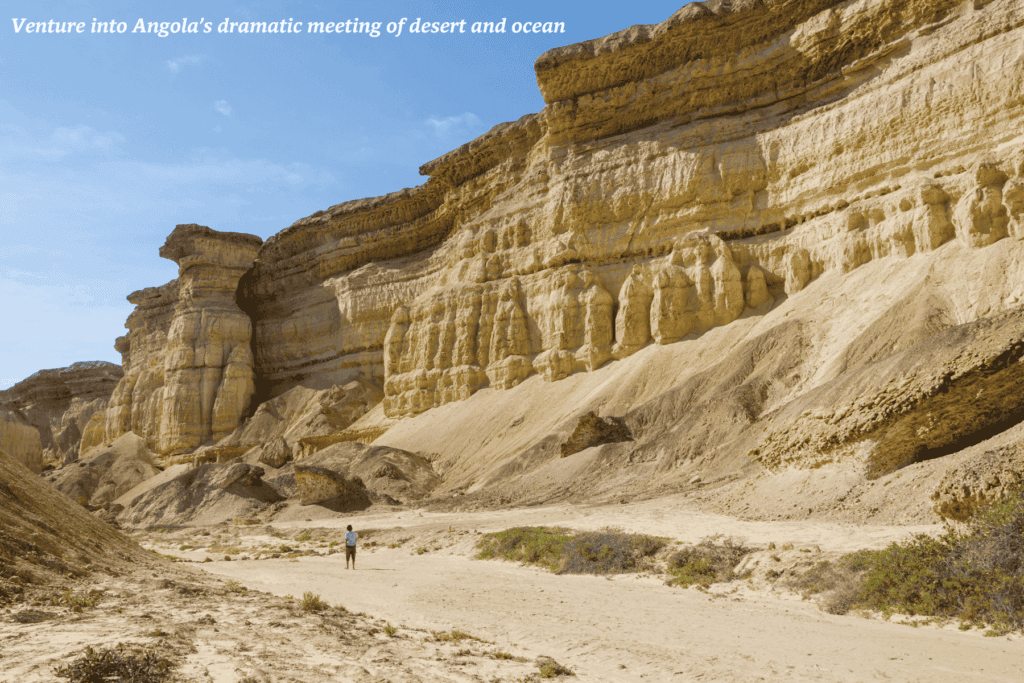
From there, visit the abandoned mineral port near Namibe town, stock up on supplies, and continue into the otherworldly landscapes of the Namib Desert, one of Angola’s most unforgettable regions.
Happy travels!
Our guide to Angola
For more information, see Oscar Scafidi’s guide to Angola: