
Discover unforgettable things to do in Barbados, from vibrant culture and historic landmarks to lush inland adventures beyond its famous beaches.
While the coastline of Barbados is one of the most beautiful in the world, this gorgeous Caribbean nation has far more to offer than its beaches.
Beyond the soft white sands and turquoise waters lies a rich cultural landscape shaped by centuries of history and a vibrant local spirit. Visitors can explore the island’s colonial past in the capital, Bridgetown, a UNESCO-listed city filled with historic buildings, bustling markets and lively streets.
Barbados is also known for its deep-rooted traditions, from the infectious rhythms of calypso and reggae to its world-famous festivals like Crop Over, a colourful celebration of music, dance and heritage. Food lovers will find just as much to enjoy, with local cuisine blending African, Caribbean and British influences – think flying fish, cou-cou and freshly prepared street food bursting with flavour.
Nature enthusiasts can venture inland to discover lush gardens, rolling hills and underground wonders such as Harrison’s Cave, where dramatic stalactites and crystal-clear streams create an entirely different side of the island.
Whether it’s exploring historic sites, immersing yourself in local culture or discovering natural attractions beyond the shore, Barbados offers a diverse and memorable experience that goes far beyond its stunning coastline.
Get our guide to Barbados
Before you delve into the article, check out the Barbados travel guide that inspired it:
Beyond the beaches: things to do in Barbados
Explore the Garrison Historic Area
Bridgetown’s Garrison Historic Area is well worth a visit. Dating back to 1650, it’s believed to be the most authentic and complete British garrison in the world and was recognised by UNESCO in 2011 for its architectural significance.
Watch the changing of the guard, take in the architecture or join a tour to find out what George Washington thought about Barbados. You can find out more on our Barbados travel information page.
Garrison Savannah
The focal point of the area is the Garrison Savannah (or just the ‘Savannah’), once a swamp before it was drained by the Royal Engineers in the early 1800s to become a parade ground for soldiers and the place where they trained and drilled.
It was surrounded by a six-furlong racecourse in 1845 and is still a popular racecourse today, now home to the Barbados Turf Club.
Main Guard
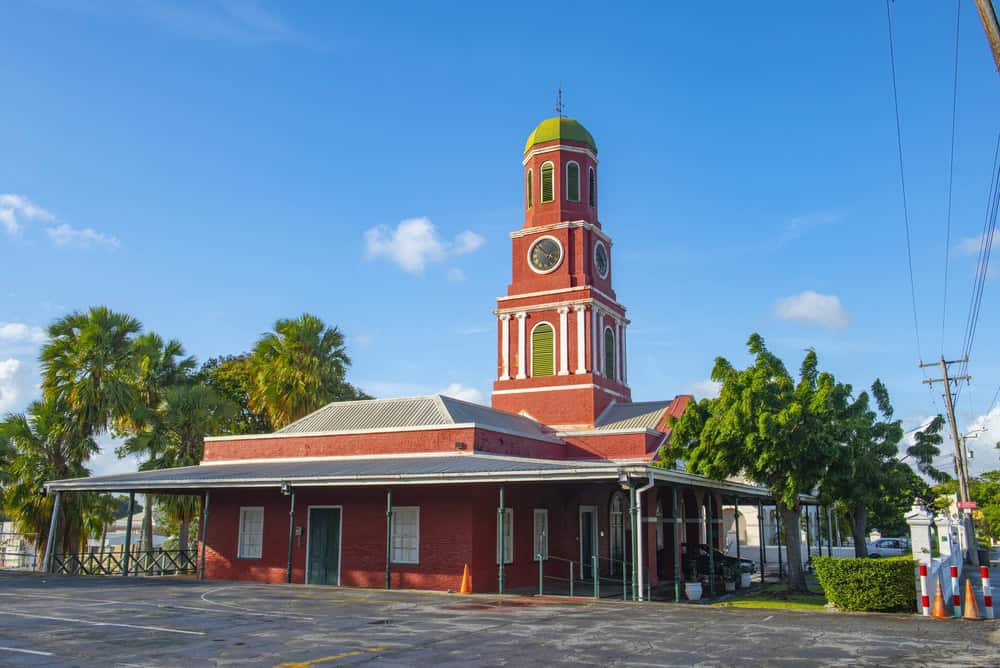
On Garrison Road, the Main Guard overlooks the racecourse from the western side. Built in 1804, it is one of the most outstanding buildings in the Garrison Historic Area. It is of elegant Georgian style and the main house, with its Roman arched portico and pediment, has a George III coat of arms designed especially for the building, a handsome clock tower, a fine wide veranda (or gallery in Caribbean terms) with cast-iron trimmings, and there’s a guardhouse at the rear.
Today the property is home to several organisations, including the Barbados Legion and Barbados Poppy League. Outside is an impressive array of 26 cannons mounted on metal garrison gun carriages (replaced with wooden ones during action as they were prone to shatter).
George Washington House
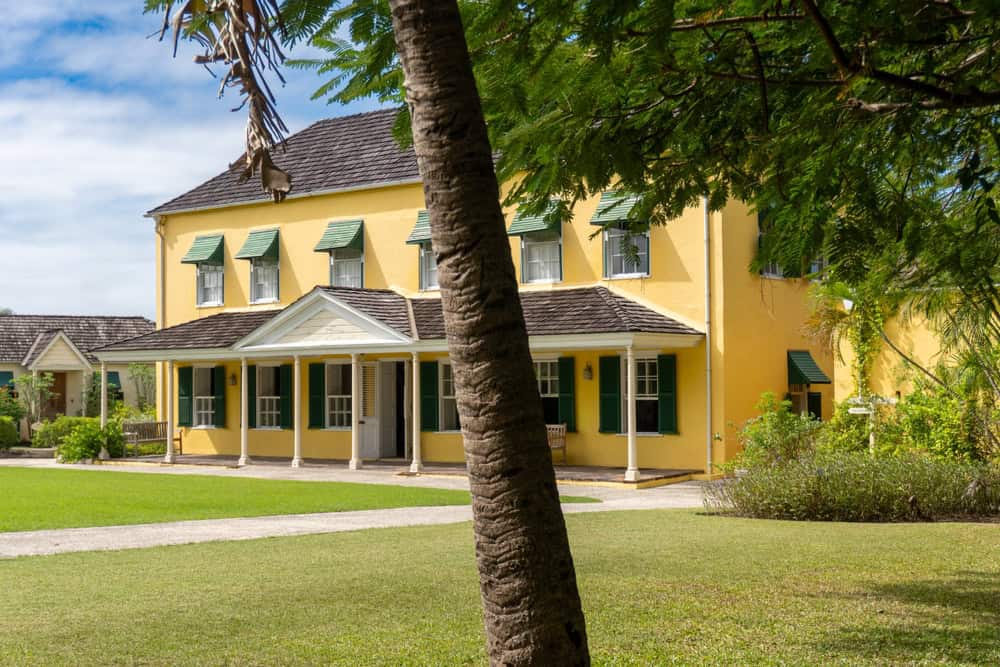
North of the Main Guard at the northwest corner of the Savannah, this beautifully restored 18th-century plantation house is where the future first president of the USA stayed in 1751 for a few months when, as a 19-year-old, he accompanied his sick brother Lawrence to search for a cure for his TB. This was George Washington’s only excursion outside his homeland and Bridgetown was the largest town he had seen.
The ground floor is furnished as it might have been in 1751 when Washington stayed, while the second floor displays items typical of life in the mid-18th century, from medical appliances to agricultural implements; there’s a section on the plantation economy and slavery and how it related to Washington, a slave owner himself.
Immerse yourself in nature at Welchman Hall Gully
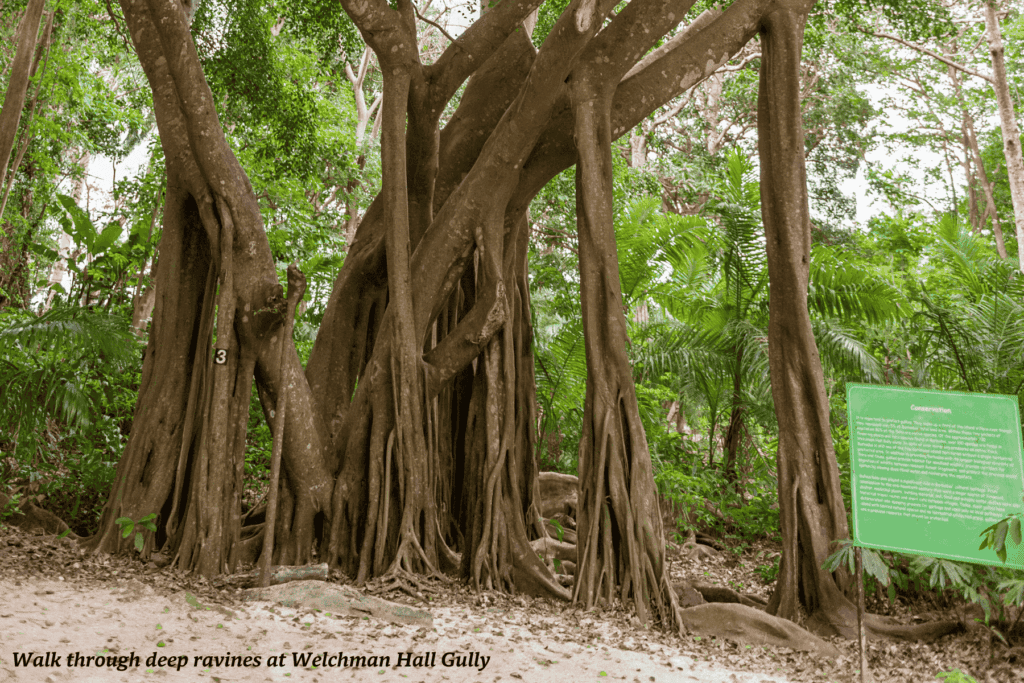
Welchman Hall Tropical Forest Reserve, more commonly referred to as the Welchman Hall Gully, is in St Thomas, one of the hilliest
parishes on Barbados.
The gully was formed by the collapsed roofs of caves and is a fascinating 30- to 45-minute walk through one of the deep ravines that are so characteristic of this part of Barbados. You are at the edge of the limestone cap which covers most of the island to a depth of about 100m.
Owned by the Barbados National Trust, the site has recently been enhanced with interpretive signage and new guided and self-guided walks on good paths, most of which are wheelchair-friendly.
The first section has a devil tree, a stand of bamboo and a Judas tree. Next you will go through jungle, which has lots of creepers, the ‘pop-a-gun’ tree and bearded fig clinging to the cliff (note the stalactites and stalagmites); a section devoted to palms and ferns – golden, silver, Macarthur and cohune palms, nutmegs and wild chestnuts; to open areas with tall leafy mahogany trees, rock balsam and mango trees. At the end of the walk are ponds with lots of frogs and toads. Best of all though is the wonderful view to the east coast.
Take a moment to reflect at the Flower Forest Botanical Gardens
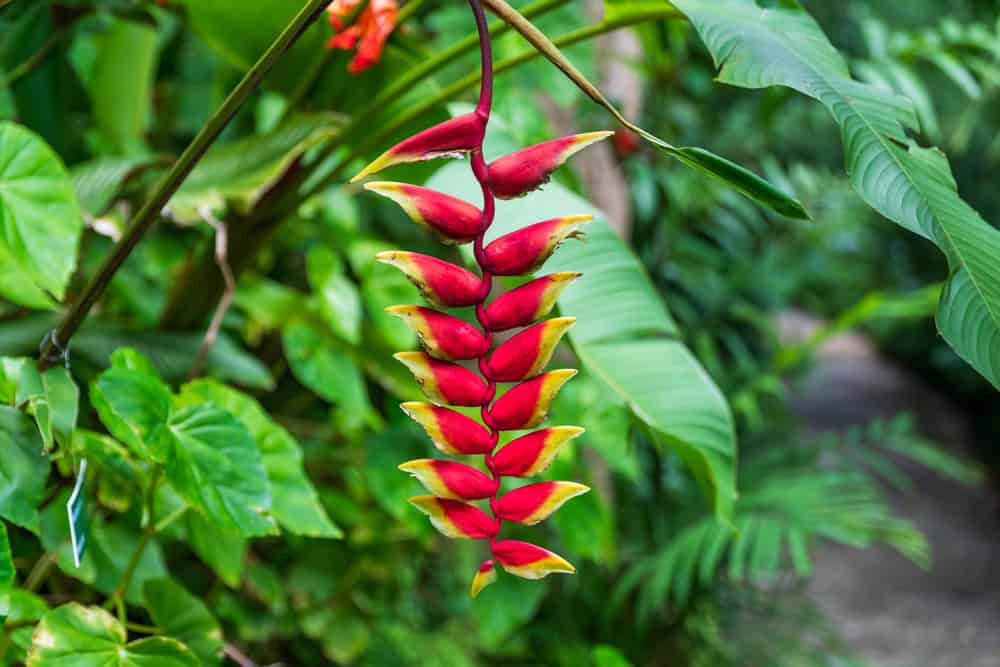
Just 300m beyond Cocoa Hills Forest, is this beautifully landscaped botanical garden on a former sugar plantation. Named paths wend their way around the hillside; they are well maintained and even suitable for wheelchairs, although there are a few which go off the beaten track and can only be negotiated on foot. The garden contains species not only from Barbados but from all over the world, all beautifully arranged with plenty of colour year round.
You can find heliconias, ginger lilies, orchids, anthuriums, ixoras and bougainvilleas as well as productive plants such as bananas, cocoa, coffee and breadfruit. The outstanding feature of the Flower Forest Botanical Gardens, however, is the forest.
Enormous trees loom above you, with royal and other palms giving shade to the paths, while in between you can find bearded fig trees, huge baobab and mango trees. Here and there they open on to large grassy areas affording excellent views over the valley to the east coast. Liv’s Lookout in particular has a fantastic outlook all up the northeast seaboard.
Get adventurous at Harrison’s Cave
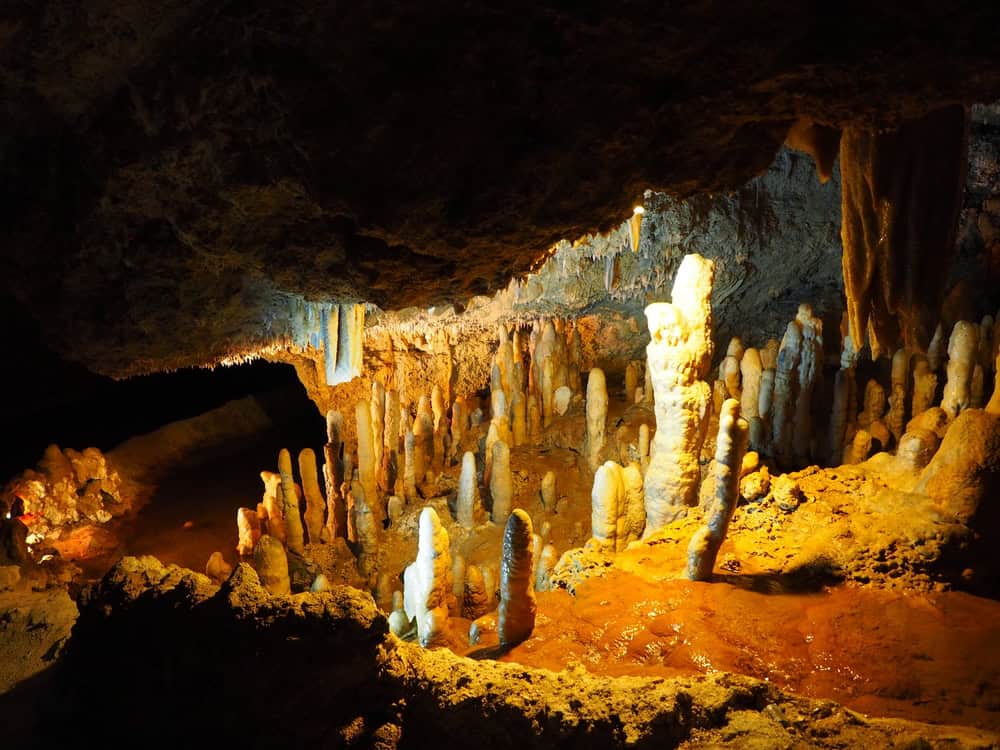
Welchman Hall Gully is connected geologically to nearby Harrison’s Cave, about 1.4 km to the south. Long known for its tram tours of the limestone caverns, Harrison’s have recently expanded their offering with an eco-adventure park that includes a nature trail, interpretation centre, aviary, zip line, swimming pool, rum-tasting experience, restaurant and bar.
There is also an impressive visitor centre, gift shop, and a small display of local geology and Amerindian artefacts. The cave tour, which showcases superb stalactites, stalagmites, waterfalls and underground lakes, takes around an hour and includes stops for photo opportunities – but be prepared to get a bit wet as the caves drip.
Ride the train at St Nicholas Abbey
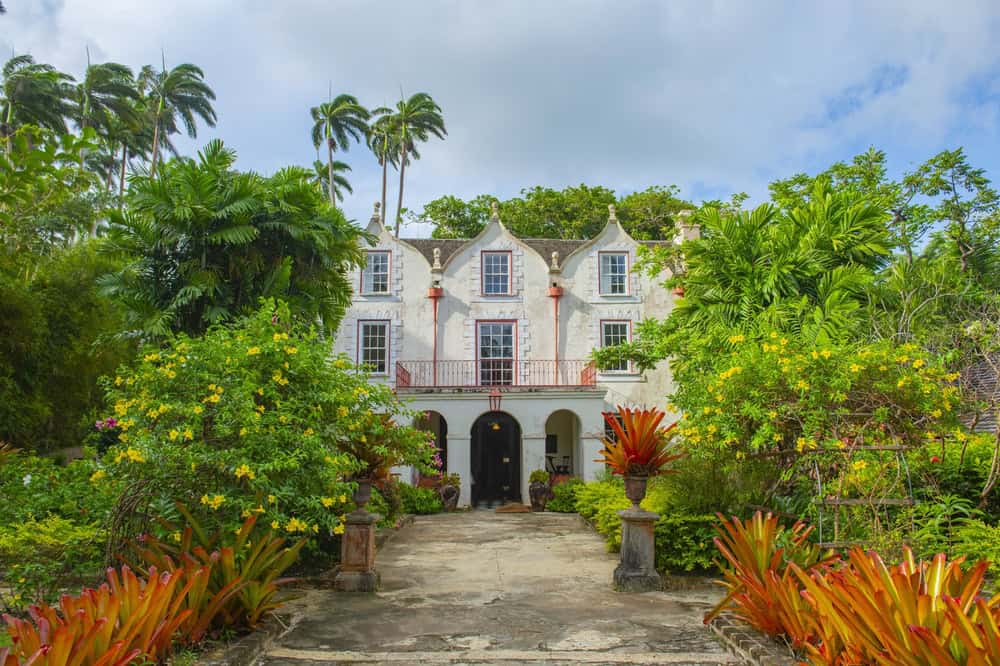
Approached down a long and impressive avenue of mahogany trees, St Nicholas Abbey was never actually an abbey – it has no monks’ cells or cloisters and some have supposed that the ‘St’ and ‘Abbey’ were added to impress. It is, however, one of only three surviving Jacobean mansions in the western hemisphere.
Today, scrupulously restored, it is one of the architectural treasures of Barbados, with a Chippendale staircase and cedar-panelled rooms containing antique furnishings. Visitors are given an interesting tour of the ground floor of the house, as well as the rum and sugar museum and the gardens.
From the top of nearby Cherry Tree Hill there are glorious views all over the Scotland District, which falls mainly within the parish of St Andrew. It is believed that cherry trees grew here once, but today the road up the hill is lined with mahogany trees.
The St Nicholas Abbey Heritage Railway runs from the station just inside the main gate of the abbey. It’s a gentle-paced and very scenic 3km train ride in open carriages pulled by a diesel or steam locomotive. It takes around an hour with a break at the top to enjoy the views, and if they wish, passengers can assist the staff with turning around the locomotive on a turntable for the return journey.
- Recommended reading: why is Barbados called ‘Bim’?
Visit the Nidhe Israel Synagogue and Museum
This beautifully restored place of worship is an early 19th-century building on the site of a 17th-century one, and is one of the two earliest synagogues in the western hemisphere.
Painstakingly restored by the island’s Jewish community over the years – with the support of the Barbados National Trust, the Caribbean Conservation Association and the Barbados government – the synagogue reopened in 2008. In 2017 the community designated the Barbados Synagogue Historic District, which covers the whole block bounded by James Street, Coleridge Street, Magazine Lane and Synagogue Lane.
It includes beautiful grounds, the Jewish cemetery, and other buildings such as Bridgetown’s first fire station (1858), which is now a café, and the former rabbi’s house next to the synagogue that is a museum exhibiting a timeline of Jewish settlement on Barbados. The most significant component is a full immersion mikvah (ritual bath) unearthed by archaeologists in 2008 and believed to have been built with the original synagogue in 1654; it’s the only one known to exist in the Americas.
Join the celebrations at Oistins Fish Fry
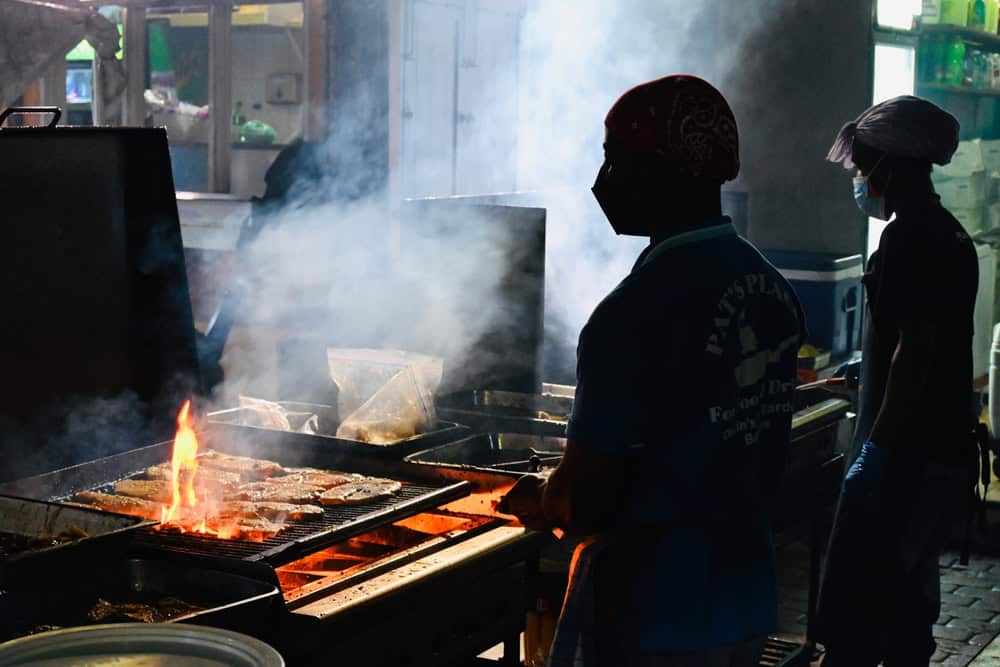
Held at Bay Gardens near the fish market, Oistins Fish Fry is a major street party on a Friday night for both Barbadians and tourists. Busloads of tourists are ferried in from resorts around the island and it’s a lot of fun.
Excellent flying fish, as well as tuna, swordfish, barracuda, kingfish, marlin, mahi mahi and lobster, plus pork chops, ribs and chicken, with sides of coleslaw, green salad, baked macaroni pie, rice and peas and hot sauce, are all served in an extremely informal setting from about 30 or so wooden stalls and eaten at communal bench tables.
There’s also plenty of drinking, as well as karaoke, steel pan bands, and live calypso and reggae on the main stage area for dancing.
Go stargazing at the Harry Bayley Observatory
Named after Dr Harry Bayley, a brilliant Barbadian physician and keen amateur astronomer who founded the Barbados Astronomical Society in 1956, the observatory is open to the public at weekends (weather permitting).
Built in 1963, it is the only observatory in the Eastern Caribbean and is a chance for northern visitors to look through a 16-inch reflector telescope at the southern hemisphere stars and planets, which aren’t all visible from North America and Europe. The moon, Jupiter and Saturn can all be seen on a cloudless night.
Shop for local produce at Cheapside Public Market
Cheapside is an excellent and colourful fresh fruit and vegetable market consisting of a double-storey interior and a collection of outdoor stalls.
There’s a great assortment of Caribbean produce for sale, like sweet potatoes, yams, eddos, breadfruits, green bananas and cassavas, and some stalls sell souvenirs. Upstairs there are food stalls; look out for saltfish bake, fried plantain and breadfruit, and ginger and cucumber iced drinks.
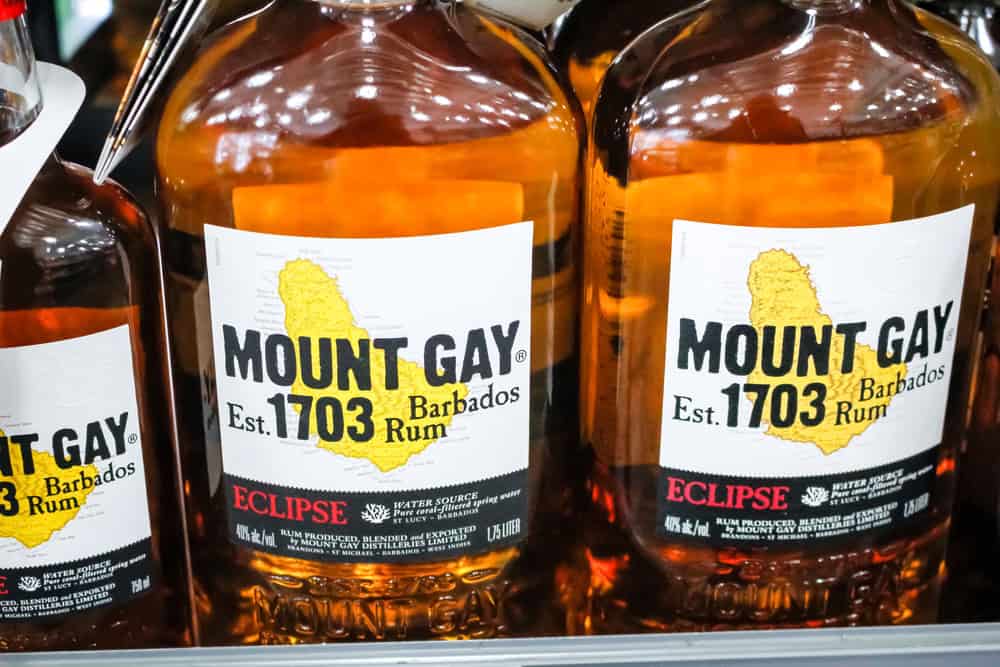
Sample Mount Gay rum
Behind Brandons Beach is the Mount Gay Visitor Centre, where you can learn all about and taste Barbados’ historic rum (the distilleries themselves are in the northern part of the island). Mount Gay’s roots can be traced back to the first production of sugar cane on the island, and the oldest surviving deed for the company is from 1703, making Mount Gay rum the oldest rum and longest continually produced spirit in the world.
Today several varieties are produced including 1703, Silver, Black Barrel, Extra Old and the flagship Mount Gay Eclipse. There are four tours to choose from: the one-hour Signature Tasting Tour does not require pre-booking and includes an introduction and tastings.
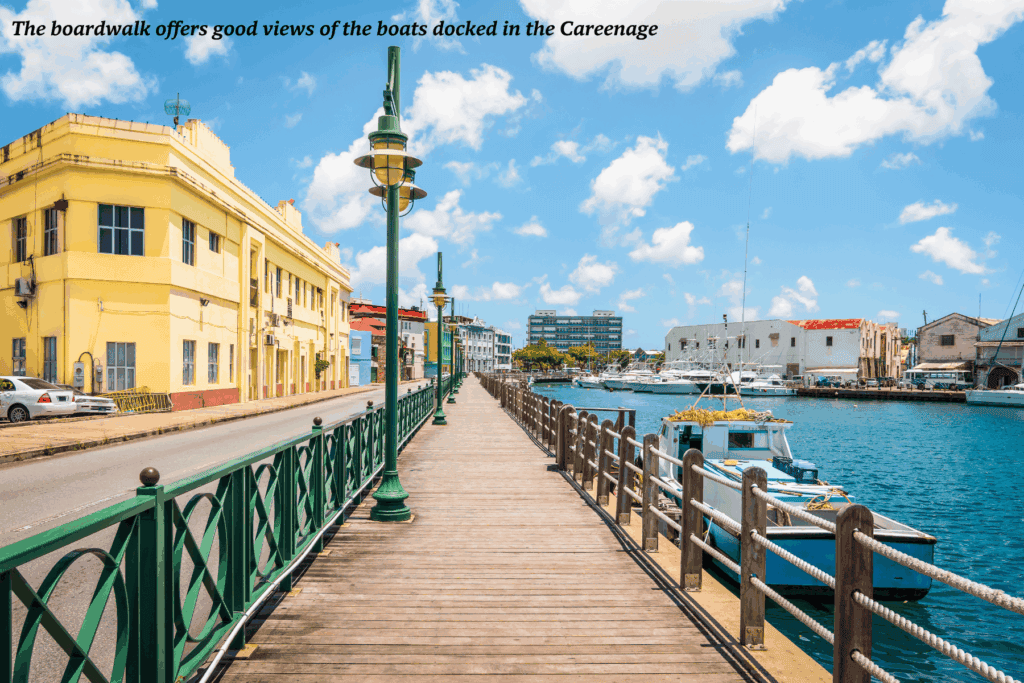
Take a stroll along the Bridgetown Boardwalk
To the west of Chamberlain Bridge, along Wharf Street on the northern side of the Careenage, is the wooden Bridgetown Boardwalk. Featuring vintage-style street lamps and benches and a number of shops and cafés, it offers a good view of the yachts, charter fishing boats and catamarans docked in the Careenage. About halfway along, on the corner of Parry Street, the red-brick Old Spirit Bond Building dates back to the 18th century when it was a warehouse for rum and other spirits.
From here, barrels were loaded on to small boats in the Careenage and then transported to cargo ships docked offshore in Carlisle Bay. The building has been restored and is now home to small businesses. At the western end of the boardwalk is a small park which celebrates Barbados’ maritime heritage, complete with cannons (originally from James Fort) and plaques with interesting facts about Barbados pirates.
And after all that?
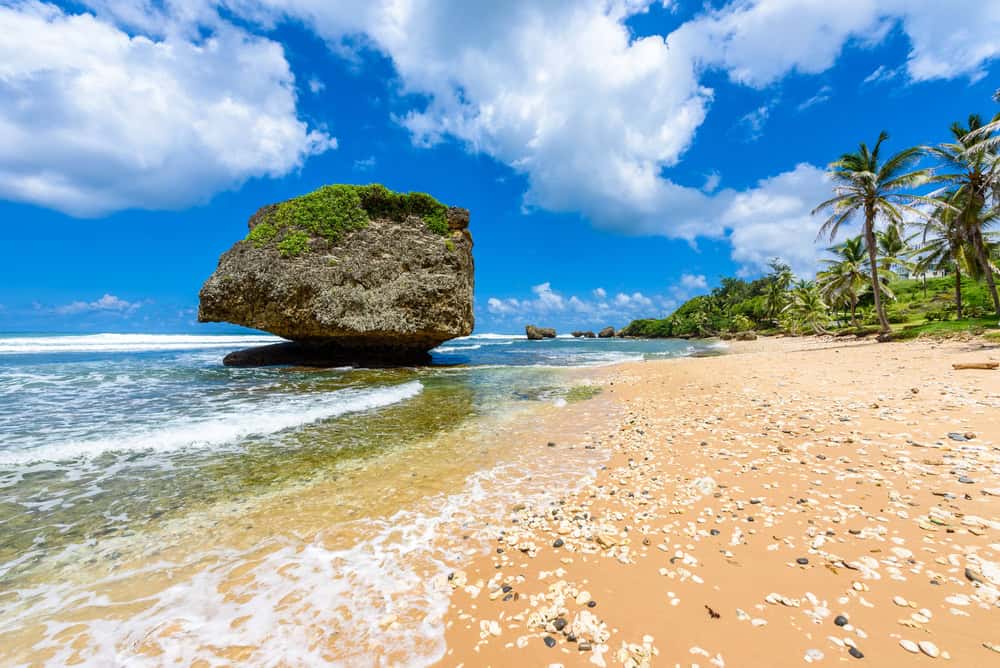
Well, we’d say you’ve more than earned yourself some well-deserved rest and recuperation time on the beach.
While we hope this article has shown that there’s far more to Barbados than just sea and sand, that certainly doesn’t mean its coastline isn’t worth your time. In fact, it’s the perfect way to round off your trip.
Whether you’re unwinding along the calm waters of Carlisle Bay, soaking up the vibrant atmosphere of the south coast, exploring the rugged beauty of the east coast, or indulging in the laid-back luxury of the west coast, we guarantee you’ll have fun doing it.
Need more inspiration? Don’t miss our guide to the best beaches in Barbados.
Our guide to Barbados
For more information, read our guide to Barbados by Daniel Austin and Faeze Shad: