
British Muslim history: 5 fascinating places to discover
Discover British Muslim history through grand mosques, Islamic neighbourhoods and cultural landmarks across Britain.
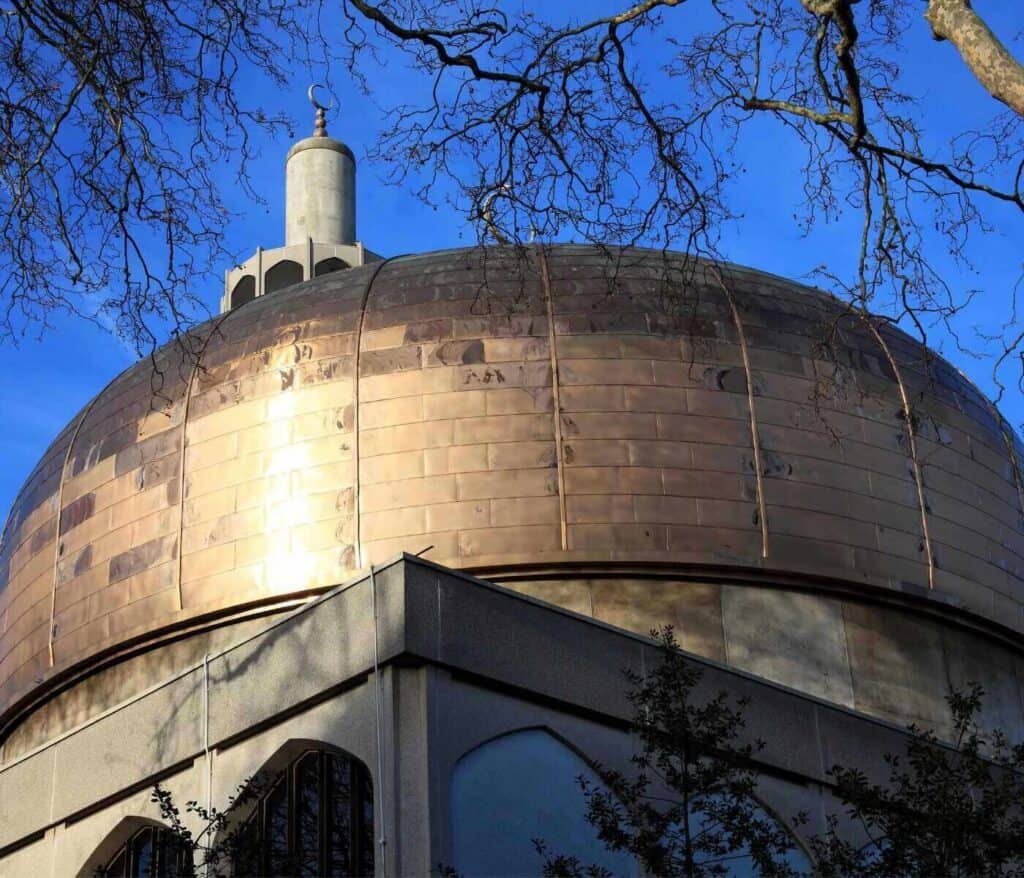
Britain’s history is often told through its castles, cathedrals and Celtic legends. But woven into its story is a fascinating, centuries-old Muslim heritage, much of which remains hidden in plain sight. From Moroccan ambassadors at the court of Elizabeth I to Yemeni sailors settling in Cardiff, Muslims have helped shape these islands for generations.
Few realise that, at its height, the British Empire ruled over more Muslims than any other empire, or that more than four million Muslims call Britain home today.
Across the country, mosques, historic burial grounds, forgotten communities and remarkable landmarks tell stories of migration, faith, trade and belonging. Some date back centuries; others reflect the vibrant, diverse Muslim communities shaping Britain today.
From pioneering mosques to unqiue, multicultural neighbourhoods, these five fascinating places offer a fresh perspective on British history, revealing a Muslim heritage that is far richer, older and more surprising than many imagine.
Get our guide to Muslim Britain & Ireland
Before you delve into the article, check out the Muslim Britian & Ireland guidebook that inspired it:

British Muslim history: 5 places you need to know about
Shah Jahan Mosque, Woking
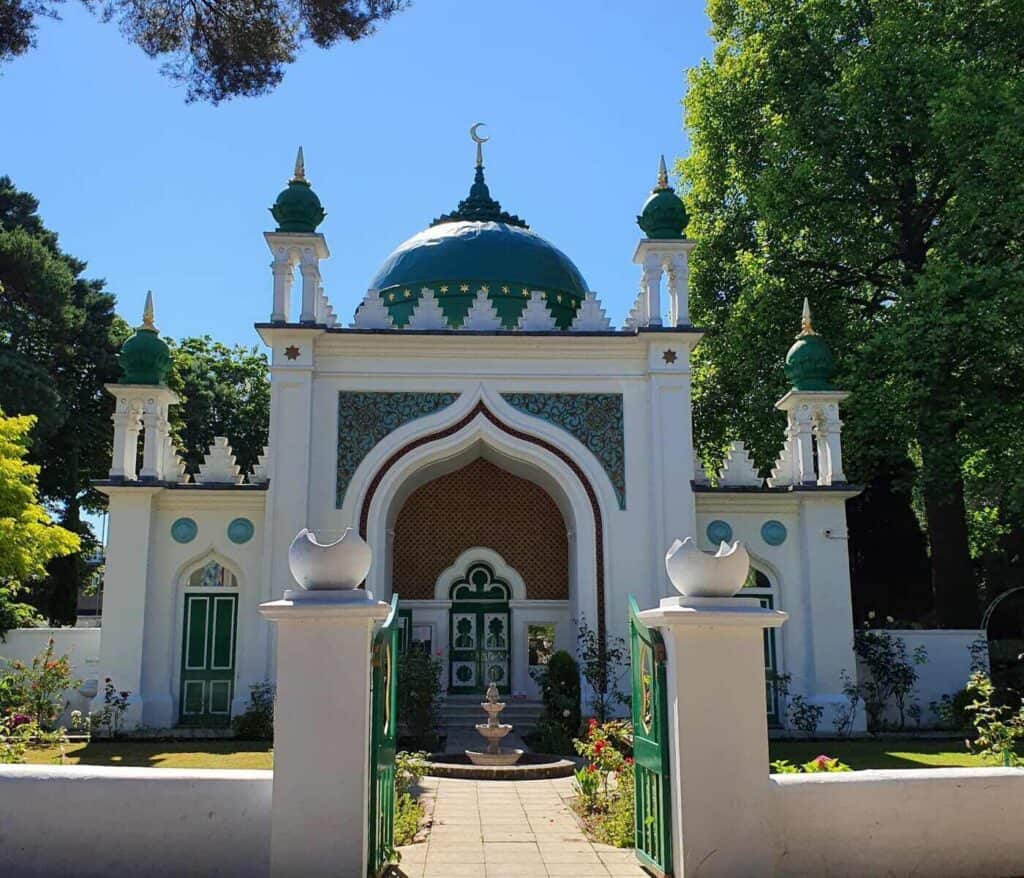
The Shah Jahan is the country’s only Grade I-listed mosque. Constructed in 1889, it is also Britain and northwestern Europe’s first purpose-built mosque and was the centre of British Muslim activity for much of the early 20th century.
The mosque was conceived by the Jewish-Christian orientalist scholar Gottlieb Wilhelm Leitner and designed by local Anglo-Irish architect William Isaac Chambers. The Shah Jahan has Levantine features but may well have been modelled on the Mughal-era Badshahi Mosque in Lahore, which Leitner would have been highly familiar with.
This monumental Mughal-style mirage features a stunning central onion dome, green with a ring of gold stars and a gold finial topped by a crescent. A series of white crenellations inspired by ancient cultures of the Middle East top the entrance, which is flanked by four faux minarets, each boasting its own mini green onion dome with gold finial.
When Leitner first opened the mosque, in 1889, it served the Muslim students attending his institute and others that came from London but was only opened on request and not for the five daily prayers. Today, Woking’s Muslim community have outgrown the historic building and expanded the premises by developing the structures opposite the Shah Jahan, where the main congregational prayers and mosque activities now take place.
The historic mosque is open to visitors, as is the adjacent Sir Salar Jung building, which houses many of the mosque’s historic archives, available to view by appointment.
Chester Beatty, Dublin
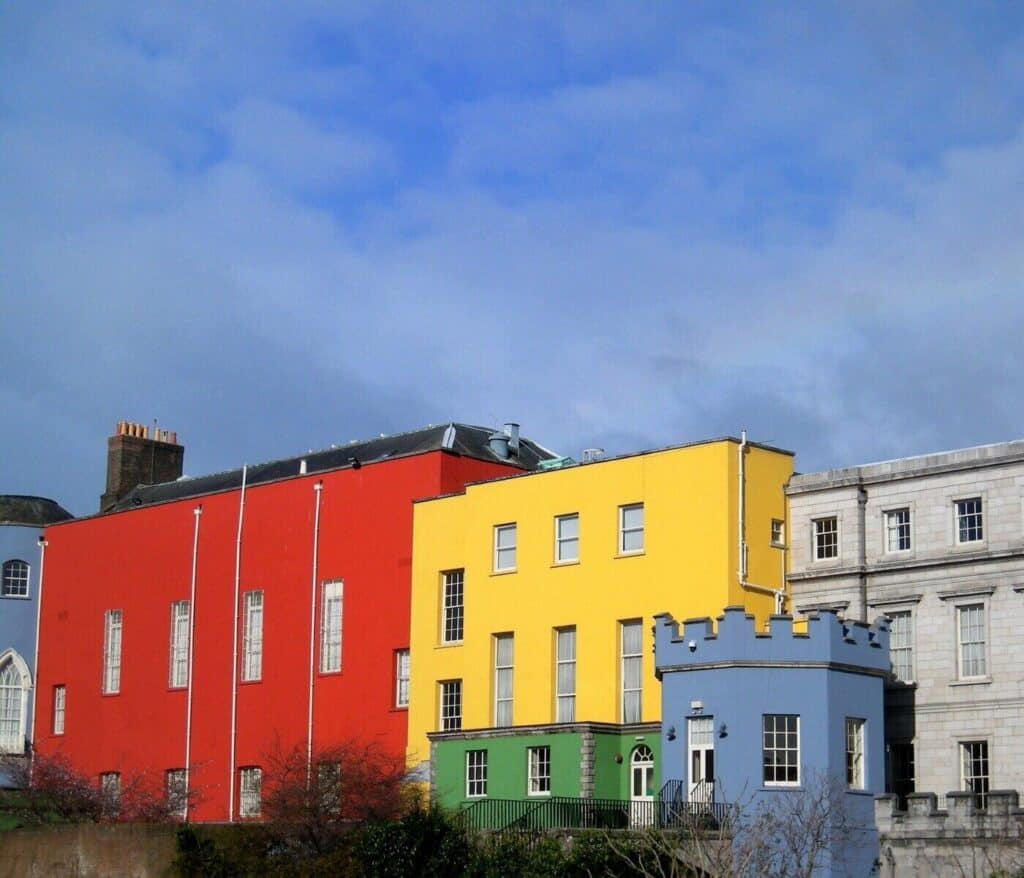
This museum, located within the historic grounds of Dublin Castle, is an absolute must. Chester Beatty showcases an extraordinary collection of Qur’anic manuscripts (perhaps the best in Europe) and art amassed by its founder, the American-Irish mining magnate Sir Alfred Chester Beatty. Upon his death, this breathtaking collection, comprising over 20,000 manuscripts, rare books, miniature paintings and decorative arts, was bequeathed to the Irish state. Although the museum spans diverse global cultures, the Islamic collection – one of the world’s most significant and exquisitely presented, with an astonishing 6,000 items – makes up more than a quarter of its vast holdings.
Located on the first floor, the Arts of the Book Gallery, is a treasure trove for lovers of Islamic artistry, offering an exploration of the intricate craftsmanship and aesthetic brilliance that flourished across the Islamic world for centuries. Here, you can examine some of the finest Arabic calligraphy ever produced within Ottoman, Persian and Arab cultures.
Up above on the second floor, the Sacred Traditions Gallery delves into the rituals and beliefs of major world religions. It is home to an astounding 260 complete or fragmentary Qur’ans, spanning the period from the 8th to the 19th centuries. Among these sacred texts, the undisputed highlight, often considered to be the greatest treasure of the entire Islamic collection, is the 11th-century Qur’an copied by the Baghdadi calligrapher par excellence, Ibn al-Bawwab.
Cambridge Central Mosque, Cambridge
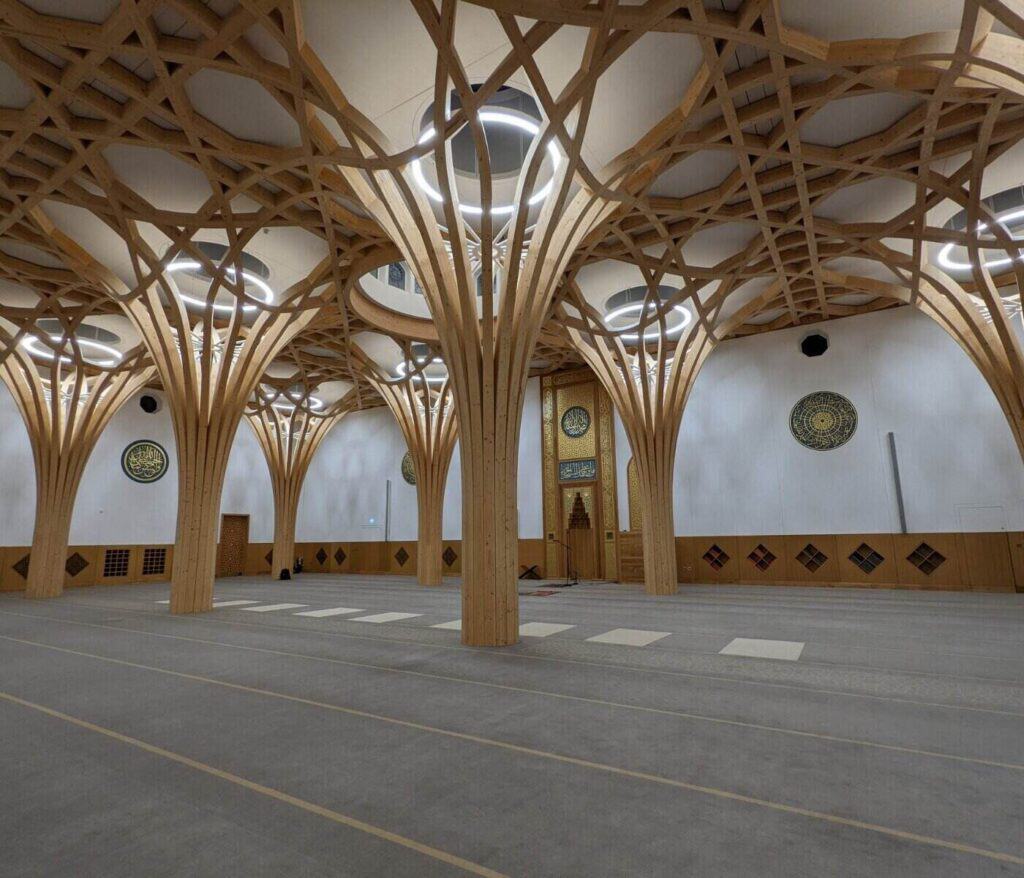
Costing a cool £23 million and taking 11 years to construct, the stunning Cambridge Central Mosque sits like a geometric mirage, held up by a forest of splayed wooden ‘trees’, in the heart of Muslim Cambridge. Britain’s first eco- friendly mosque is conveniently within walking distance of the main train station, and a mere mile or so southeast of Cambridge’s medieval centre. Surrounded by mostly residential, terraced houses, the mosque is designed to respect its local setting, which is why it has no minaret and only a small, subtle, golden dome, barely visible from the road.
Having opened its doors in April 2019, it was shortlisted for the country’s most prestigious architectural award, the RIBA Stirling Prize, in 2021, and won the prize’s People’s Vote. It is easily Cambridge’s most famous Islamic monument and has put the city firmly on Britain’s ‘Muslim map’.
A project led by local academic, Islamic scholar and mosque trustee, Sheikh Abdul Hakim Murad, and patron Yusuf Islam – the 1970s pop star formerly known as Cat Stevens – the Cambridge Central Mosque boasts a number of groundbreaking environmentally friendly features that merge classical Islamic with traditional British style. For example, modern systems developed to collect rainwater are re‑used to irrigate the garden, which is modelled on classical Islamic gardens but also features benches made in a traditional British style using local oak. The water furnishes the toilets and wudu areas, where it is heated using a system that recycles the energy of the building’s intelligent underfloor ‘pressure- sensitive’ heating.
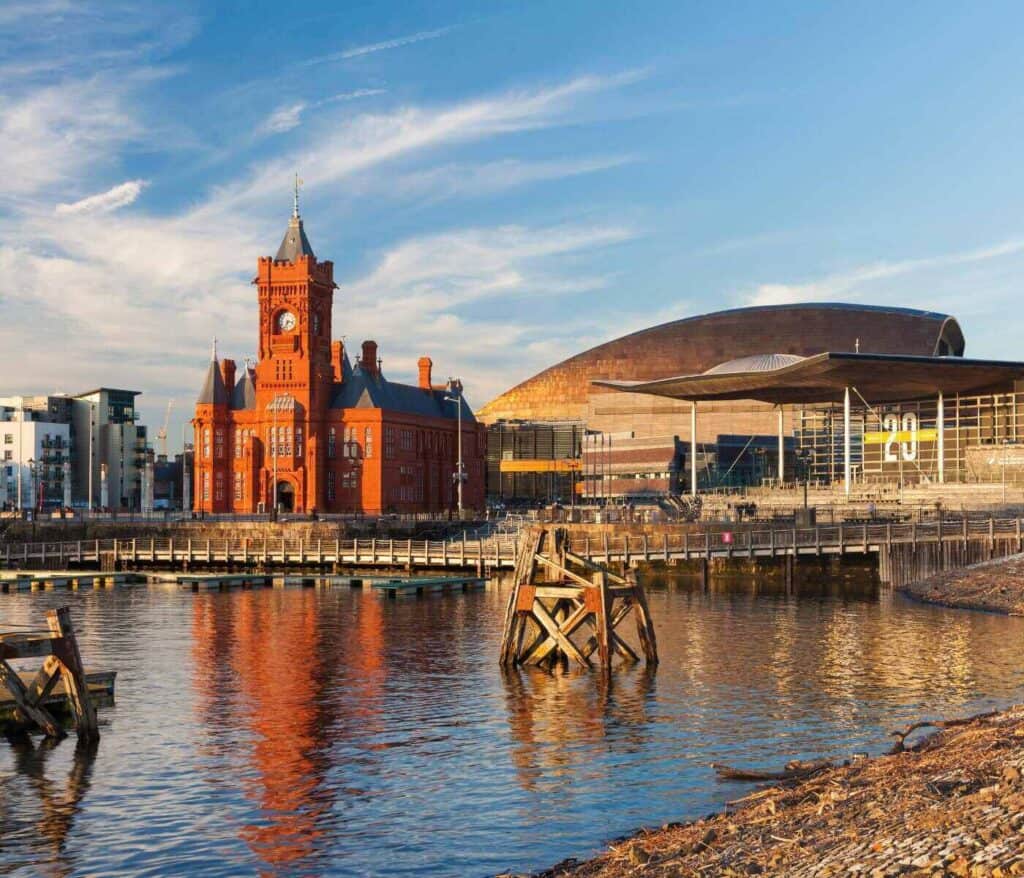
Butetown, Cardiff
Home to one of the most historically significant Muslim communities in Britain, Butetown – in the area formerly known as Tiger Bay – became a hub for Muslim seafarers from Yemen, Somalia and South Asia as early as the 19th century, drawn to Cardiff ’s booming docks, with reports of ‘mussulmans’ carrying out religious processions here back in 1892. By 1936, some stables behind Bute on Peel Street had been converted into the city’s first Muslim prayer hall and cultural centre under Sheikh Abdullah Ali al-Hakimi. Wartime air raids destroyed this early mosque in 1941, but the community swiftly regrouped to establish in 1943 a temporary structure that saw large Eid gatherings and processions through the surrounding streets.
By 1947, the city was home to one of Britain’s earliest purpose-built mosques, the Noor ul Islam; this was torn down in 1988, when a new mosque, called Noor El Islam, was built on the site. There is also the South Wales Islamic Centre (SWIC), which was opened in 1969 on nearby Alice Street after a split in the community. Both mosques claim to be successors to the original Noor ul Islam that stood on Peel Street.
Butetown today still exudes the layered multiculturalism it has been traditionally known for – with halal butchers, Somali cafés and corner shops sitting alongside heritage plaques and youth centres. Both the Noor El Islam and the SWIC often engage in open days. Vibrant Butetown-based cultural projects like Docks magazine and Young Queens (a local arts and heritage project) are worth looking up online, often led by young Somali women reclaiming spaces and voices via media from fashion and photography to poetry.
If you can, catch a football match at Tiger Bay FC, a club formed in 2009 by first- and second-generation Somalis, or Cardiff Bay Warriors FC, first formed in 2005, also by the Somali community.
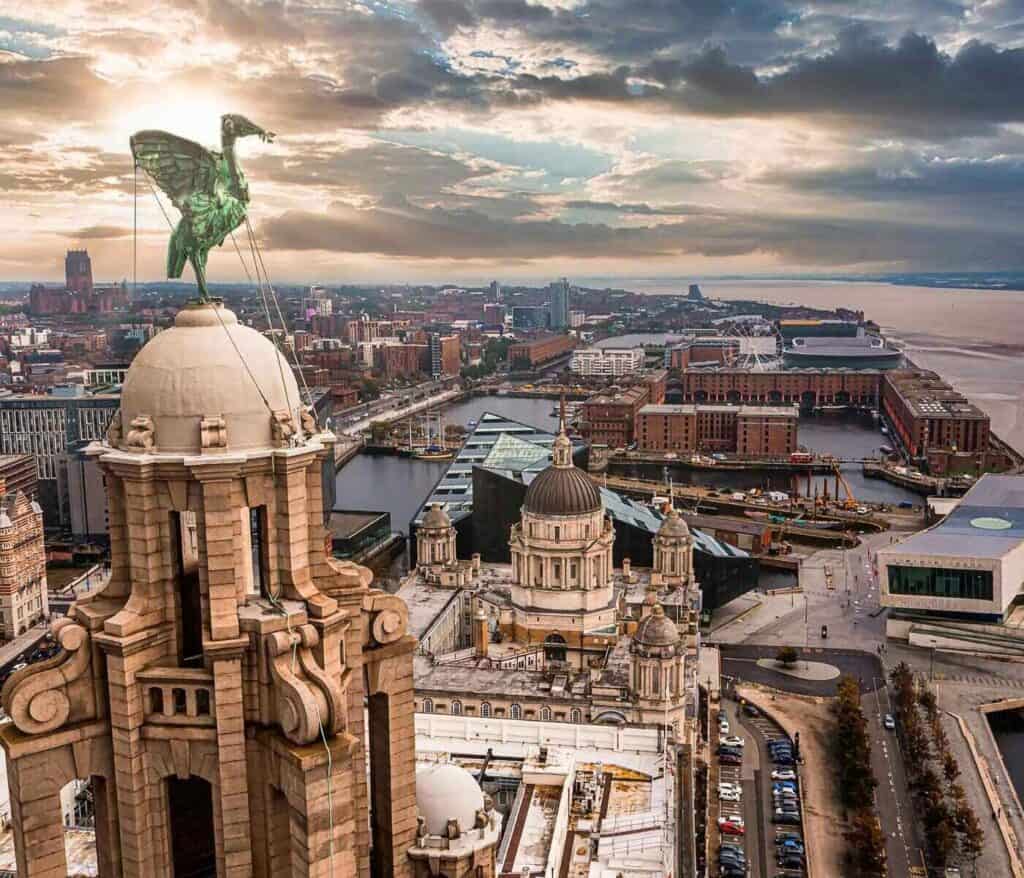
Abdullah Quilliam Mosque and Heritage Centre, Liverpool
Britain’s first mosque was part of the Liverpool Muslim Institute (LMI), which was founded by a local lawyer called William Henry Quilliam in 1887 in a small room in Mount Vernon Terrace. Quilliam, who had recently converted to Islam after a trip to Morocco, had begun preaching publicly in the city upon his return. By the time the LMI moved into 8 Brougham Terrace in 1889, he had converted around 20 Liverpudlians and was going by the name Abdullah.
Over the next years, what the local press dubbed the ‘Islam Church’ became home to a number of important Muslim organisations, including an orphanage, a madrasa and a publishing house that produced Britain’s first Muslim newspaper, The Crescent, and the international journal Islamic World. As the reputation of the LMI grew, news began to spread across the globe of the British Muslims of Liverpool. Quilliam went on to claim the title of Sheikh-ul-Islam of Britain, recognising him as the official head of the then tiny British Muslim community.
Today, the Abdullah Quilliam Society has acquired numbers 1 to 6 Brougham Terrace, where the modern Abdullah Quilliam Mosque – a conventional community mosque with separate spaces for men and women, which has no direct or heritage link to Quilliam’s historic structure – is located. Meanwhile, numbers 8–10 are being slowly restored to resemble the original LMI, the aim being to recreate a space that transports visitors back to late Victorian Liverpool and offers a glimpse of the truly remarkable institute that once existed here.
- Recommended reading: a family-friendly weekend in Liverpool
Our Muslim Britain & Ireland guide
For more information, see Tharik Hussain’s guide to Muslim Britain & Ireland: