Beyond its size and scenery, these interesting facts about Kazakhstan highlight what makes the country truly unique.
Few destinations feel as expansive as Kazakhstan.
Covering a territory larger than much of Europe, it is a land where open steppe gives way to mountains, deserts and inland seas. Its identity has been shaped over centuries by nomadic traditions, the movements of empires and its years within the Soviet Union. Traces of the Silk Road remain visible in historic settlements and cultural landmarks, several of which are recognised as UNESCO World Heritage Sites. At the same time, contemporary Kazakhstan is forward-looking, with evolving cities and a growing international presence.
This blend of old and new makes it a fascinating place to explore, and these fascinating facts about Kazakhstan reveal the breadth of influences that have shaped its landscape, culture and identity.
Get our guide to Kazakhstan
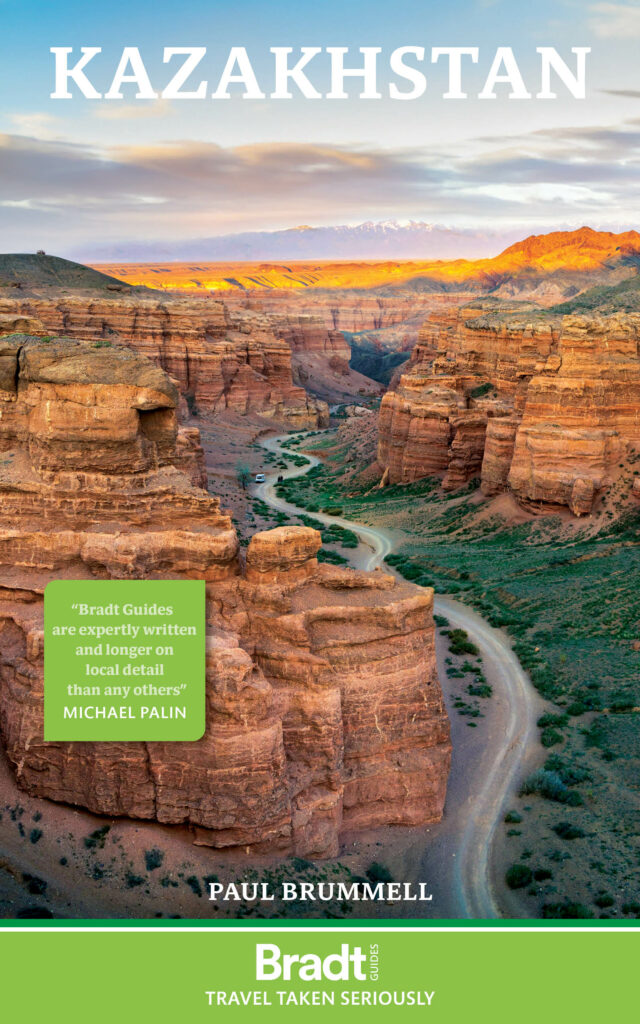
Before you delve into the article, check out the Kazakhstan travel guide that inspired it:
Facts about Kazakhstan worth discovering
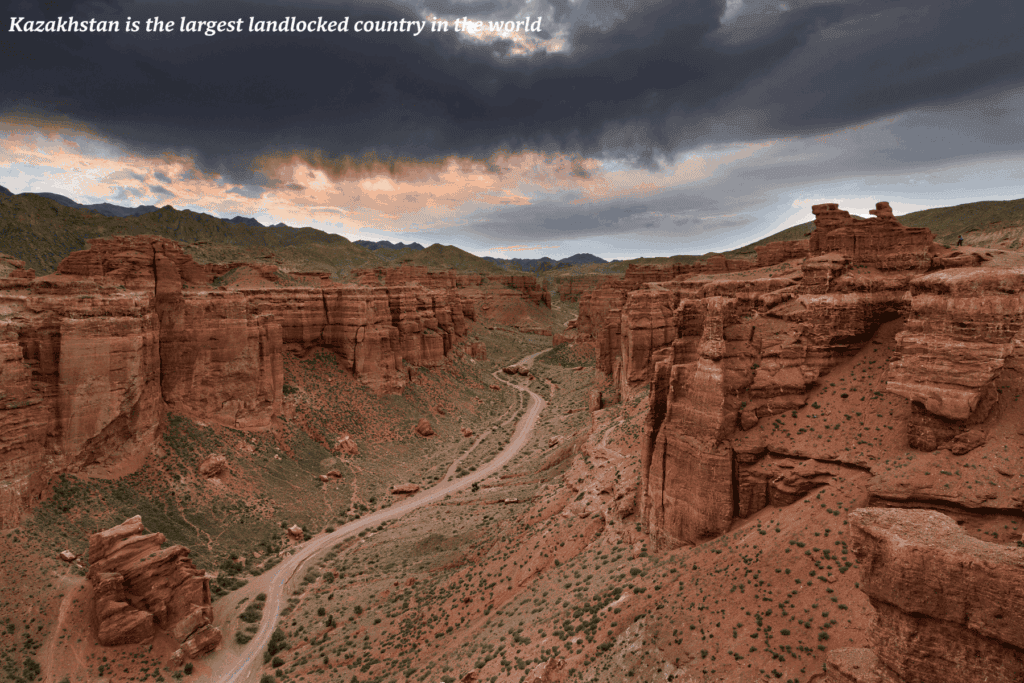
It is the largest landlocked country in the world
Kazakhstan is big.
Covering an area of more than 2.7 million square kilometres, it is the ninth-largest country in the world, equivalent in size to the whole of western Europe and accounts for around 1.8% of the world’s land.
It is bordered in the north by Russia, with whom it shares an astonishing 6,846km-long land border, the longest land border in the world; in the east by China; and in the south by the central Asian republics of Kyrgyzstan, Uzbekistan and Turkmenistan.
The population of this huge country is around 20 million, giving Kazakhstan the low population density of around seven people per square kilometre. While most of Kazakhstan lies geographically in Asia, the part of the west of the country above the Caspian Sea (the world’s largest inland body of water) is considered part of Europe, giving strength to Kazakhstani claims that it represents both continents.
Our recommended Kazakhstan tour operators
Independent travel in Kazakhstan is certainly possible, but having local support can make a big difference.
Distances between destinations are vast, transport schedules can be unpredictable and some of the most rewarding places to visit are off the usual tourist routes.
Local knowledge is especially valuable when it comes to navigating regional logistics, understanding cultural nuances and accessing remote areas more easily.
Here are some of our favourite tour operators:
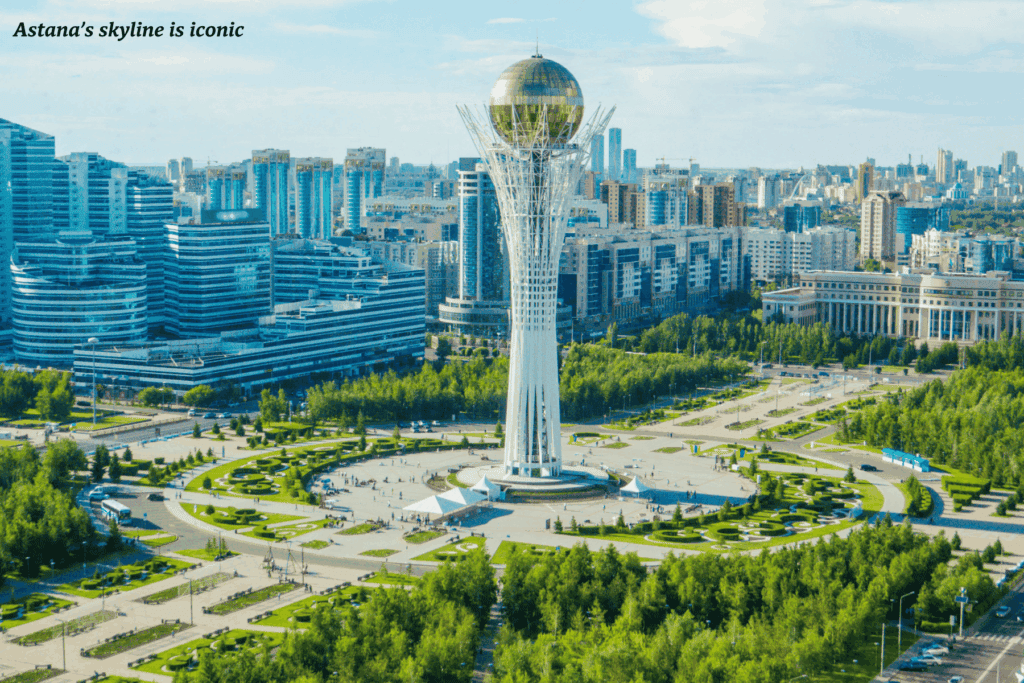
The capital city has changed names several times
The names of many streets and cities have been changed back and forth since Kazakhstan gained independence.
In spring 2019 the capital city of Astana was renamed ‘Nursultan’ in honour of the first president of Kazakhstan – Nursultan Nazarbayev – but already by 2022, the second and current president, Kassym-Jomart Tokayev, had decreed to change the name back.
The oldest train station in the city, Astana-1, was during the same period known as Nursultan-1. Today Nursultan Nazarbayev International Airport and a private university are among a few major places in the capital that have held on to the first president’s name.
Not confusing at all, right?
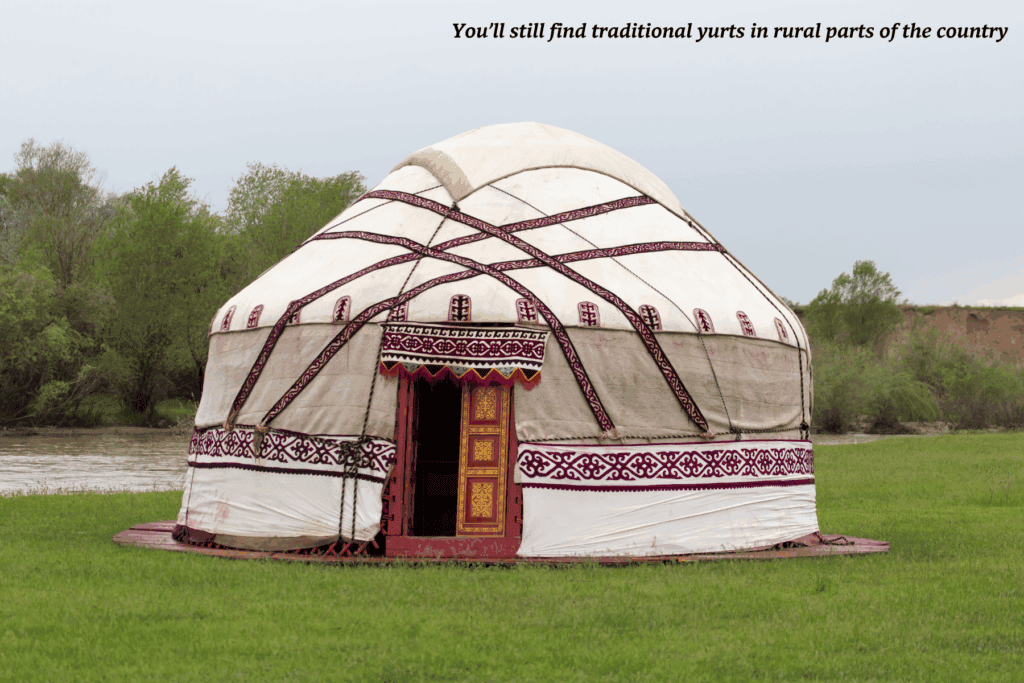
It has supported a nomadic way of life for centuries
Much of Kazakhstan was controlled by a long succession of Iranian and then Turkic nomadic peoples.
While around 40% of the population of Kazakhstan lives in rural areas, today this is overwhelmingly in settled, not nomadic, communities, although some pastoralists do still move animals seasonally. Nonetheless, the traditions and artefacts of nomadism lie at the heart of Kazakh culture.
The yurt, hunting with eagles, and beshbarmak (traditional nomad dish of finely chopped boiled meat) are invoked frequently in the symbolism of the post-independence state, whether by government sources or advertisements on television.
Epic poetry, recounted by akyns (improvising poets and singers) and accompanied by dombra playing, remains popular, and some young Kazakh pop bands are experimenting with the use of traditional Kazakh instruments and musical styles alongside Western ones.
An invitation to a traditional Kazakh meal is not to be missed. When presented, as honoured guest, with a sheep’s head for division among those around the table, the music of the dombra playing in the background, and your host solicitously enquiring as to whether you would prefer mare’s or camel’s milk, the exoticism of this fascinating land makes itself most clear.
The space race started here
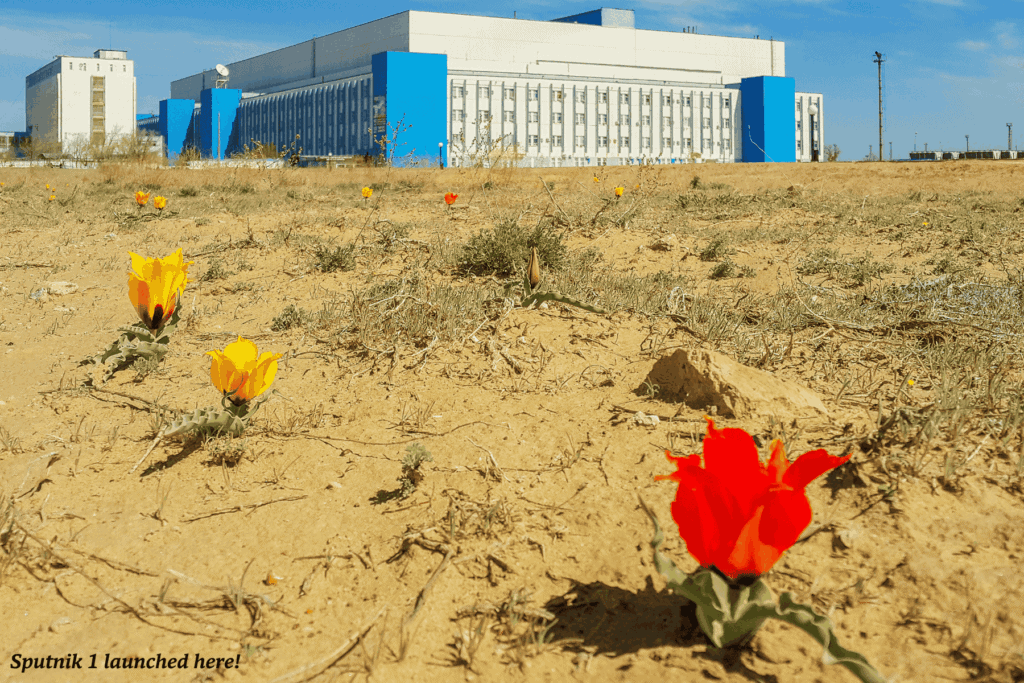
On 4th October 1957, the world’s first satellite, Sputnik 1, weighing only some 90kg, was successfully launched from Baikonur Cosmodrome in the south of the country. This journey made Yuri Gagarin the first human to enter space, and marked the beginning of Kazakhstan’s enduring role at the heart of global space exploration.
To this day, the Baikonur Cosmodrome remains the world’s oldest and largest operational space launch facility. Securing the necessary permissions to go there is time-consuming, but it’s worth it.
Existing as a fascinating living museum of the history of space travel, a visit here is an expensive but unforgettable one, especially if you can manage to get your trip to coincide with a launch.
It is one of the most ethnically diverse countries in Central Asia
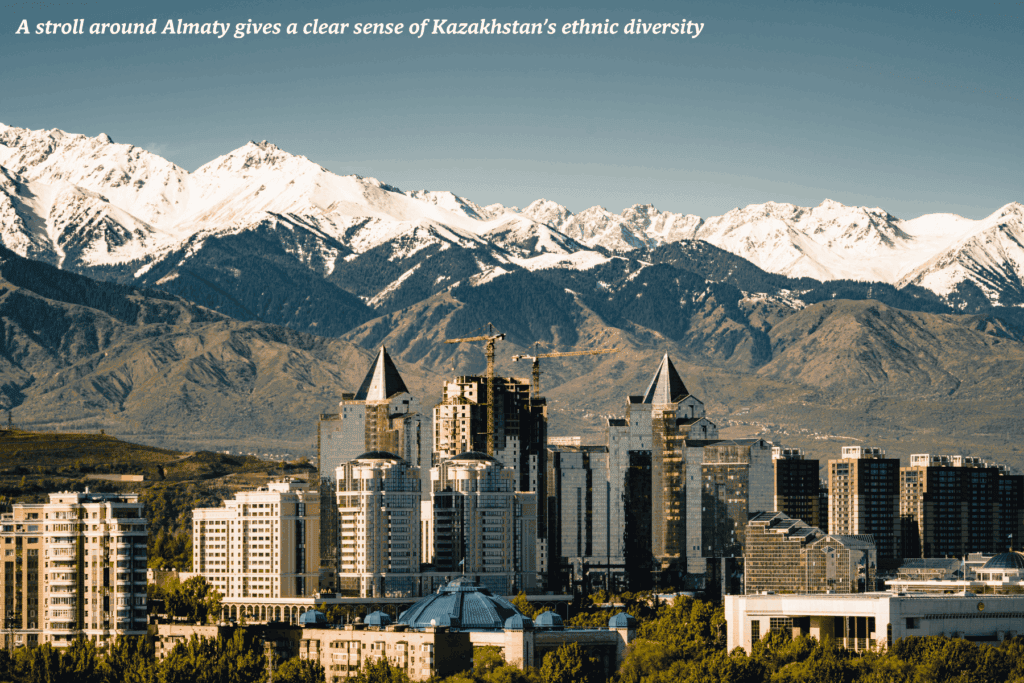
A stroll around central Almaty will give you a clear sense of Kazakhstan’s ethnic diversity, as a broad mix of European and Asiatic faces greets you.
At the start of 2025 ethnic Kazakhs comprised 71.3% of the population, and ethnic Russians 14.5%. Other minority groups are much smaller: Uzbeks come third with 3.3% of the population, followed by Ukrainians (1.8%), then Uyghurs (1.1%) and Germans (1.1%).
This diversity is immediately noticeable for visitors, not just in the people you encounter but in the atmosphere of everyday life, where different languages and cultural influences coexist side by side. In cities like Almaty and Astana, this mix is reflected in everything from cuisine to traditions, creating a truly layered cultural experience.
For travellers, it means the opportunity to experience multiple cultural perspectives within a single trip. Whether exploring markets, dining out, or simply walking through the city, visitors are likely to encounter a blend of customs and interactions that reflect Kazakhstan’s long history as a crossroads between Europe and Asia.
It experiences extreme temperatures
Kazakhstan’s extreme continental climate makes for large seasonal variations, with hot summers and cold winters and temperatures ranging from –40°C to 40°C. Its large size makes for big regional variations too.
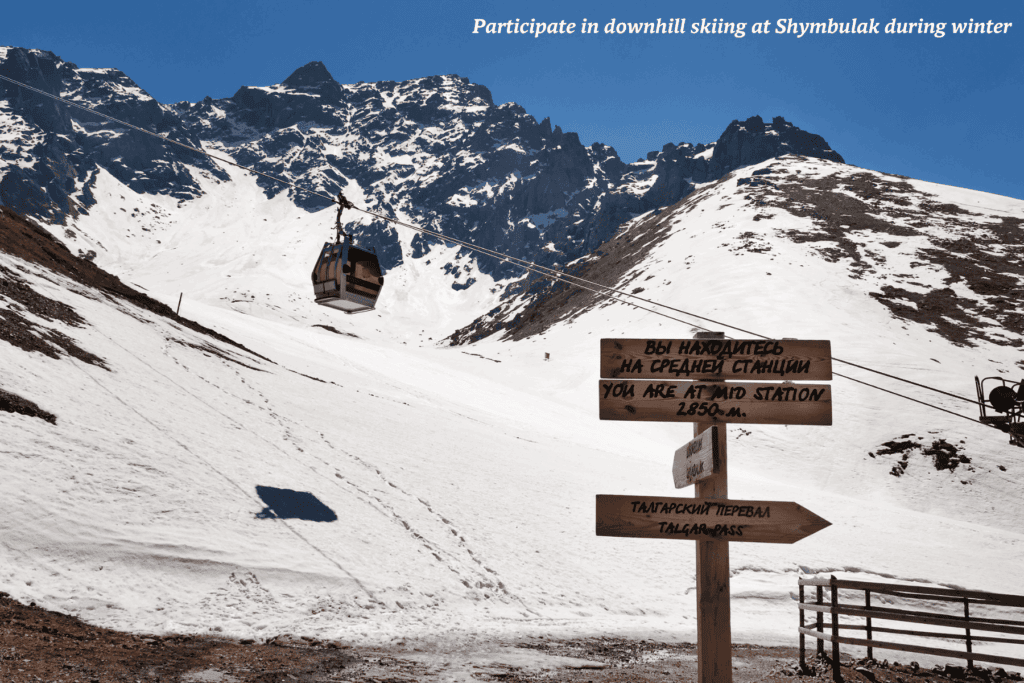
Winter in northern Kazakhstan means snow cover between November (especially in January) and April, and temperatures regularly below –20°C. In Kyzylorda and Mangistau regions, there is relatively little snow, and winter temperatures are nothing like as extreme. The season brings with it opportunities for snow-related sports across Kazakhstan, including downhill skiing at Shymbulak and Ak Bulak outside Almaty. On crisp, cold but sunny winter days, Kazakhstan is perhaps at its most beautiful.
Late April and May bring a wonderful carpeting of wild flowers to the steppes, and to the slopes of the mountains. The tulips on the slopes of the Tian Shan in May are a particularly fine sight. The trekking season in Kazakhstan starts to develop around mid-May, running to late September, though some high-altitude routes remain closed until June or July.
The summer months are in general an excellent time to come to Kazakhstan, and represent the peak of the tourist season, with temperatures in the southern regions frequently reaching well above 30°C in July and August.
The landscapes are truly spectacular
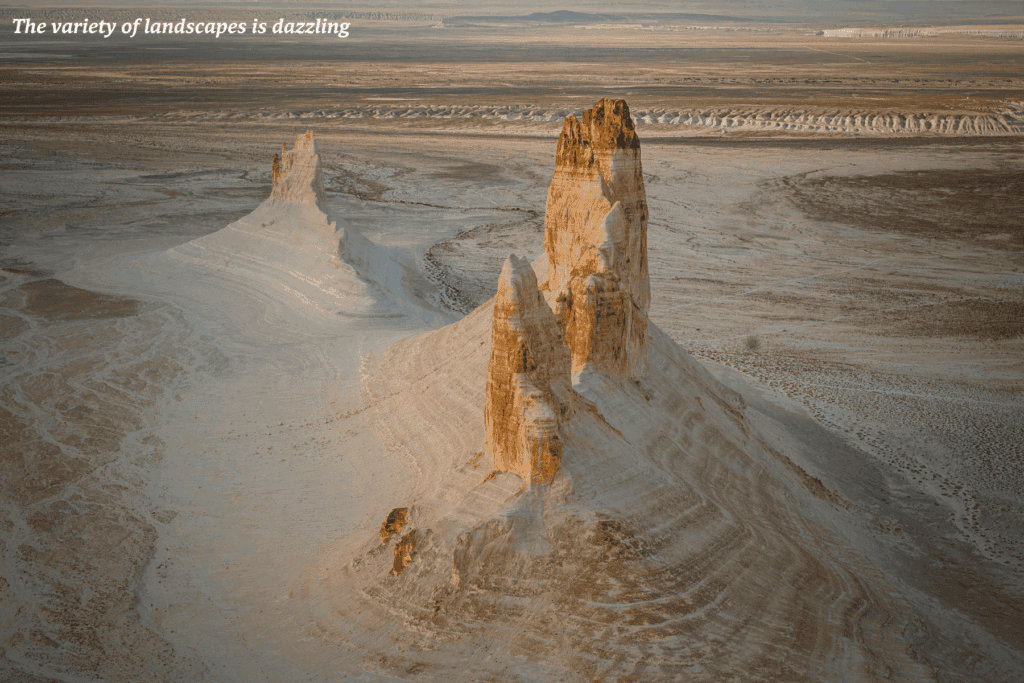
Kazakhstan’s vast and varied landscapes are among its most striking features.
In the east and southeast of the country are high mountain ranges: the Tian Shan along the borders of Kyrgyzstan and China, and the Dzhungarsky Alatau and Altai ranges further north along the Russian and Chinese borders. Kazakhstan’s highest peak, Khan Tengri in the country’s southeastern corner, shades 7,000m and offers dramatic alpine scenery that attracts climbers and adventurous travellers alike.
In contrast, in the west, close to the Caspian, lie some of the lowest points in the country. Kazakhstan’s lowest land altitude is the Karagiye Depression in Mangistau Region, at –132m, it is a stark and almost otherworldly landscape of wide open space. Kazakhstan also boasts some 48,000 lakes scattered across its plains, deserts, and mountain regions, adding to the diversity of its natural scenery.
Belts of pine and birch forest in the north give way to the world’s largest dry steppe region, a vast expanse of open grassland covering more than 800,000km² that stretches as far as the eye can see. With gradually declining rainfall and increasing temperatures from north to south, the steppe belt gives way to semi-desert and then to desert, creating a continuous and visually striking transition of ecosystems across the country.
The country has 6 UNESCO World Heritage Sites
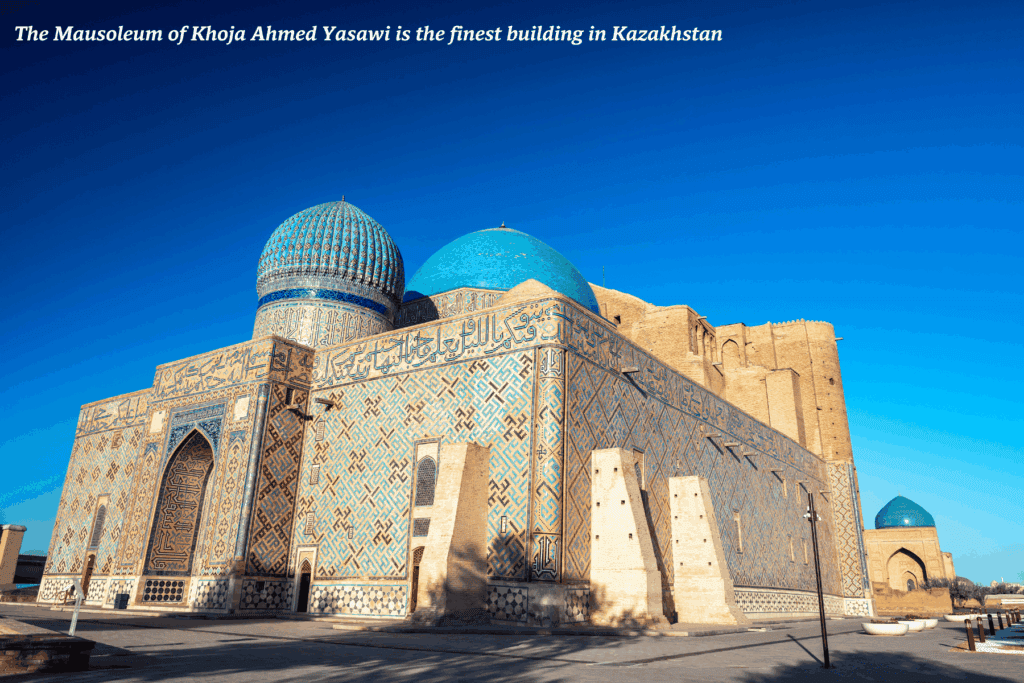
Mausoleum of Khoja Ahmed Yasawi
Undoubtedly the finest building in Kazakhstan, the Mausoleum of Khoja Ahmed Yasawi makes for a stunning sight from every angle. The towering portal, dominated by the tall central arched niche, faces southeast.
The northeastern and southwestern walls are decorated with blue and turquoise tiles forming geometric designs, with a line of Arabic inscriptions above. The central dome, which stands above the main hall, the kazanlyk, is the largest in central Asia, its exterior glowing a warm turquoise behind the portal.
Petroglyphs of the Archaeological Landscape of Tanbaly
Situated in a group of hills running north of the line of the Zailysky Alatau, Tanbaly is one of the most impressive of the many petroglyph sites in Kazakhstan.
Discovered in the 1950s by the archaeologist Anna Maksimova, it was recognised as a UNESCO World Heritage Site in 2004, and its main petroglyph clusters are now well signposted.
Silk Roads: The Routes Network of Chang’an-Tianshan Corridor
The Routes Network of Chang’an-Tianshan Corridor is a transnational site stretching across China, Kazakhstan, and Kyrgyzstan, featuring 8 major sites in Kazakhstan including Kayalyk, Talgar, and Akyrtas.
Natural UNESCO sites
Kazakhstan also has three natural sites on the UNESCO World Heritage List:
It is an important stop along the Silk Road
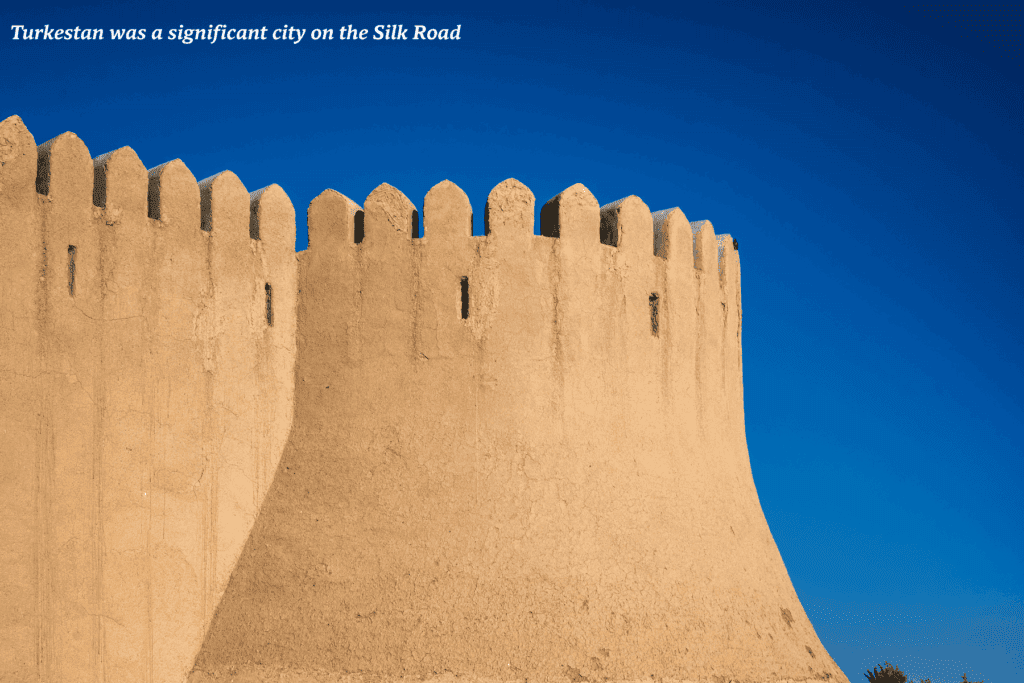
The northern route of the Silk Road ran through the southern part of the country, nurturing important cities. In one, Turkestan, Kazakhstan’s most magnificent building is to be found, the turquoise-domed mausoleum of the Sufi spiritual leader Khoja Ahmed Yassaui.
The neighbouring city of Otrar, living on today as no more than an archaeological site, has a somewhat unfortunate claim to historical fame as the place in which the ill-considered actions of the city governor brought the predations of the Mongols of Genghis Khan on to central Asia.
Discover more of our favourite Silk Road sights here.
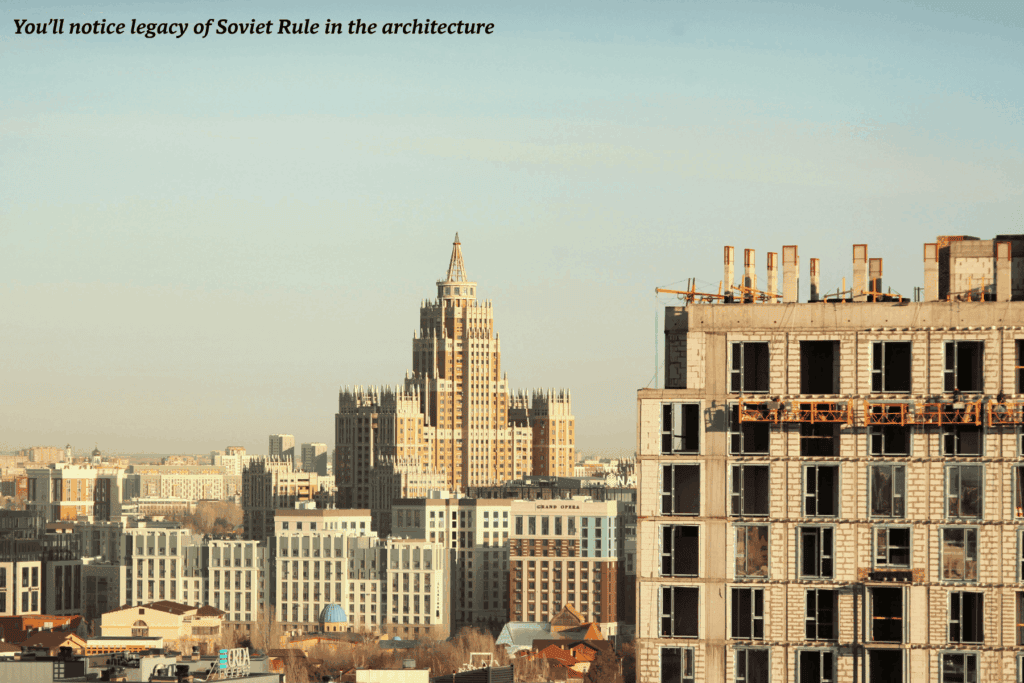
It was part of the Soviet Union until 1991
The open spaces of Kazakhstan were the setting for several dark historical episodes during the Soviet period, when leaderships were at times all too inclined to view the country essentially as empty space that could be utilised for some of the less savoury tasks required by the Soviet Union. Political and other prisoners were detained in the numerous GULAG labour camps across the steppes of Kazakhs.
Whole peoples, including Germans, Koreans and Chechens, were deported here during World War II under the orders of Stalin, who wanted to keep the groups whose loyalty he questioned away from the front lines.
On 16 December 1991, it became the last of the republics of the USSR to proclaim its independence.
- Recommended reading: how the architecture of Astana tells a story
It has a wealth of natural resources
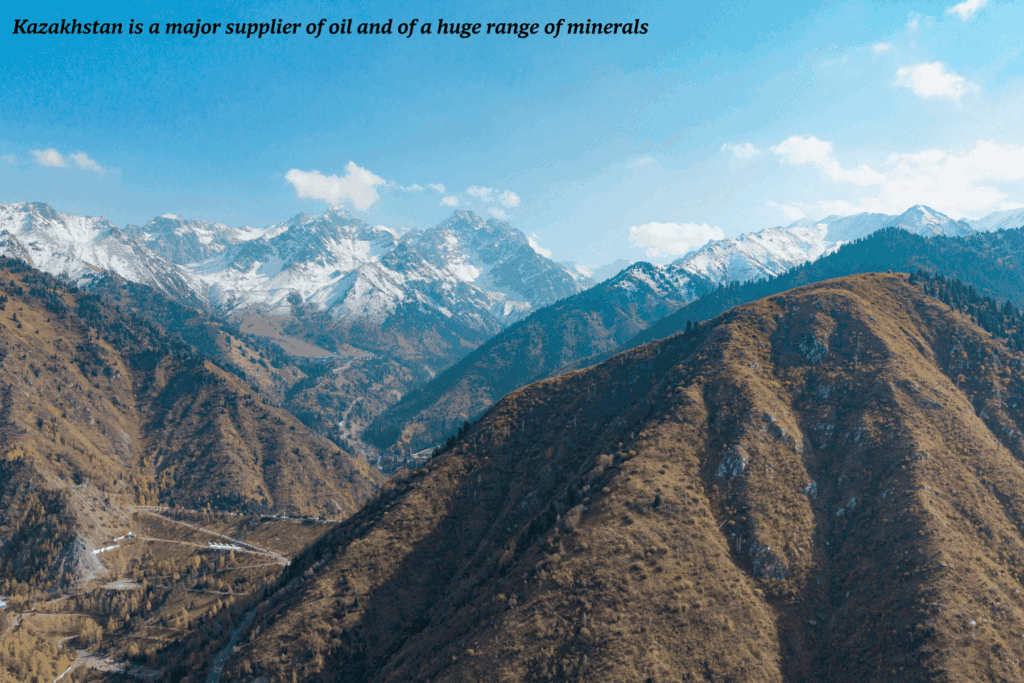
Rich in natural resources, Kazakhstan is a major supplier of oil and of a huge range of minerals – it has the second-largest deposits of copper in the world.
Following a difficult economic transition post-independence, it has experienced an economic boom on the back of high world prices for its natural products, making it an increasingly prosperous and self-confident country.
Today, the former Soviet aims to become one of the world’s most developed countries by 2050, balancing its oil- and gas-based economy with investments in future energy, including plans for its first nuclear power plant near Lake Balkhash.
Our guide to Kazakhstan
For more information, read our guide to Kazakhstan by Paul Brummell: