
Is Suriname worth visiting? Thanks to its rich culture, colonial history and untouched rainforest, we’d say absolutely. Here’s what you need to know.
When most people think of South America, this small, remote country on the northern coast rarely comes to mind. It sits quietly off the usual travel circuit, overshadowed by better-known neighbours, and that distance – both geographical and cultural – often raises a simple question: is Suriname worth visiting?
Given how little it features in mainstream itineraries, the hesitation is understandable.
But the short answer is yes.
Suriname brings together a layered cultural identity, colonial-era architecture and vast expanses of rainforest that remain largely undiscovered. It’s a place where history, nature and everyday life overlap in unexpected ways.
In this article we’ll explore exactly what makes Suriname distinctive, and why it is deserving of a spot your bucket list.
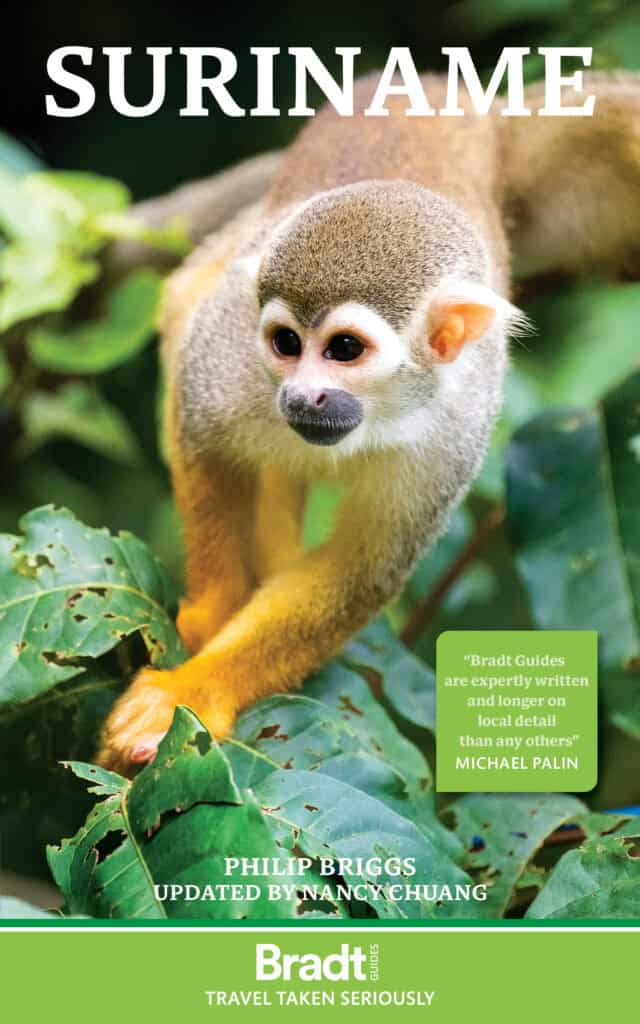
Get our guide to Suriname
Before you delve into the article, check out the Suriname travel guide that inspired it:
Why Suriname is worth visiting
Untouched rainforest and jungle exploration
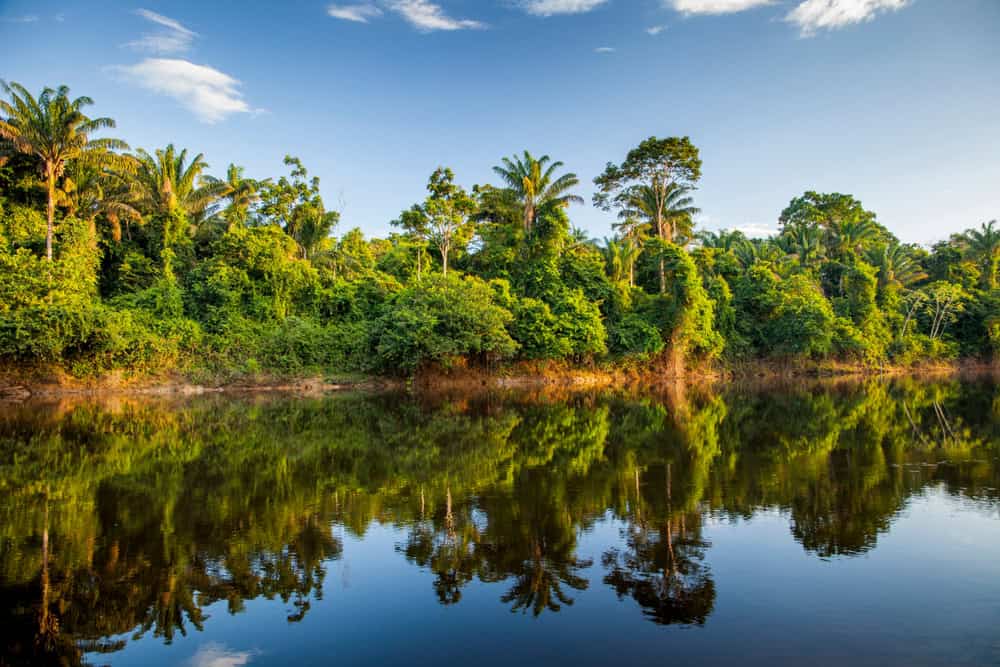
Perhaps Suriname’s greatest attraction is the immense tract of pristine rainforest that swathes its interior. This vast and thinly inhabited wilderness, a northern extension of the Amazon jungle, is home to an untold wealth of wildlife, ranging from secretive, solitary jaguars to inquisitive and sociable squirrel monkeys, from the outsized psychedelic macaws that screech overhead to the iridescent Morpho butterflies that flutter along the forest tails.
Largely untrammelled by roads but penetrated by a series of long, wide navigable rivers, the jungle of the deep interior is accessible only by light aircraft or by motorised dugout boat. Flying in is the more efficient approach, and though relatively costly, it does provide passengers with a magnificent grandstand aerial view over an endless canopy tinged a hundred shades of green.
But exploring the interior by boat – whether it’s the 3-hour approach to Raleigh Falls up the Coppename River, or a longer lodge-hopping excursion up the Upper Suriname and Gran Rio – is the stealthier and more adventurous option, leading to a feeling of total immersion in this mesmerising landscape.
Find out more on our Suriname travel information page.
The Central Suriname Nature Reserve
Suriname’s most important conservation area, the Central Suriname Nature Reserve accounts for almost 10% of the country’s surface, extending over around 16,000km² of untrammelled lowland and montane forest. It was created in 1998 following the amalgamation of three smaller nature reserves designated in the 1960s with the vast corridor of forest that links them.
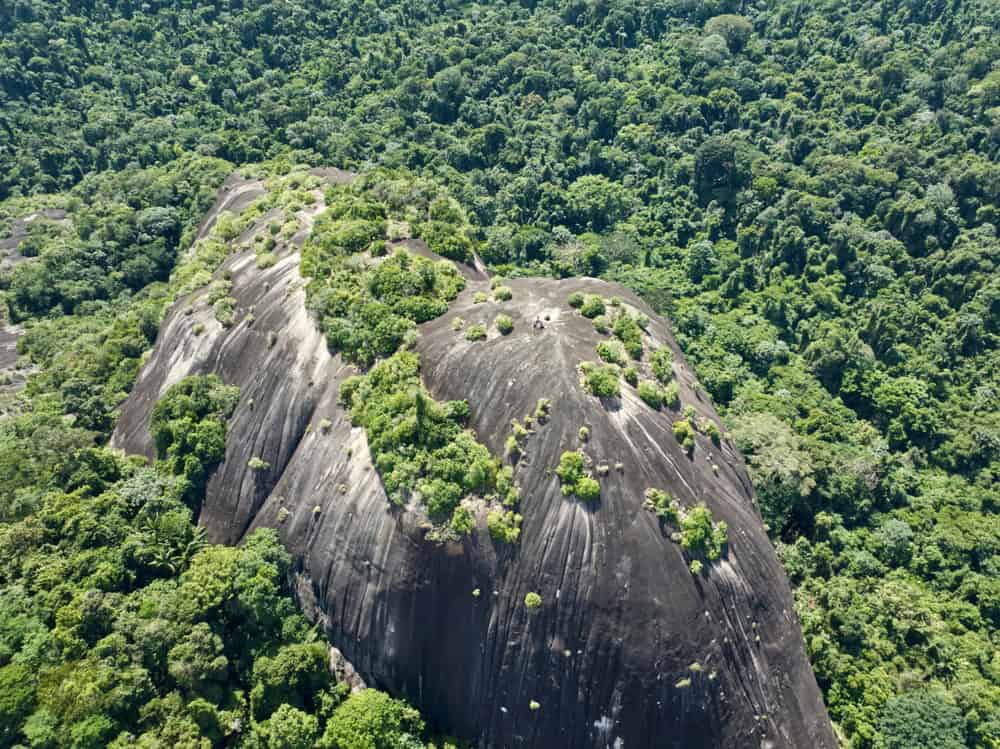
Declared a UNESCO World Heritage Site in 1990, the CSNR is not only the largest reserve in Suriname, but also the fifth-largest terrestrial protected area anywhere in South America. The CSNR incorporates Suriname’s tallest mountain, the 1,280m Juliana Top in the Wilhelmina Mountains, along with the 1,026m Tafelberg (‘Table Mountain’) and many smaller granite domes of which the best known and most accessible is the 245m Voltzberg.
It is a measure of the CSNR’s remote and unspoiled character that, despite its vast area, no roads run close to it and the only area developed for tourism is Fungu Island on Raleigh Falls, which can be accessed by air or by boat along the Coppename River. A major attraction of the Fungu area is its abundant wildlife, which tends to be far more conspicuous than in populated areas such as the Upper Suriname.
A simpler option
Although few visitors to Suriname would want to miss out on at least one excursion into the deep interior, those with limited time, money or tolerance for basic travel conditions will find plenty of opportunities to explore slightly tamer tracts of jungle closer to Paramaribo.
At the more upmarket end, the relaxing Seliba River Glamping, with numerous trails, activities and wildlife spotting, lies on the Suriname River about 2 hours from the capital city on a good, surfaced road plus a short boat ride. More affordably, Peperpot Nature Park and Brownsberg Nature Park provide equally alluring but very different opportunities to see colourful forest birds and monkeys in their natural habitat. Suriname is in fact so thinly populated that almost every settlement or resort outside the capital is fringed by some unexpectedly wild forest and/or swamp habitats.
Our recommended Suriname partners
Independent travel in Suriname is possible, but exploring the interior can be challenging without local knowledge. English is widely spoken in towns, but transport options are limited and many areas are only accessible by river.
As a result, many visitors choose to rely on a mix of trusted local partners – from tour operators and guides to well-located accommodation – to help plan their journeys and make the most of their time in the country.
Here are some of our favourites:
- Wilderness Explorers ([email protected] / +44 7958 218784)
- Hotel Palacio
Paramaribo: a UNESCO-listed capital
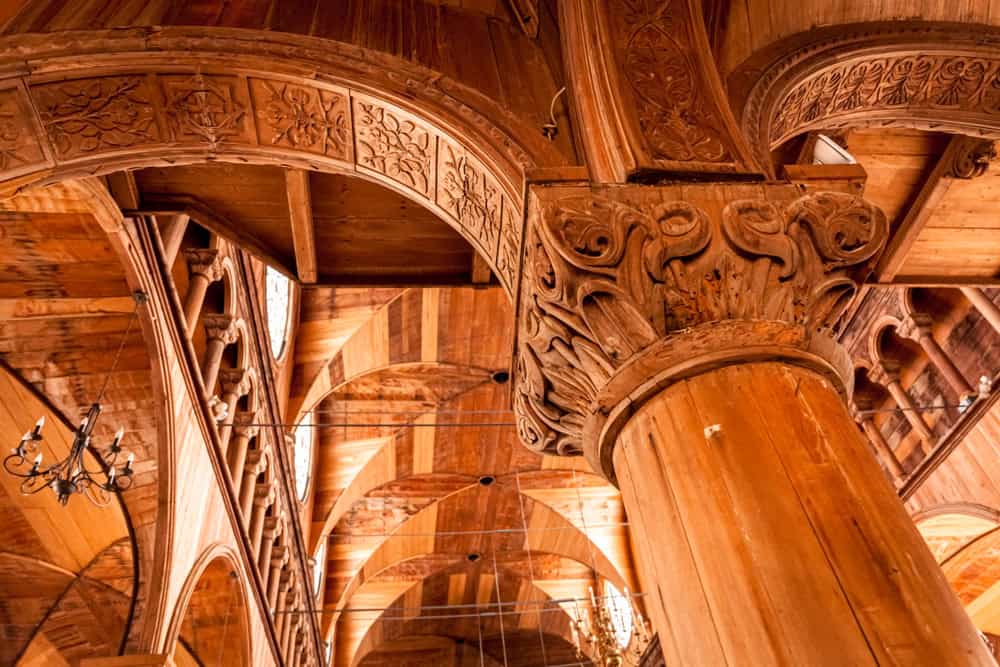
Paramaribo is not only the capital of Suriname, but also the country’s largest population centre and main transport hub. Often referred to as Parbo, it’s a safe, welcoming and decidedly beguiling city, steeped in history and strong on character.
Founded in the early 17th century on the west bank of the Suriname River, the inner city is renowned for its unique and thoroughly attractive Dutch-Creole wooden architecture, which earned it recognition as a UNESCO World Heritage Site in 2002.
It is fortunate that Paramaribo is such a gem of a city, as anybody planning a trip to Suriname will quickly recognise that almost all the country’s roads converge on the capital, as does pretty much every last bus service, domestic flight and organised tour.
As a result, visitors tend to end up planning around several one- and two-night stays in Paramaribo between upcountry excursions.
This, it must be said, is no hardship.
Things to do in Paramaribo
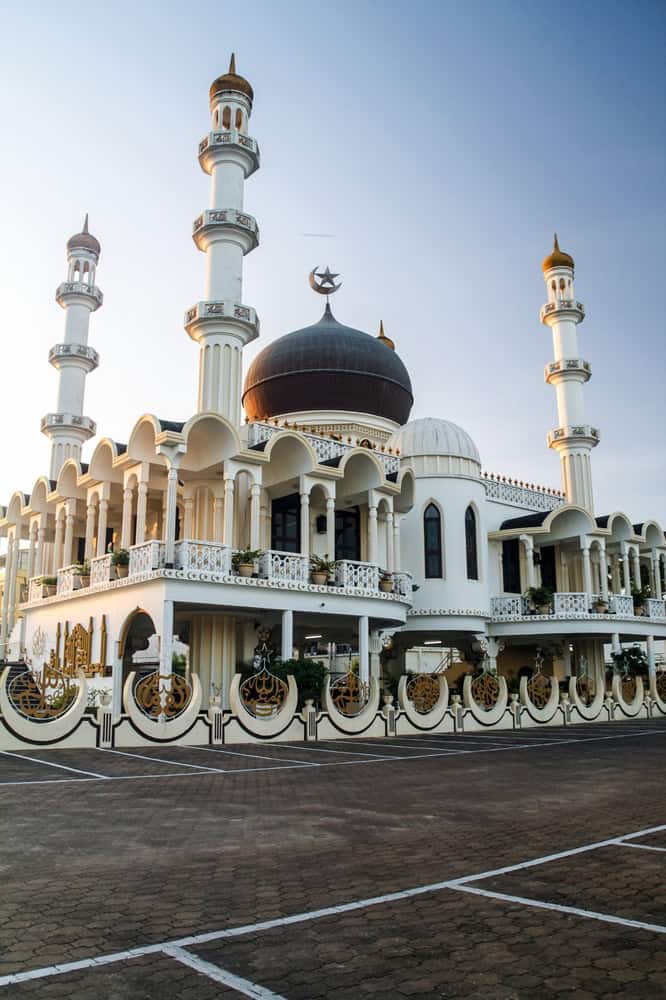
The UNESCO-endorsed inner city warrants a full day’s exploration, starting with historic Fort Zeelandia and its excellent national museum.
Further afield, Paramaribo offers rich pickings for day trippers: a leisurely stroll through the forested Peperpot Nature Park to look for colourful parrots and toucans, a relaxed cycling excursion to historic Fort Nieuw Amsterdam and the old plantations of Commewijne, a boat trip in search of the dolphins and marine birds that frequent the mouth of the Suriname River, an all-day organised tour to beautiful Brownsberg Nature Park or a bus trip to Lelydorp’s underrated Neotropical Butterfly Park.
And after the day’s adventures, it is a genuine pleasure to while away the balmy tropical evening over chilled drinks on the riverside, or to work through a few of the city’s countless eateries, which range from cheap and cheerful Javan-style warungs and Indian-style roti shops to a surprisingly cosmopolitan but still mostly affordable selection of smarter restaurants.
Unique and rich history
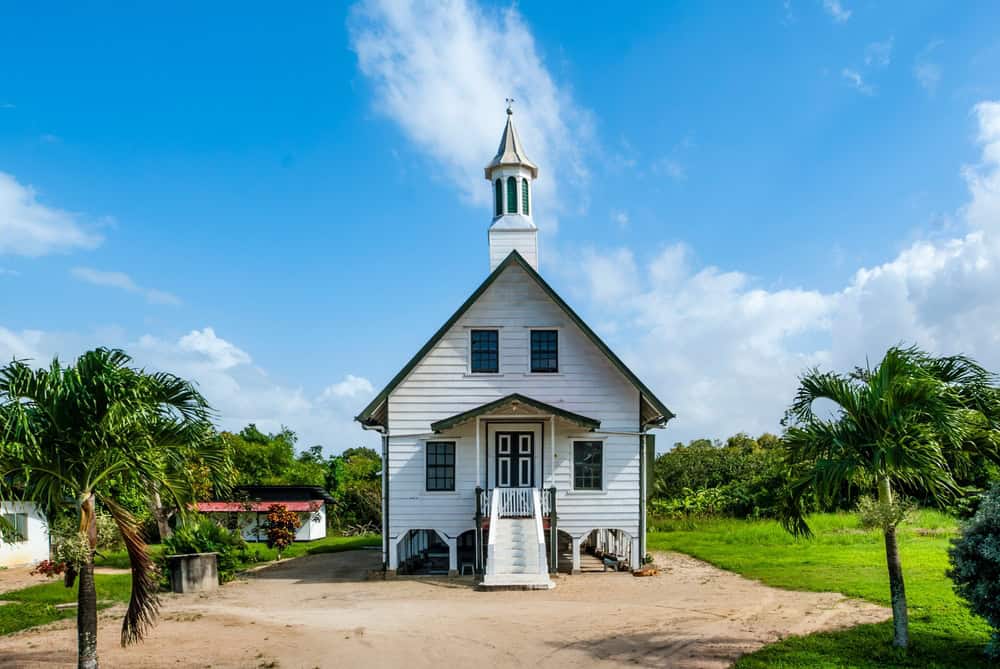
Part of Suriname’s appeal lies in how vividly its history can still be experienced. Beyond the capital, the past isn’t locked away in museums, it’s embedded in the landscape. At Jodensavanne, once a thriving 17th-century settlement, you can wander among the remains of what was once a key hub, now reduced to atmospheric brick foundations and an overgrown synagogue deep in the forest.
Along the Commewijne River, former plantations – part of a network of at least 400 different plantations established during Dutch rule – still feature wooden manor houses, old sugar factories and quiet canals, offering a tangible glimpse into colonial life.
What makes this history especially compelling is how many layers remain visible at once. The plantation economy was built almost entirely on the labour of enslaved people, and its legacy can still be felt in these landscapes, but also in the living cultures that grew out of resistance and survival.
Communities formed by descendants of those that escaped slavery continue to preserve their own traditions in the interior (having fought long and hard for their right to occupy their traditional lands), while later waves of migration from India, Indonesia and China have shaped the country’s diverse identity.
Remote villages and rural experiences
Palumeu
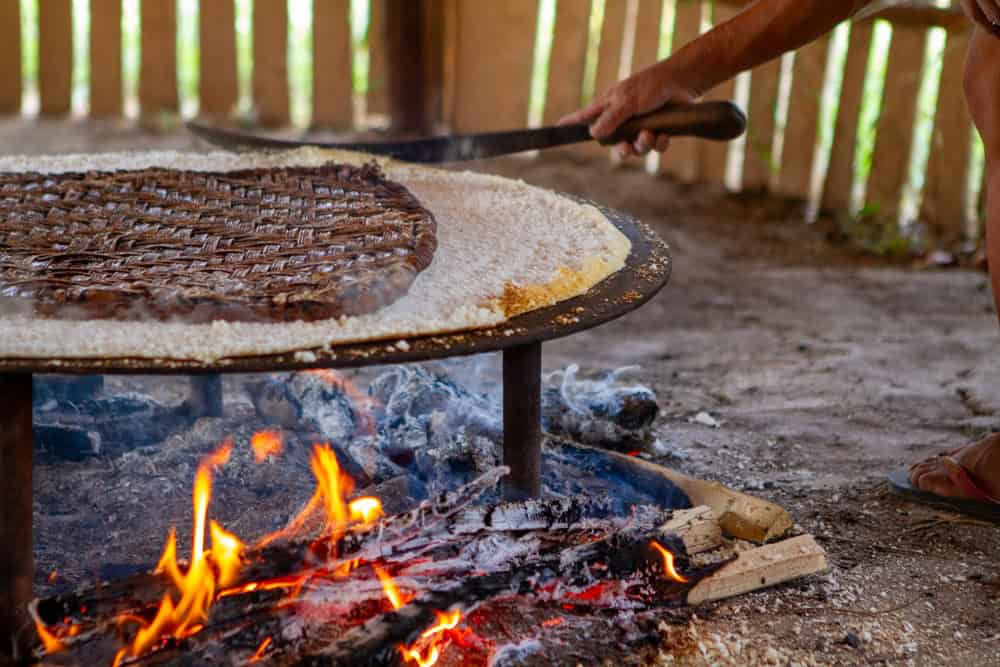
Situated on a bend in the Tapanahony River, a tributary of the Marowijne, Palumeu Jungle Lodge is a small but comfortable community-run lodge at the confluence with the Palumeu, deep in the western interior.
Surrounded by jungle on all sides, the lodge lies alongside the eponymous village, a remote community of around 300 Tiriyó, Wayana and Akurio people. Palumeu Jungle Lodge is managed by villagers and it is particularly suited to those with an interest in indigenous culture.
Attractions include day hikes, boat trips, swimming in the rapids, birdwatching and wildlife viewing. Palumeu is also a springboard for longer expeditions to the utterly remote and very beautiful Mount Kasikasima, which rises to an altitude of 780m from the west bank of the Palumeu River.
Kwamalasamutu
The most southerly destination in Suriname, Kwamalasamutu is a legendarily remote indigenous village set on the banks of the Sipaliwini River.
It is home to around 1,000 predominantly Tiriyó inhabitants, who were first exposed to the outside world in 1960 as a result of Operation Grasshopper, and have since been heavily influenced by the teachings of Baptist missionaries. Mark J Plotkin’s Tales of a Shaman’s Apprentice is an engaging travelogue featuring this isolated community – and others in the Amazon – during the 1980s while he studied indigenous medicines and incidentally observed the missionaries’ effects.
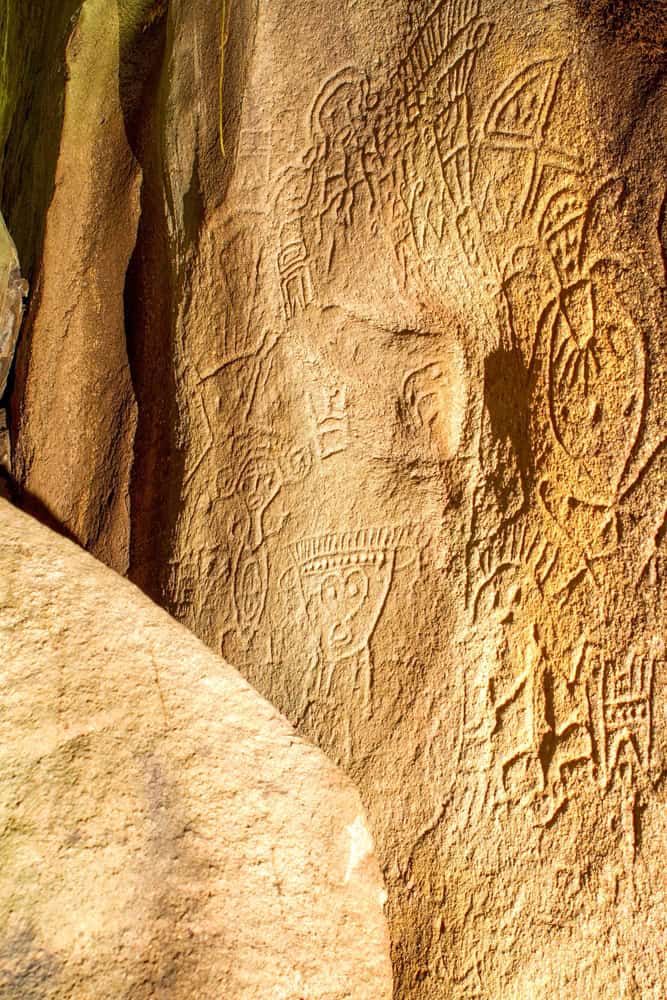
The main attraction of the region is the elaborate petroglyphs engraved into the walls of the Werehpai Caves, which lie about two hours from the village along a rough jungle path. Discovered by outsiders in 2004, Werehpai is a formation of gigantic boulders and overhangs that extends across a couple of hectares, and is decorated with at least 350 ancient rock carvings, the greatest concentration in the Amazon region.
Turtle nesting and coastal wildlife encounters
You cannot visit Suriname without experiencing the coastal hinterland around Paramaribo.
True, this murky-watered, mangrove-lined stretch of Atlantic coastline is somewhat deficient when it comes to conventional beach resorts, but it has a lot to offer wildlife enthusiasts.
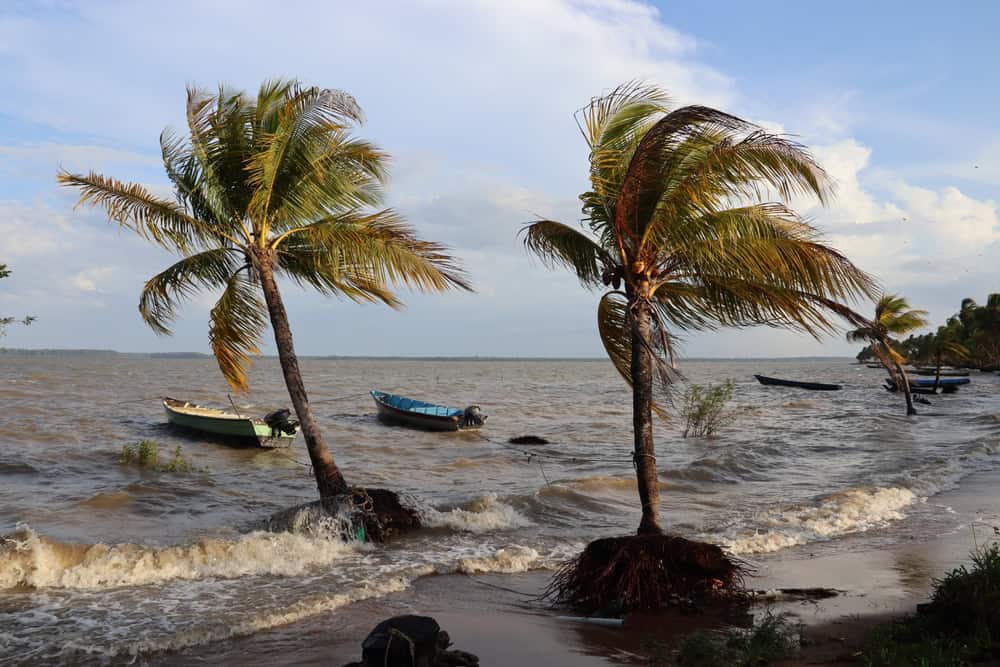
The Surinamese coast includes some of the world’s finest and most reliable marine turtle-viewing sites, particularly at Braamspunt, Matapica and Galibi, while the likes of Bigi Pan and Warappa Creek offer superlative aquatic and marine birdwatching, and dolphins are regularly encountered in the Suriname Estuary downriver of Paramaribo.
Turtles in Suriname: responsible tourism
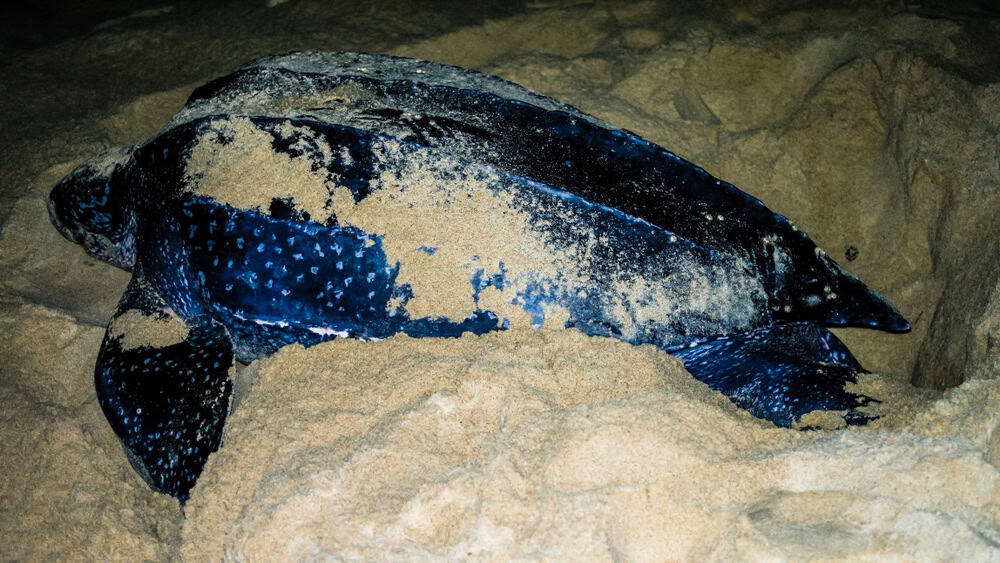
The four species of marine turtle that nest on the beaches of Suriname are all listed as endangered due to global threats such as habitat destruction, direct harvesting for food, incidental capture by fishermen, and eggs being preyed upon by domestic animals.
People seldom have an opportunity to observe turtles in the wild because they are so rare and difficult to find. However, tourists who visit the Surinamese beaches of Galibi, Matapica and Braamspunt during the nesting season of February to July (sometimes running into August) are provided with an excellent chance of watching a sea turtle come ashore to nest.
Unfortunately, however, keep in mind that guiding standards in Suriname are not always what might be hoped for, which places some responsibility on the individual tourists to ensure that any sighting is handled in a manner that minimises the disturbance of these sensitive creatures while maximising the chances of having a great experience:
- Sea turtles are very sensitive to light and a photographic flash can damage their eyes. For this reason, flash photography is prohibited in most turtle-breeding sites globally, and you are urged not to use a flash even if your guide permits or encourages it.
- Use a torch (flashlight) or headlamp with a red filter. Sea turtles are less sensitive to red light. But avoid shining any light in the turtle’s eyes or near her head.
- Wear dark clothing to reduce the chances that a turtle will see you approaching.
So, is Suriname worth visiting?
Despite all this, tourism to Suriname is still in its infancy.
True, there is no shortage of mid-range to upmarket hotels and restaurants in the capital, but mostly these cater towards business travellers and Dutch-based visitors with strong family connections to this small South American nation. Further afield, facilities are generally rather basic and exploration is almost always in the form of day or overnight trips out of the capital to a specific site in the hinterland of Paramaribo or the deep interior.
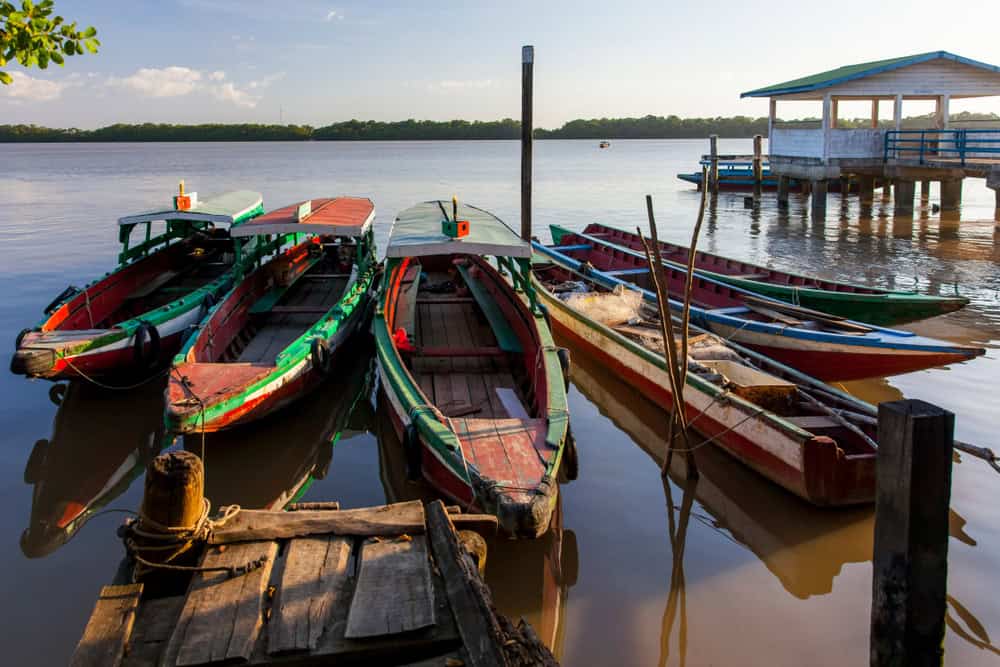
But much of the country is also open to deeper exploration, whether it be cycling, bussing or driving through the developed coastal belt, or lodge-hopping with the taxi-boats that service the remote villages of the Upper Suriname.
Indeed, like so many countries with a small nascent tourist industry, Suriname makes for a fabulously rewarding travel destination – safe, relaxed, unaffected and wonderfully friendly!
Need more inspiration? Don’t miss this list of the best places to go in Latin America.
Our guide to Suriname
For more information, read our guide to Suriname by Philip Briggs: