
How to get off the beaten track in Istanbul
Discover how to get off the beaten track in Istanbul by exploring hidden neighbourhoods, lesser-known markets and local hangouts far from the city’s busiest tourist sights.
How to get off the beaten track in Istanbul
There is a version of Istanbul that most visitors never see.
They arrive at the airport, they navigate the taxi queues, they check in somewhere near Sultanahmet and they spend their days shuttling between the Hagia Sophia, the Grand Bazaar, and the Topkapı Palace – monuments so spectacular that it almost feels ungrateful to want for something more.
But Istanbul is not one city.
It is many folded inside one another. It is a place layered across two continents that is threaded together by water, memory and the call to prayer echoing from a thousand minarets. To know only its most famous landmarks is, by any honest measure, to barely know it at all.
This guide is for travellers who want to dine in tea gardens with no English menus, follow the smell of freshly baked simit down cobblestone alleyways and experience the rare sensation of genuine discovery.
Why you should look beyond the Golden Horn
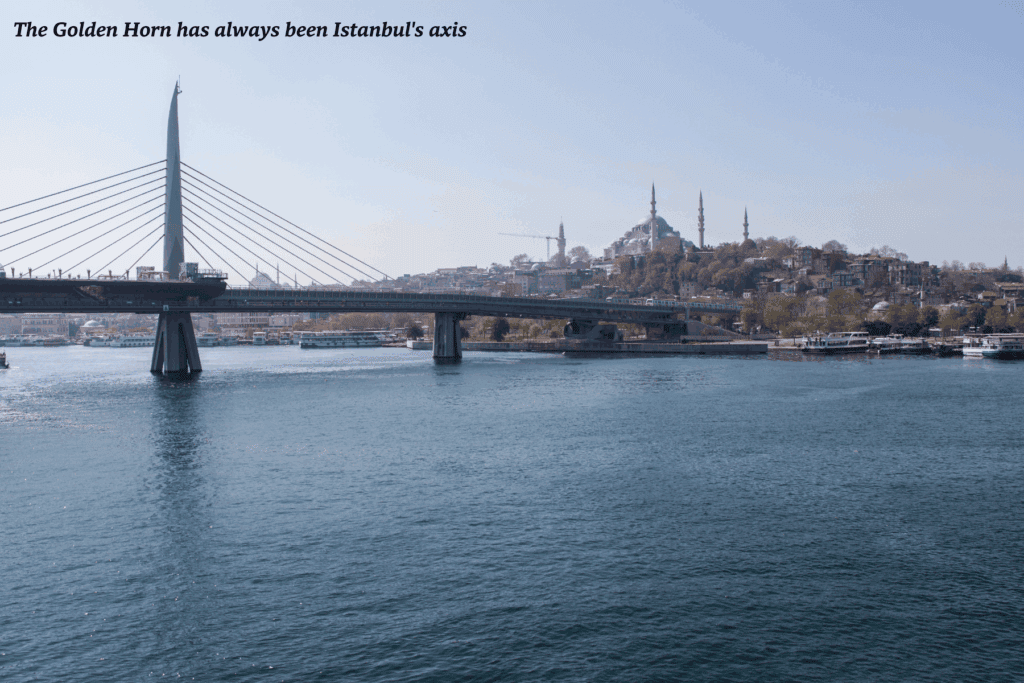
The Golden Horn has always been Istanbul’s axis. The inlet that separates the old city from the new district of Beyoğlu has witnessed the rise and fall of empires, the coming and going of fleets and the slow transformation of the world’s most persistently fascinating city.
But it has also become something of a barrier to deeper exploration. Most tourists stay on the historic peninsula or within easy walking distance of Istiklal Avenue, and in doing so they miss a great deal of what makes Istanbul so extraordinary.
The best neighbourhoods in Istanbul are not necessarily the most famous ones. They are those where fresh pomegranate juice is sold from carts on the kerb and cats choose to spend their afternoons, curled up on the warm steps of a church that has stood since the 12th century.
An alternative Istanbul itinerary is not about rejecting history; it is about understanding that history here is not only preserved behind glass. It lives in the streets, in the accents, in the architecture and in the stubborn insistence of local neighbourhoods that refuse to change.
Istanbul’s best hidden gems
Kuzguncuk: the Bosphorus village frozen in time
Visit Kuzguncuk and it will not take long to understand why the people who live here speak of it with such fierce pride.
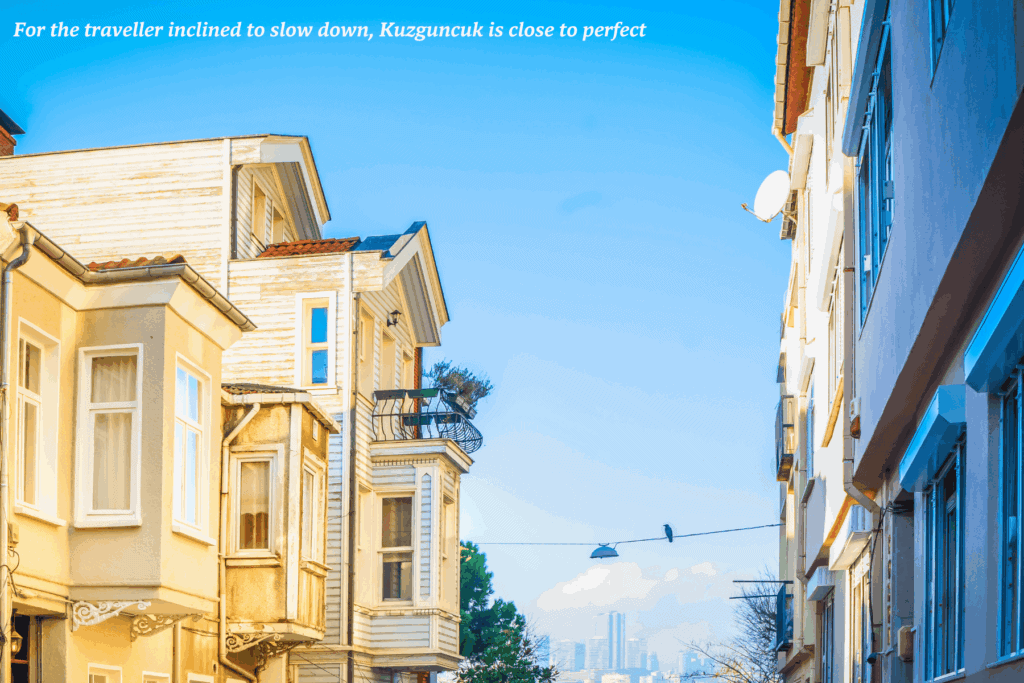
Tucked along the Asian shore of the Bosphorus, this is a neighbourhood that somehow survived the 20th century’s appetite for demolition largely intact. The wooden Ottoman houses along İcadiye Caddesi still wear their original colours – ochre, powder blue and terracotta – and a local bakery that has been in the same family for generations continues to pull simit rings from a wood-fired oven every morning.
Kuzguncuk translates, with unusual aptness, to “little raven.” It was for centuries home to a mixed community of Greek and Armenian Christians, Jews and Muslims, and that pluralism is still visible in the streetscape: a mosque, a synagogue and an Orthodox church stand within a few hundred metres of one another.
For the traveller inclined to slow down, Kuzguncuk is close to perfect. The galleries are small and serious. The cafés are the sort where the owner knows which table you prefer. And the fish restaurant İsmet Baba – which has been feeding people at the waterfront since 1951 – serves levrek (sea bass) and kalamar with the unhurried confidence of a place that has nothing left to prove.
Fener and Balat: a deep dive into Byzantine and Ottoman heritage
Just west of the Golden Horn ferry pier, Fener and Balat are twin neighbourhoods that have resisted – despite recent waves of gentrification – the erosion of their old identity.
Fener was for centuries the political and spiritual capital of Istanbul’s Greek Orthodox community. The Ecumenical Patriarchate of Constantinople still occupies a compound here, its modest exterior giving little indication of its immense theological significance. Higher up the hill, the red-brick Phanar Greek Orthodox College looms over the Golden Horn like a Victorian Gothic folly, visible from the water and quite unlike anything else in the city.
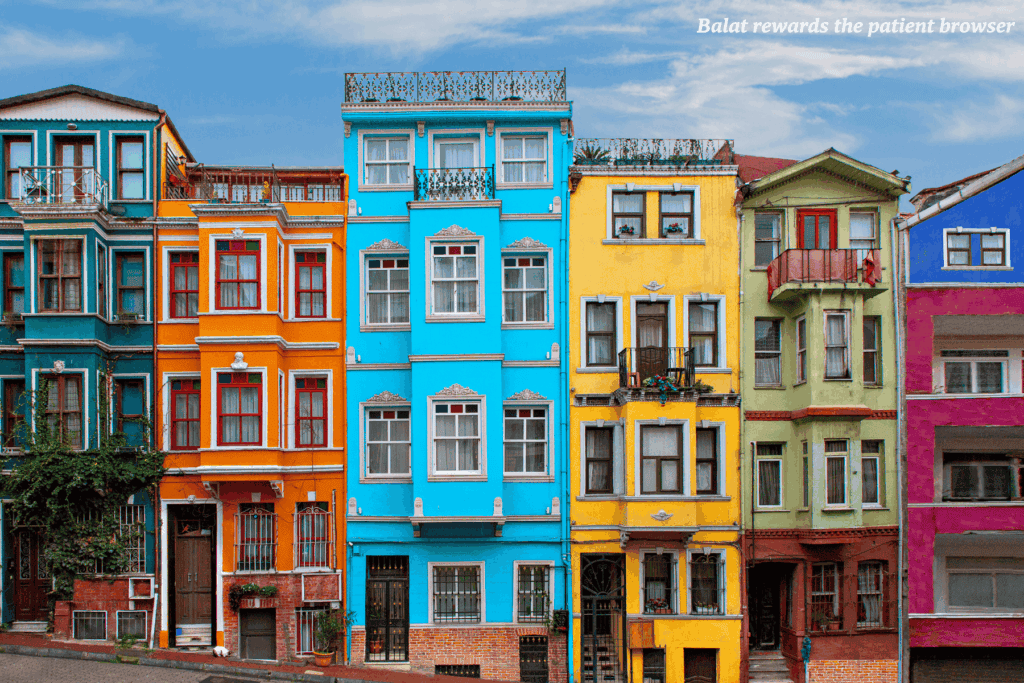
Balat, immediately adjacent, became one of the main centres of Istanbul’s Jewish population following the Ottoman welcome of Sephardic Jews expelled from Spain in 1492. Its streets are steep, irregular and frequently impassable to anything wider than a handcart. The houses (some freshly painted in candy colours for the Instagram crowd, others wearing the authentic patina of neglect) create a visual narrative of a place that has cycled through wealth, poverty and quiet persistence.
The antique shops and second-hand bookstores of Balat reward the patient browser, and the café culture here is genuinely local. Forno, near the old market square, does a weekend brunch popular with residents and increasingly with visitors in the know.
A historical peninsula private walking tour that includes both Fener and Balat will reveal layers of the city’s past that most visitors overlook. The key is having a guide who can read the facades – someone who can point to an Armenian inscription above a doorway that has otherwise been stripped of context, or explain why a particular courtyard belongs to a han that predates the Ottoman conquest.
- Recommended reading: the lost cities of the world you need to know about
The artisans of Kurtuluş: A culinary journey through Istanbul’s forgotten middle
Kurtuluş does not appear on most maps marketed to foreign visitors. It sits slightly north of Taksim, separated from the boutique hotels and tourist restaurants of Nişantaşı by a shift in atmosphere so complete it might as well be a different city. The streets here are lined with small family-run lokantas serving the kind of food that residents of Istanbul have been making for generations, sold at prices that would make any café on İstiklal Avenue feel like extortion.
The neighbourhood’s name means “liberation” in Turkish, and there is something appropriate about that: Kurtuluş has always been a place where Istanbul’s non-Muslim minorities lived quietly, and where the grocery stores, delis, wine shops and Orthodox church give the area a texture that you simply cannot find in the more obviously fashionable parts of town.
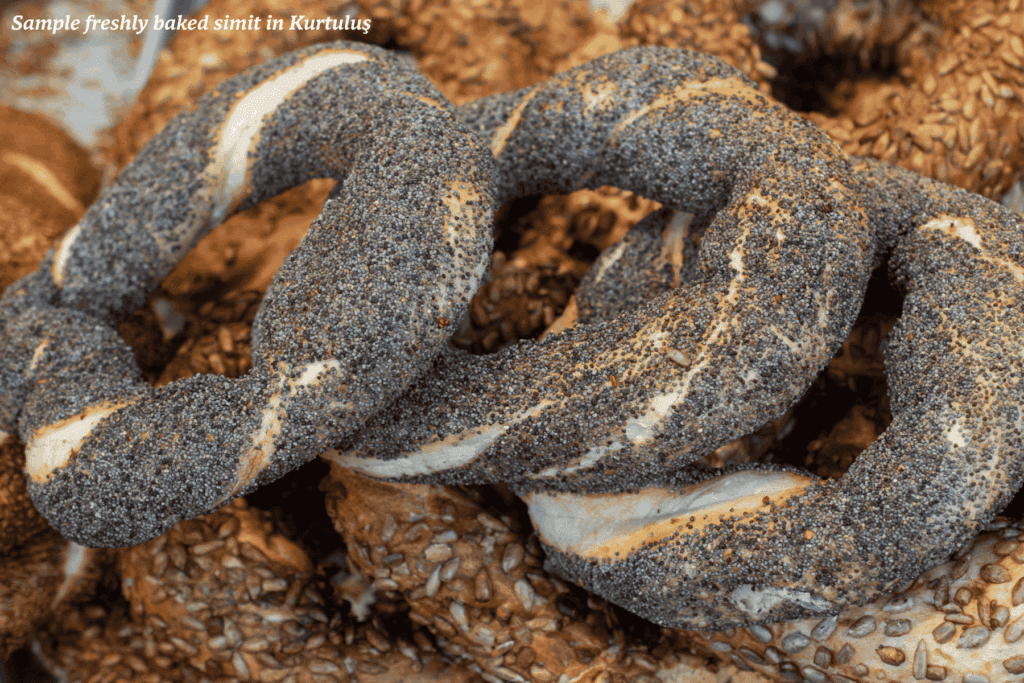
A local guide will take you to the Rum fırın – the old Greek bakery still producing sesame-crusted bread rings alongside the Turkish staples – and to the meyhane, where the meze is made fresh each morning and the owner pours your wine with the deliberate generosity of a man who celebrates hospitality.
This is a neighbourhood for eating, walking and understanding what ordinary life in Istanbul actually looks like.
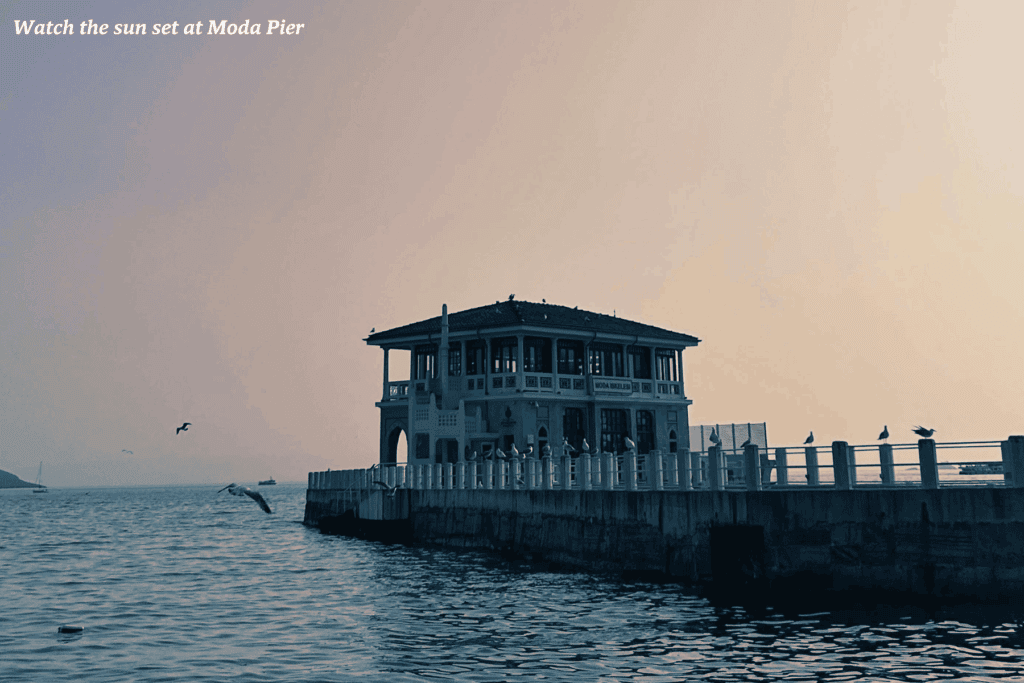
Moda and Kadıköy: exploring the pulse of modern Turkish culture
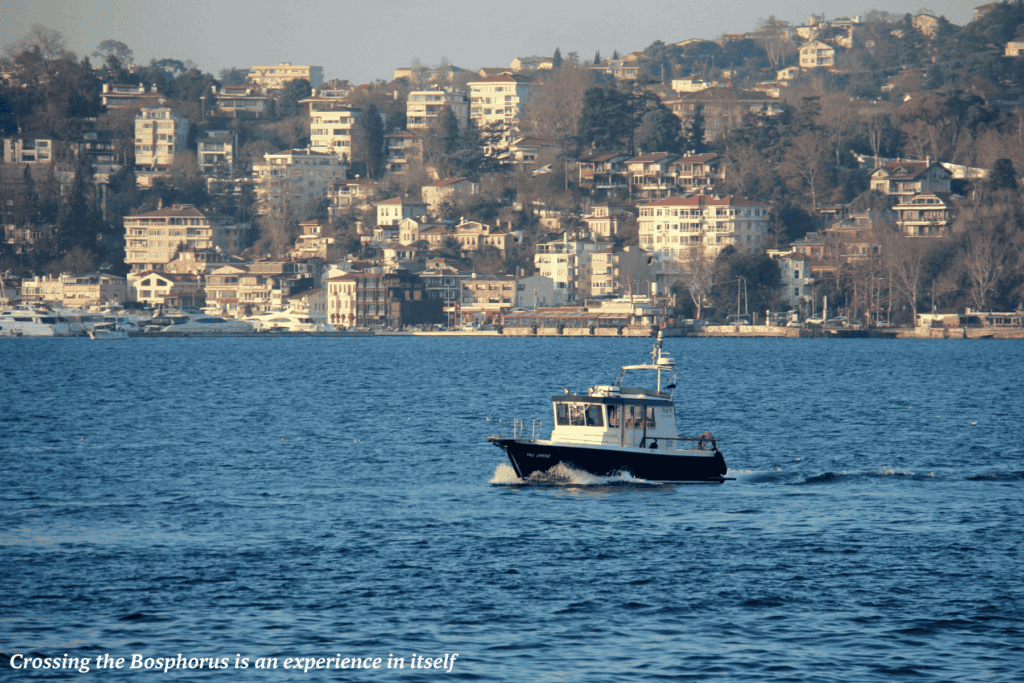
Crossing the Bosphorus by ferry is an experience in itself. You’ll watch the city unfold behind you like a painted screen before you arrive in Kadıköy, the beating heart of Asian Istanbul. This is where bookshops, record stores, independent coffee roasters and meyhanes concentrate authentically, not for the purpose of attracting tourists.
Moda, the waterfront neighbourhood that edges south from Kadıköy’s main market, operates at a different tempo still. Here you’ll find joggers in the morning, elderly couples in the afternoon, and students gathered in the evenings, all sharing the same wide pavement beside the Sea of Marmara. The cafés are unique, the menus diverse, and the view – with the Princes’ Islands visible on the horizon and the distant profile of the old city behind you – is quietly extraordinary.
The Kadıköy market is the kind of Istanbul hidden gem that guidebooks mention but never quite capture. The spice sellers, the fishmongers, the olive vendors, the man with the stall of pickled vegetables standing in enormous barrels – these are not arranged for photogenic effect. They are simply there, because they have always been there, and because the people of Kadıköy depend on them.
A morning spent here, finishing with a balık ekmek (fish sandwich) from the boats moored at the quay, constitutes one of the city’s finest cheap meals and most rewarding experiences.
Arnavutköy: architecture, fishermen and the best sunset views
Arnavutköy occupies a narrow shelf of land between the Bosphorus and the ridge above it. Its main street is lined with late- Ottoman mansions in shades of cream and pale green, their bay windows hanging over the water to create one of the most beautiful urban streetscapes in Europe. The fact that it is relatively unknown outside Istanbul feels like a miracle…or a scandal.
The fishermen still mend their nets at the water’s edge in the early morning. The cafés do not transform into cocktail bars at sunset; they serve tea and water and perhaps a glass of rakı to the regulars who have been sitting at the same table for twenty years. The balık restorans here – modest, serious and serving whatever arrived on the boats that morning – represent what Bosphorus dining used to be before it became a luxury commodity.
This is also the place for sunsets. As the light thickens over the water in the early evening, the European shore turns gold and the minarets of the mosques visible across the strait become silhouettes against a sky that looks like something a nineteenth-century painter arranged specifically for the occasion. A Bosphorus private boat tour that includes the Arnavutköy waterfront provides one of those views that tends to end conversations – not from boredom, but from a kind of wordless appreciation.
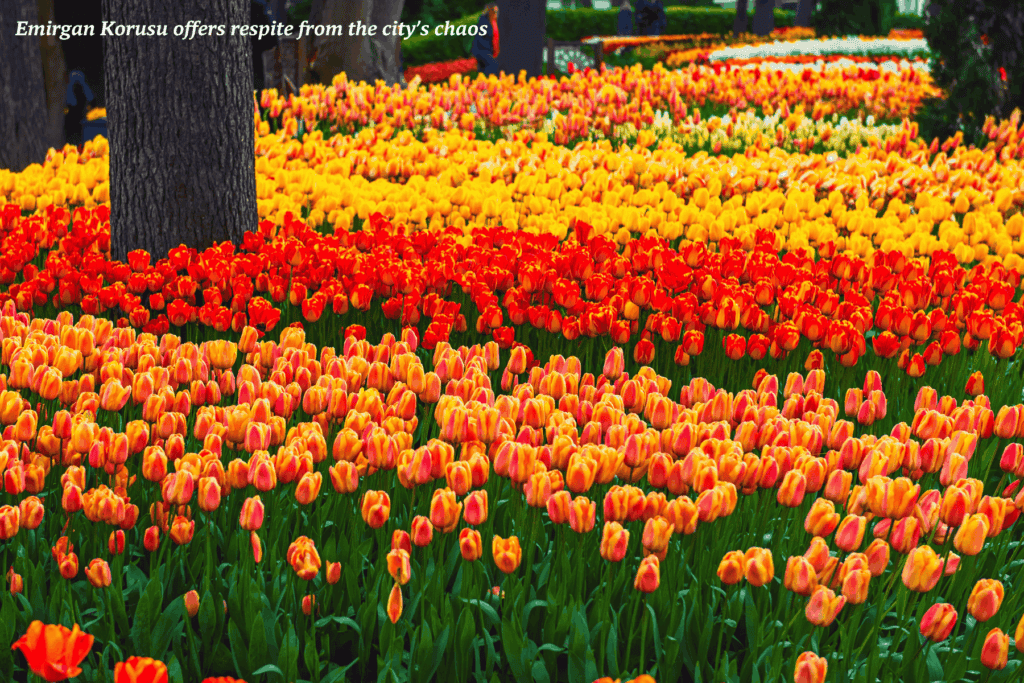
The secret gardens of Emirgan: nature in the heart of the Metropolis
Emirgan Korusu – the park that extends across a wooded hillside in the Emirgan neighbourhood on the European Bosphorus shore – is one of Istanbul’s genuine green secrets.
In April, during the Istanbul Tulip Festival, the park becomes a riot of colour, with millions of tulips in varieties developed during the Ottoman period planted across terraced lawns that descend toward the strait. Outside of the festival period, it remains one of the most peaceful places in the city: old çınar (plane) trees providing shade, historic Ottoman pavilions housing tea gardens and the Bosphorus visible through the branches on clear days.
What is lesser-known is the park’s role as a social space for Istanbul families. On weekend mornings, grandparents bring grandchildren for walks, teenagers sit on the grass with guitars and couples eat sandwiches on benches that have looked out over the same view for a hundred years. This is the Istanbul that locals inhabit every day – natural, unhurried, completely devoid of anything that might be described as a tourist attraction…and all the more attractive for it.
Emirgan village itself has some of the better independent cafés on the European shore, along with several waterfront fish restaurants that manage the difficult feat of being simultaneously popular with locals and genuinely good.
Essential travel tips for Istanbul
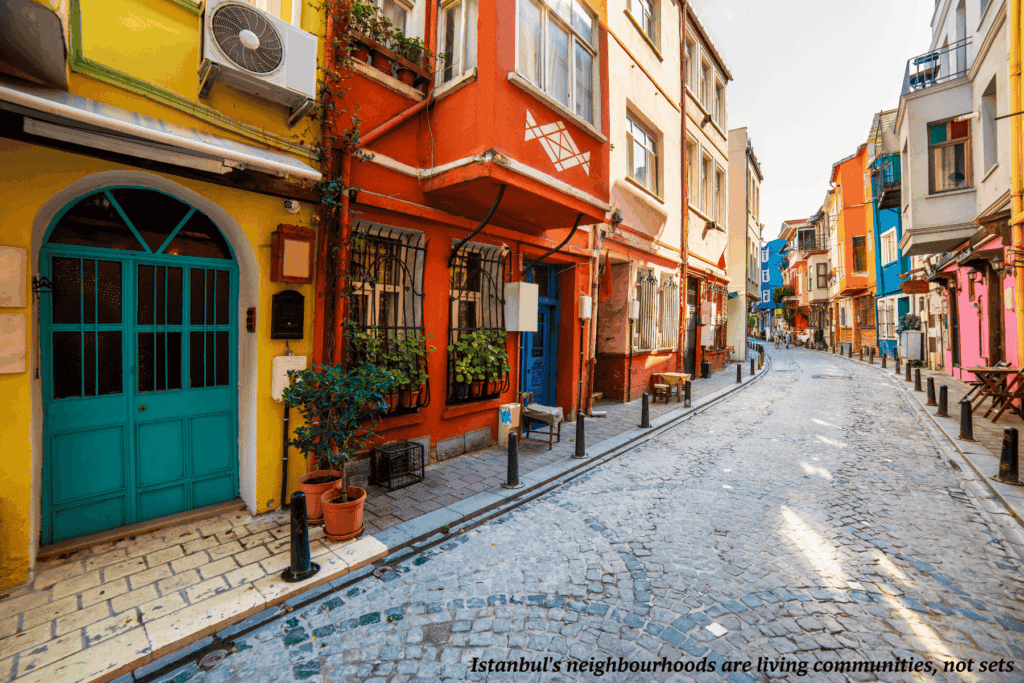
Istanbul’s neighbourhoods are living communities, not sets. The same ‘untouched’ quality that makes Balat, Kuzguncuk and Arnavutköy so appealing also makes them vulnerable to a particular kind of attritional damage: the slow replacement of the bakery with the boutique hotel, the meyhane with the brunch café aimed at foreign visitors and the resident with the short-term rental.
Travelling thoughtfully in these neighbourhoods is not merely a nicety; it is what ensures they will still be worth visiting in years to come.
A few things are worth remembering.
- Eat and drink in local-facing establishments rather than those that have pivoted entirely to the tourist market.
- Buy food from market vendors and family-run delis rather than the souvenir shops that have reproduced themselves on every corner near major landmarks.
- If you are visiting a mosque, dress modestly, visit outside prayer times and remember that you are entering a functioning religious space rather than an attraction.
- Learn perhaps a dozen words of Turkish – merhaba (hello), teşekkürler (thank you), ne kadar (how much) and güzel (beautiful) are good places to start – and deploy them without self-consciousness. The response, almost invariably, will be warmth rather than correction.
- Choose smaller, locally owned accommodation in residential neighbourhoods rather than the international chain hotels that insulate you from the city.
- Allocate time for the slow discovery of a single neighbourhood rather than exhausting a never-ending checklist of landmarks.
- Hire a local guide who was born in the city and knows it well.
Istanbul will reward this approach with generosity. It nearly always does.
Travelling further afield? Don’t miss our guide to getting off the tourist trail in eastern Turkey.
How to get around Istanbul
Airport transfers
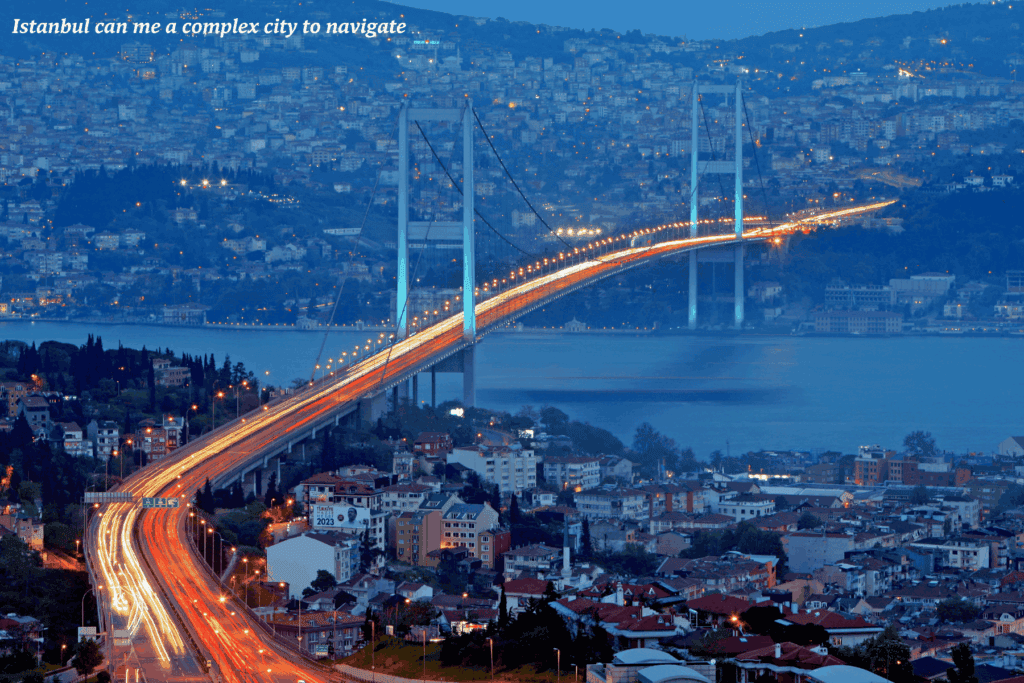
The question of how to get around Istanbul is not trivial. The city’s public transport is comprehensive and largely functional, but it was designed for the sixteen million people who already know where they are going. For visitors, the combination of the metro, tram, funicular, ferry and the various dolmuş (shared minibus) routes that serve the hillier residential areas requires a kind of navigational fluency that takes time to develop.
The best way to get from Istanbul airport to the city centre depends on your arrival airport and your final destination, but both Istanbul Airport (on the European side) and Sabiha Gökçen (on the Asian side) are at distances from the city centre that make a reliable, comfortable transfer important. An airport transfer that meets you at arrivals, manages your luggage and delivers you to your hotel can make all the difference to how you start your holiday.
Layovers
For travellers with limited time, a private Istanbul layover tour is worth serious consideration.
Both airports sit at distances that make even a five or six-hour layover viable for a meaningful encounter with the city. A private guide who can design a compact, high-quality itinerary around your connection time – hitting one or two significant spots rather than rushing through ten – can make the difference between Istanbul being a transit point and it becoming a city you’ll return to time and time again.
Private drivers
Chauffeur-driven car rental in Istanbul can be an excellent way to explore.
In a place where neighbouring districts are separated by a thirty-minute hill climb and where traffic patterns shift on the hour, a driver who knows the city inside out is an asset of real worth. This is particularly true for families visiting Istanbul, where managing the logistics of moving children and luggage across a complex city requires a level of coordination that is simply easier with dedicated ground transport.
A VIP Istanbul airport transfer or a custom Istanbul sightseeing tour takes some of the most common sources of travel anxiety – the fear of getting lost or wasting time – and eliminates them entirely.
Explore personalised tours with Mokan Travel to see how a bespoke approach to the city – whether for a layover, a long weekend or an extended stay – can be designed around exactly what you want from Istanbul.
Why a personalised itinerary is the best way to experience Istanbul
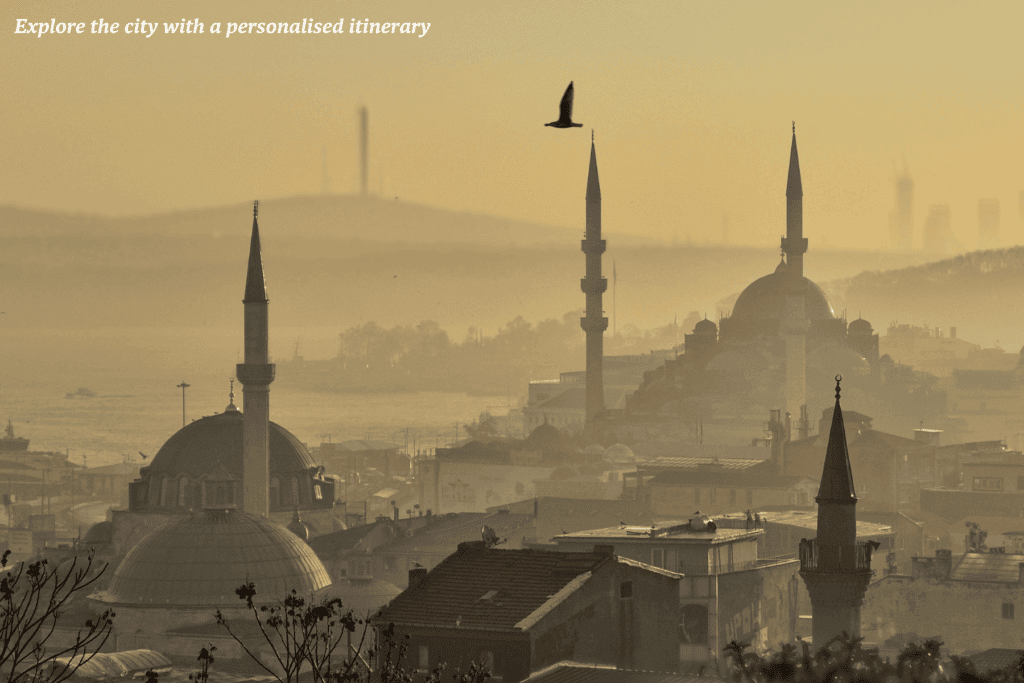
Istanbul looks manageable on a map…until you are standing at the bottom of a steep Ottoman street at sunset, realising that the neighbourhood you’re looking for is forty minutes away by a combination of tram, ferry and faith. Istanbul is not a city that rewards a lack of plan. Its hills are real, its distances are deceptive and the gap between what looks ‘close’ on a screen and what is actually reachable on foot can be measured in exhausting hours.
A personalised tour addresses this directly. The value of working with a company that specialises in custom Istanbul tour packages is not merely logistical convenience – though that is real and significant – it is the accumulated intelligence of people who actually live in the city.
The Istanbul guide who knows which hour the light hits the Hagia Sophia’s interior at the most extraordinary angle, who went to school with a meyhane owner in Kurtuluş that will open the back room for a private lunch, and who understands that the real Bosphorus experience is not the big tourist ferry but a quiet morning on a private boat, transforms an itinerary from a list of attractions into something genuinely memorable.
Taking a private tour with Mokan Travel means your trip to Istanbul will not consist of Tripadvisor’s greatest hits. Instead, your experience will be built around your interests, your pace and the things that genuinely matter to you.
Your bespoke Istanbul adventure awaits
The Istanbul described in this article exists for any traveller willing to look past the obvious. It requires curiosity, flexibility and recognition that the best experiences in any city are rarely the most advertised ones.
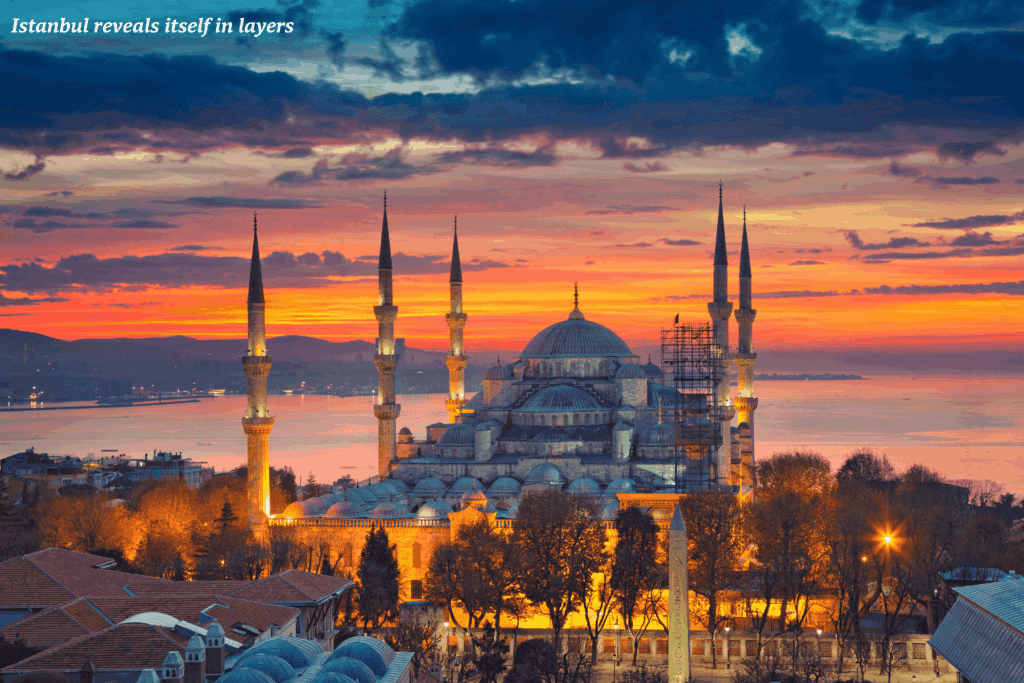
What it also requires – particularly in a city of this scale and complexity – is the right kind of help. Istanbul does not reveal itself equally to everyone. Its layers respond to patience, to language, to relationships and to local knowledge built over years. The difference between an enjoyable visit and a transformative one often comes down to the quality of the guidance available and the intelligence with which the itinerary was designed.
Whether you are arriving for the first time or returning to go deeper, whether you have a week or an afternoon, whether your interest runs to Byzantine history or contemporary food, companies like Mokan Travel exists to ensure that Istanbul delivers its best.
That is what exploring Istanbul with a guide looks like: not a standard tour, but a conversation between curious travellers and a city that has been having interesting conversations for three thousand years.
About Mokan Travel
Mokan Travel are specialists in custom Istanbul sightseeing, private tours and luxury ground transport, including VIP airport transfers. All their neighbourhood recommendations are independent and reflect genuine local knowledge.