
What is it like to travel Afghanistan?
What is it like to travel Afghanistan? Here’s exactly what to expect when visiting this landlocked, mountainous country at the crossroads of Central and South Asia.
So, what is it like to travel Afghanistan?
To the first-time visitor, Afghanistan feels at once familiar and utterly alien. It is a place many people think they know, thanks to the nightly news, social media or the headlines of the last four decades. Names like Kabul, the Hindu Kush, the Khyber Pass, Kandahar, Bagram, the Taliban, the mujahideen – these words echo with recognition.
Yet to trace them on to real places, lived-in streets and ordinary people going about their day is disorienting and thrilling in equal measure. The country that looms so large in the imagination becomes something tangible, textured, and unexpectedly human.
A visit to Afghanistan today reveals a country suspended between tradition and modernity. After decades of conflict and outside influence, it is now more independent than at any point in recent history. Yet that independence brings challenges.
The Taliban’s strict interpretation of Islam shapes daily life and limits Afghanistan’s engagement with the wider world, while economic hardship and the pressures of climate change loom large. Modernity knocks at the door, but in many ways the old rhythms of life continue much as they always have. For travellers, this means Afghanistan offers a rare chance to encounter traditions, landscapes and ways of life that feel both timeless and fragile.
This article is not intended to argue for or against visiting, but to provide insight for those who wish to see Afghanistan first-hand, and for those who are simply curious about the country as it is today.
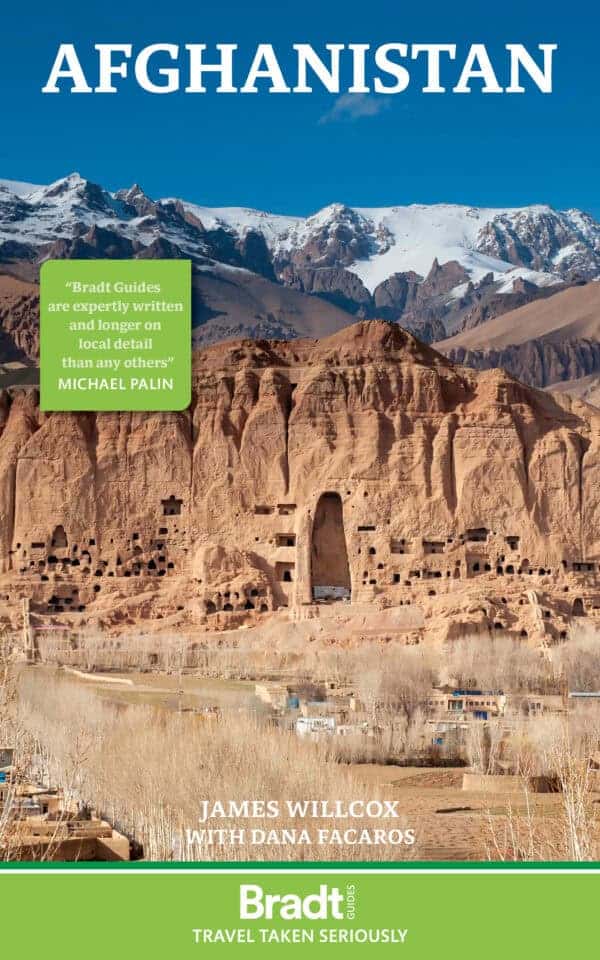
Get the guide
Before you delve into the article, check out the Afghanistan travel guide that inspired it…
Is it safe to travel to Afghanistan?
You should be aware that both the UK Foreign, Commonwealth and Development Office (FCDO) and the US State Department advise firmly against travel to Afghanistan, and there is no consular support available to foreign nationals.
However, as with many things in Afghanistan, the more time you spend exploring, the more you find that things are far more nuanced than they first appear.
Despite its reputation for danger, Afghanistan is also home to some of the most hospitable and welcoming people in the world. For those who choose to visit, understanding the risks and taking proactive measures can significantly reduce the likelihood of encountering serious issues.
Proper planning, careful tourist visa research, the use of reputable local guides, and strict adherence to cultural norms and security protocols all contribute to a safer experience. Travel routes and accommodations should be selected with security in mind, avoiding areas with known instability. Additionally, blending in as much as possible by dressing conservatively and adopting local customs can help minimise unwanted attention.
Anyone considering a visit should consult a specialist tour operator with genuine, first-hand experience of organising trips to Afghanistan, as up-to-date local knowledge, trusted contacts on the ground and robust contingency planning are absolutely essential.
While no amount of preparation can eliminate all risks, those who approach travel in Afghanistan with caution, cultural awareness and strategic planning stand a far greater chance of having a rewarding and trouble-free experience in a country offering one of the last bastions of true travel adventure.
Our recommended Afghanistan tour operators
Independent travel in Afghanistan is possible, but it’s not for the faint-hearted and navigating the country can present significant challenges: English is rarely spoken by government officials or security forces; road signs are almost non-existent, and online maps are often inaccurate, making travel difficult without local knowledge.
Here are some of our favourite tour operators:
What to expect when travelling to Afghanistan
Travelling in Afghanistan demands patience and openness. The country unfolds through spectacular landscapes, layers of history carved by empires and conquerors, and customs that continue to guide daily life.
Transport is often slow and uncertain, rules are strict, and the contrasts between hardship and beauty are stark, but the experience offers a rare glimpse into a place shaped far more by tradition than by tourism.
Here’s what you can expect.
A rich and complicated history
Afghanistan’s apparent lack of modernity conceals a deeper truth – that for centuries, it was anything but a backwater. It stood at the crossroads of empires, the meeting place of great civilisations, and it is still littered with reminders of that layered history.
Sitting at one of the world’s great crossroads, Afghanistan has been called the ‘cockpit of Asia’. Surrounded by tremendous civilisations – Persian to the west, Indian to the east, and south and central Asian to the north – it has been influenced by all three over the millennia, but also by cultures further afield, headlined by conquerors sweeping through, from Alexander the Great to Genghis Khan and Timur (Tamerlane).
Not as well known, perhaps, is that Afghanistan – often viewed as a ‘graveyard of empires’ – was just as often an incubator of empires. The Ghaznavid and Ghorid empires (founded when Baghdad was the most enlightened city in the world), as well as several Indian dynasties including the mighty Mughal empire, all had their origins in what is now Afghanistan.
A distinct cultural character
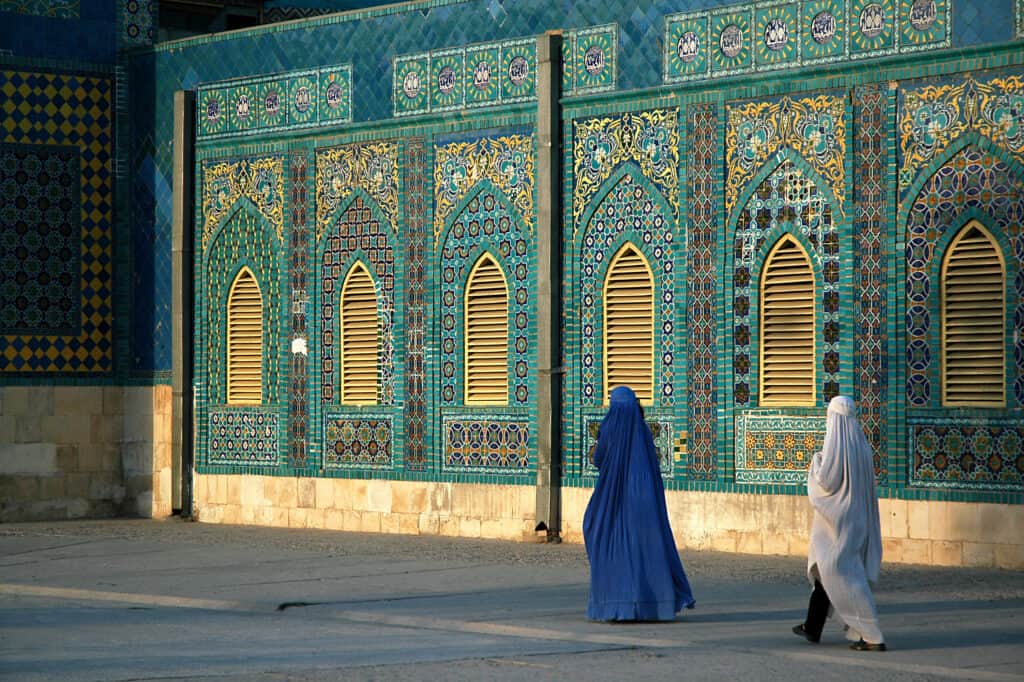
Afghanistan’s cultural life has long been shaped by its deep-rooted traditions in architecture, music, poetry and visual art. While it may not offer the range of arts and entertainment found in more open societies, the creative spirit has not vanished.
It simply finds new forms and quieter venues. Poetry, calligraphy, textiles and craftsmanship all continue to serve as means of expression and cultural continuity. In a time of uncertainty, these quieter forms of art remain essential to the Afghan identity.
Visual arts in Afghanistan are now largely shaped by religious and cultural constraints. Under current regulations, the depiction of living beings is discouraged, so figurative painting and sculpture have virtually disappeared from public life. In their place, calligraphy, geometric design and architectural embellishment have taken prominence.
Religious themes dominate, with Quranic verses and Arabic calligraphy adorning everything from wall hangings to carved wooden panels as artists and artisans draw on Afghanistan’s rich Islamic artistic heritage.
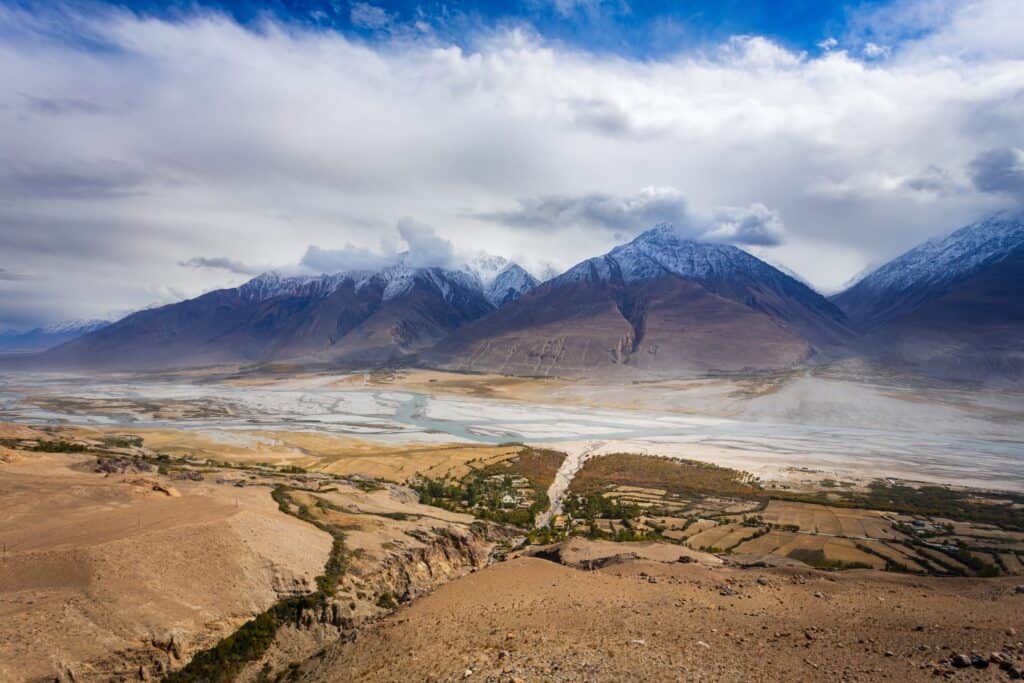
Spectacular landscapes
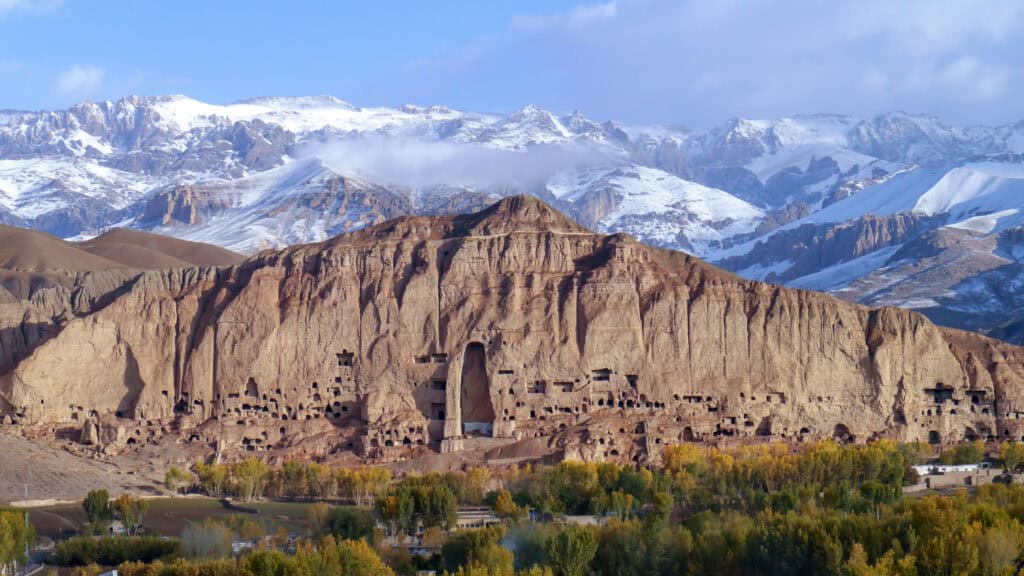
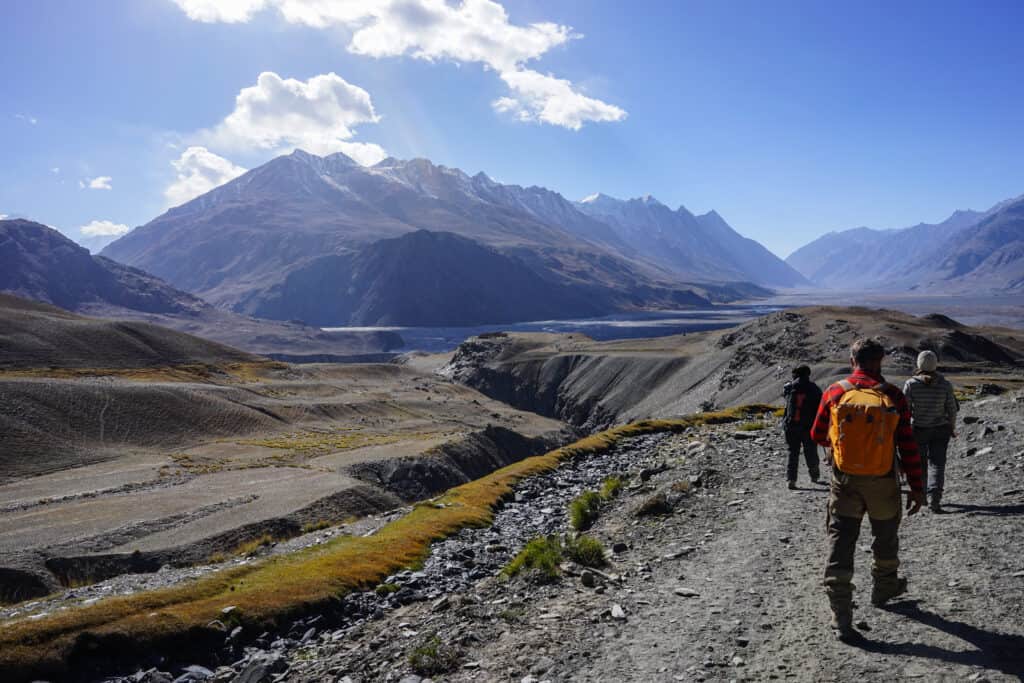
At 652,869km², Afghanistan is larger than France and smaller than Texas. Set on the Iranian plateau, with around half the country at 2,000m or above, it is landlocked and mountainous, fringed in the east by some of the highest peaks in the world.
The land itself is hard, rocky and arid, yet threaded with pristine rivers that feed orchards heavy with fruit. It is a landscape that mirrors its people – resilient, unyielding, yet with a surprising softness at the core.
The Registan Desert
One of the driest parts of the world, stretching across southeast Iran and southwest Afghanistan, the Registan is perhaps better known by its Iranian name, Sistan (from Sakastan, the land of the Saka nomads).
Here blows the infamous Sadobist Roozeh, the hot abrasive ‘Wind of 120 days’ (‘the most vile and abominable in the universe’, according to Lord Curzon). Laden with dust and salt, it blows from late May to September from north to south across the Helmand basin.
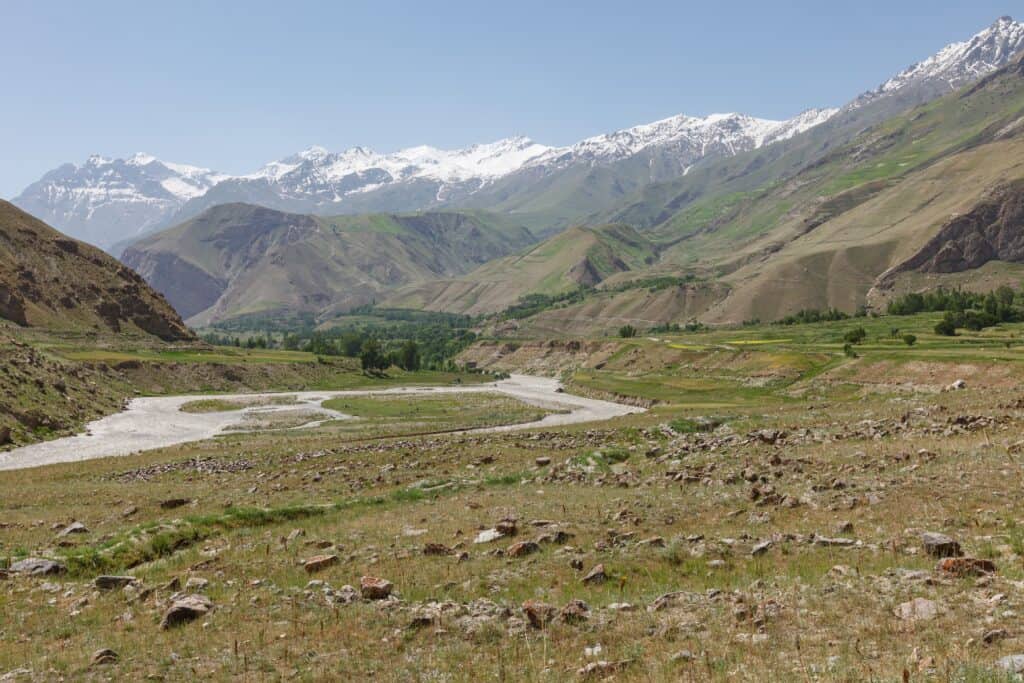
Steppe
The rolling country of northern Afghanistan is a continuation of the semidesert, treeless steppe of central Asia, bisected by the mighty Amu Darya River. The northern hills act as a barrier to the silt blown off the steppes, leaving the area covered in a layer of fertile, mineral-rich loess (notably around Maymana), which is subject to mudslides.
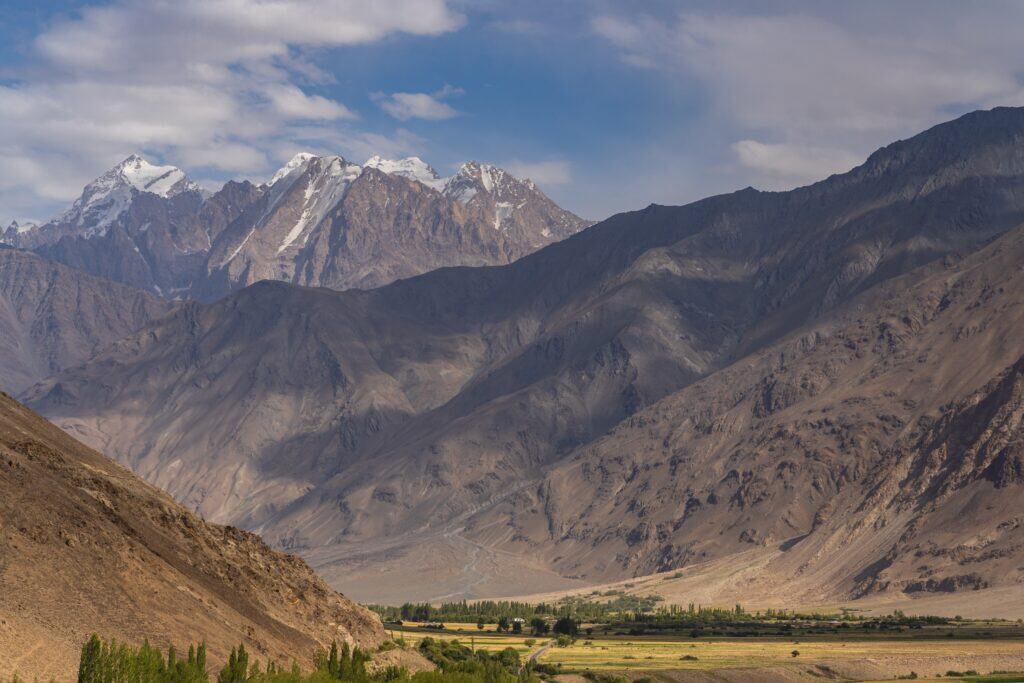
The Hindu Kush
Eastern Afghanistan is dominated by this relatively young 966km range that forms a mighty rampart north of Kabul. In antiquity, these mountains were named the Caucasus Indicus, which Greeks believed marked the end of the earth, where Prometheus, for the crime of giving humankind fire, had been bound by Zeus and had his liver devoured by an eagle every day.
The Central Highlands
The Hindu Kush declines into the smaller mountain ranges of central Afghanistan. The Koh-i-Baba stretches southwest into central Afghanistan, extending west towards Herat as the Feroz Koh. Between the mountains lie steep, generally V-shaped valleys where people live and farm along the rivers or wherever they can irrigate.
Eastern Afghanistan
The Himalayas are so high they block the Indian summer monsoons of south Asia from reaching Afghanistan. The exception is the far east, from Khost Province in the southeast up to Nuristan, which catch the fringe of the monsoon; Khost, for instance, receives an average of 500–1,000mm of rain per year.
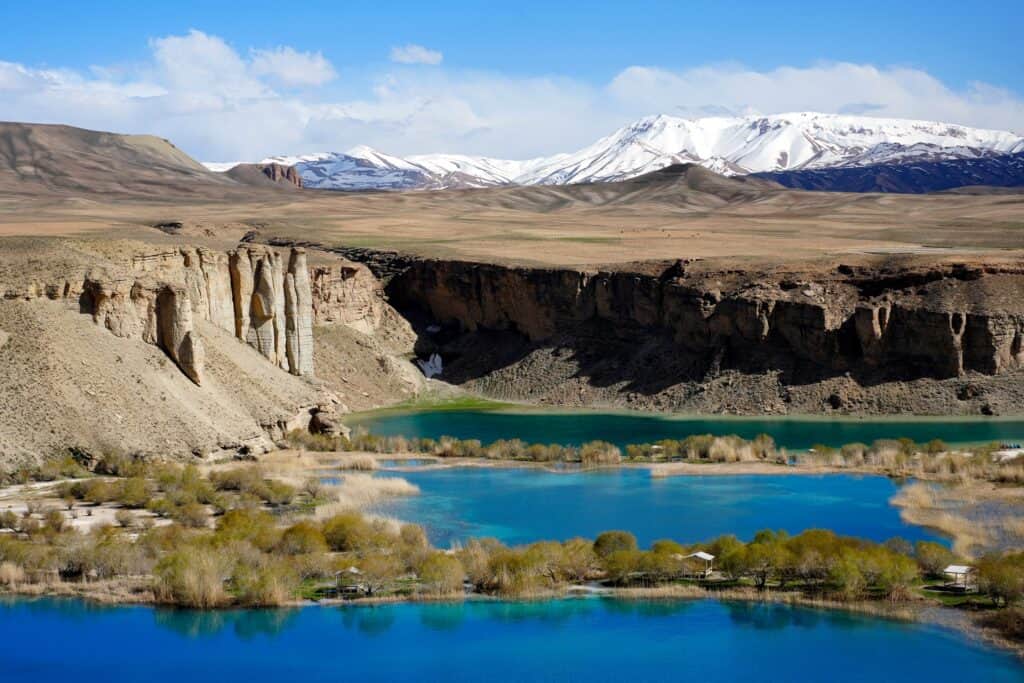
Lakes
Afghanistan has a handful of beautiful high-altitude lakes, especially the six lakes of Band e Amir in the Hazarajat, now part of Band e Amir National Park.
They are among the world’s very few natural travertine lakes; carbon-dioxide-rich water oozing out of the faults in the mountains formed the steep limestone walls that naturally dammed the lakes.
Glacial Lake Zorkul, at 4,200m above sea level on the border with Tajikistan, is one of the largest high-altitude lakes in the world, stretching for 25km amid magnificent mountain peaks. The other lakes in the Wakhan Corridor are equally striking, including Chaqmaqtin (4,024m), and Lake Shewa, which has kept its pre-Islamic name (Shiva).
- Recommended reading: the most spectacular lakes in the world
Extreme climates
Much of Afghanistan has a continental climate which can run to extremes, from 50°C below zero to 50°C above. Winters are cold and dry but have deep snowfalls in the mountains, where temperatures can remain well below zero for days on end. Spring is the wettest season.
Summers in low-lying regions and in Heratand Kandahar can see very high temperatures, even into the 40s (although the thermometer drops noticeably when the sun goes down); while in the Central Highlands and Hindu Kush temperatures tend to stay in the 20s. In summer it almost never rains, except in the eastern monsoon forest strip. Autumn is generally dry and comfortable.
A diverse cuisine
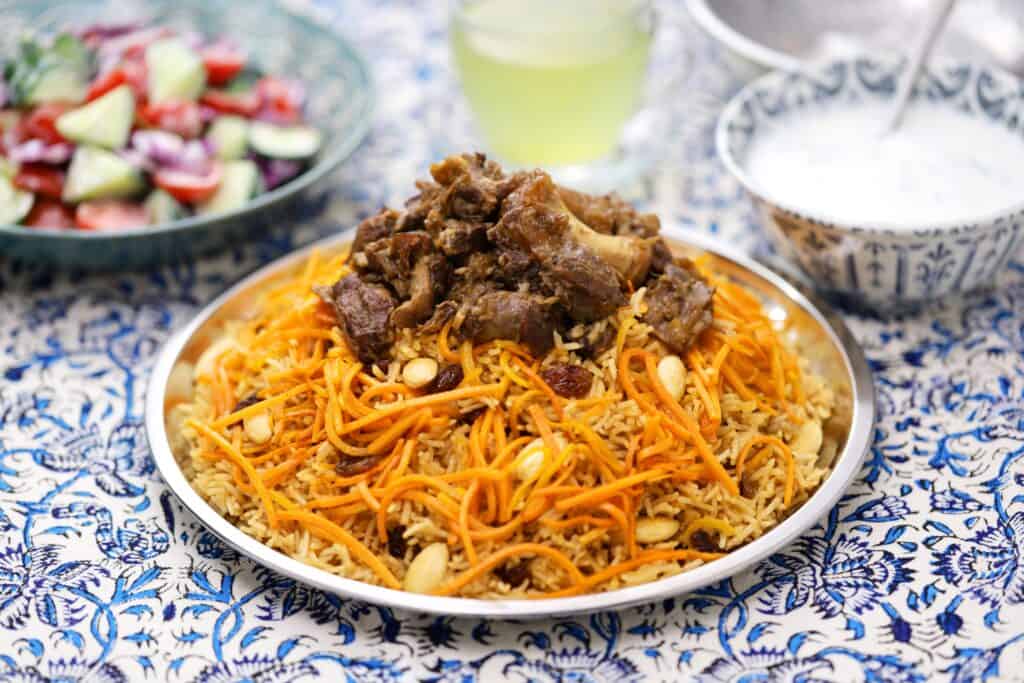
Located at the crossroads of the Silk Road, linking the Middle East, Iran and central Asia to the Indian subcontinent and the Far East, Afghanistan has always been in the centre of a great cultural exchange, not least of all in its kitchen.
At its finest, Afghan cuisine is a mix of sweet, salty, smoky, sour and spicy, often blending unexpected together to create something new. It features a wide range of rice dishes, kebabs, curry-like stews, fresh herbs and chutneys. Some Afghan dishes are found in almost every restaurant in Afghanistan while others are solely the preserve of home-cooked family meals.
Each region has a different flavour, depending on its neighbours. Pashto areas in the south such as Jalalabad and Kandahar are influenced by the spice and heat of the subcontinent. Heratis often take their kebabs with white rice rather than bread, like their Persian neighbours in Iran. While in Mazar e Sharif, the bread resembles the small, thick breads of Uzbekistan. Urban Afghans enjoy dishes from their neighbours and further afield. Restaurants serving Pakistani and Chinese food are common, and pizza, burgers and fried chicken are as popular in big cities in Afghanistan as anywhere else.
Gendered environments
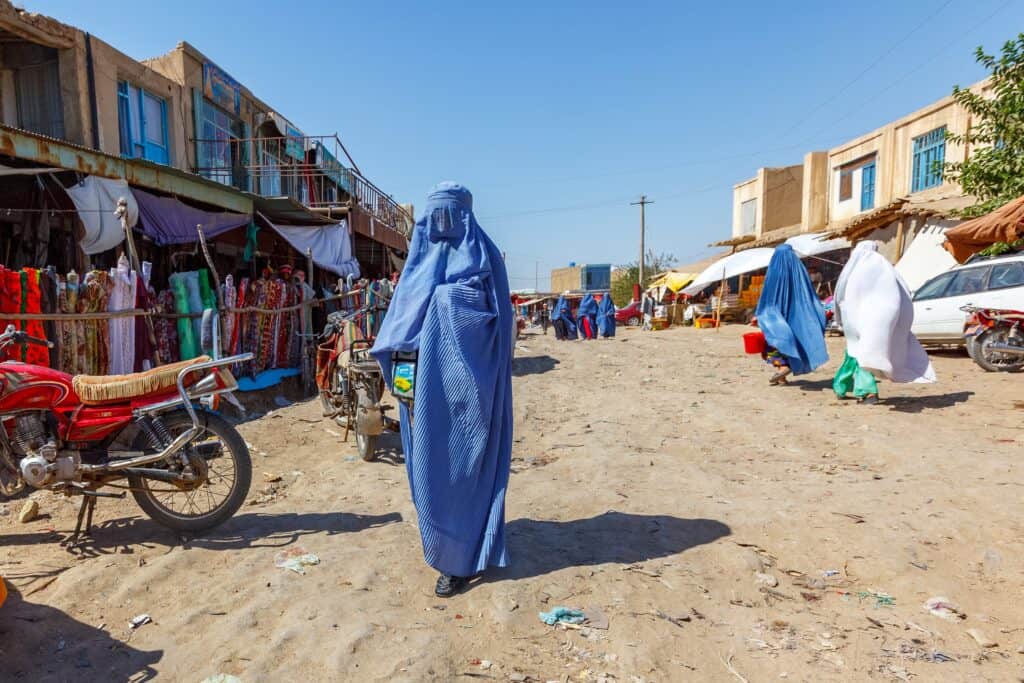
There are few chances for women to earn a living, outside of farming, where in many cases they are the only breadwinner in the family.
Government restrictions hit city dwellers hardest, and deprived Afghanistan of hundreds of doctors, scientists, engineers, journalists and more. Although it was rare in traditional Afghan society for women to work outside the home – only some 14% did before all of the country’s wars and troubles – the Afghanistan Women’s Chamber of Commerce in March 2021 counted more than 50,000 women-owned businesses, creating more than 129,000 jobs, over three-quarters of which were held by women.
Today all businesses, even if all the work is done by women, must be owned by men. Jobs that women have been able to do include teaching girls in primary schools, tailoring, producing food, carpet-making and other handicrafts and cleaning.
Women wanting to pursue medical careers attended nursing and midwife courses until Hibatullah Akhundzada (Afghanistan’s supreme leader) banned them in February 2024. He then banned any NGO that employed women from working in Afghanistan.
Unexpected detours
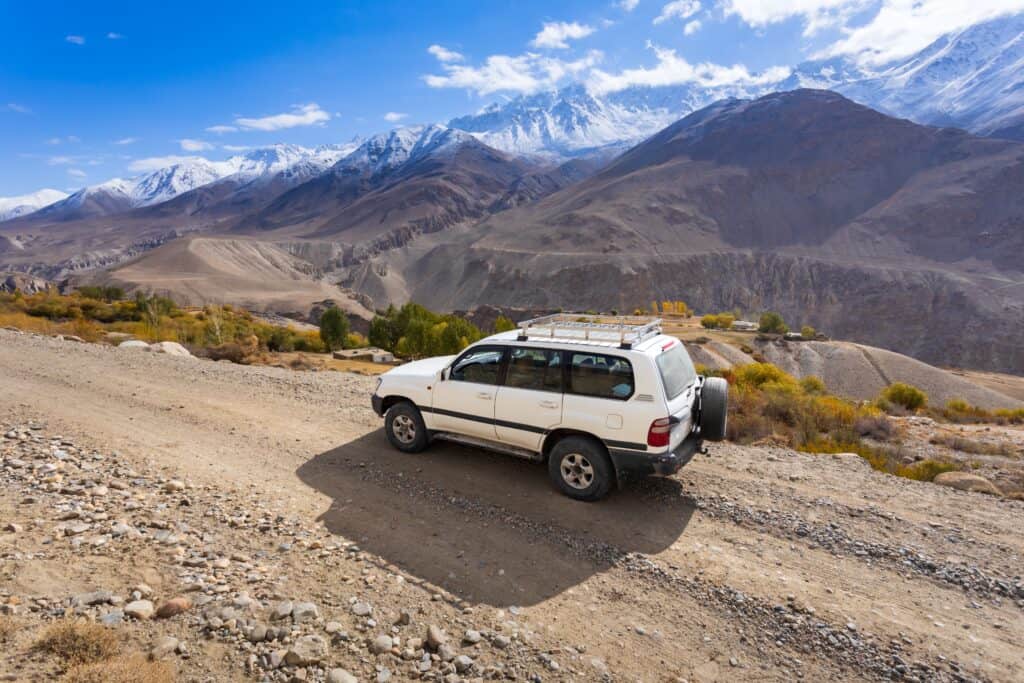
Travelling in Afghanistan is an adventure in itself, requiring flexibility, patience, and a willingness to embrace the unexpected. The country’s transportation network is largely informal (especially in rural areas), with little reliable information available online, and what does exist is usually in Dari or Pashto. Scheduled transport is rare outside of the limited internal flights between major cities, and even these may not run on time. There are no ride-hailing services like Uber, but then again, Afghanistan lacks formal addresses, making traditional taxi apps impractical.
The condition of the roads varies widely. While some major highways, such as the one connecting Kabul to Mazar e Sharif, are in reasonable shape, many others, particularly in remote or mountainous regions, can be in poor condition.
Dirt tracks, washed-out roads, and even seasonal river crossings can make travel slow and unpredictable. However, despite these challenges, Afghans are highly mobile, and there is no shortage of cars and drivers willing to take you almost anywhere – often at a moment’s notice. Shared taxis, private hires and even longhaul buses exist, though they often require some negotiation and local knowledge to arrange.
The upside of all this? Afghanistan travel is rarely dull. The landscapes are breathtaking, and with no generic motorways to speed through, every trip is filled with fascinating sights. Whether winding through dramatic mountain passes, passing nomadic camps on open plains, or navigating the chaotic streets of a city, there is always something to see.
While getting around may be challenging, the experience of travelling through Afghanistan is one of the most rewarding aspects of visiting the country.
Dynamic cities
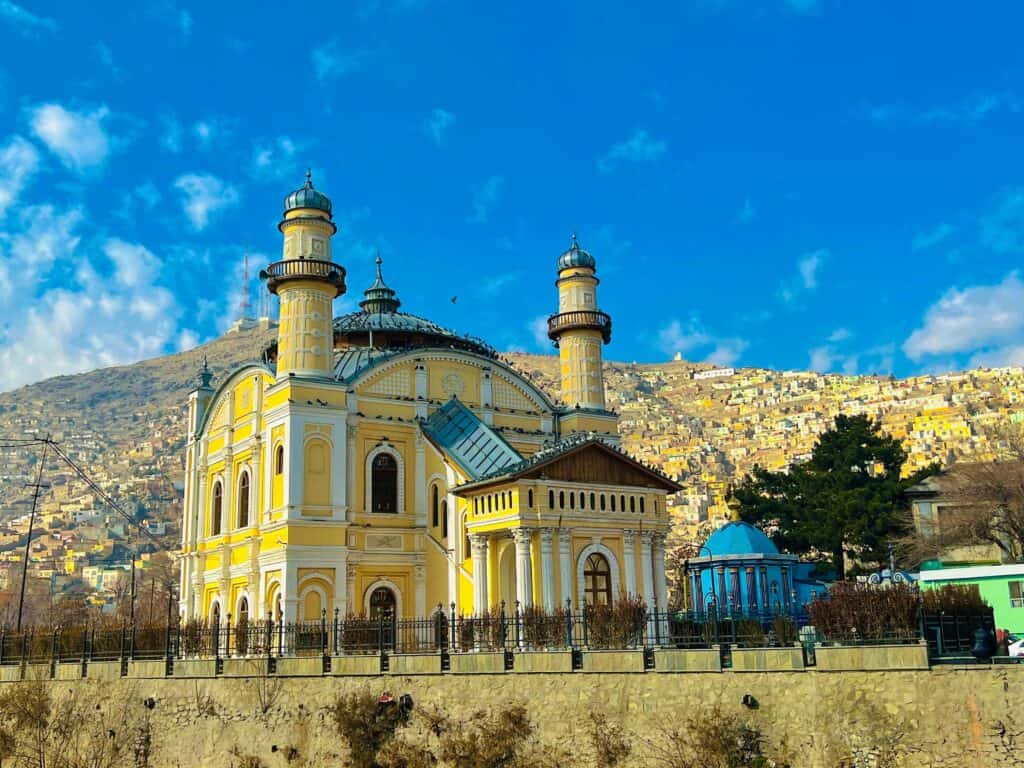
Kabul
Home to more than 7 million people and counting, Afghanistan’s lofty capital is currently the world’s 75th largest city. Since 2012, Kabul is also one of the five fastest growing in the world, a ‘primate city’, twice as large and important as any other city in the country.
Founded on the Kabul River, a tributary of the Indus, the setting is spectacular. One of the world’s highest capitals at 1,790m, Kabul occupies a triangular valley in the Hindu Kush at the southern end of the Shomali Plains; the buildings appear from the air like a sea sloshing against the mountains that surround and divide it.
It has also been described as an ‘amnesiac city’ like Baghdad, where it’s impossible to measure the beauty and human knowledge that has been lost over the centuries. Old hippies would hardly recognise the place: Soviet occupation, civil war and modern reconstruction have changed the city dramatically in the last 50 years.
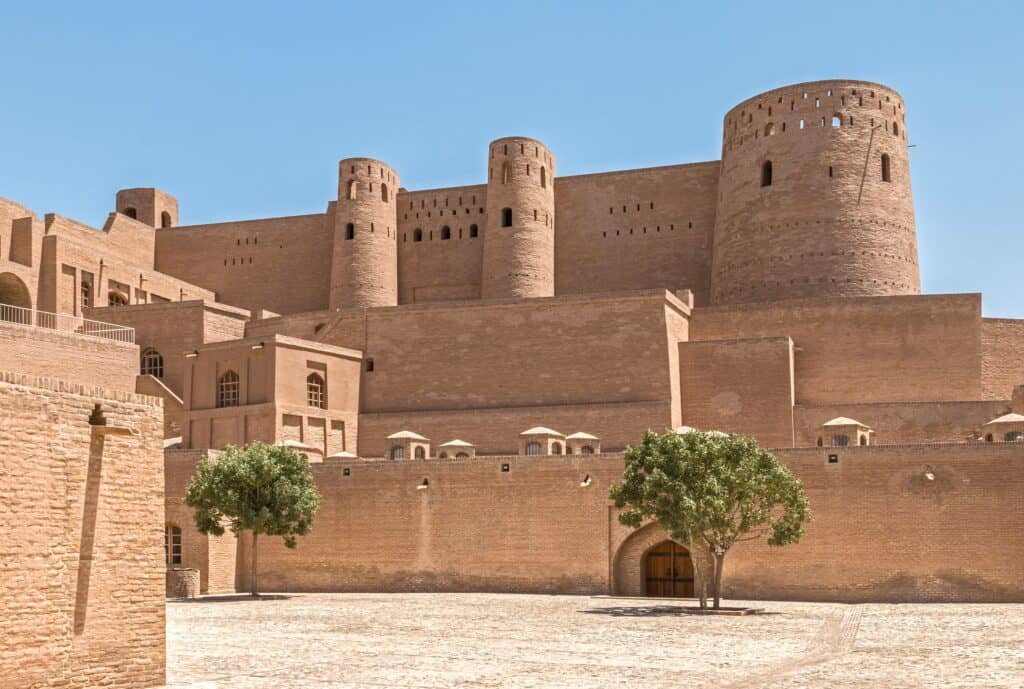
Herat
Set on the fertile plain of the Hari Rud River, Herat is Afghanistan’s third largest city (population 580,000) and one that for 2,000 years played a key role in central Asian and Persian history, where its strategic location and mild climate made it a prize for every ambitious ruler.
It’s the one Afghan city that still has the power to evoke the Silk Road of old, so much so that Herat is on UNESCO’s World Heritage Tentative List. It is a well-ordered city of pine-shaded avenues and gardens, where people dine late into the evening. Restaurants often serve meals in courtyards or open-air pavilions, offering a level of refinement rare elsewhere in the country.
Discover more in our guide to the historic sights of the Silk Road.
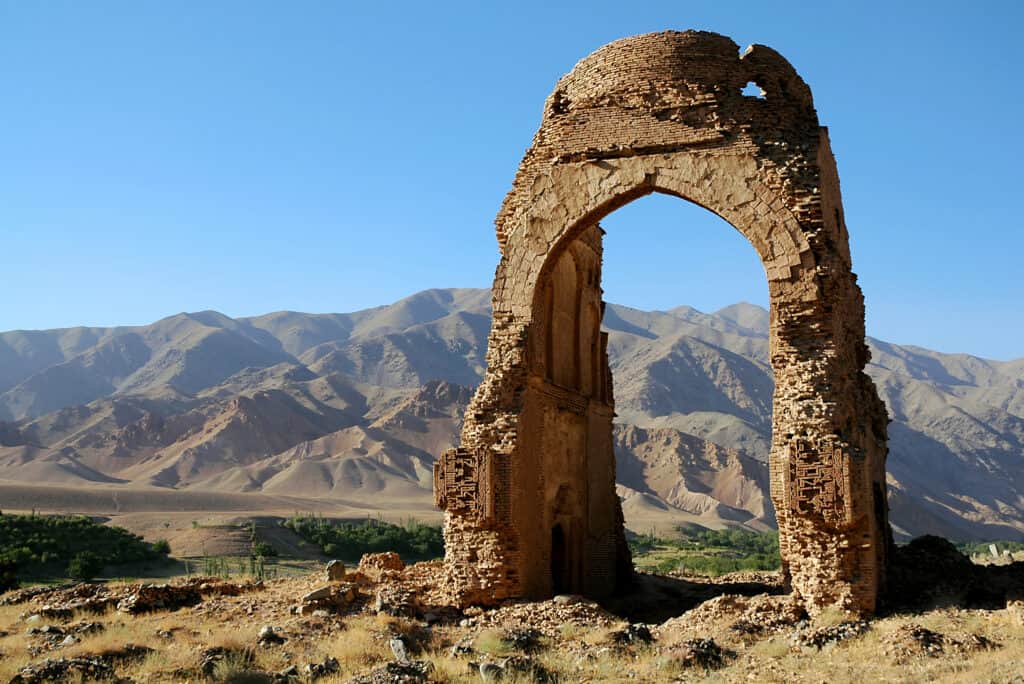
Kandahar
Afghanistan’s second city, Kandahar is by far the largest in the arid south. It grew up along the trade routes between Persia and India in the Arghandab Valley, where the river disappears into the sands of the Registan Desert.
Kandahar is an epicentre of power, and source of major legal rulings and edicts. Religious leaders tend to remain behind the scenes, but their influence is deeply felt.
The birthplace of modern Afghanistan continues to be the spiritual and political heartland of the Pashtun people. Kandahar’s motto says it all: ‘The City of Power’.
Unique customs and traditions
Afghanistan’s tragic recent history, though devastating, has left much of the country in spirit as it has always been: traditions intact, ways of life preserved, landscapes and monuments left raw and unvarnished.
When visiting Afghanistan, it is essential for tourists to be aware of the cultural etiquette and respect local traditions. Understanding these customs helps build positive relationships with the local people and ensures that interactions are conducted respectfully.
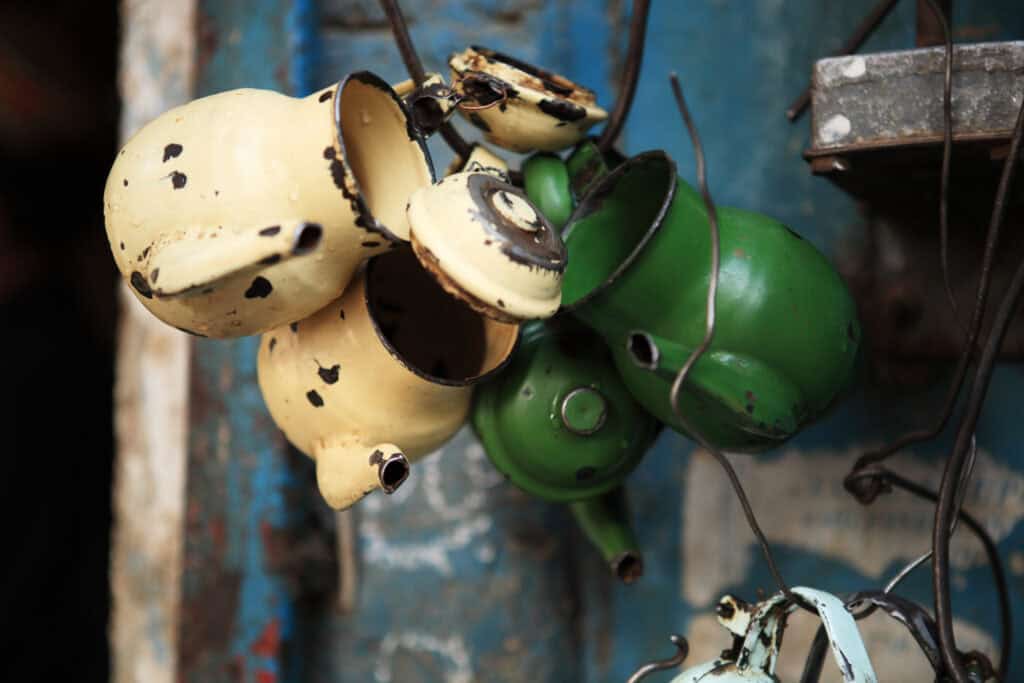
Tea drinking
One of the most common customs in Afghan culture is the offer of tea. Tea is a central part of Afghan hospitality, and it is often offered to guests as a gesture of respect and warmth. When offered tea, it is generally polite to accept, but keep in mind that sometimes the offer may be simply to show courtesy rather than a genuine invitation.
Communicating
When greeting others, men in Afghanistan often touch their hearts as a sincere gesture of respect, particularly when they are meeting someone of importance or older than them.
It’s important to note that women typically do not shake hands with men, especially in public. If you are meeting a woman, a smile and a nod are usually sufficient to show respect, and it is better not to initiate physical contact unless it is with a close family member.
Gesturing
Gesturing should also be approached with care. For instance, the thumbs-up gesture is considered rude, equivalent to raising one’s middle finger in Western cultures. The ‘OK’ hand sign, forming a circle with the index finger and thumb, can also be offensive, as it may symbolise the evil eye or something more lewd.
On the other hand, hooking your index fingers together is a sign of agreement, and stroking one’s beard or pounding a fist into one’s hand may signify anger or a desire for revenge.
Our guide to Afghanistan
For more information, check out our guide to Afghanistan from author James Willcox: